
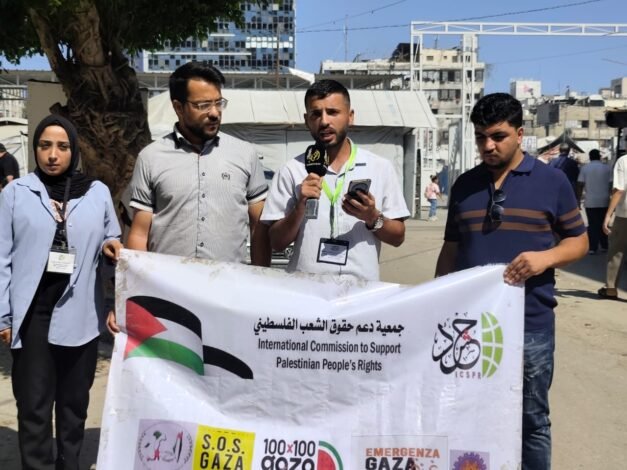
ICSPR Holds a Press Conference in Gaza City on World Humanitarian Day and Documents the Targeting of Relief Personnel and Infrastructure

Date: 27 August 2026
Press Release
ICSPR Holds a Press Conference in Gaza City on World Humanitarian Day and Documents the Targeting of Relief Personnel and Infrastructure
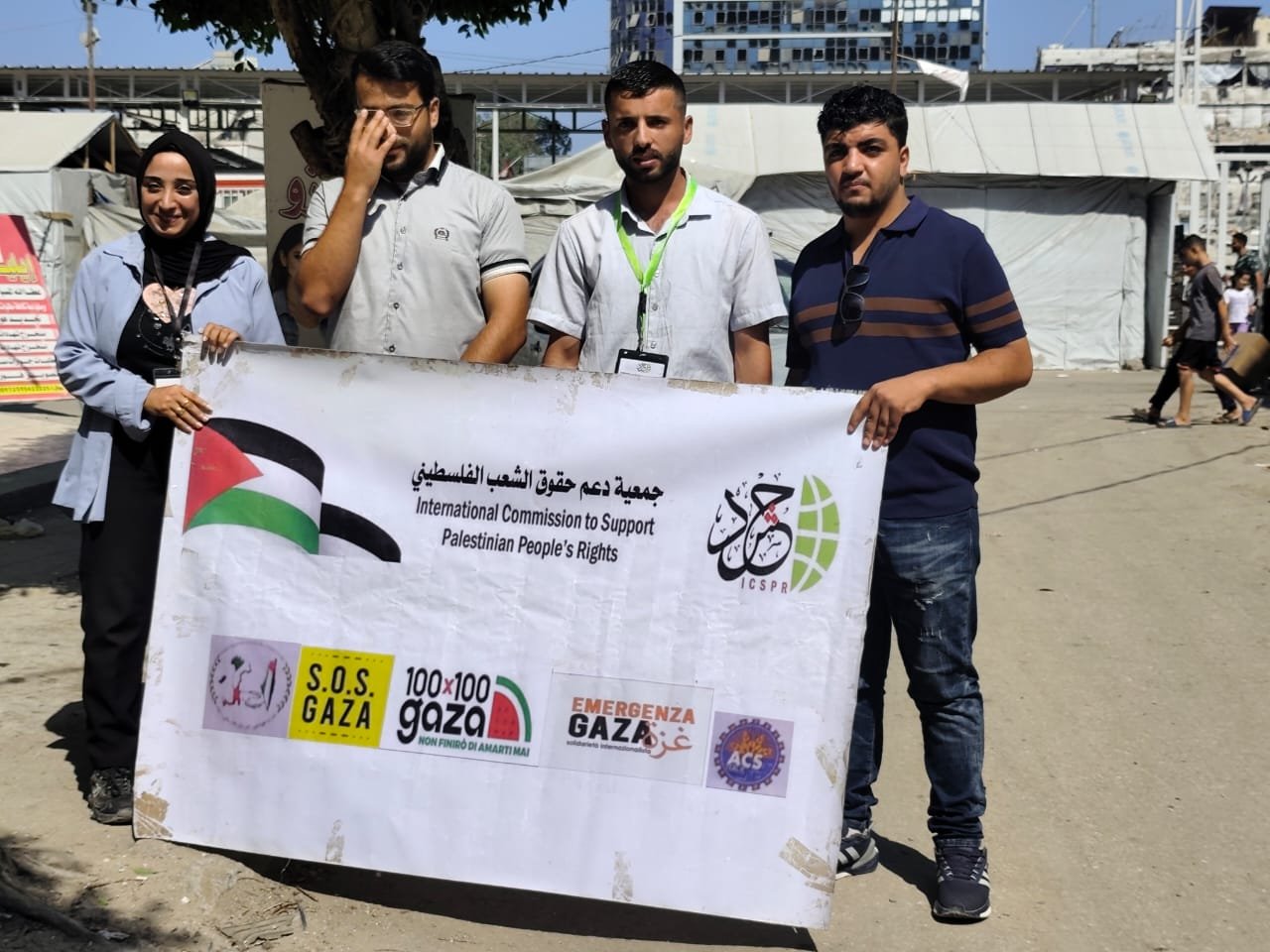
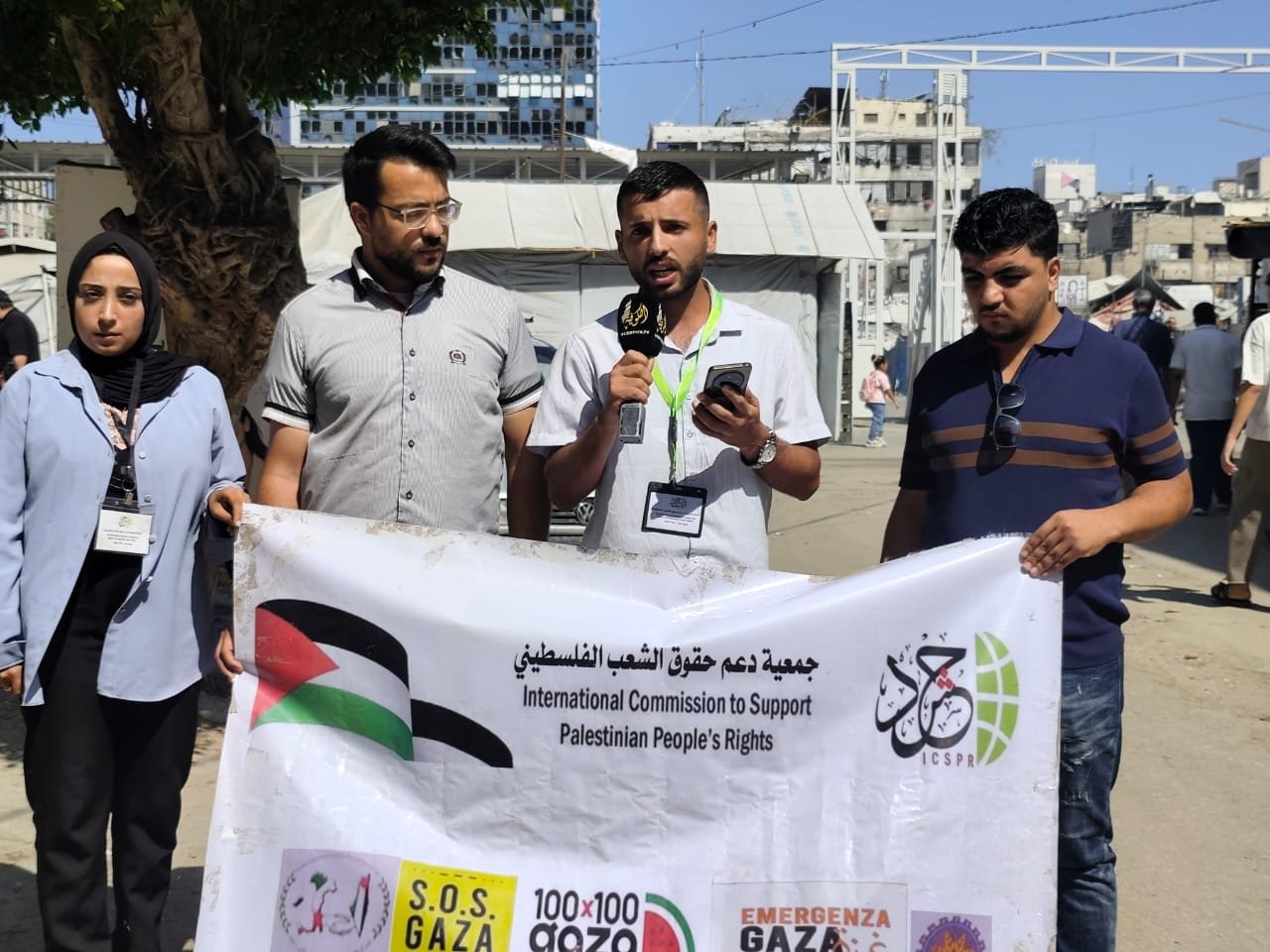
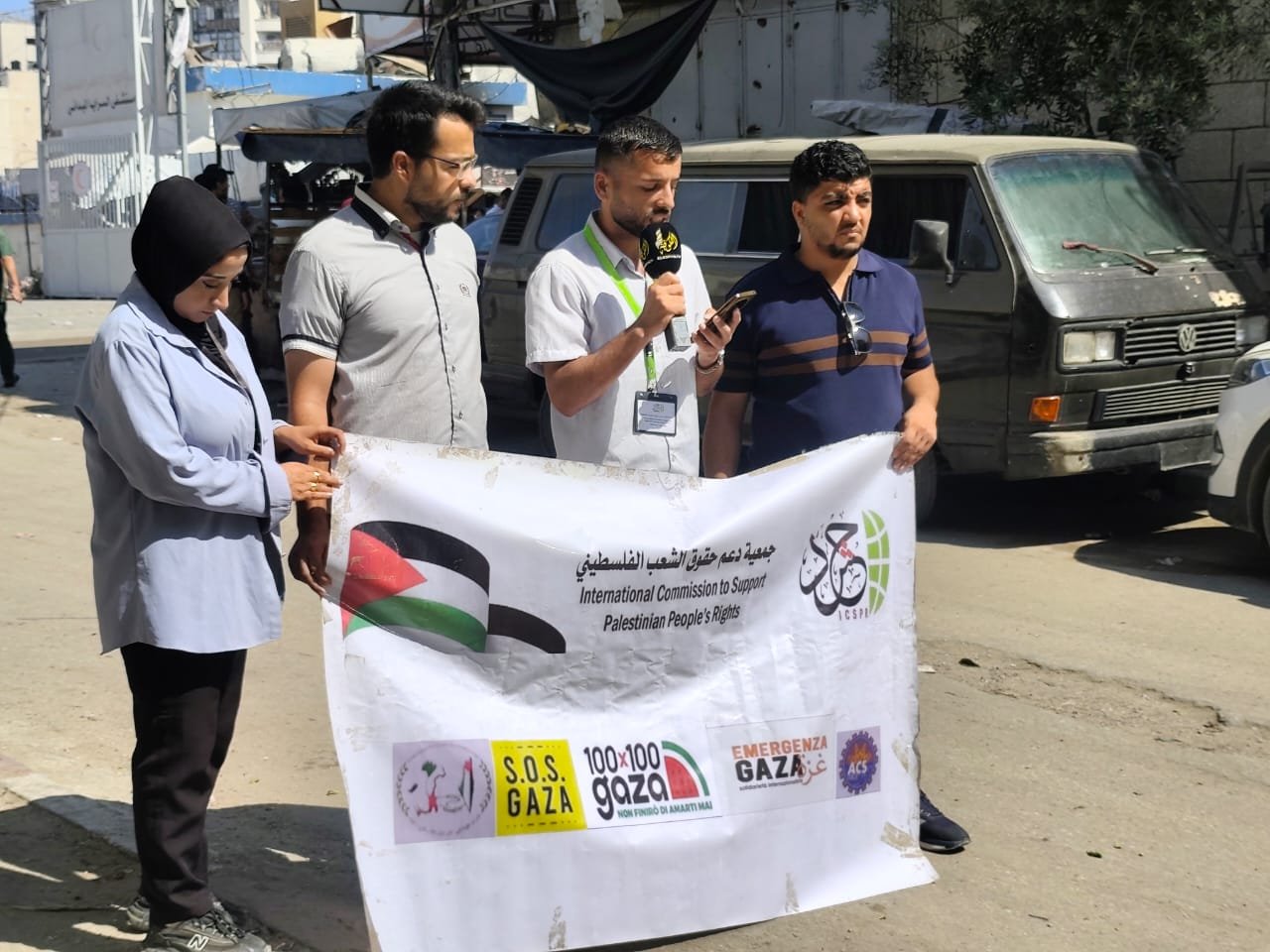
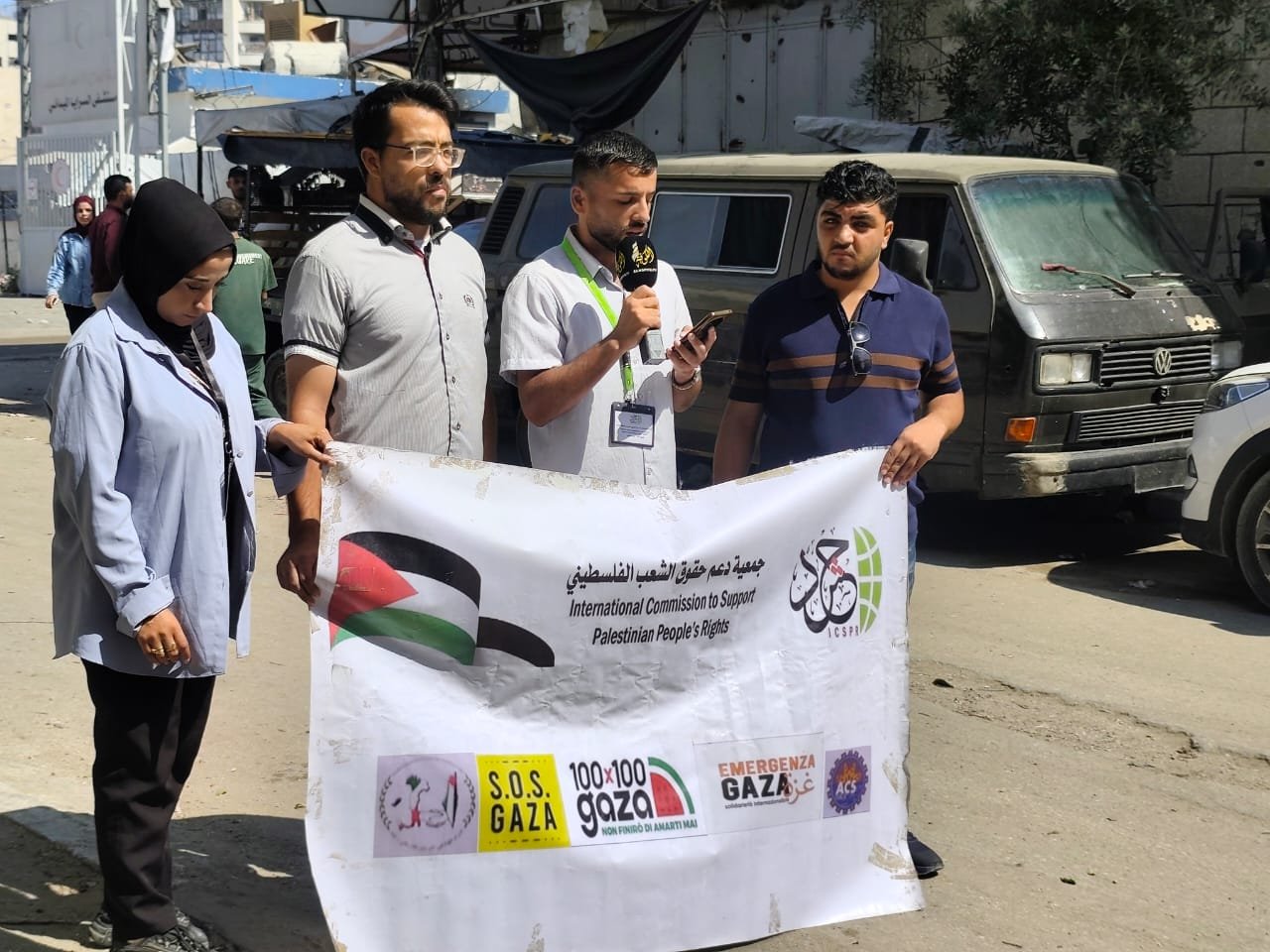
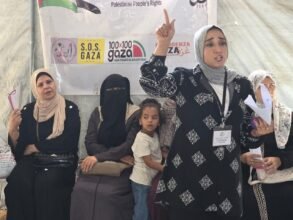
The International Commission to Support Palestinian Rights (ICSPR) held a press conference on Thursday in front of the Palestine Red Crescent Society Hospital at Al-Saraya Square in Gaza City, on the occasion of World Humanitarian Day. The conference was attended by representatives of the Commission and covered by local media outlets.
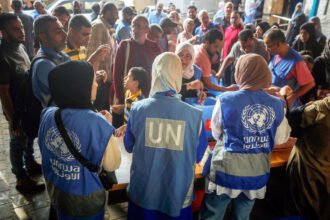
During the conference, the Commission affirmed that World Humanitarian Day, which honours those who provide assistance in the most difficult circumstances, comes this year while Gaza is witnessing direct targeting of humanitarian work itself—not merely a passing humanitarian crisis. It noted that local and national institutions, volunteer teams, and displaced persons are being forced to work under continuous bombardment in order to provide the minimum necessities of life.
The Commission revealed documented figures demonstrating the scale of the targeting of humanitarian personnel. More than 500 humanitarian and relief workers have been killed, including 203 UNRWA employees, 1,411 medical personnel, 113 civil-defence paramedics, and 260 journalists.
It explained that the United Nations documented the killing of 186 humanitarian workers in Gaza during the past year alone, representing more than half of all humanitarian workers killed worldwide. This makes Gaza the most dangerous place in the world for humanitarian and relief personnel, according to the United Nations classification.
The conference also addressed the scale of destruction affecting humanitarian-response capacity and infrastructure. Seventy-five percent of the relief-truck fleet in the Gaza Strip has been destroyed, while more than 20 relief-truck drivers have been killed and 15 others arrested, some of whom remain detained to this day.
The Commission noted that 90% of civilian infrastructure in Gaza has been destroyed, with losses exceeding USD 70 billion. This has been compounded by an acute water crisis resulting from the destruction of 725 water wells and 700,000 metres of sewage networks. As a result, the daily per-capita water share has fallen to less than three litres, and 90% of the population has been deprived of access to clean water.
The Commission considered these documented facts to constitute a clear violation of the Fourth Geneva Convention of 1949 and of the principles of distinction, proportionality, and precaution under international humanitarian law. It further affirmed that such acts amount to war crimes and crimes against humanity, including the use of starvation as a weapon of war.
At the conclusion of the conference, ICSPR called on the international community to open the crossings without restrictions or conditions; protect humanitarian convoys and humanitarian personnel; and launch an urgent, transparent international investigation under United Nations supervision into attacks against relief workers and medical, UN, and civil-society facilities.
The Commission also called for protecting the independence of humanitarian action from any politicisation, providing direct and urgent funding to UNRWA and Palestinian civil-society organisations, initiating cases before the International Criminal Court, and activating the principle of universal jurisdiction to prosecute those responsible for these violations.
ICSPR representatives stressed that humanitarian action is a non-negotiable legal and moral obligation. They affirmed that commemorating this day from the heart of Gaza’s suffering must be an occasion to renew that commitment through action, not words alone.
International Commission to Support Palestinian Rights (ICSPR)
End