
ICSPR Gaza under Fire, Hunger, and Destruction Settlement Devours the West Bank and Jerusalem; Prisoner Violations Worsen amid International Failure to Protect Palestinians

Date: 19 October 2026
Press Statement
ICSPR: Gaza under Fire, Hunger, and Destruction; Settlement Devours the West Bank and Jerusalem; Prisoner Violations Worsen amid International Failure to Protect Palestinians
The International Commission to Support Palestinian Rights (ICSPR) affirms that the continuation of Israeli crimes and violations in the Gaza Strip, the occupied West Bank, including occupied East Jerusalem, and Israeli prisons reveals a serious international failure to protect the Palestinian people and enforce international law. While killings and targeted attacks continue, human losses mount, and the catastrophe of hunger, destruction, displacement, and the collapse of basic services deepens in Gaza, settlement policies, land confiscation, forced displacement, and settler violence are accelerating in the West Bank and Jerusalem. At the same time, the situation of Palestinian prisoners and detainees is deteriorating, amid the absence of decisive international measures to end the grave crimes and violations committed against Palestinians and to ensure accountability for those responsible.
ICSPR stresses that what is taking place in the occupied Palestinian territory constitutes international crimes and a protracted catastrophe in which killing, starvation, destruction, genocide, ethnic cleansing, and forced displacement intersect with settlement expansion, annexation, and the alteration of the geographic and demographic reality. These practices threaten Palestinians’ lives, rights, and continued existence on their land.
The Commission also affirms that the continued loss of life despite the announcement of a ceasefire in the Gaza Strip on 11 October 2025, and the continuing restrictions on humanitarian aid and operations, demonstrate the need to move beyond statements of condemnation and concern to practical and effective international measures to protect Palestinians.
First: Gaza—Escalating War Crimes and the Absence of International Protection
Between 15 and 19 October 2026, 18 Palestinians were killed and approximately 100 others were injured as a result of Israeli occupation crimes. This brings the death toll since the ceasefire began on 11 October 2025 to 1,522 people killed and 5,421 injured, raising the total number of victims of the genocide in the Gaza Strip since 7 October 2023 to 74,480 killed and 175,539 injured.
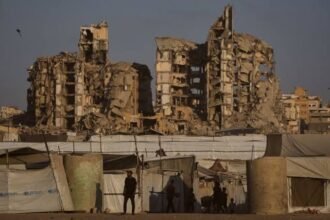
These figures show that the ceasefire has not ended the population’s suffering or provided the effective protection required. Attacks, field risks, and restrictions on movement and relief continue, alongside the destruction of homes, civilian facilities, infrastructure, health facilities, and educational institutions, and the expansion of displacement, poverty, unemployment, and loss of livelihoods.
ICSPR holds the Israeli occupation authorities responsible for the continuation of attacks and violations against civilians. It stresses that ceasefire arrangements have no real value unless accompanied by an actual halt to killings and targeting, effective protection for civilians, the lifting of restrictions on aid, an end to forced displacement, and the creation of conditions necessary for recovery and reconstruction.
Second: Hunger, Malnutrition, Collapse of Living Conditions, and Humanitarian Funding Crisis
ICSPR warns of the continued severe deterioration in humanitarian and living conditions in the Gaza Strip, caused by restrictions on the entry of aid and essential goods, declining food and medical supplies, the destruction of agricultural land and productive facilities, and the collapse of large parts of infrastructure and public services.
According to data announced by the Ministry of Health and documented by the Commission, hunger-related deaths have reached 466 since 2024, including 157 children and 189 older people. The number of children under five suffering from acute malnutrition reached 158,001 cases as of August 2026, including 28,716 severe cases, amid projections that approximately 74,200 children will require treatment by April 2027.
Data issued by the Ministry of Health and international organizations indicate that approximately 1.4 million people face food insecurity at crisis levels or worse. The under-five mortality rate rose from 13.6 to 33.4 per 1,000 live births between 2022 and 2025; child stunting reached 12.2%; and anaemia among pregnant women reached 61%. Approximately 4,000 pregnancy losses were recorded during the first half of 2026, and one in three pregnancies was classified as high-risk.
The crisis is worsening as food and medical assistance declines. Families are forced to reduce food portions or skip meals, while patients face increasing difficulty obtaining medicines and treatment. Displaced people face extremely harsh conditions as winter approaches, amid shortages of shelter, clothing, blankets, and safe heating, and damage to water, sanitation, and stormwater networks. The crisis of recovering the bodies of thousands of victims trapped under the rubble continues, alongside the inability to remove approximately 68 million tonnes of debris, creating health and environmental risks and obstructing the rehabilitation of residential areas and services.
In a development that deepens the humanitarian catastrophe, the World Food Programme announced the suspension of assistance to approximately half a million Palestinians in the Gaza Strip, depriving families of a primary source of food. This comes as restrictions and obstacles continue against UNRWA and other international and local humanitarian organizations, weakening their capacity to respond to growing needs under severe pressure.
These developments coincide with an acute funding crisis facing UNRWA and international and local humanitarian organizations, threatening further reductions in food, health, relief, and social-protection programmes and weakening field institutions’ ability to meet the needs of displaced people, poor families, children, and patients.
ICSPR affirms that the combination of funding shortages, restrictions on aid entry, and obstruction of the work of international and local humanitarian institutions multiplies risks to civilians’ lives and undermines the humanitarian response precisely when needs are intensifying.
The Commission stresses that food, medicine, clean water, and shelter are fundamental rights that must not be denied to the population. Starving civilians and obstructing life-saving humanitarian assistance are prohibited under international humanitarian law and constitute war crimes and collective punishment that contradict the measures ordered by the International Court of Justice, United Nations resolutions, and international law.
It calls on the international community and mediators to act to ensure sufficient and regular aid entry, lift restrictions and obstacles preventing assistance from reaching those entitled to it, rehabilitate health and humanitarian services, provide medicines and medical supplies, and prioritize children, women, older people, patients, and persons with disabilities. It also calls on donor states to provide emergency, sustainable, and adequate funding for UNRWA and international and local humanitarian organizations; maintain food, health, shelter, and protection programmes; refrain from using humanitarian funding as a tool of political pressure; and respond urgently to winter needs.
Third: The West Bank and Jerusalem—Settlement, Land Confiscation, and Settler Violence
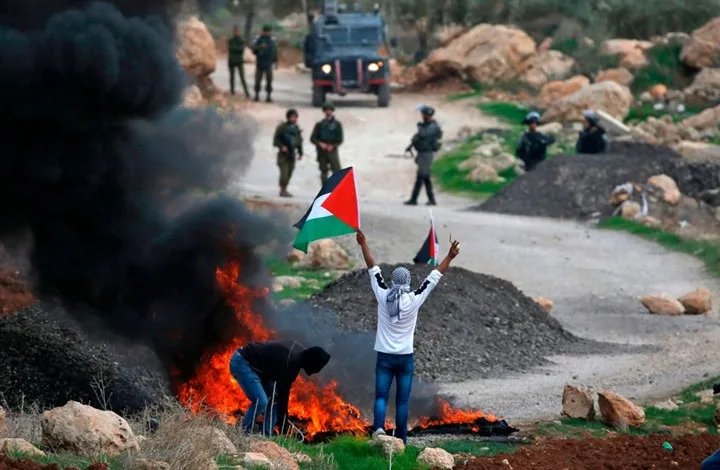
ICSPR follows with grave concern the escalation of attacks and crimes by occupation forces and settlers in the West Bank and occupied East Jerusalem, including targeting of land, property, farmers, and Palestinian communities. These practices increase the risk of forced displacement and undermine Palestinians’ ability to remain on their land.
According to reports by the Wall and Settlement Resistance Commission, 62,916 attacks were recorded between 7 October 2023 and the present, including 48,174 attributed to occupation forces and 14,742 attributed to settlers. Settler attacks killed 66 Palestinians, caused 1,182 fires, and targeted 147,111 trees, including 100,485 olive trees.
The reports also indicate the establishment of 211 settlement outposts, the seizure of approximately 64,000 dunums, the announcement of tenders for 15,760 settlement units, 415 settlement-plan procedures, 1,814 demolitions affecting 5,059 Palestinian structures, and the issuance of 2,133 demolition or stop-work orders.
In the context of ongoing attacks, near the town of Abu Falah on 16 October 2026, American journalist Heidi Levine was seriously injured in an assault. Other attacks near the town of Taybeh targeted diplomats and representatives of international and church institutions, reflecting the widening scope of attacks and their threat to residents, journalists, human rights defenders, and diplomatic personnel.
ICSPR also warns of the danger of new settlement plans, including the recently announced plans for 1,080 settlement units: 730 units in the “Pisgat Ze’ev” settlement and 350 units in the “Tzofar Midbar” settlement near Ma’ale Adumim. It also highlights the “E1” plan, which threatens to fragment the West Bank, undermine geographic and demographic continuity between Palestinian communities, and isolate Jerusalem from its Palestinian surroundings.
The Commission affirms that settlement construction and the transfer of the occupying state’s population into occupied Palestinian territory, land confiscation, property demolition, and forced displacement constitute war crimes and grave violations of international law, including the Fourth Geneva Convention and relevant United Nations resolutions. The escalation of settler violence, amid the absence of protection and accountability, reinforces a coercive environment that pushes Palestinians to leave their land and threatens their rights to housing, work, agriculture, and a safe and dignified life.
ICSPR renews its call on the United Nations and third states to act seriously to stop settlement expansion, colonial annexation plans, and land confiscation; provide protection for farmers, herders, Palestinian communities, journalists, and human rights defenders; protect the olive harvest, trees, and property; ensure investigations into attacks; hold those responsible accountable; and provide redress to victims.
Fourth: Palestinian Prisoners—Violations Threatening Life and Human Dignity
ICSPR expresses grave concern over the continued deterioration in the situation of Palestinian prisoners and detainees in Israeli prisons, amid ongoing denial of visits, solitary confinement, deprivation of health care, torture, and harsh living conditions. These practices endanger prisoners’ lives and physical and psychological safety.
In the latest violations, on 19 October 2026, female prisoners were subjected to a series of assaults, including the spraying of pepper gas inside a room housing 15 prisoners, leading to vomiting and other health symptoms. A pregnant prisoner was transferred to the prison clinic. The relevant office also reported the isolation of 17 female prisoners and the forcing of some to remove their braids, in violations affecting their privacy and human dignity.
More than 1,500 sick prisoners still require medical care. Gaza prisoners continue to be denied the rights guaranteed under the Third and Fourth Geneva Conventions, which require occupation authorities to ensure humane treatment for all prisoners and detainees, preserve their dignity, provide necessary health care without delay or discrimination, prohibit torture and cruel, inhuman, or degrading treatment, and allow international bodies—particularly the International Committee of the Red Cross—to access detention facilities, independently verify detention conditions, and monitor prisoners’ situation. Israel has refused to permit this for three years.
ICSPR: From Condemnation to Practical Protection and Accountability
The International Commission to Support Palestinian Rights stresses that the continuation of crimes and violations against the Palestinian people, alongside the absence of decisive international measures, obliges the international community to move from statements of condemnation and helplessness to practical and effective measures that protect civilians, stop attacks, ensure humanitarian access, end genocide, settlement, and displacement, and activate accountability for international crimes.
ICSPR stresses the need to support independent investigations and proceedings before the International Criminal Court, cooperate with competent international judicial and human-rights mechanisms, activate universal jurisdiction wherever its legal conditions are met, preserve evidence, protect witnesses and victims, guarantee victims’ rights to truth, justice, and reparation, and prevent those responsible for crimes from evading accountability.
Accordingly, ICSPR calls on the United Nations, states parties to the Geneva Conventions and the Convention on the Prevention and Punishment of the Crime of Genocide, and international, regional, and human rights institutions to take the following steps:
First: Stop Crimes and Ensure Effective Civilian Protection
Take urgent and effective international measures to halt killings, targeting, and Israeli attacks in the Gaza Strip and the occupied West Bank, including occupied East Jerusalem; ensure a permanent and respected ceasefire in Gaza; protect civilians, their property, and civilian infrastructure; prevent forced displacement; ensure the safety of journalists, humanitarian workers, and human rights defenders; and comply with international humanitarian law.
Second: Lift Restrictions on Aid, End Starvation, and Secure Humanitarian Funding
Ensure the opening of crossings and the safe, sufficient, and regular flow of humanitarian aid, including food, medicine, fuel, drinking water, medical and nutritional supplies; facilitate medical evacuation of the wounded and sick; provide shelter, clothing, blankets, and safe heating; repair water, sanitation, and stormwater networks; remove debris and hazardous waste; and expand food, medical, and cash assistance while ensuring it reaches those entitled to it without obstacles or discrimination.
ICSPR also calls on donor states to close the funding gap facing UNRWA and international and local humanitarian organizations, and to provide emergency and sustainable funding that maintains food, health, relief, and social-protection programmes—especially those relied upon by hundreds of thousands of Palestinians, including the poorest families, displaced people, children, and patients. It demands the removal of restrictions and obstacles impeding humanitarian organizations’ work, safe and sustained access to all areas of the Gaza Strip, an end to the use of humanitarian funding as a political pressure tool, and the preservation of UNRWA’s services and capacity to fulfil its humanitarian mandate.
Third: Stop Settlement, Land Confiscation, Displacement, and Settler Violence
Halt all settlement activity, expansion and annexation plans—including those threatening Jerusalem and its surroundings and the “E1” area—end land confiscation, home and structure demolitions, and forced displacement; take effective measures to protect Palestinians from settler attacks; investigate acts of violence and hold those responsible accountable; protect farmers, the olive harvest, trees, and property; and ensure justice and reparation for victims.
Fourth: Activate International Accountability and End Impunity
Support independent international investigations and proceedings before the International Criminal Court; cooperate with competent judicial mechanisms; activate universal jurisdiction wherever its legal conditions are met; preserve evidence and protect witnesses and victims; hold those responsible for international crimes accountable in accordance with the law and fair-trial guarantees; take effective measures to prevent continued violations and their repetition; and guarantee victims’ rights to truth, justice, and reparation.
Fifth: Protect Prisoners and Rebuild Gaza with Palestinian Leadership and Ownership
Ensure humane treatment of Palestinian prisoners and detainees; end arbitrary solitary confinement and mistreatment; provide urgent health care; and enable competent international bodies to visit prisons and independently verify detention conditions. In parallel, launch a recovery and reconstruction process based on residents’ needs and priorities, ensuring the participation of local communities and institutions in planning, implementation, and oversight. This process must reject any external guardianship that undermines the Palestinian people’s right to self-determination, and must link reconstruction to ending the occupation, achieving freedom and independence, and establishing an independent, sovereign Palestinian state with East Jerusalem as its capital.