
ICSPR, on the International Day of Solidarity with the Palestinian People, Calls for Sustained Global Mobilization and Political and Legal Pressure to End the Israeli Occupation and Ensure International Protection for Palestinians

Date: 29 November 2026
Press Release
ICSPR, on the International Day of Solidarity with the Palestinian People, Calls for Sustained Global Mobilization and Political and Legal Pressure to End the Israeli Occupation and Ensure International Protection for Palestinians
Every year on 29 November, the world marks the International Day of Solidarity with the Palestinian People, established by the United Nations General Assembly under Resolution 32/40 B, adopted on 2 December 1977. This occasion commemorates the anniversary of the adoption of General Assembly Resolution 181 (II) on 29 November 1947, which provided for the partition of Palestine into two states, Arab and Jewish, and placed Jerusalem under a special international regime. The establishment of this day aims to keep the Palestinian cause on the international community’s agenda and reaffirm the continuing responsibility of the United Nations and the international community towards the Palestinian people and their legitimate national rights, foremost among them the rights to self-determination, independence, and return.
On this occasion, the International Commission to Support Palestinian Rights (ICSPR) affirms that solidarity with Palestine is solidarity with humanity, human dignity, and the rights to life, freedom, justice, equality, and the rule of law. This day must not remain merely a symbolic occasion for renewing positions and issuing statements; rather, it must serve as an opportunity to expand popular, political, diplomatic, and legal action and transform international solidarity into practical commitments and measures that end the occupation, halt the crimes of genocide in Gaza and the grave Israeli violations across the occupied Palestinian territories, and guarantee the legitimate national rights of the Palestinian people.
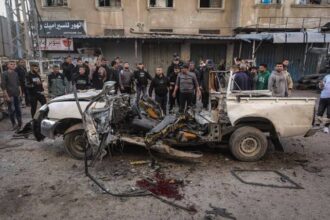
This year’s commemoration takes place amid the ongoing humanitarian and political catastrophe endured by the Palestinian people. The Gaza Strip continues to face the devastating consequences of the war of genocide, military aggression, siege, starvation, destruction, and forced displacement, alongside persistent violations despite the announcement of a ceasefire. Since the ceasefire took effect on 11 October 2025, the death toll has risen to 1,720 Palestinians killed and 6,201 injured, while 854 bodies have been recovered from beneath the rubble. The cumulative toll has exceeded 74,790 killed and 176,336 injured, in addition to more than 9,000 people who remain missing under the rubble. The tragedy is further compounded by the obstruction of humanitarian aid, the collapse of essential living conditions, widespread displacement, and the deterioration of shelter, healthcare, and education services, as well as the growing risks posed by winter, amid continued restrictions on the entry of aid, equipment, mobile homes, and essential supplies.
In the occupied West Bank and Jerusalem, settlement expansion, annexation, land confiscation, home demolitions, forced displacement, and organized attacks by settlers continue to escalate, alongside military incursions, arrests, extrajudicial killings, and ongoing violations against civilians. These actions form part of a systematic policy aimed at undermining the Palestinian presence and denying the Palestinian people their national rights.
Violations against Palestinian prisoners and detainees, whose number has reached 9,500 men and women, also persist. These include torture, ill-treatment, medical neglect, and the denial of fundamental rights, amid the absence of effective international monitoring and accountability. These policies also extend to Palestinian refugees through continued attempts to undermine their rights to return, compensation, and the restitution of their properties, as well as efforts to weaken the United Nations Relief and Works Agency for Palestine Refugees in the Near East (UNRWA), its mandate, and its services. Such actions directly undermine the rights of millions of refugees and the international community’s responsibility towards their cause.
ICSPR stresses that the continued Israeli occupation, crimes, and violations, amid the absence of effective international accountability, pose a serious threat to the international legal system and the credibility of international institutions. They entrench a culture of impunity and encourage the continuation and expansion of violations. The Commission believes that statements of condemnation and expressions of concern are no longer sufficient in the face of the scale of the crimes being committed. The international community must move beyond political positions towards binding and effective measures, with states assuming their legal and moral responsibilities to halt crimes, protect civilians, and end the occupation.
ICSPR emphasizes the need to implement international obligations and resolutions, including the advisory opinion of the International Court of Justice concerning the illegality of Israel’s continued presence in the occupied Palestinian territory, as well as cooperation with the International Criminal Court and respect for its proceedings and decisions. It further calls for the prosecution of those responsible for international crimes and for ensuring justice, reparations, and compensation for victims. The Commission also reaffirms that ending the occupation, enabling the Palestinian people to exercise their right to self-determination, establishing an independent Palestinian state on the borders of 4 June 1967, with Jerusalem as its capital, and guaranteeing the right of refugees to return in accordance with Resolution 194 are inalienable rights that cannot be compromised or postponed.
The Commission warns of the grave dangers posed by the continuation of Israeli occupation crimes, settler terrorism, and attempts to impose annexation and forced displacement or alter the geographical and demographic realities in the Gaza Strip, the West Bank, and Jerusalem in order to undermine the prospects for establishing a Palestinian state.
ICSPR further emphasizes that recovery and reconstruction in the Gaza Strip must be accompanied by international measures that provide protection for the Palestinian people, guarantee the ceasefire, ensure the entry of humanitarian aid, facilitate the deployment of a protection and stabilization force and the Gaza Administration Committee, secure international support for reconstruction, reopen border crossings, and lift the blockade. Such measures must safeguard Palestinian rights and prevent the reintroduction of colonial control and occupation in new forms.
Recognizing that genuine solidarity with the Palestinian people requires tangible changes in international policies, an end to crimes and violations, accountability for those responsible, and the termination of occupation and colonialism, the International Commission to Support Palestinian Rights (ICSPR) calls upon governments, parliaments, the United Nations and its agencies, human rights organizations, trade unions, universities, popular movements, and people of conscience worldwide to:
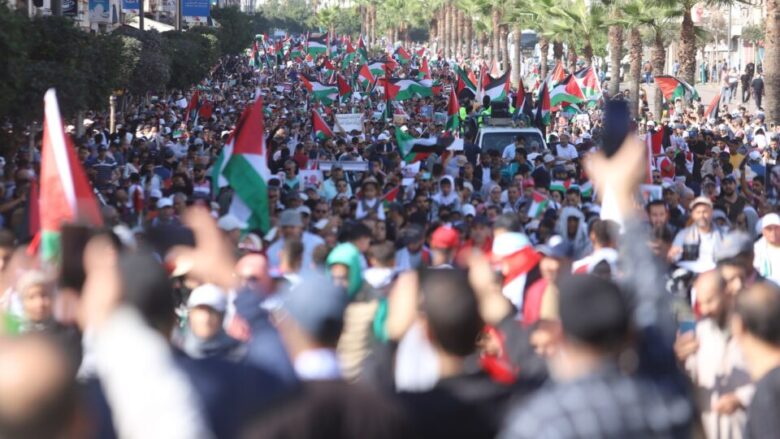
- Intensify global popular mobilization through marches, sit-ins, mass events, boycott campaigns, and solidarity initiatives; keep Palestine at the forefront of public discourse and media and political pressure; and transform popular solidarity into a sustained force capable of influencing governments and decision-makers.
- Exercise serious political and diplomatic pressure to halt aggression and violations, lift the blockade on the Gaza Strip, ensure the opening of border crossings and the unrestricted entry of humanitarian aid and essential supplies, protect civilians, and stop settlement expansion, annexation, and forced displacement.
- Take practical measures to end the occupation and implement international legitimacy resolutions and the advisory opinion of the International Court of Justice, expand recognition of the State of Palestine, and support the Palestinian people’s right to self-determination and independence.
- Activate international accountability and legal prosecution before international courts and apply the principle of universal jurisdiction; halt the transfer of weapons and equipment that may be used to commit violations; review relations and agreements that contribute to their continuation; and ensure reparations and justice for victims.
- Protect the rights of prisoners and refugees, ensure international monitoring of detention facilities, end torture and medical neglect, safeguard UNRWA’s mandate, resources, and services, and uphold the right of return and compensation.
- Reject the continuation of genocide, forced displacement, ethnic cleansing, colonial settlement, and racial discrimination, and support the unity of the Palestinian political system and the renewal of its legitimacy and institutions on democratic and participatory foundations that guarantee the free will of the Palestinian people.
ICSPR stresses that solidarity with Palestine is a shared political, legal, and moral responsibility. Defending the rights of the Palestinian people means defending the principles of justice, humanity, human dignity, and the rights of peoples, as well as the credibility of international law and universal human values.
There can be no just peace without ending the occupation, no justice without accountability and redress for victims, and no genuine solidarity without serious action to halt Israeli crimes and violations and guarantee the Palestinian people’s rights to freedom, independence, return, and self-determination.
The International Commission to Support Palestinian Rights (ICSPR)