
ICSPR Warns of the Consequences of Reducing UNRWA Services and Any Arrangements Affecting Its UN Mandate and Palestinian Refugees’ Rights

Date: 20 October 2026
Position Statement
ICSPR Warns of the Consequences of Reducing UNRWA Services and Any Arrangements Affecting Its UN Mandate and Palestinian Refugees’ Rights
The International Commission to Support Palestinian Rights (ICSPR) follows with grave concern developments concerning the United Nations Relief and Works Agency for Palestine Refugees in the Near East (UNRWA), amid the worsening of its financial and operational crisis, continued austerity measures and reductions in some of its services, and questions raised about the future of its role in the Gaza Strip and possible restructuring of responsibilities related to providing services to Palestinian refugees. These concerns also include the future of UNRWA staff and their employment rights.
These concerns take on added significance in light of statements by UNRWA’s Acting Commissioner-General, Christian Saunders, in June 2026, in which he warned of the danger posed by the Agency’s financial crisis. He explained that approximately 1.7 million people in the Gaza Strip depend on UNRWA services, and that the Agency’s cash shortfall for 2026 amounts to approximately $100 million. He also indicated that UNRWA had been forced to reduce service delivery hours by 20%, stressing that these measures cannot continue over the long term and that UNRWA’s capacities and service networks remain essential to the humanitarian response in Gaza.
ICSPR considers that these developments go beyond UNRWA’s financial and operational crisis and affect the continuity of essential services, the rights of Palestinian refugees, and the future of the Agency’s UN mandate. In this context, it stresses the need to clarify the nature of any future arrangements concerning service management or the transfer of some responsibilities, and to ensure that they do not become a means of reducing refugees’ rights or creating a humanitarian or institutional vacuum.
ICSPR: UNRWA’s Financial Crisis Does Not Justify Undermining Its Mandate or Reducing Its Responsibilities toward Palestinian Refugees
UNRWA was established under UN General Assembly Resolution 302 of 8 December 1949 to provide relief and works programmes for Palestine refugees. Its responsibilities have since developed to include essential services in education, health, relief, and social services across its areas of operation.
On 5 December 2025, the UN General Assembly renewed the Agency’s mandate for three years, reaffirming the continuation of its UN mandate and the importance of continuing to provide services to Palestine refugees.
Despite the renewal of the Agency’s mandate, its financial crisis has affected its operational capacity. In June 2026, the Acting Commissioner-General announced a 20% reduction in service-delivery hours, accompanied by corresponding reductions in the salaries of most Palestinian staff. ICSPR stresses that addressing this situation requires adequate and sustainable funding, not treating resource shortages as a justification for reducing services or weakening the Agency’s institutional role.
It further stresses the need to distinguish between administrative and operational reforms that UNRWA may adopt to address the crisis, and any arrangements that could result in transferring its responsibilities or undermining its UN mandate.
ICSPR: Any New Arrangements for Managing Services in Gaza Must Not Create a Humanitarian Vacuum or Undermine Refugees’ Rights
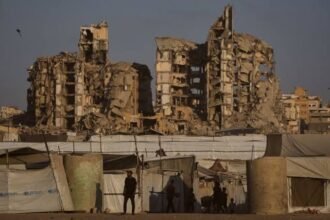
Concerns about UNRWA’s future in Gaza arise amid expanding humanitarian needs in health, education, shelter, food, and social protection, and increasing pressure on local institutions and their capacity to meet residents’ needs.
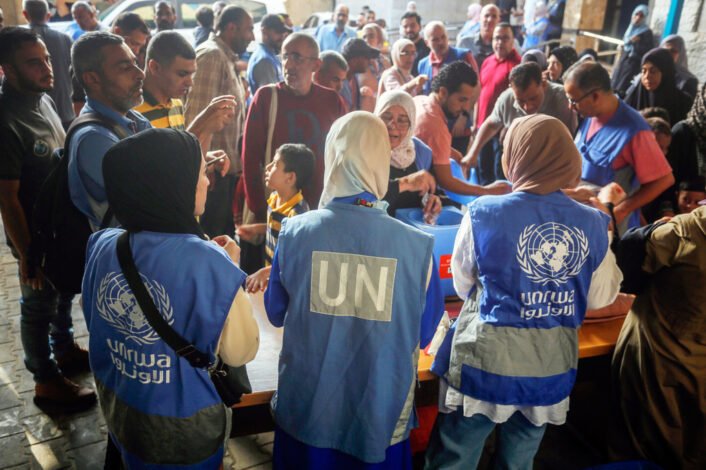
The Acting Commissioner-General affirmed that UNRWA continues to play a major role in providing essential services in the Gaza Strip, including primary health care, temporary education, water, public health, and psychosocial support. He also stressed that its human resources, operational networks, and the trust of local communities in it are important elements in recovery and institutional stability efforts.
ICSPR warns that reducing the Agency’s services or redistributing its responsibilities without a realistic assessment of the capacities of alternative providers, and without providing the necessary funding and resources, could lead to service interruptions or declining quality, wider gaps in the humanitarian response, and increased burdens on Palestinian refugees who rely on these services to meet their basic needs.
ICSPR affirms that any future arrangements for managing services or transferring certain operational responsibilities to Palestinian institutions must be based on a transparent and gradual plan. Such a plan must ensure the readiness and financial and institutional capacity of the entities concerned, maintain service continuity and quality, and define responsibilities, funding sources, and oversight and accountability mechanisms, in order to prevent a humanitarian or institutional vacuum or the imposition of burdens on local institutions beyond their capacity
ICSPR: Undermining UNRWA’s Mandate Raises Legal and Political Concerns about the Future of the Palestinian Refugee Question
ICSPR affirms that UNRWA’s mandate is based on UN General Assembly resolutions and that any substantive amendment to it falls within the competence of the relevant UN bodies. Accordingly, changes in service-delivery methods or operational arrangements do not, in themselves, mean ending or transferring the UN mandate. However, they require verification of their nature, effects, and consistency with the Agency’s mandate.
In light of references to an organized transfer of responsibilities to the Palestinian Authority, ICSPR stresses the need to clarify the scope of any potential transfer, its timing, its safeguards, and its relationship to UNRWA’s existing UN mandate, in a manner that ensures service continuity and does not affect Palestinian refugees’ rights.
ICSPR warns that weakening UNRWA or reducing its capacity to carry out its functions without clear international safeguards could have far-reaching political and humanitarian consequences and weaken the international community’s ability to meet its obligations toward Palestine refugees. It also affirms that restructuring services must not become a substitute for addressing the refugee question, or be used to impose a new reality that undermines refugees’ rights or bypasses relevant international frameworks and resolutions.
ICSPR: Protecting UNRWA Staff Rights Is Essential to Service Continuity and Staff Dignity
UNRWA’s human resources and accumulated expertise are fundamental to its ability to provide services and implement its mandate. Therefore, financial and operational measures affecting staff cannot be treated as administrative measures separate from their humanitarian, social, and professional consequences.
ICSPR stresses the need to respect staff members’ legal and contractual rights, guarantee their entitlements and job security, and adopt clear, fair, and transparent procedures when making decisions affecting their professional status. It also calls for involving staff representatives and trade unions in consultations on the future of jobs and restructuring.
The Commission stresses that addressing the financial crisis must not come at the expense of staff, and that their professional stability is an essential condition for maintaining the Agency’s efficiency and service continuity.
ICSPR’s Calls
Based on the above, the International Commission to Support Palestinian Rights affirms the responsibility of the United Nations and donor states to provide adequate and sustainable funding that enables UNRWA to continue implementing its mandate, maintain service continuity, and protect the rights of its staff. It also stresses the need to provide a safe operating environment that allows the Agency to reach beneficiaries, and to fund any future arrangements related to developing services or organizing responsibilities, in order to prevent a humanitarian or institutional vacuum.
Accordingly, ICSPR calls for the following:
First: The United Nations and UNRWA’s Commissioner-General should issue official clarifications regarding the Agency’s future work in the Gaza Strip; the nature of any potential arrangements for managing services or transferring certain operational responsibilities; and their scope, timing, and safeguards, in a manner that preserves the UN mandate and Palestinian refugees’ rights.
Second: The UN General Assembly and donor states should provide sustainable and adequate funding for UNRWA, ensure its capacity to continue implementing its mandate, and not allow the financial shortfall to become a pretext for reducing essential services or weakening the Agency’s role.
Third: UNRWA’s management should ensure the continuity of health, education, relief, and social services; clarify the effects of austerity measures and operational changes; respect staff members’ legal and contractual rights; and involve their representatives in decisions affecting their professional future.
Fourth: Entities responsible for administering the Gaza Strip and humanitarian institutions should ensure that no service or institutional vacuum occurs; avoid assigning responsibilities to local institutions without providing the necessary resources and capacities; and define funding, implementation, oversight, and accountability mechanisms for any new arrangements.
Fifth: The Arab Staff Union of UNRWA, national and community forces, and human rights institutions should strengthen coordination and consultation, develop a common position and a trade-union, rights-based, and advocacy plan of action to protect staff rights, preserve the Agency’s role, and defend Palestinian refugees’ rights.
Sixth: Representatives of Palestine refugees, UNRWA staff, and human rights institutions should be included in consultations on the future of services and the organization of responsibilities. Information on proposed arrangements and their expected effects should be made available to promote transparency and accountability.
End of statement.