
ICSPR Escalation of Israeli War Crimes in the Gaza Strip and the West Bank Requires Accountability for the Occupying Power and the Imposition of Sanctions

Date: 26 October 2026
Press Statement
ICSPR: Escalation of Israeli War Crimes in the Gaza Strip and the West Bank Requires Accountability for the Occupying Power and the Imposition of Sanctions
The International Commission to Support Palestinian Rights (ICSPR) strongly condemns the ongoing Israeli occupation crimes in the Gaza Strip and the occupied West Bank, including the killing of civilians, among them children and women; the bombing of displaced persons’ tents and the burning of their shelters; attacks on educational institutions and civilian facilities; the destruction of homes; and the imposition of siege, starvation, and forcible displacement, alongside escalating raids, closures, and settler attacks.
ICSPR stresses that these crimes and practices constitute war crimes and grave violations of international humanitarian law and international human rights law. It holds the Israeli occupation authorities responsible and calls for an immediate end to these violations, the protection of civilians, and an end to impunity.
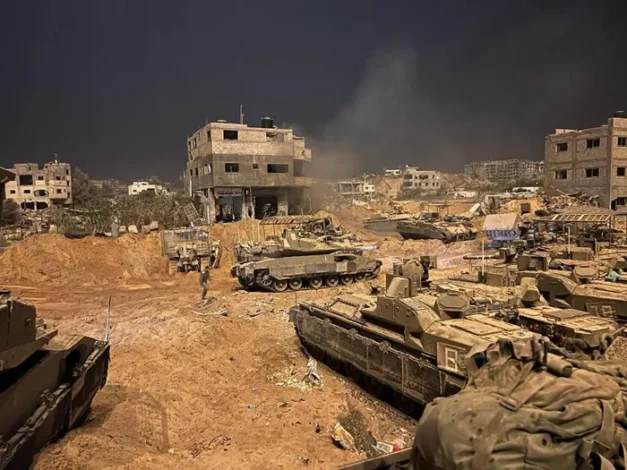
ICSPR emphasizes that Israeli violations in the Gaza Strip continue to escalate, as occupation forces carry out daily bombardments, shootings, and attacks targeting civilians and displaced people. In the latest incidents documented by ICSPR, three Palestinians, including a young girl, were killed by shelling and gunfire targeting the Al-Iqlimi area in Al-Mawasi, Khan Younis, which shelters large numbers of displaced people. Another Palestinian was killed and several others injured after an Israeli drone targeted a group of civilians near the Pension and Insurance Authority in the Al-Rimal neighborhood, west of Gaza City.
According to data from the Palestinian Ministry of Health, 11 Palestinians were killed and 35 injured in the preceding 24 hours, bringing the total toll of the Israeli assault since 7 October 2023 to 74,555 fatalities and 175,727 injuries. These figures include 1,559 fatalities and 5,608 injuries since the announcement of the ceasefire, while 845 bodies have been recovered from the rubble. ICSPR stresses that these figures reflect the continuing humanitarian catastrophe in Gaza and call for urgent international action to protect civilians, enable medical and humanitarian teams to carry out their duties, and ensure that the population receives essential supplies without obstruction.
ICSPR strongly condemns the burning of a camp for displaced people near the Shuja’iyya neighborhood on the evening of 25 October 2026, following an attack by drones that set shelters ablaze and affected displaced families who had already lost their homes and basic necessities as a result of the ongoing assault. ICSPR also calls for full disclosure of the circumstances surrounding the detention of Ibrahim Amin Hassan Abu Gharaba, aged 33, whose family received his body approximately two weeks after his detention. It demands an independent and transparent investigation into the circumstances of his detention and death, and accountability for those responsible for any violations established by the investigation.
ICSPR condemns attacks on educational institutions, staff, and students in the Gaza Strip, particularly the two attacks on the Islamic University in Gaza City. The first attack injured more than five students, some of them seriously. The second attack, near the university’s western gate on 25 October, resulted in the deaths of staff members Sami Baroud, Ashraf Dahlan, and Shadi Abu Ataya, and injured others, according to published reports. ICSPR stresses that attacks on educational institutions and the endangerment of students and staff undermine the rights to education and life, threaten the remaining educational infrastructure in the Gaza Strip, and require investigation and accountability, alongside guarantees for the protection of educational and civilian institutions.
ICSPR condemns the killing and targeting of Palestinian children, students, and civilians. The Ministry of Education and Higher Education announced that ten students and one teacher were killed between 18 and 24 October 2026 as a result of gunfire and shelling in residential areas of the Gaza Strip. The students were: Misk Hazem Al-Dalou, aged 6; Baraa Mohammad Marouf, aged 14; Abdul Rahman Awad, aged 10; Majd Mohammad Hassan, aged 15; Walid Mohammad Shakshak, aged 14; Tamer Shadi Soboh, aged 14; Mohammad Riyad Abu Hammad, aged 14; Rafif Raed Labad, aged 16; Mohammad Hossam Shaheen, aged 12; and Fatima Hisham Al-Bayouk, aged 8. Teacher Ahmad Zuhair Abu Odeh was also killed during the same period.
ICSPR notes that Fatima Hisham Al-Bayouk died from injuries sustained after being shot by Israeli forces east of Deir al-Balah. She had been the sole survivor of her family, which was killed in the bombing of their home in late 2023. ICSPR also condemns the killing of other civilians, including Hamdan Salman Abu Amra, Fawzi Salem Al-Sawarka, brothers Alaa Ahmad Abu Zayed and Nabil Ahmad Abu Zayed, Hossam Fakhri Mohammad Al-Zamli, Jouri Islam Al-Soufi, Tamer Abu Suneima, Anas Akram Al-Hamaydeh, and others. It calls for investigations into these killings and attacks, guarantees of victims’ and their families’ rights to truth, justice, and reparation, and effective measures to protect children, students, and educational staff.
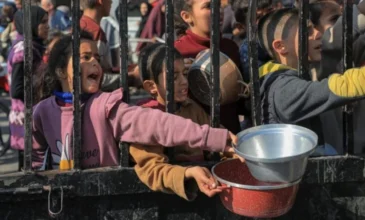
ICSPR warns of the worsening humanitarian catastrophe facing women, girls, children, and displaced people in the Gaza Strip. Available data indicate that approximately one million women and girls have been displaced, more than 150 evacuation orders have been issued, and around 702,000 women and girls face acute food insecurity. The data also indicate that 86,290 households are headed by women, while 28,224 women have lost their husbands and are responsible for caring for 71,846 orphaned children. The total number of widows has reached 64,413. Approximately 4,000 miscarriages were also recorded during the first half of 2026.
ICSPR stresses that shortages of food, flour, water, medicine, fuel, and shelter materials, together with the disruption of health and humanitarian services, threaten lives and exacerbate hunger, disease, and social breakdown, with particularly severe consequences for women, children, and the most vulnerable groups. It calls for the opening of crossings, the regular, adequate, and unrestricted flow of essential aid, goods, and fuel, the provision of healthcare, including reproductive health services, and the expansion of psychosocial support, prioritizing those most severely affected and in greatest need.
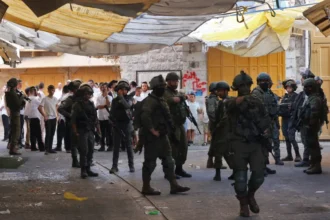
ICSPR strongly condemns the escalation of military operations, closures, raids, and displacement policies in the occupied West Bank, particularly in Hebron Governorate, where a military operation has continued for a fourth consecutive day. The operation has displaced hundreds of families, affecting more than 2,300 Palestinians, and led to the closure of 128 gates and 120 military checkpoints. More than 500 homes have reportedly been raided and searched, homes have been evacuated and converted into military positions, and a residential building containing three apartments has been demolished in the Farsh al-Hawa area. Road closures have also disrupted residents’ movement.
ICSPR stresses that these practices restrict freedom of movement, access to essential services, and livelihoods, directly disrupting daily life and increasing the risk of forcible displacement. It calls for an end to raids, closures, demolitions, and forced evictions; guarantees for the return of displaced people to their homes; protection for residents and their property; and respect for the legal obligations governing the protection of civilians in occupied territory.
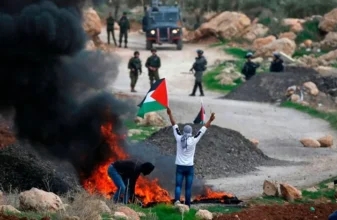
ICSPR condemns the escalating attacks by occupation forces and settlers against Palestinian farmers, particularly during the olive harvest season, which provides a vital livelihood for thousands of Palestinian families and serves as a cornerstone of their economic and social resilience. According to figures released by the Wall and Settlement Resistance Commission, 409 attacks targeting farmers, olive trees, agricultural land, and equipment were documented between 1 and 21 October 2026. Of these, 317 were carried out by settlers and 92 by occupation forces. The Commission also reported that the total number of attacks related to the olive harvest season had risen to 482 from the beginning of the season through 25 October.
ICSPR stresses that these attacks, including preventing access to land, assaulting farmers, stealing crops, and damaging trees and equipment, threaten Palestinian livelihoods, restrict farmers’ ability to cultivate their land, and increase the risk of forcible displacement and property seizure. It calls for protection for farmers, safe and continuous access to their land, an end to these attacks, and accountability for those responsible.
ICSPR warns against exploiting Palestinian lives and suffering for Israeli political and electoral calculations, as well as statements threatening to dismantle the Palestinian Authority or impose new realities by force. It stresses that killing, starvation, displacement, settlement expansion, and annexation cannot be justified on political or security grounds, and that Palestinian rights and civilian protection must never be subjected to political bargaining or electoral calculations.
ICSPR calls on the international community, the United Nations, the Security Council, mediators, and parties guaranteeing the ceasefire to exert effective pressure to stop these crimes, reject forcible displacement, annexation, and imposed guardianship over the Palestinian people, and support their inalienable right to self-determination, freedom, independence, and an end to the occupation.
ICSPR commends the struggle of port workers and trade unions standing in solidarity with the Palestinian people, particularly the Italian grassroots trade union USB and the Autonomous Port Workers’ Collective (CALP), alongside trade unions in Italy, Spain, Greece, France, Morocco, Türkiye, and elsewhere. ICSPR appreciates their opposition to the use of ports, transport networks, and logistics services to move weapons that may be used to commit grave violations of international law.
In recognition of the international labor action scheduled for 30 October 2026, ICSPR calls on trade unions and workers in ports, transport, and logistics to expand peaceful and lawful actions, strengthen international coordination, work to prevent the shipment of weapons that contribute to ongoing violations, and pressure governments to halt arms supplies to the occupation and fulfill their legal obligations. Such solidarity efforts can play an important role in protecting the rights of the Palestinian people.
ICSPR affirms that the continuation and escalation of Israeli occupation crimes and grave violations against the Palestinian people expose the dangerous consequences of ongoing impunity and demand serious international action that goes beyond statements of condemnation to include effective legal and practical deterrent measures. While condemning international inaction and the failure to adopt effective measures to halt these crimes, ICSPR stresses that protecting civilians and respecting international humanitarian law and international human rights law are binding legal obligations that permit neither selectivity nor exception.
Warning of the consequences of continued aggression, siege, starvation, forcible displacement, settlement expansion, and settler crimes, ICSPR emphasizes that effective protection for the Palestinian people requires genuine international political will and binding measures to stop these crimes, halt arms supplies to the occupation, ensure the delivery of humanitarian aid, and provide international protection for Palestinians.
Accordingly, the International Commission to Support Palestinian Rights (ICSPR) calls for the following:
First: A comprehensive and permanent ceasefire in the Gaza Strip; an end to all crimes, attacks, and violations against civilians; an end to forcible displacement; and a halt to attacks on displaced people and their shelters, as well as educational and healthcare institutions. Guarantees must be provided for the protection of civilians, particularly children, women, and workers in educational, humanitarian, and healthcare institutions in the Gaza Strip and the occupied West Bank.
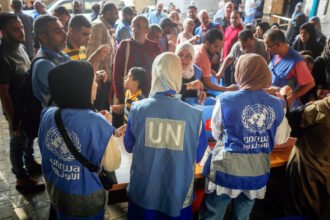
Second: The opening of crossings and the adequate, regular flow of humanitarian assistance into the Gaza Strip, including food, water, fuel, medicine, medical supplies, temporary housing units, tents, shelter materials, spare parts, and oils required to operate essential facilities. Restrictions obstructing humanitarian organizations must be lifted, aid must reach those in need, and the population’s urgent needs must be met in full.
Third: An end to raids and attacks in the occupied West Bank and to collective restrictions on Palestinian movement. Settler attacks against residents, their property, and agricultural land must cease. Farmers’ right to access their land safely and harvest their crops must be guaranteed, and necessary measures must be taken to protect residents from forcible displacement and property seizure.
Fourth: The activation of international accountability mechanisms and the conduct of independent and transparent investigations into killings, targeted attacks, and violations against civilians, including deaths in detention and the case of Ibrahim Amin Hassan Abu Gharaba. Those responsible must be held accountable under international law, impunity must be prevented, and cooperation with the competent international judicial mechanisms must be ensured.
Fifth: The imposition of sanctions on the occupying power and an end to the transfer of weapons and military equipment that could be used to commit violations of international law. Military and security cooperation that may contribute to such violations must be reviewed, and practical measures must be taken to prevent complicity in these crimes. The role of the United Nations, states, human rights organizations, trade unions, and labor federations must be strengthened in applying pressure to protect civilians, uphold international law, and achieve justice for the Palestinian people.
End of Statement