
ICSPR Warns of Famine Returning to Gaza amid Flour Shortages, Reduced Aid, and Disrupted Entry of Commercial Goods

Date: 23 October 2026
Press Statement
ICSPR Warns of Famine Returning to Gaza amid Flour Shortages, Reduced Aid, and Disrupted Entry of Commercial Goods
The International Commission to Support Palestinian Rights (ICSPR) follows with grave concern the rapidly deteriorating food and humanitarian situation in the Gaza Strip. This deterioration is driven by Israeli restrictions on the entry of goods and essential supplies, disruption of commercial shipments over recent days, reduced food assistance due to funding shortages, rising prices, and declining purchasing power. The situation has reached the point of flour stock depletion, with the Bakery Owners’ Association warning that the seven remaining bakeries may stop operating within 48 hours unless new quantities of flour enter the Strip.
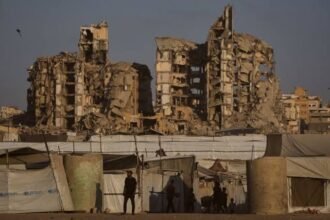
These developments come as more than two million Palestinians face the consequences of war, destruction, displacement, and loss of income, amid widespread reliance on aid and local markets to secure basic needs. ICSPR warns that the combination of flour shortages, disrupted and obstructed access to humanitarian assistance, and rising prices threatens to expand hunger and food deprivation and increase the risks of malnutrition, particularly among children, patients, pregnant and breastfeeding women, older people, persons with disabilities, displaced people, and the poorest families.ltjwy-kslH-khll-Hrb-lbd-ljm-y-l-qT-Gz.pdf
ICSPR is following the consequences of the Israeli occupying state’s halt to the entry of commercial shipments on 15 October 2026, under the pretext that the government authorities in Gaza imposed fees on Gaza-based traders.
This has caused shortages of goods, raised prices, and limited traders’ ability to provide essential needs, in addition to reducing the number of humanitarian aid trucks. These developments are reviving the spectre of catastrophic famine in Gaza.
The Bakery Owners’ Association in Gaza announced that the shortfall in flour stocks has reached 100%, with only seven bakeries still operating out of 20. It warned that the remaining seven bakeries may cease operating within 48 hours unless new quantities of flour enter the Strip.
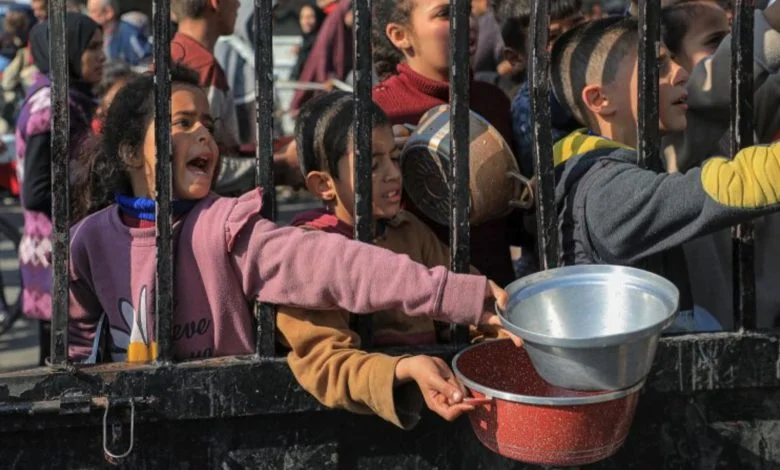
ICSPR warns that the closure of bakeries would threaten a primary source of daily food, especially for displaced families living in tents and shelter centres who lack fuel and cooking facilities. It would also increase pressure on markets and raise bread prices, deepening the suffering of families with no or limited income.
This requires immediate intervention to secure the entry of commercial goods, humanitarian aid, fuel, and flour, in order to maintain bread production and distribution and prevent its interruption to the population.
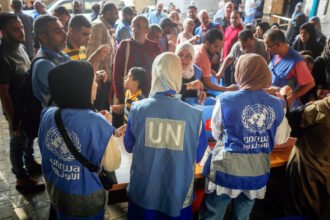
It is noteworthy that, on 19 October 2026, the World Food Programme announced that it had been forced to reduce its food assistance in Gaza by approximately one third due to funding shortages. It reduced the number of beneficiaries from approximately 1.6 million to 1.1 million people, depriving approximately 500,000 people of monthly assistance. It also cut food rations by half and reduced daily hot meals from 250,000 to 150,000 meals.
This threatens approximately 1.4 million people who will face severe food insecurity at crisis levels or worse, while approximately 200,000 people live in food-emergency conditions requiring urgent assistance. ICSPR stresses that reducing assistance while obstructing the entry of goods and prices rise multiplies risks for families that have lost their income and savings.
The Commission calls on donor states and international institutions to close the funding gap facing UNRWA and the World Food Programme, in order to maintain humanitarian and cash assistance and support, and to avoid making civilians bear the consequences of funding shortages.
ICSPR affirms that the loss of income sources among most of Gaza’s population, the expansion of displacement, and damage to livelihoods, combined with rising prices and shortages of supplies, have made food inaccessible to thousands of families. This is pushing families to reduce their meals and food needs, threatening the health of children, patients, pregnant and breastfeeding women, older people, and the most vulnerable groups.
At the same time, ICSPR calls on the government authorities in Gaza to intensify market oversight, confront monopolies, price manipulation, and exploitation, and ensure price controls on essential goods.
ICSPR affirms that starving civilians constitutes a crime against humanity and a war crime prohibited under international humanitarian law. Protecting the population and ensuring access to humanitarian relief are legal obligations that must not be evaded under any circumstances. The continuation of Israeli restrictions on the entry of food, medicine, and fuel, alongside reduced assistance and the closure of bakeries, requires urgent and effective international action to support the humanitarian response and prevent the occupation from using starvation as a weapon against civilians in Gaza.
Accordingly, the International Commission to Support Palestinian Rights (ICSPR) demands the following:
-
A comprehensive and permanent ceasefire in the Gaza Strip, and ensuring the regular and sufficient flow of humanitarian aid, commercial goods, and essential supplies, including food, flour, fuel, and medicine, while lifting restrictions that obstruct their entry.
-
Urgent intervention to save the bakeries, secure flour, fuel, and production and distribution supplies, and ensure continued bread production and access for the population, particularly the most affected groups and areas.
-
Restore humanitarian funding and compensate for the shortfall in assistance, and ensure the continuation of food distribution, hot-meal, and cash-assistance programmes according to actual needs.
-
Protect civilians from starvation and ensure accountability, through compliance with international humanitarian law, facilitating unimpeded access to relief, investigating violations, and holding those responsible accountable before the competent bodies.
-
Ensure the availability of essential goods at reasonable prices, address disputes and procedures that obstruct the entry of goods or raise their cost, strengthen market oversight, and combat monopolies and exploitation.
-
Strengthen humanitarian support and coordination and ensure equitable distribution of assistance, with priority given to children, patients, pregnant and breastfeeding women, older people, persons with disabilities, displaced people, and families that have lost their sources of income