
On the Occasion of the International Day to End Impunity for Crimes Against Journalists ICSPR Calls for Accountability for Israeli Occupation Crimes Against Palestinian Journalists

Date: 2 November 2026
Press Statement
On the Occasion of the International Day to End Impunity for Crimes Against Journalists
ICSPR Calls for Accountability for Israeli Occupation Crimes Against Palestinian Journalists and an End to the Policy of Targeting the Media
2 November marks the International Day to End Impunity for Crimes Against Journalists, established by the United Nations General Assembly through Resolution 68/163 of 2013. The occasion aims to shed light on crimes and violations committed against journalists and strengthen international efforts to ensure that perpetrators are held accountable and that impunity comes to an end.
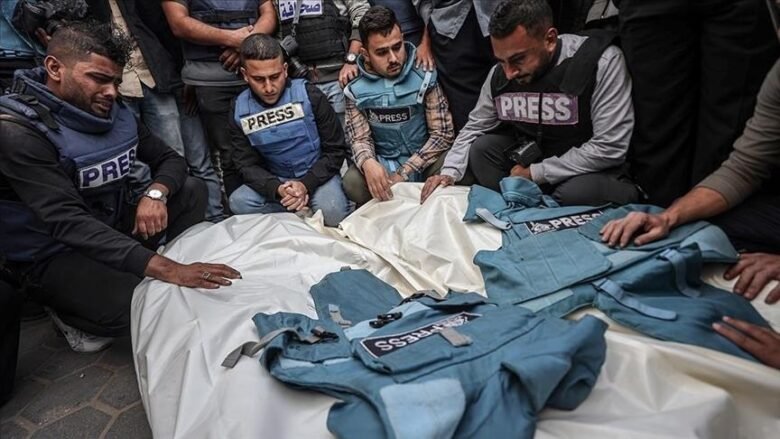
This occasion comes amid the continued Israeli crimes and violations against the Palestinian people, from which Palestinian journalists have not been spared. On the contrary, they have been at the forefront of direct and systematic targeting in an attempt to undermine media freedom, prevent the truth from being reported, and obstruct the documentation of crimes committed against Palestinian civilians. Documented figures reveal the scale and widespread nature of these violations. The International Commission to Support Palestinian Rights (ICSPR) has documented more than 2,968 violations targeting journalists and freedom of journalistic work across the occupied Palestinian territories between 7 October 2023 and September 2026. Meanwhile, the number of Palestinian journalists killed has exceeded 311, and approximately 250 journalists have been arrested or detained, amid continuing violations and the absence of effective accountability for those responsible.
The Direct Targeting of Journalists Amid the Ongoing Crime of Genocide
In the context of the ongoing crime of genocide since October 2023, ICSPR confirms that Palestinian journalism in the Gaza Strip has endured one of the deadliest periods in the history of journalistic work, alongside the continued escalation in the targeting of media crews. Practising journalism has become an extremely dangerous undertaking due to the direct and repeated targeting of journalists while covering events and documenting crimes and violations committed against Palestinian civilians.
According to ICSPR’s documented figures concerning the Gaza Strip, the violations and crimes committed by the occupation have resulted in the killing of approximately 262 journalists and media professionals, including 26 female journalists and media professionals. In addition, approximately 28 media activists and influencers have been assassinated. Among those killed were more than 10 journalists who lost their lives after the ceasefire agreement entered into force in October 2025, confirming that media workers continue to be targeted despite the agreement.
The Commission has also documented injuries sustained by more than 433 journalists and media professionals, some of whom suffered amputations and permanent disabilities. These violations have not been limited to targeting their lives and physical safety; they have also deprived them of the ability to perform their professional duties in safe conditions and exposed them to grave risks while reporting events and documenting facts.
Arbitrary Arrests and Detention of Journalists
Regarding arrests and detention, ICSPR reports that approximately 50 journalists and media professionals in the Gaza Strip have been subjected to arbitrary arrest, with around 23 still in detention. Serious concerns persist that some may have been subjected to enforced disappearance and denied the legal safeguards and fundamental rights guaranteed to detainees. Meanwhile, three journalists remain missing.
The Commission stresses that the continued detention of journalists, coupled with the lack of sufficient information regarding the fate and conditions of detention of some of them, constitutes a serious violation of the legal and humanitarian safeguards guaranteed under international law.
Targeting Journalists’ Families and Property
With regard to the targeting of journalists’ families and property, more than 32 journalists’ families have been targeted, including through the killing of family members and the destruction of their homes. Furthermore, at least 53 homes belonging to journalists have been totally or partially destroyed.
These incidents demonstrate the widening scope of targeting to include journalists’ family and social circles, rather than being confined to media professionals themselves, thereby deepening the humanitarian and social harm inflicted upon journalists and their families.
Targeting Media Institutions and Journalistic Infrastructure
Regarding the targeting of media institutions and the infrastructure necessary for journalistic work, ICSPR draws attention to the fact that Israeli occupation violations have extended to the various components of the Palestinian media environment and the essential foundations required for the continuation of journalistic work.
The premises of 12 print newspapers and magazines, approximately 23 electronic newspapers, 11 local radio stations, around 16 television and satellite channels, as well as 27 printing presses—including approximately five major printing facilities and 22 smaller ones—and around five trade union, professional, and human rights institutions concerned with press freedom, have been totally or partially destroyed.
Preliminary estimates of direct material losses suffered by the media sector have exceeded USD 800 million, resulting from the destruction of media institution headquarters, training, production, and broadcasting centres, as well as the destruction of technical equipment and devices required to operate broadcasting and television stations.
In addition to direct physical targeting, restrictions on media content across social media platforms continue, limiting the circulation of information and constraining freedom of publication and expression. These restrictions coincide with incitement campaigns calling for the killing of journalists and campaigns of defamation against them, as part of a broader effort to silence media voices and prevent the truth about crimes and violations committed against Palestinian civilians from reaching the public.
ICSPR’s Legal Position and Demands
The International Commission to Support Palestinian Rights (ICSPR), while affirming that the violations and crimes committed against Palestinian journalists constitute grave breaches of international humanitarian law and international human rights law, including the Universal Declaration of Human Rights, the International Covenant on Civil and Political Rights, the Geneva Conventions and their Additional Protocols, particularly Article 79 of Additional Protocol I to the Geneva Conventions, as well as UN Security Council Resolution 2222 (2015) on the protection of journalists and media professionals in armed conflicts;
And while emphasizing that the continuation of these crimes, alongside the absence of effective accountability and prosecution of those responsible, is a major factor in entrenching and expanding impunity, undermining the international safeguards established to protect journalists and uphold freedom of the media;
And recognizing that protecting Palestinian male and female journalists is inseparable from protecting society’s right to knowledge and truth, and that ending impunity for crimes committed against them constitutes an international legal obligation that goes beyond expressions of solidarity and political condemnation, requiring practical and effective measures to ensure accountability and justice;
And while renewing its solidarity with Palestinian journalists, both men and women, and workers in media institutions, who have continued to fulfil their professional mission despite the destruction of media institution headquarters, newspaper offices, television channels, and radio stations, and who have turned tents and displacement shelters into workplaces in an effort to continue field reporting, convey events, and document violations;
And while commemorating the journalists who lost their lives while carrying out their professional duties, and affirming the need for serious and effective international action to investigate the crimes committed against them, pursue and hold those responsible accountable, and ensure that such crimes are not repeated, given that protecting journalists and ending impunity are essential to safeguarding media freedom, strengthening respect for international law, and achieving justice;
The International Commission to Support Palestinian Rights (ICSPR) hereby calls for and records the following demands:
First: Calls on mediators, the guarantors of the ceasefire agreement, and the international community to assume their political and legal responsibilities and work to ensure a complete and comprehensive cessation of hostilities in the Gaza Strip; end all Israeli military actions and violations; protect civilians, including male and female journalists and media crews; lift the blockade; and ensure the adequate and regular delivery of humanitarian assistance, thereby creating the necessary conditions for recovery and reconstruction.
Second: Calls on the International Criminal Court and the competent international judicial mechanisms to expedite investigations into international crimes committed against the Palestinian people, including crimes targeting journalists; pursue those responsible, including political and military leaders; ensure their accountability and prosecution; and bring the state of impunity to an end.
Third: Calls on the United Nations, the High Contracting Parties to the Geneva Conventions, and international mechanisms concerned with press freedom and human rights to take urgent and effective measures to ensure international protection for Palestinian male and female journalists and media crews. It also calls for the establishment of an independent international mechanism to monitor, document, and investigate violations, collect and preserve evidence, and refer it to international judicial accountability bodies, while ensuring respect for international humanitarian law and international human rights law.
Fourth: Calls on the international community and international media and human rights institutions, particularly the International Federation of Journalists, the Union of Arab Journalists, and the International Committee of the Red Cross (ICRC), to intensify their efforts to protect Palestinian journalists; exert pressure to enable the ICRC to visit prisoners and detainees; reveal the fate of missing and forcibly disappeared journalists; verify the conditions of their detention and treatment; and strengthen international documentation and advocacy efforts and pressure to end the targeting of journalists.
Fifth: Calls on the international community, international institutions, and donor agencies to guarantee freedom of journalistic work and media coverage; lift restrictions preventing foreign journalists and media institutions from entering the Gaza Strip; enable journalists to access the sites of events and report facts without obstruction or threats; and provide the financial, technical, and logistical support necessary to rehabilitate damaged media institutions and restore their operational capacity.
The International Commission to Support Palestinian Rights (ICSPR)
End of Statement