
ICSPR: 24 Palestinians Killed in Three Days as Killing, Destruction and Forced Displacement Continue in Gaza, While Settlement Expansion, Judaization and Targeting of Human Rights Work Escalate

Date: 16 November 2026
Press Release
ICSPR: 24 Palestinians Killed in Three Days as Killing, Destruction and Forced Displacement Continue in Gaza, While Settlement Expansion, Judaization and Targeting of Human Rights Work Escalate
The International Commission to Support Palestinian Rights (ICSPR) is following with grave concern the continued Israeli crimes and violations in the occupied Palestinian territories, the escalation of killing, bombardment, gunfire and systematic destruction in the Gaza Strip, alongside the worsening humanitarian and environmental catastrophe, the ongoing blockade and the prevention of humanitarian aid and shelter materials from entering the Strip. The Commission is also concerned by the intensification of incursions, arrests, settler violence and annexation and settlement projects in the occupied West Bank and Jerusalem, as well as the restrictions imposed on human rights institutions and human rights defenders.
The Commission stresses that the continuation of these violations, despite the ceasefire agreement and relevant international resolutions, exposes a serious gap between international obligations and realities on the ground. It places the international community, the Board of Peace, and the sponsoring and guarantor parties before their political, legal and moral responsibilities. It also confirms that the ceasefire still requires effective guarantees, implementation mechanisms, monitoring and accountability measures to prevent further killing, destruction and displacement.
First: Continued Killing and Targeting in the Gaza Strip Despite the Ceasefire
The Commission condemns the continued Israeli air and artillery bombardment, gunfire and attacks across the Gaza Strip, which have resulted in civilian casualties and the destruction of property and civilian facilities. The latest field updates indicate that 24 Palestinians were killed over the past three days, highlighting the alarming continuation of killing and targeting despite the ceasefire agreement.
In this context, the Commission documented the killing of 24 Palestinians between 11 and 15 November 2026, including a child and two women, as a result of airstrikes, artillery shelling, and attacks targeting gatherings of civilians and civilian vehicles in various parts of the Strip. These incidents reveal the expanding scope of attacks against civilians in their homes, places of displacement and daily movements, including residential gatherings, civilian vehicles and the vicinity of healthcare facilities.
Among the most notable incidents was the targeting of a work site affiliated with the Ministry of Economy in the Al-Mawasi area west of Rafah, which resulted in the killing of Ahmad Abdeen and Moataz Haji and the injury of others. Nidal Zaarab also died from injuries sustained in an earlier attack on the Ministry of Economy site west of Rafah. Meanwhile, young Abdullah Hassouna died from injuries sustained when a tent in the Sheikh Radwan neighbourhood in the northern part of the Strip was targeted. The attacks also included the targeting of civilian gatherings in Jabalia, Deir al-Balah and Al-Mawasi in Khan Younis, the shelling of civilian vehicles in Gaza City and Deir al-Balah, and gunfire and bombardment directed at residential areas and gatherings of displaced people, resulting in further deaths and injuries, including among women and children.
The Commission affirms that targeting civilians, residential gatherings and civilian vehicles, and causing casualties, constitutes a grave violation of the right to life and the provisions of international humanitarian law, and may amount to war crimes. Such acts also undermine the very substance of the ceasefire agreement. Since the ceasefire came into effect on 11 October 2025, the number of casualties has risen to 1,647 Palestinians killed and 5,969 injured, in addition to the recovery of the bodies of 850 Palestinians. The cumulative toll since the beginning of the aggression has reached 74,699 Palestinians killed and 176,098 injured.
The Commission stresses that figures relating to the recovery of bodies must be treated as a separate category from the cumulative death toll and must not be added to it mathematically.
Second: Deliberate Destruction of Homes and Tents, the Use of Explosive-Rigged Boxes and Forced Displacement
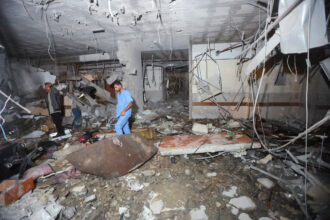
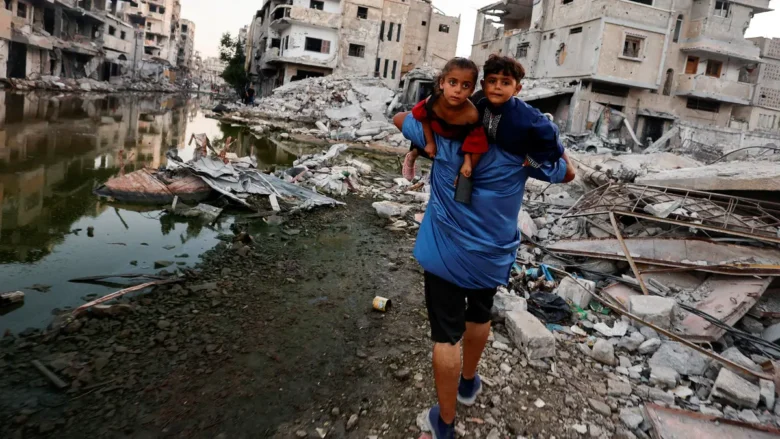
The Commission condemns the use by occupation forces of drones to drop boxes rigged with explosives onto the rooftops of destroyed homes and the remaining residential buildings in populated areas, before detonating them in successive waves, as occurred in the Al-Zaytoun neighbourhood east of Gaza City. These boxes have repeatedly been dropped and detonated in the area and its surroundings, resulting in the destruction of an entire residential neighbourhood and a large number of homes and tents, displacing dozens of families and forcing them to flee without being able to take their belongings or basic necessities.
The Commission stresses that this pattern of destruction cannot be regarded merely as incidental material damage resulting from military operations. Rather, it raises serious concerns about the use of wide-impact explosive devices in residential areas, exposing civilian lives to danger, destroying the remaining means of shelter, and forcing repeated displacement upon families who have already lost their homes or been compelled to flee them. The repeated destruction of homes and tents, coupled with the denial of safe alternative accommodation, further aggravates conditions of forced displacement and undermines the possibility of residents returning to their areas.
The Commission calls on the Board of Peace and the international community to protect the remaining buildings, tents and shelters, enable families to return safely to their places of residence and property, and ensure protection, compensation and effective reparation for those affected.
Third: Targeting the Healthcare System and Reproductive Rights
ICSPR warns that the continued targeting of healthcare facilities, combined with shortages of medicines, fuel, medical supplies and personnel, as well as the obstruction of medical evacuations, is pushing the healthcare system towards further collapse and placing the lives of thousands of patients and injured people at risk.
The Commission also warns of the grave humanitarian and social consequences of preventing the entry into the Strip of the equipment and medicines required to preserve embryos and sperm samples. Thousands of frozen embryos and samples have been lost during the war, while hundreds of cases face the risk of permanently losing the ability to reproduce. The Commission considers that depriving the population of these medical capabilities goes beyond direct health consequences, affecting reproductive rights, human dignity and the right to establish a family. This makes the urgent entry of specialized equipment and medicines essential.
The Commission calls for special protection to be guaranteed for hospitals, medical personnel, patients and the wounded; the restoration of damaged hospital departments; the entry of medicines, medical supplies and specialized equipment without restrictions; the facilitation of medical evacuations and treatment outside the Strip; and an end to the use of the blockade and restrictions on medical supplies as means of placing civilian lives at risk.
Fourth: The Humanitarian Catastrophe, Winter Conditions, Shelter Risks and Environmental Threats
The Commission warns that winter may become an additional humanitarian catastrophe, given the continued deprivation of the population of safe shelter and essential shelter supplies. According to available humanitarian estimates, approximately two million Palestinians are living in dilapidated tents, temporary shelters and damaged buildings at risk of collapse. Around 950,000 displaced people face the risk of flooding, approximately 1.4 million people are threatened by hunger, while around 150,000 tents remain outside the Strip awaiting entry.
The Commission stresses that the continued prevention of the entry of tents, temporary housing units, construction materials and means of protection against cold and rain cannot be separated from the Israeli restrictions imposed on humanitarian aid and the continued confinement of the population in living conditions that threaten their lives and dignity. Keeping families in worn-out tents and unsafe shelters amid ongoing storms and rainfall poses a direct threat to the lives of children, patients, older persons and other particularly vulnerable groups.
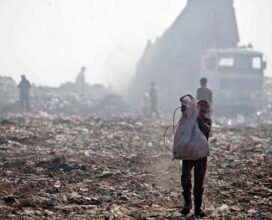
In a development of grave environmental concern, data from the Environmental Quality Authority indicate that the Gaza Strip contains approximately 68 million tonnes of rubble, including four million tonnes of hazardous waste and at least 50,000 tonnes of carcinogenic asbestos. These quantities pose widespread health and environmental threats, particularly given the damage to water and sewage networks and the accumulation of waste and remnants of war. This situation requires an emergency plan to remove rubble, sort hazardous waste and dispose of it safely, bring in specialized equipment and teams, and protect residents, workers and rescue teams from the dangers of toxic and carcinogenic materials.
In this context, the Civil Defence in the Gaza Strip announced that it had recovered the bodies and remains of 70 Palestinians killed from beneath the rubble of 20 homes in the Beit Lahia Project and western Jabalia, in the northern Strip. This was out of approximately 160 bodies still missing beneath the rubble, following 231 hours of work carried out with limited resources. This operation reveals the immense scale of destruction, the continued presence of victims beneath the rubble and the urgent need to support rescue teams with the necessary equipment, machinery and resources.
ICSPR stresses the need to open the crossings and lift the blockade, ensure the immediate, sufficient and regular flow of humanitarian and medical assistance and fuel, and allow the entry of prefabricated temporary housing units (“containers”), suitable tents capable of withstanding winter conditions, blankets, heating equipment, protection against rain and flooding, and all other shelter supplies, without restrictions or obstacles. The Commission also calls for the entry of heavy equipment and machinery needed to recover the bodies of those killed and missing from beneath the rubble, remove debris and remnants of war, safely handle hazardous waste, and rehabilitate infrastructure and essential facilities.
The Commission emphasizes the need to implement the provisional measures issued by the International Court of Justice, particularly those relating to the provision of basic services and humanitarian assistance and the prevention of any further deterioration in living conditions that threaten human life. It also welcomes the Qatari-Turkish agreement on coordinating support for the reconstruction of Gaza and strengthening humanitarian assistance, and calls for these efforts to be translated into practical measures that ensure the entry of aid, shelter materials and reconstruction supplies.
Fifth: Escalation of Incursions, Settlement Expansion and Settler Violence in the West Bank
The Commission condemns the continued military incursions, raids and arrests in the camps and towns of Nablus, Tubas, Jericho, Ramallah and other areas, accompanied by the detention of Palestinians and their field interrogation under harsh and degrading conditions, as well as the seizure of homes and their conversion into interrogation centres.
The Commission also condemns the escalation of settler attacks against farmers and olive harvesters, including the uprooting of trees, theft of crops and equipment, destruction of vehicles and displacement of families. These attacks include incidents in Masafer Yatta, areas south of Hebron and Wadi Abu Saif in the town of Beit Fajjar, south of Bethlehem.
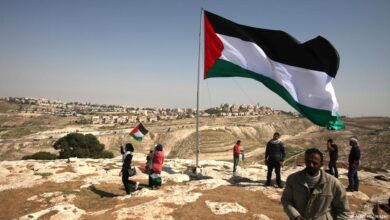
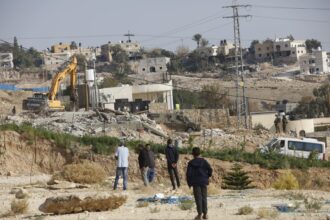
ICSPR warns of the acceleration of settlement and de facto annexation plans, including the laying of the foundation stone for an industrial settlement zone covering an area of 800 dunums southeast of Tulkarm, and the announcement of 11 new settlement plans to add 895 settlement units across the West Bank governorates, according to data from the Wall and Settlement Resistance Commission. The Commission considers these measures part of a systematic policy aimed at fragmenting Palestinian land, imposing new settlement and demographic realities, displacing residents and undermining the Palestinian people’s right to self-determination.
Sixth: Jerusalem and Al-Aqsa Mosque: Continued Attempts at Judaization
The Commission condemns the continued incursions into the blessed Al-Aqsa Mosque, which witnessed the entry of 1,589 settlers over the course of a single week, as part of ongoing attempts to alter the existing historical and legal status quo and impose new Judaizing realities in the holy city.
The Commission affirms that these practices constitute an attack on freedom of worship and the sanctity of holy places, and form part of a policy aimed at changing Jerusalem’s identity and its historical and demographic character. It calls for international protection for the city and its holy sites, and for an end to all measures intended to alter its historical and legal status.
Seventh: Targeting Human Rights Institutions and Human Rights Defenders
The Commission condemns the Israeli authorities’ decision to prevent Palestinian human rights activist Shawan Jabarin, Director of Al-Haq, from travelling abroad. This is part of a broader policy of restricting human rights institutions and human rights defenders and an attempt to limit their ability to document violations and communicate them to international bodies and accountability mechanisms.
The Commission stresses that protecting human rights work and ensuring freedom of movement, expression and documentation are international obligations. Targeting human rights institutions and defenders will not succeed in concealing the truth or obstructing demands for accountability.
Eighth: The Responsibility of the Board of Peace, Implementation of Resolution 2803, Ensuring Withdrawal and the Return of Displaced People
In light of the continuation of these violations, ICSPR calls on the Board of Peace and the international sponsoring and guarantor parties to assume their political and legal responsibilities, respect UN Security Council Resolution 2803 and fully implement its provisions. It also calls for moving beyond statements and understandings towards practical measures, clear timelines, and monitoring and accountability mechanisms that ensure an end to Israeli crimes and ongoing violations of the ceasefire agreement.
The Commission stresses that the immediate priority is to compel the occupation authorities to stop the killing, assassinations, targeting and military attacks against civilians; halt the destruction of homes, tents and civilian objects; ensure effective protection for the population and civilian and medical facilities; open the crossings and lift the blockade; and allow the entry of humanitarian assistance, fuel, medicines, heavy equipment, rescue supplies, shelter materials and reconstruction supplies without restrictions or obstacles. The entry of prefabricated temporary housing units (“containers”), tents suitable for winter conditions, heating equipment and protection against rain and flooding must also be permitted, while safe and adequate shelter must be provided for displaced people until their homes are rebuilt.
The Commission further calls for ensuring the entry of the Gaza Administration Committee and enabling it to begin carrying out its duties, as well as deploying the International Stabilization Force in accordance with its designated mandate, in a manner that ensures civilian protection, monitors the implementation of commitments and prevents renewed aggression. It also calls for ensuring the Israeli withdrawal in accordance with the specified phases and timelines, and preventing the imposition of buffer zones, geographical restrictions or facts on the ground that would obstruct the return of residents.
ICSPR emphasizes that the return of displaced people to their areas of residence and homes is an inherent right that must not be subjected to political or security bargaining or blackmail. Ensuring this return requires securing roads and affected areas, removing rubble, remnants of war and hazardous materials, guaranteeing freedom of movement and safe access to homes, property and land, providing dignified temporary shelter, and immediately beginning reconstruction under a clear plan that restores normal life and essential services throughout the Strip.
The Commission also calls for an end to settlement expansion, de facto annexation and settler attacks; protection for Palestinians in the West Bank and Jerusalem; preservation of Al-Aqsa Mosque and other holy sites; an end to restrictions on human rights institutions and human rights defenders; activation of international investigation and accountability mechanisms; prosecution of those responsible for crimes and grave violations; and guarantees against impunity.
The International Commission to Support Palestinian Rights (ICSPR) affirms that a ceasefire does not grant the occupation authorities a licence to continue killing, targeting, assassinations, destruction, blockade, starvation and forced displacement. The continued detonation of homes, destruction of the remaining residential neighbourhoods and repeated forced displacement of families pose a direct threat to Palestinians’ rights to life, housing, security and remaining on their land.
The implementation of Resolution 2803 must not become merely a set of administrative and security arrangements detached from the Palestinian people’s national and human rights, or a mechanism for managing the crisis while perpetuating control over the Strip. The credibility of the Board of Peace and the guarantor parties will be measured by their ability to stop violations of the ceasefire agreement and other Israeli crimes, end the blockade, ensure withdrawal, enable the Gaza Administration Committee and the International Stabilization Force to carry out their duties, facilitate the entry of aid, temporary housing units and tents, secure the return of displaced people to their homes, remove rubble and remnants of war, protect civilians and safeguard their dignity and rights, rebuild Gaza, and guarantee the Palestinian people’s right to freedom and self-determination.
The International Commission to Support Palestinian Rights (ICSPR)