

ICSPR Katz’s Statements, Ben Gvir’s Plan, and Netanyahu’s Refusal to Withdraw Reveal an Integrated Israeli Criminal Scheme to Forcibly Displace Gaza’s Population

Date: 6 September 2026
Press Statement
ICSPR: Katz’s Statements, Ben Gvir’s Plan, and Netanyahu’s Refusal to Withdraw Reveal an Integrated Israeli Criminal Scheme to Forcibly Displace Gaza’s Population
The International Commission to Support Palestinian Rights (ICSPR) warns in the strongest terms that recent Israeli developments no longer allow the project of displacing Palestinians from the Gaza Strip to be treated as merely extremist rhetoric or temporary electoral positions. When viewed alongside facts on the ground and ongoing occupation policies, these developments reveal an integrated course combining military control of land, destruction of the means of life, obstruction of recovery and reconstruction, the imposition of a new geographic reality, and the promotion of so-called “voluntary migration,” all in preparation for emptying the Gaza Strip of its Palestinian population.
ICSPR considers that the most dangerous aspect of recent developments is the timing and integration of the statements made by Israeli Prime Minister Benjamin Netanyahu, Defence Minister Israel Katz, National Security Minister Itamar Ben Gvir, and Finance Minister Bezalel Smotrich, together with their known positions concerning the displacement of Gaza’s population and colonial annexation in the West Bank. The Commission warns of the danger of transforming the project of emptying Gaza from a criminal idea into an issue formally advanced within the circles of the Israeli government and its extremist coalition, with publicly declared administrative tools, plans, and timelines.
ICSPR strongly condemns the statements of Israeli Defence Minister Israel Katz, who stated on 2 September that “there is no real solution for Gaza without this migration.” Katz further claimed that the Israeli plan to remove Palestinians from the Gaza Strip had been “frozen” by the United States but not cancelled, and that the Israeli government was “organized and prepared” to remove residents by sea, air, and every possible means. These statements amount to an official acknowledgement that the project to displace Gaza’s population remains in place and is awaiting suitable political conditions for its implementation.cbc+2
ICSPR considers Katz’s statements a serious warning to the international community because they reveal that displacement is not an incidental consequence of the war, but rather a political option that remains under consideration at the governmental level in Israel. The expression “voluntary migration” cannot conceal the fact that the population is being driven to leave amid killing, destruction, siege, starvation, repeated displacement, and the obstruction of reconstruction. Such conditions strip any departure of civilians of its genuinely voluntary character.
ICSPR warns of the serious implications of the statement made by Israeli Prime Minister Benjamin Netanyahu inside the Gaza Strip, in which he asserted that Israel controls approximately 60% of the Strip and that its forces would not withdraw from the areas under their control but would continue operations there. Combining a declaration of military control over most of the Gaza Strip with a declaration of readiness to remove its population reveals an exceptionally dangerous equation: control of land and removal of its population at the same time.bbc+1
ICSPR affirms that the plan put forward by Itamar Ben Gvir on 3 September represents an additional shift from rhetoric to planning. The plan envisages the removal of approximately 250,000 Palestinians during the first year, followed by the removal of the rest of the population in subsequent years, reaching approximately 1.86 million Palestinians within seven years. It also includes establishing a specialised government structure for this purpose. On 6 September, Ben Gvir again stated that he would not retreat from or cease pursuing what he calls a “voluntary migration” plan.timesofisrael+2
ICSPR stresses that changing the name of a crime does not change its legal nature. Coercion does not necessarily require the direct physical removal of civilians by force; it may also result from creating coercive conditions that make remaining impossible, unsafe, or unlivable. The destruction of homes and infrastructure, the prevention of reconstruction materials, restrictions on the entry of aid, food, medicine, and water, the shrinking of the space available to civilians, and then presenting departure as an “option” do not transform forcible displacement into voluntary migration.
ICSPR considers that Smotrich’s previous and current statements and positions regarding Gaza, annexation, and settlement expansion in the West Bank must be understood in the same context. He has previously promoted approaches based on removing Palestinians from Gaza and linking the reconstruction of the Strip to transforming it into an economic and tourism project, while continuing to push for the imposition of annexation and settlement realities in the West Bank. The convergence of displacement discourse in Gaza and annexation policies in the West Bank reveals a systematic criminal policy aimed at reshaping the Palestinian map politically, demographically, and geographically.
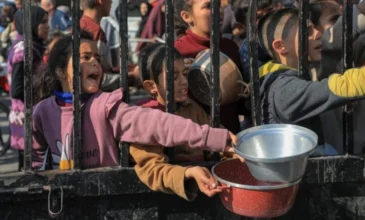
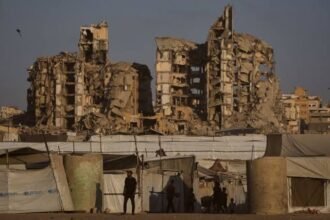
ICSPR affirms that events on the ground precede and prepare the way for political rhetoric. Israeli military operations have caused widespread destruction of homes, infrastructure, economic facilities, and essential services, while Israeli restrictions continue to obstruct the entry of temporary housing, tents, equipment, construction materials, and reconstruction supplies. With more than 80% of buildings in the Gaza Strip destroyed, over two million Palestinians continue to endure catastrophic and harsh conditions in displacement camps.
ICSPR warns that the continuing destruction of the means of life, together with control over crossings, aid, and reconstruction materials, amounts in practice to the continued creation of an environment designed to expel the population. When homes are destroyed and their reconstruction is prohibited, when the economy is destroyed and cannot be revived, when water, health, and education services deteriorate, and when residents remain confined in a narrow geographical area, “voluntary migration” becomes a political label for a result produced by policies of force, coercion, and genocide.
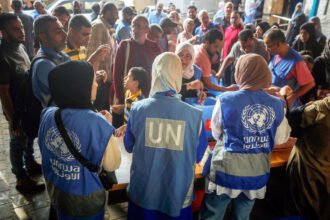
The Commission further stresses that preventing reconstruction or subjecting it to Israeli security and political conditions is not merely economic obstruction. It may become a tool of pressure intended to push civilians to seek any exit from an environment that has been made unlivable. This is compounded by a deep humanitarian and economic crisis that threatens to transform Gaza into a society almost entirely dependent on aid, rather than one capable of restoring production, work, and economic independence.
ICSPR condemns the continuation of military operations and field violations of the ceasefire. It affirms that the ongoing killing, bombardment, and destruction, together with the refusal to withdraw from wide areas of the Gaza Strip, cast serious doubt on any genuine transition towards recovery. The Commission stresses the urgent need for an effective and binding international mechanism to monitor the ceasefire and ensure the implementation of all its phases.
ICSPR also warns that the continued obstruction by the occupation of the entry of the National Administration Committee and the International Stabilisation Force, together with Israel’s continued control of crossings, aid, and the security sphere, may lead to the reproduction of the occupation model under new labels such as “security” and “transitional administration.” Any international arrangements for Gaza must protect the population, enable a Palestinian transitional administration, launch reconstruction, and end the occupation, rather than administer Palestinians on behalf of the occupation.
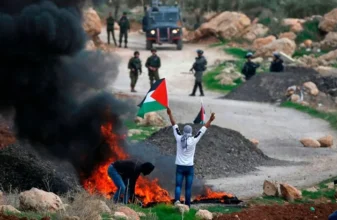
The Commission affirms that the broader picture becomes clearer when Gaza is linked to developments in the West Bank. The UN Human Rights Office has documented the displacement of approximately 33,000 Palestinians from the Jenin, Nur Shams, and Tulkarm refugee camps, preventing their return, amid widespread building destruction and escalating settler violence. The two tracks therefore appear to be moving in the same direction: forced geographic emptying in Gaza and demographic and geographic re-engineering in the West Bank.
ICSPR further condemns the crimes committed by occupation forces and settlers against Palestinians in the West Bank, including the killing of two Palestinian young men in the village of Al-Mughayyir during a settler attack carried out under the protection of occupation forces. The Commission considers the protection of attackers and the use of lethal force against Palestinian civilians to be part of a broader system of settlement expansion, violence, and displacement.
ICSPR affirms that the combination of control over land, displacement, settlement expansion, destruction of the means of life, obstruction of reconstruction, control of resources and crossings, and the restructuring of the security and administrative framework cannot be separated from the broader objective of preventing the establishment of a viable, geographically contiguous Palestinian entity capable of exercising its right to self-determination.
The Commission warns the international community against the mistake of treating each Israeli statement separately. The full picture must be understood: Netanyahu declares continued control and non-withdrawal from Gaza; Katz declares readiness to displace the population; Ben Gvir presents a timeline for emptying Gaza; Smotrich continues to promote annexation and displacement; while the Israeli occupation continues to impose facts on the ground through the destruction of the conditions necessary for Palestinian survival. This requires urgent international action to protect Palestinian civilians from war crimes, genocide, and forcible displacement.
ICSPR calls on the United Nations, the UN Security Council, the European Union, States Parties to the Geneva Conventions, and Arab and Islamic states to move immediately from political condemnation to practical measures to halt any displacement project. It calls for compelling Israel to respect international law, United Nations resolutions, and the binding measures issued by the International Court of Justice, and to ensure that starvation, deprivation of water, obstruction of humanitarian aid, and the prevention of reconstruction are not used as tools of political and humanitarian pressure to displace civilians.
The Commission calls for guaranteeing the safe and dignified return of all internally displaced persons in the Gaza Strip to their areas and homes; opening crossings regularly; and permitting the entry of food, medicine, fuel, shelter materials, rubble-removal equipment, construction materials, and the equipment needed to recover the bodies of missing persons, clear rubble, and reconstruct Gaza.
ICSPR further calls for launching an urgent international programme to rebuild the Palestinian economy in the Gaza Strip, preventing the transformation of the territory into a disaster-stricken area dependent on aid and deprived of the means of life and production.
The Commission calls on States to impose political and economic sanctions against any official who plans, incites, or facilitates the forcible transfer of civilians. It stresses that public displacement statements must not be allowed to become a “test of reaction” before being implemented on the ground. Preventing Israeli occupation crimes before they occur is a legal and moral duty, not a political choice.
ICSPR affirms the importance of serious action by mediators, the United Nations, and free people around the world, both states and peoples, to stop displacement, provide international protection to Gaza’s population, guarantee Palestinians’ right to return to their areas and homes, launch reconstruction, and enable the Palestinian people to exercise their right to self-determination and establish their independent state with Jerusalem as its capital.