
With Broad Political, Academic, and Societal Participation, ICSPR and The Shaikh Group (TSG) Organize an Expanded Dialogue Forum on Gaza, the “Engineering of No-Solution,” and Future Scenarios for the Gaza Strip

Date: 10 June 2025
Press Release
With Broad Political, Academic, and Societal Participation, ICSPR and The Shaikh Group (TSG) Organize an Expanded Dialogue Forum on Gaza, the “Engineering of No-Solution,” and Future Scenarios for the Gaza Strip
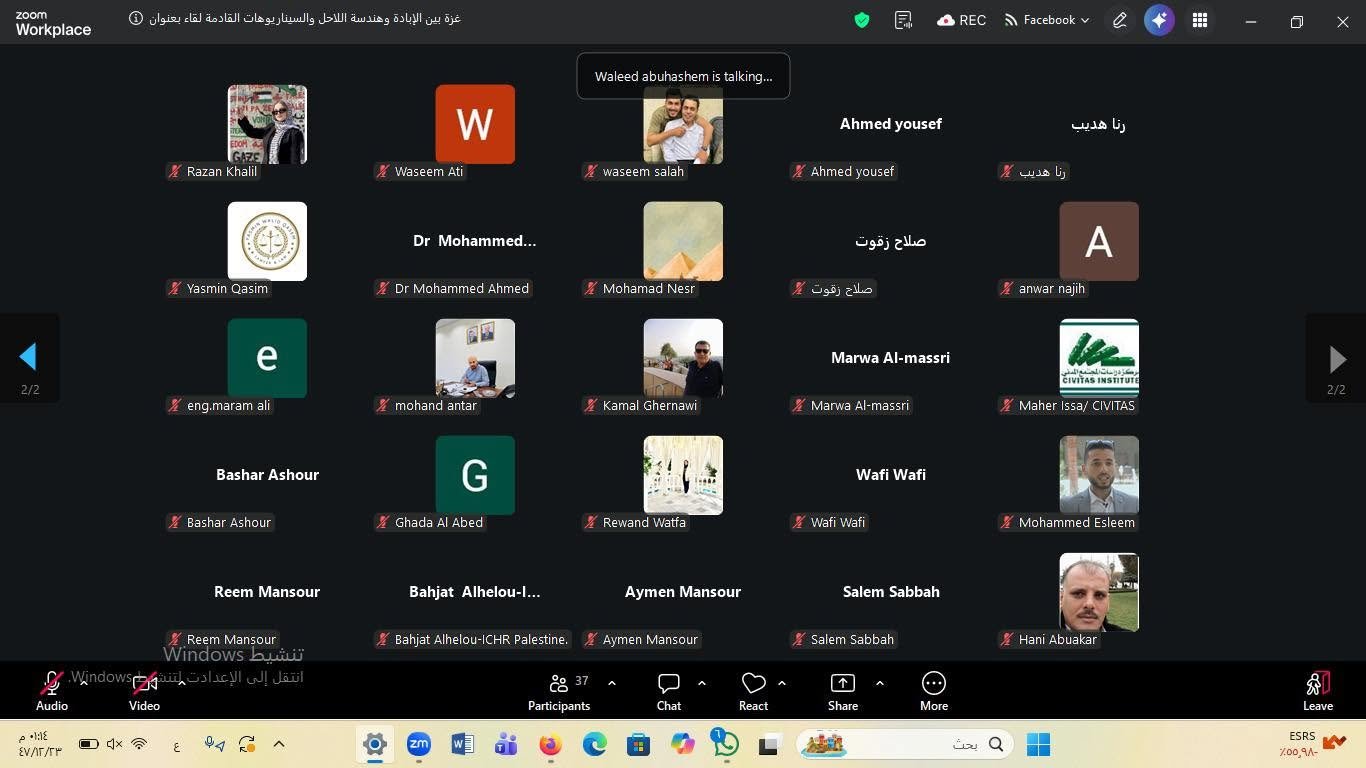
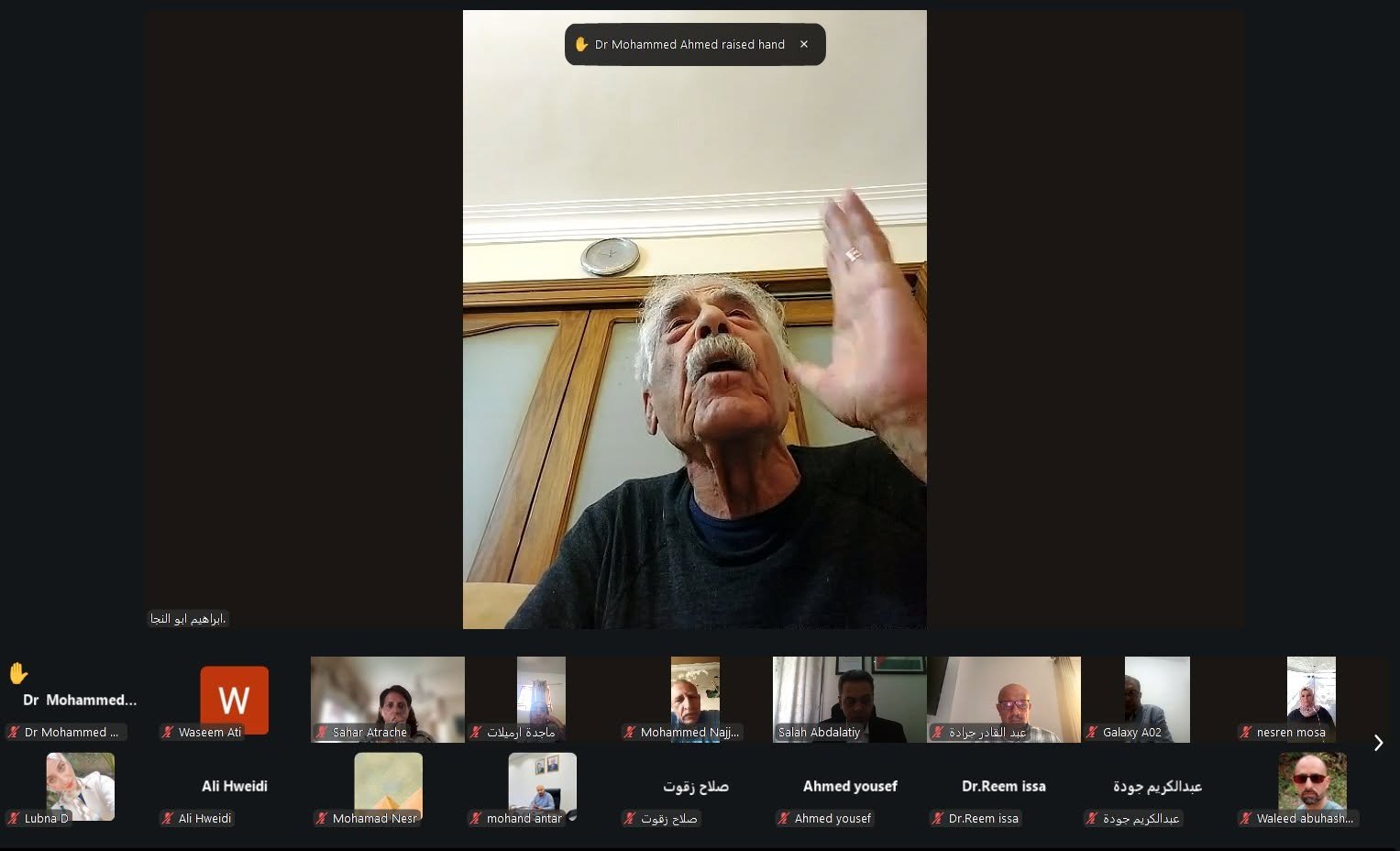
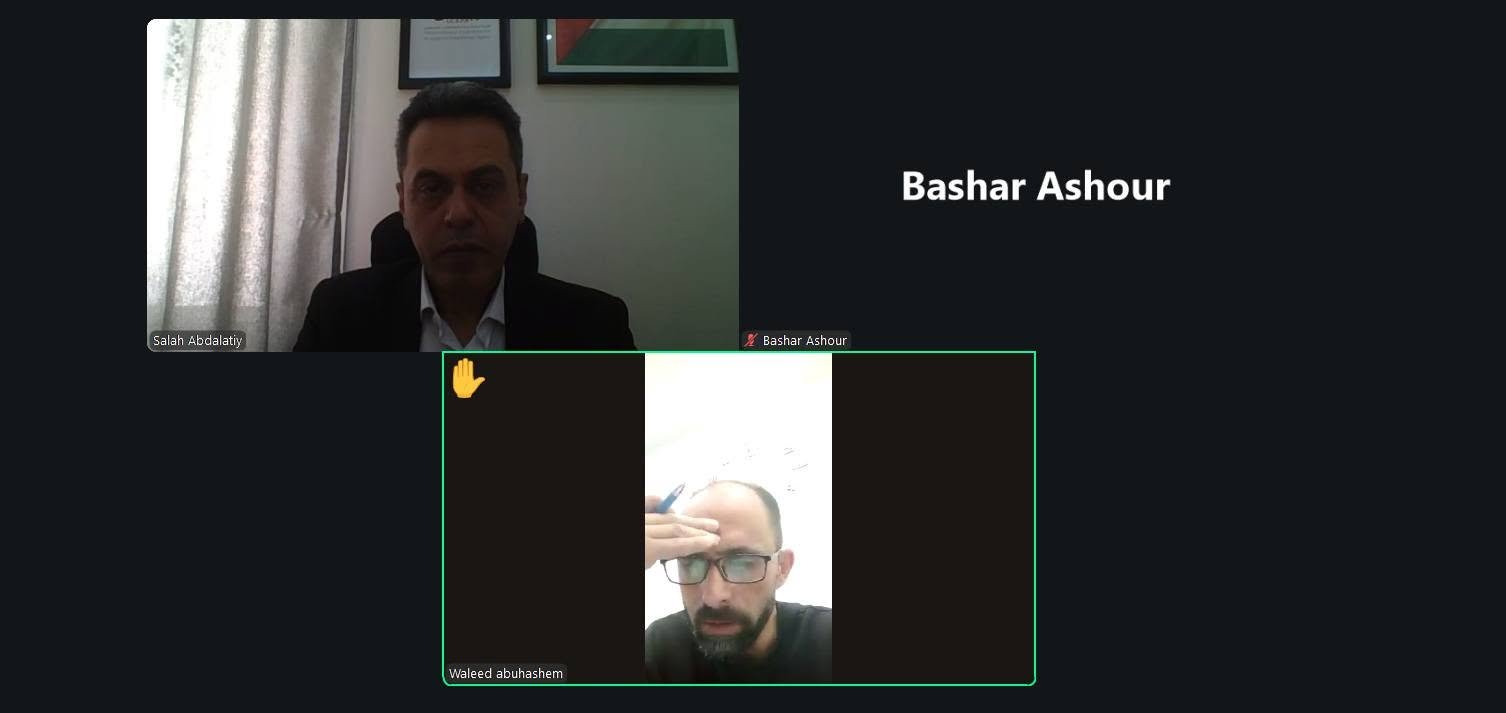
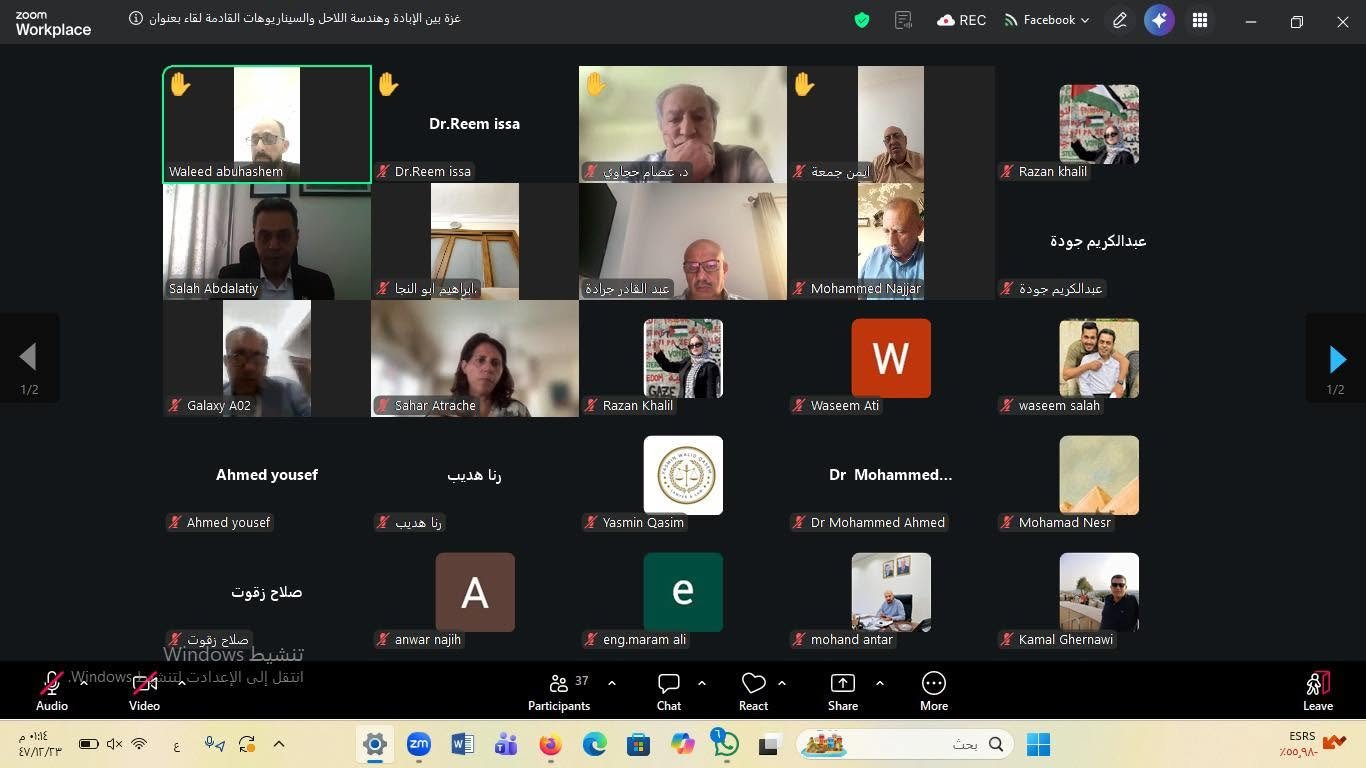
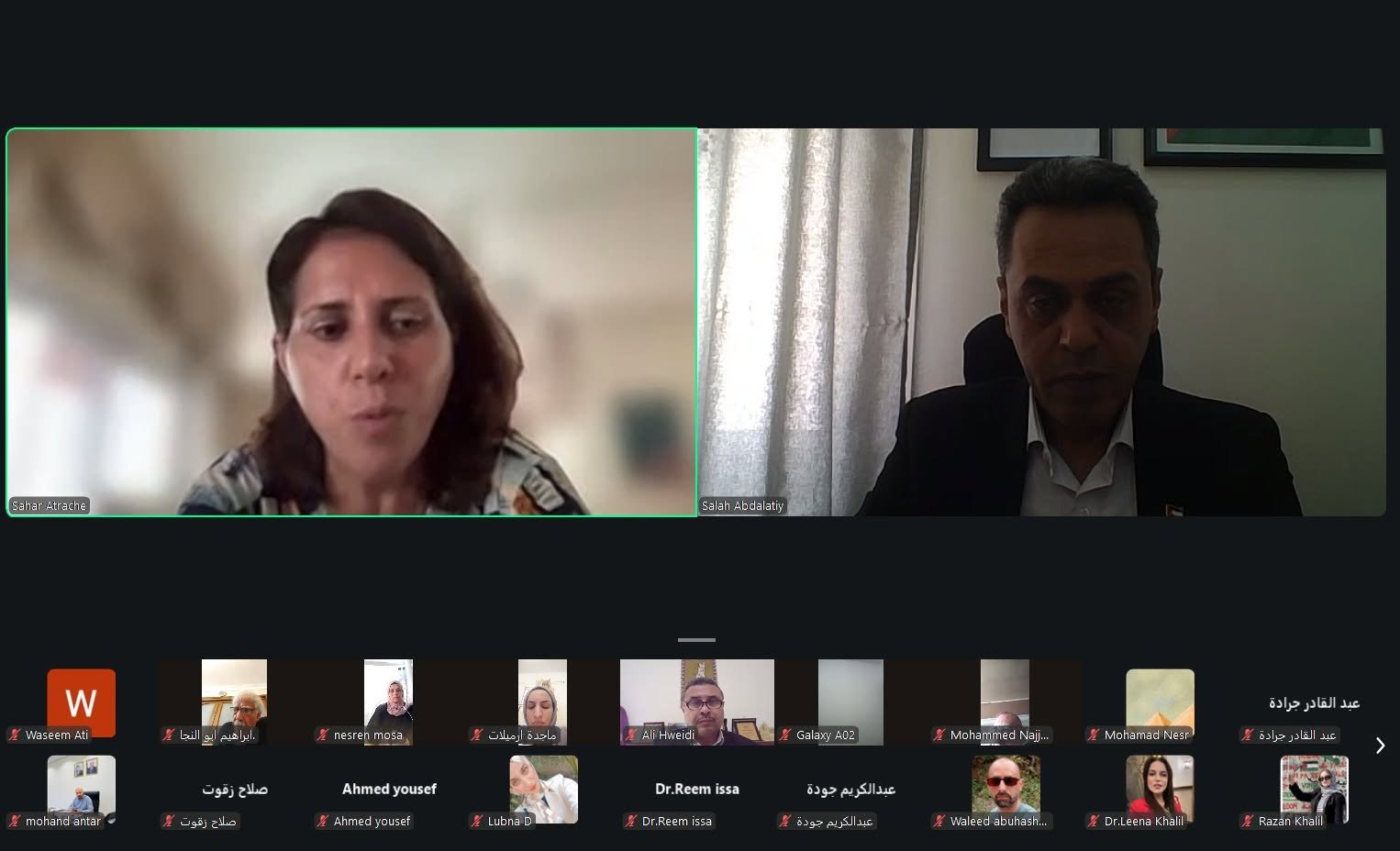
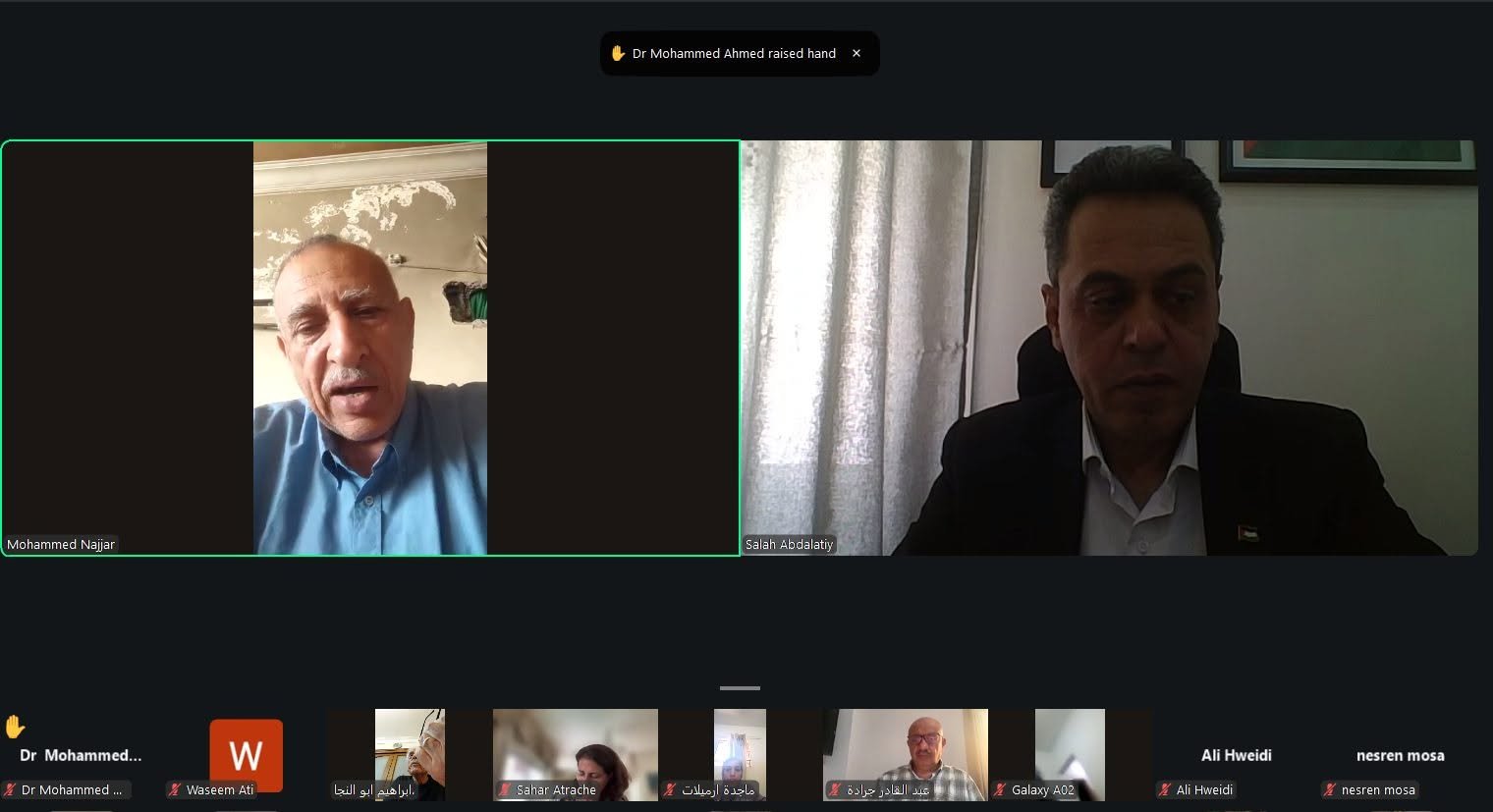
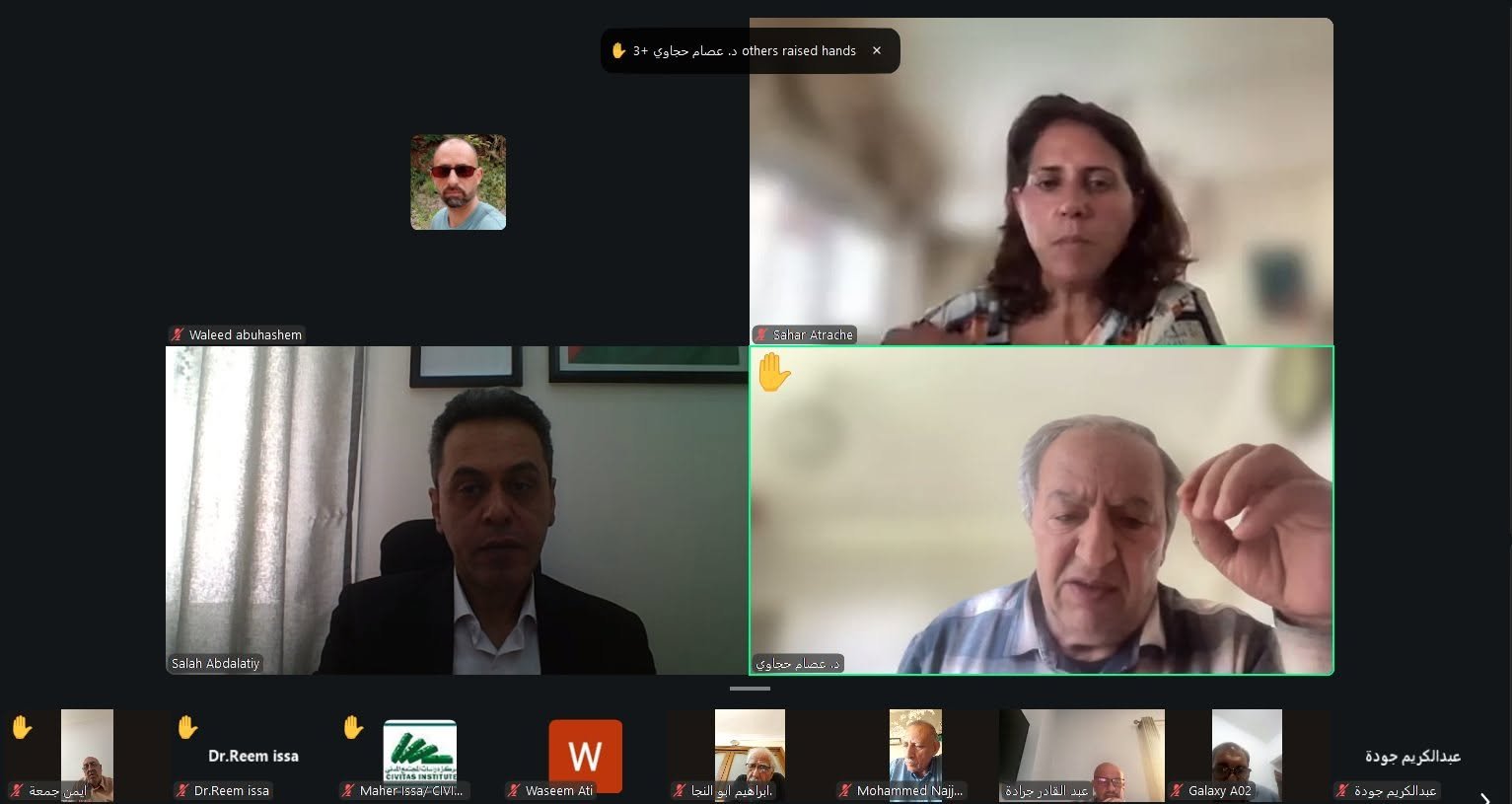
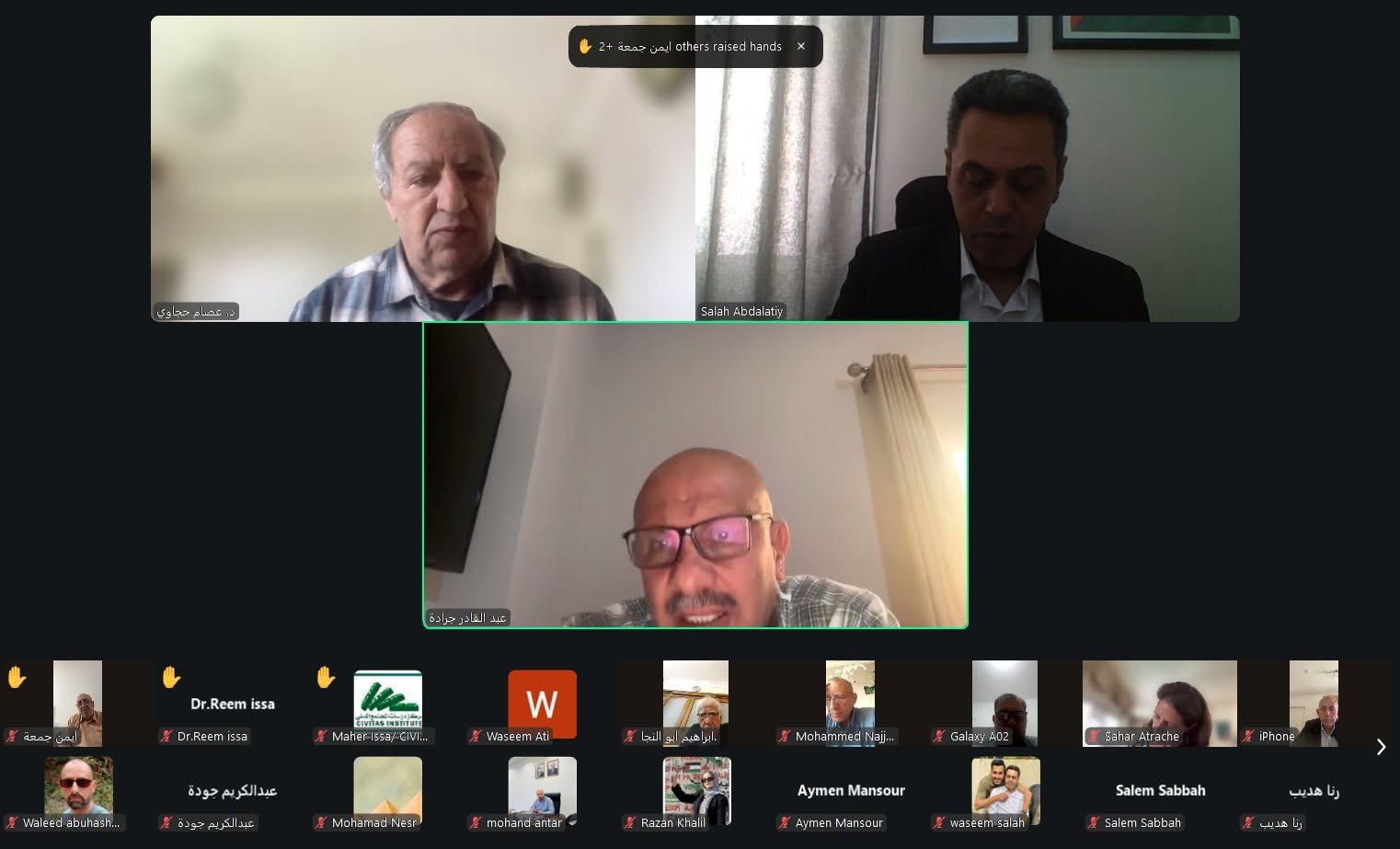
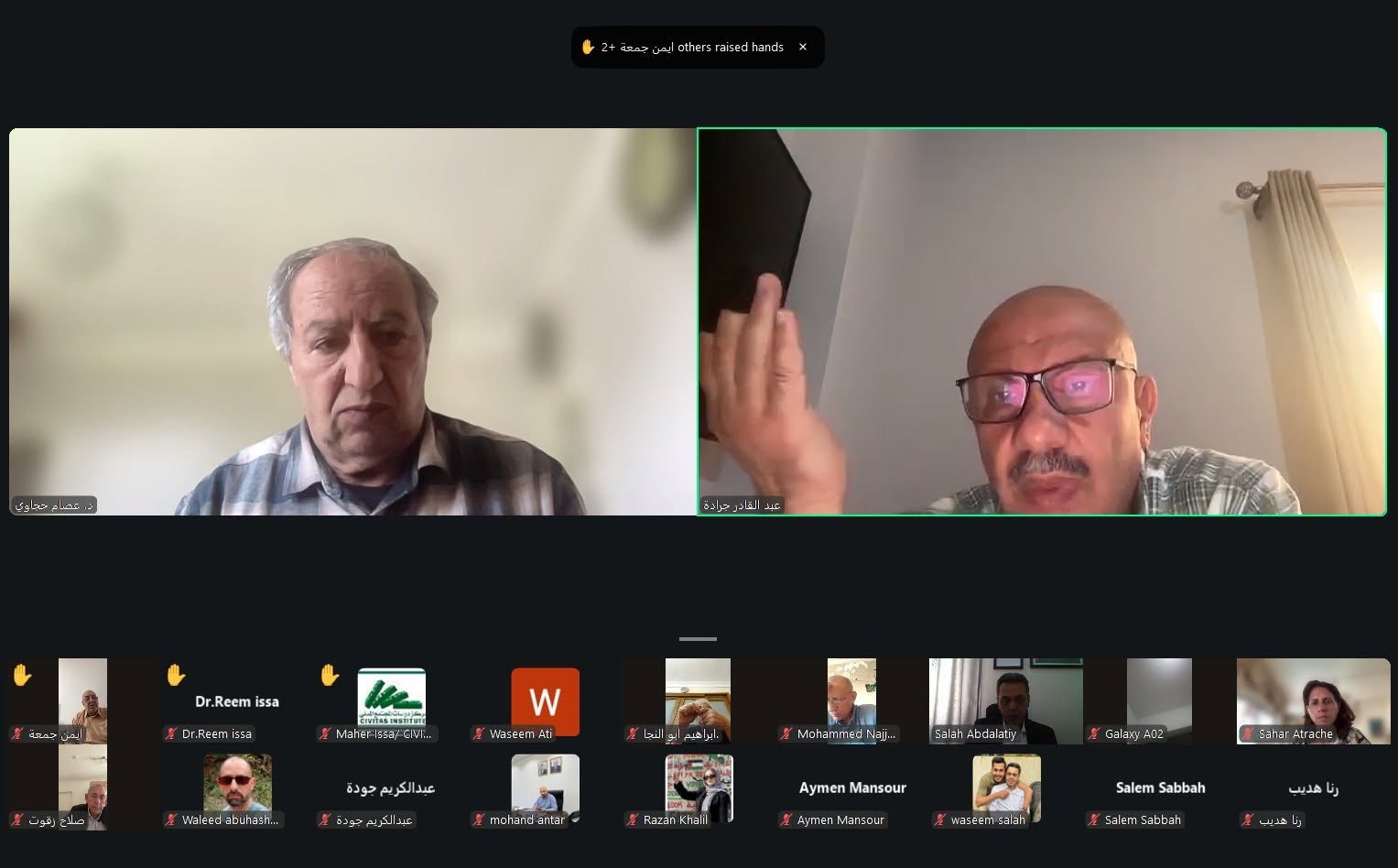
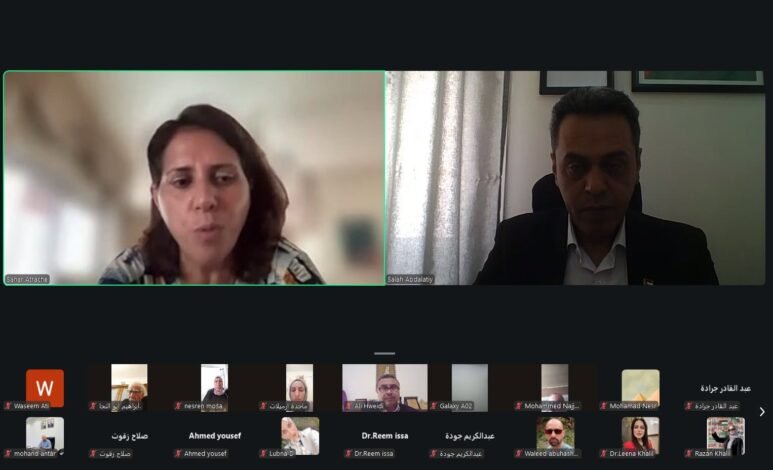
The International Commission to Support Palestinian Rights (ICSPR), in partnership and cooperation with The Shaikh Group (TSG), organized an expanded dialogue forum via Zoom under the title: “Gaza Between Genocide, the Engineering of No-Solution, and the Coming Scenarios.” The event brought together more than fifty participants, including leaders of Palestinian factions and political forces, academics, human rights defenders, experts, journalists, and representatives of civil society organizations from inside and outside Palestine.
The forum was held as part of an in-depth discussion of a comprehensive strategic and forward-looking position assessment prepared by Dr. Salah Abdalati, Chairman of ICSPR, titled: “Palestine Between Genocide, the Engineering of No-Solution, and the Future of Gaza and the Palestinian Political System in Light of Day-After Negotiations.” The paper examined the rapidly accelerating structural transformations in the Palestinian scene amid the continued genocidal war on the Gaza Strip, the Cairo negotiations, the faltering “day after” arrangements, and the related questions of governance, administration, reconstruction, the weapons file, renewal of legitimacy, and the restructuring of the Palestinian political system.
The paper affirmed that the Gaza Strip stands at a pivotal moment in which genocide intersects with attempts to reshape Palestinian reality politically, geographically, and demographically through policies aimed at managing and prolonging the crisis rather than ending it. This, according to the paper, places Gaza in a condition of long-term exhaustion within what it describes as the “engineering of no-solution,” a dynamic that threatens the Palestinian presence, the essence of the national project, and reproduces the crisis through more complex mechanisms.
Abdalati’s remarks
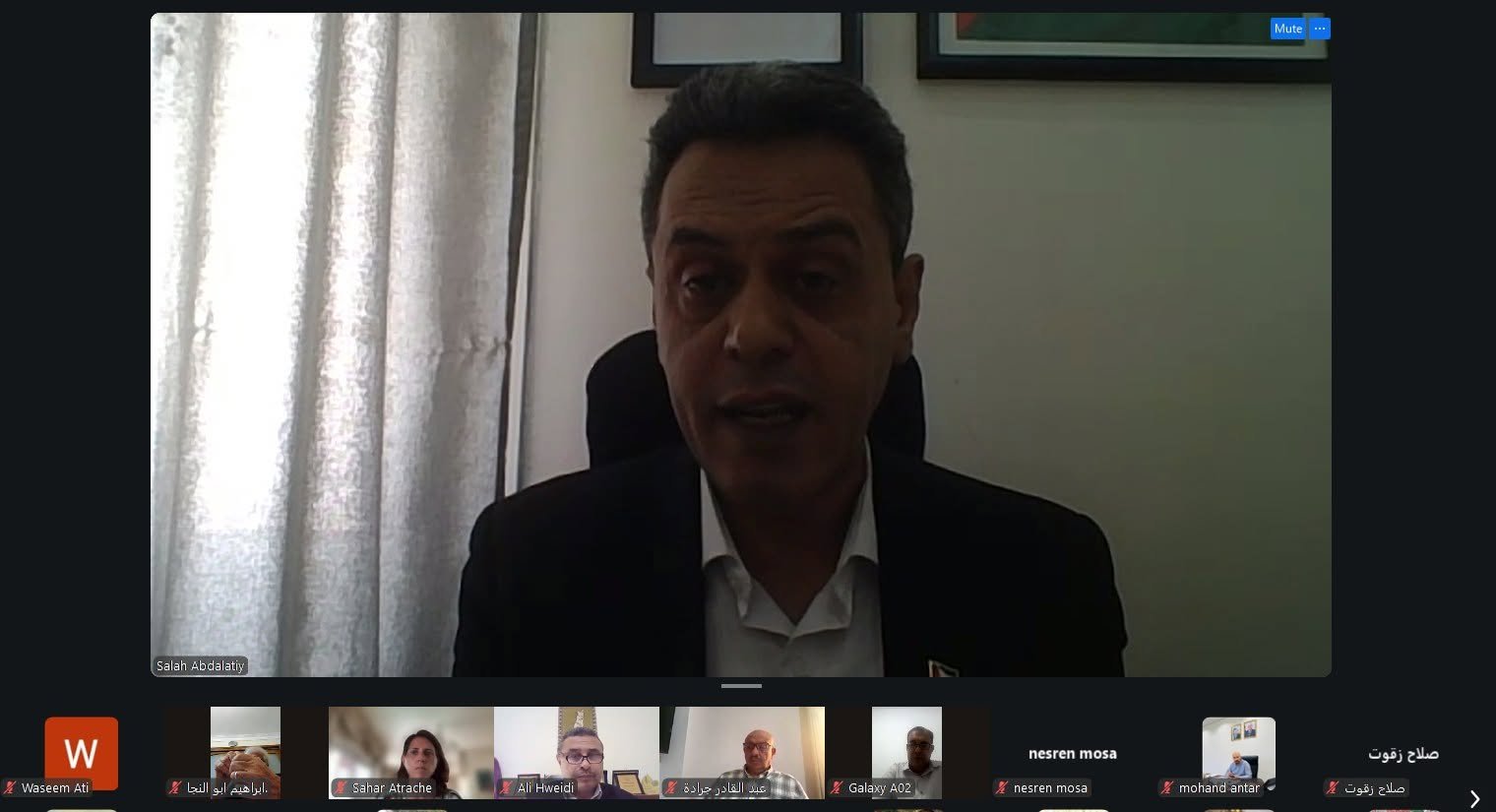
Opening the forum, Dr. Salah Abdalati stressed that what is taking place in the Gaza Strip is no longer merely a military confrontation, but rather a fully-fledged crime of genocide aimed at reshaping Palestinian reality in its entirety through mass killing, systematic starvation, the wide-scale destruction of infrastructure, and the targeting of the means of life and civil society institutions, in ways that exhaust Palestinian society and push it toward displacement and coercive restructuring under the pressure of catastrophe.
He explained that the ongoing negotiations in Cairo are no longer confined to a ceasefire or prisoner exchange, but now extend to deeper issues related to the future of governance in Gaza, the structure of civil administration, security, the future of weapons, reconstruction mechanisms, and the relationship between Gaza and the West Bank, all the way to the future of the Palestinian political system as a whole, including discussion of mechanisms for implementing the roadmap put forward by the mediators within regional and international arrangements, among them the plan advanced by President Donald Trump.
Dr. Abdalati warned that the continuation of political division and the continued management of the crisis without a clear political path may lead to the reproduction of the occupation in different forms, even if the tools change. He stressed the need to consolidate a ceasefire, accelerate the entry of humanitarian aid, and activate recovery and reconstruction efforts, while warning of the risks of pushing Gaza toward chaos and shifting it from a national liberation project into a reality of open-ended crisis management without sovereignty or political horizon.
He also pointed to what he described as “relative progress” in some of the ongoing negotiation tracks in Cairo, where efforts are underway to formulate understandings around a roadmap that includes consolidating the ceasefire, facilitating aid delivery, forming a committee to administer Gaza, discussing gradual Israeli withdrawal, the possible deployment of international forces, and ensuring a comprehensive reconstruction path, leading to discussion of scenarios for a full withdrawal that would protect civilians.
Civil society role
The forum witnessed broad discussion of the role of civil society in the current phase, with participants agreeing on the need to reposition it as a central actor through the formation of a national pressure bloc and the creation of a national council of wise figures composed of independent personalities capable of formulating practical alternatives that transcend political paralysis.
Participants called for moving from managing political disagreements to prioritizing the protection of the Palestinian human being as the essential entry point to any stability, through ending the war, accelerating humanitarian aid, and guaranteeing the continuity of basic services in health, education, water, electricity, and relief.
They affirmed that Gaza belongs to its people, and that any future arrangements must begin with affirming the right of the population to remain on their land, confronting policies of displacement and genocide, enhancing societal resilience, and activating local initiatives, municipalities, and civil society organizations as the first line of defense against collapse.
Main warnings
Participants warned against the continuation of what they called the “engineering of no-solution,” describing it as a framework based on managing the crisis without ending it, thereby keeping the Gaza Strip in a condition of open political and humanitarian exhaustion and turning aid and reconstruction into conditional tools within highly complex arrangements.
They also stressed that the absence of a comprehensive political solution will lead to dangerous social and institutional disintegration and grant the occupation wider space to reshape Palestinian reality according to narrow security and humanitarian approaches. A number of speakers criticized the state of Palestinian division, factional performance, and the absence of national unity, emphasizing the need to rebuild the political system on the basis of partnership, democracy, and accountability in a way that restores the national project in the face of current challenges.
Some participants pointed out that the current phase may open a political window more conducive to understandings, in light of Israel’s reordering of its security priorities after recent escalations, particularly through efforts to prevent the conflict from evolving into a broader “unity of fronts” linked to Iran, which may drive a preference for separating the Gaza file from the wider regional framework and consolidating limited security arrangements that reduce the likelihood of escalation. Others noted that many initiatives that had previously been rejected have later returned to the table in more flexible forms under the pressure of changing conditions, making the current moment closer to a “redefinition of priorities” than to a final resolution.
Participants unanimously agreed that the Gaza Strip is experiencing an unprecedented humanitarian catastrophe as a result of the continued genocidal war, siege, and starvation, and the resulting near-total collapse of the health, education, and basic services sectors in the absence of any political horizon capable of halting this deterioration. They also pointed out that the systematic targeting of international relief institutions, foremost among them UNRWA, further complicates the humanitarian scene and threatens the minimum requirements of life and stability.
Participants expressed concern over the faltering international efforts aimed at providing protection for civilians, warning that the absence of effective international will contributes to the continuation of violations and obstructs recovery and reconstruction efforts. They also called for a comprehensive refoundation of the Palestinian political system, the strengthening of civil peace, and the building of institutions capable of managing the transitional phase efficiently and responsibly while preventing chaos and institutional collapse.
Final recommendations
At the conclusion of the forum, participants reached a set of central recommendations,:
-
An immediate and permanent end to the genocidal war and protection of the Palestinian people and their existence.
-
Opening all crossings and intensifying the entry of humanitarian aid without restrictions.
-
Launching recovery and reconstruction programs without political or security conditions.
-
Strengthening citizens’ resilience in education, health, and basic services.
-
Rebuilding the Palestinian political system on the basis of partnership and ending division, while warning against unilateral reconstruction attempts, including holding Palestinian National Council elections without national consensus.
-
Supporting UNRWA and humanitarian institutions and ensuring the continuity of their humanitarian work.
-
Forming a national emergency committee to administer the Gaza Strip until the Gaza Administration Committee can enter the Strip and to enhance communication among all official, international, and local components.
-
Establishing a civil society council to generate resilience-supporting initiatives and launching a national fund to support Gaza with participation from Palestinians at home and in the diaspora.
-
Strengthening the global solidarity movement, advancing international justice efforts, and activating the establishment of an international humanitarian coalition to provide international protection for Palestinian civilians and ensure the deployment of international forces to separate the Israeli occupation and guarantee its withdrawal from the Strip.
Participants affirmed that the current phase requires a new national approach capable of protecting people, enhancing resilience, rebuilding trust between citizens and their institutions, preventing collapse and chaos, rebuilding institutions on professional foundations, and opening an internal political path for reconstructing all institutions of the political system and the national movement through a strategy linking the protection of Palestinian existence and resilience with ending the occupation and achieving justice.
They further emphasized that confronting the “engineering of no-solution” requires an inclusive, pragmatic national vision and plan, an active societal movement, the activation of all political, popular, and diplomatic tools, and serious Arab and international pressure that places the protection of human beings, the end of the genocidal war, the guaranteed flow of humanitarian aid, Israeli withdrawal from the Gaza Strip, and reconstruction at the heart of any political settlement.