
ICSPR Warns Against Turning Gaza Recovery and Reconstruction into a Tool for Managing Destruction and Reshaping Palestinian Reality, Calls for International Protection and Effective Accountability

Date: 29 September 2026
Press Release
ICSPR Warns Against Turning Gaza Recovery and Reconstruction into a Tool for Managing Destruction and Reshaping Palestinian Reality, Calls for International Protection and Effective Accountability
The International Commission to Support Palestinians’ Rights (ICSPR) is following with grave concern the continuing Israeli violations against Palestinian civilians in the Gaza Strip, the West Bank, and occupied Jerusalem, alongside the introduction of new arrangements for recovery and reconstruction in the Gaza Strip and the accompanying discussions regarding the future administration of the Strip and the role of international institutions, foremost among them the United Nations Relief and Works Agency for Palestine Refugees in the Near East (UNRWA).
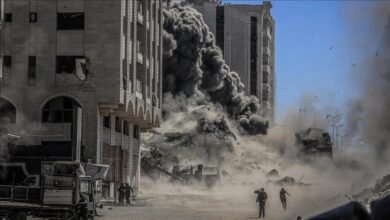
ICSPR considers that these developments are taking place at a time when effective protection for civilians has not yet been achieved and the effects of war and violations remain evident on the ground. The priority of the international community must therefore be to stop violations, guarantee civilian protection, and enforce international law—not merely to manage the consequences of the catastrophe.
The Commission warns that the recovery and reconstruction phase, despite its urgent humanitarian necessity, must not become a framework for administering Gaza, re-engineering its political, security, or demographic reality, or transforming the consequences of war, displacement, and destruction into permanent political and legal facts.
ICSPR affirms that rebuilding life in the Gaza Strip must be a Palestinian right and a process led by the actual needs of the population, under Palestinian leadership and ownership, with international support and a human-rights-based framework. Such a process must guarantee the return of displaced persons, Palestinians’ ability to remain on their land, and the protection of the unity of Palestinian territory, institutions, and inalienable rights.
Continued killings require real protection
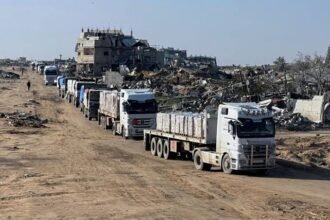
ICSPR condemns the continuing killing and injury of Palestinians in the Gaza Strip despite the ceasefire. It stresses that any arrangement to halt hostilities loses its humanitarian and legal meaning if civilians continue to be targeted and if aid, fuel, medicine, shelter materials, and reconstruction supplies remain subject to restrictions and obstacles.
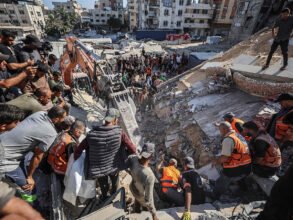
According to the latest reported data, the number of Palestinians killed in the Gaza Strip since 7 October 2023 has reached approximately 74,022, while the number of injured has reached 175,980. Since the beginning of the ceasefire on 11 October 2025, approximately 1,421 Palestinians have been killed and 4,983 injured, in addition to the recovery of the bodies of 834 Palestinians.
ICSPR considers that the continued loss of life following the ceasefire confirms that the primary priority remains the protection of civilians, the consolidation of the ceasefire, and ensuring regular humanitarian access, rather than moving toward the management of destruction while the sources of danger remain in place.
Recovery must rebuild life
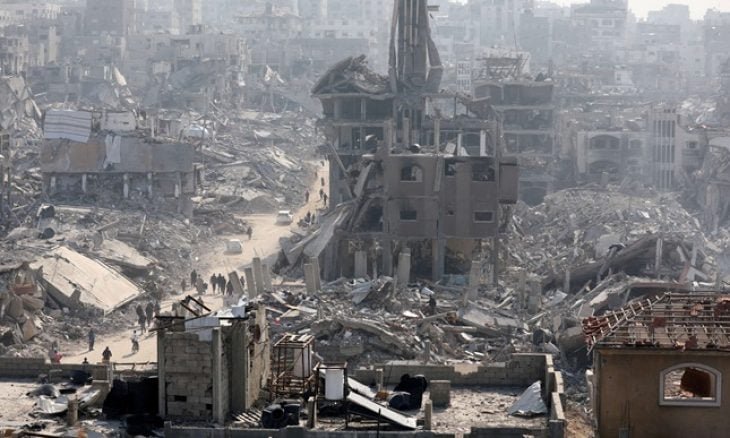
ICSPR affirms that the scale of destruction and needs in Gaza makes recovery and reconstruction an urgent humanitarian necessity. This includes rebuilding homes, hospitals, schools, water and energy networks, roads, and public-service facilities, as well as restoring livelihoods and restarting the economy.
In this context, a six-month recovery plan comprising 66 projects at an estimated cost of approximately USD 2.45 billion has been announced, covering infrastructure, development, services, and other areas related to rebuilding life in the Gaza Strip.bbc
The Commission considers the provision of funding and the reconstruction of infrastructure necessary. However, the standard for assessing any recovery plan must not be the size of its funding or the number of its projects, but rather its responsiveness to the needs of the population, its respect for their rights, and the guarantee of their genuine participation in setting priorities, implementation, and oversight.
Rebuilding a home does not replace its owner’s right to return to it. Rebuilding a hospital does not remove the obligation to protect patients. Removing rubble does not eliminate responsibility for its destruction. Reconstruction must not become a means of turning the outcomes of war into permanent political realities.
ICSPR warns against the Board of Peace’s announcement that UNRWA would have no role in the Gaza Strip and rejects any attempt to treat this issue merely as a change in the entity providing humanitarian services.
The Commission affirms that UNRWA was established by the United Nations General Assembly under Resolution 302 (IV) of 1949 and derives its mandate from successive General Assembly resolutions. Accordingly, no transitional, administrative, or funding arrangement for Gaza’s reconstruction can, on its own, redefine the mandate of an agency created by the General Assembly or impose an alternative to it outside the United Nations framework.unrwa+2
ICSPR warns that the danger is not confined to the direct abolition of UNRWA. It may also take the form of a gradual dismantling of its role through cuts to funding and services, its exclusion from recovery and reconstruction arrangements, and the transfer of its responsibilities to other entities. This could weaken the United Nations’ presence in relation to the Palestinian refugee question.
At the same time, the Commission affirms that UNRWA is not the source of Palestinian refugees’ rights. Ending the Agency’s services or replacing it with other arrangements does not end the refugee question or extinguish their rights, including the rights enshrined in relevant international legal references.
West Bank and Jerusalem
ICSPR is following with concern the escalation of demolitions, evictions, land confiscation, settlement expansion, and settler violence in the West Bank, particularly in Masafer Yatta, where homes, agricultural facilities, water and energy resources, and residents’ livelihoods are subjected to demolition and removal within a continuing context of restrictions on construction and access to land.
The Commission considers that displacement does not necessarily begin when people cross borders. It can be created gradually when conditions for remaining in a place become unbearably harsh as a result of house demolitions, the destruction of water and energy sources, land confiscation, settler violence, and restrictions on movement, work, and access to land. ICSPR warns that the continuation of such policies threatens to turn demographic and geographic change into a permanent reality.
ICSPR condemns the continuing incursions and restrictions imposed on Palestinians in Jerusalem and at Al-Aqsa Mosque, as well as any measures aimed at changing the existing legal and historical status quo at holy sites. It affirms that freedom of worship and access to holy places must be guaranteed, and that imposing new realities by force does not create legal entitlement.
The Commission also condemns violations against Palestinian prisoners and detainees, including threats made by Israeli officials. It stresses that persons deprived of their liberty are protected under international law and that any threats against them require investigation and accountability.
International obligations
ICSPR affirms that the accumulation of killings, destruction, displacement, settlement expansion, land confiscation, and alteration of the demographic reality cannot continue while the response remains limited to statements of condemnation. International responsibility includes protecting civilians, investigating violations that may amount to international crimes, guaranteeing victims’ access to justice, and pursuing those responsible.
It further includes the obligation of states not to recognise unlawful situations and not to render aid or assistance in maintaining them, as affirmed by the International Court of Justice in its Advisory Opinion of 19 July 2024. The Court concluded that Israel’s continued presence in the Occupied Palestinian Territory is unlawful and held that all states must neither recognise as lawful the situation arising from that presence nor provide aid or assistance in maintaining it.un+2
ICSPR’s demands
Based on the above, ICSPR calls for:
-
The full and effective implementation of the ceasefire; an end to all acts of targeting; and effective protection for civilians in the Gaza Strip, the West Bank, and occupied Jerusalem.
-
The opening of crossings and the sufficient, regular entry of food, medicine, fuel, water, shelter supplies, and reconstruction materials, with recovery and reconstruction conducted under Palestinian leadership and ownership, supported internationally, grounded in human rights, and based on genuine Palestinian participation.
-
The guaranteed return of displaced persons and their ability to remain on their land, and the rejection of any arrangements that turn temporary displacement into a permanent reality.
-
Protection of UNRWA; rejection of any attempt to exclude it or dismantle its role outside the United Nations framework; and the guaranteed continuity of its funding and ability to carry out its mandate.
-
An end to demolitions, evictions, land confiscation, settlement activity, and settler violence; protection for the residents of Masafer Yatta and all Palestinian communities; respect for the existing legal and historical status quo in Jerusalem, Al-Aqsa Mosque, and holy sites; and an end to unilateral measures.
-
Respect for the rights of prisoners and detainees, investigation into violations against them, and accountability for those responsible.
-
Independent and effective investigations into violations and crimes, and the prosecution of those responsible through competent national and international justice mechanisms.
-
Practical measures to implement obligations arising from international law, United Nations resolutions, and the International Court of Justice Advisory Opinion, including the duty not to recognise unlawful situations or provide assistance in maintaining them.