
Escalating Ceasefire Violations and Continuing Grave Abuses Against Civilians in the Gaza Strip, the West Bank, and Occupied Jerusalem

Date: September 24, 2026
Press Statement
Escalating Ceasefire Violations and Continuing Grave Abuses Against Civilians in the Gaza Strip, the West Bank, and Occupied Jerusalem
The International Commission to Support Palestinian Rights (ICSPR) condemns in the strongest terms the continuing and escalating violence against Palestinian civilians in the Gaza Strip, the West Bank, and occupied Jerusalem. ICSPR stresses that the announcement of a ceasefire has yet to translate into effective protection for the population. Killings, bombardment, gunfire, and the demolition and destruction of buildings continue, while effective mechanisms for monitoring, enforcement, and accountability remain absent. This further weakens the ceasefire arrangements and leaves civilians at risk.
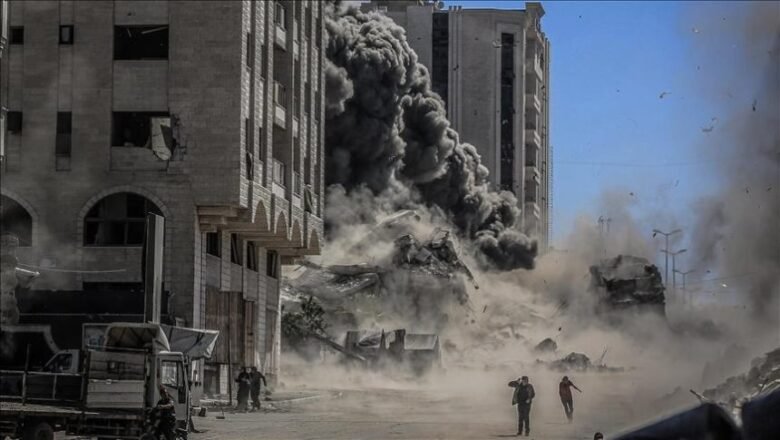
Over the past 72 hours, from September 22 to 24, 2026, ICSPR documented a series of serious incidents across the Gaza Strip, including bombardment, gunfire, attacks on civilians and vehicles, and the demolition of buildings. Gaza’s Ministry of Health reported that six people who had been killed, including one who died of earlier wounds, and 35 injured people were brought to hospitals in the previous 24 hours.
On Wednesday, September 23, ICSPR documented the killing of Muhannad Husni Abu Madin by Israeli forces west of Al-Zahra City; the death of Yahya Juma Samour, 27, from injuries sustained north of Khan Younis; and the death of Nour Awni Diab from a gunshot wound sustained in Al-Bureij Camp. ICSPR also documented an attack on a civilian vehicle near the American Hospital west of Al-Zawayda that killed one person and injured eight others, and an attack on a group of civilians outside Haifa School in central Khan Younis that injured four people. These incidents took place alongside building demolitions east of Gaza City.
On Thursday, September 24, ICSPR documented an attack on a civilian vehicle near the Al-Baydar area on Al-Rashid Street, west of Gaza City, which injured several people. It also documented a civilian injured by gunfire from a quadcopter at the entrance to Twentieth Street in Al-Nuseirat Camp; two people injured by gunfire directed toward Halawa Camp east of Jabalia; and artillery shelling in the Al-Atatra area north of Beit Lahia.
According to the figures cited by ICSPR, the toll since the ceasefire announcement on October 11, 2025, has risen to approximately 1,408 people killed and 4,916 injured, in addition to 834 cases in which bodies were recovered. The cumulative toll since October 7, 2023, stands at approximately 73,928 people killed and more than 175,030 injured, with thousands more missing beneath the rubble.
ICSPR stresses that these continuing attacks, together with demolitions and attacks on civilians and vehicles, cannot be treated as isolated incidents or incidental ceasefire violations. They require an independent and effective international mechanism to monitor and verify violations, establish responsibility, and ensure that the ceasefire does not become a merely formal framework under which civilians continue to be killed and the foundations of their lives destroyed.
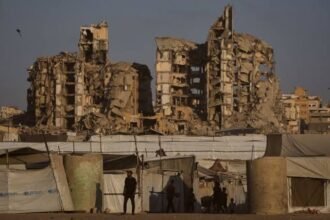
These attacks coincide with a severe deterioration in humanitarian and health conditions and infrastructure. Hospitals and medical facilities face acute shortages of fuel, medicines, medical consumables, and spare parts. The water, sanitation, and hygiene crisis is worsening, while access to essential services continues to decline. The housing and shelter crisis also persists: hundreds of thousands of homes have been damaged, restrictions remain on the entry of construction and shelter materials, and the risk of damaged buildings collapsing is growing as winter approaches.
In this context, ICSPR documented the collapse of an unoccupied three-storey house in the Al-Nafaq area of northern Gaza City, days after a residential building collapsed in the Al-Sina’a area of Gaza City, killing 21 people, including 12 children. These incidents expose the danger posed by damaged buildings to people returning to their homes and to displaced residents. Rescue and rubble-removal efforts remain constrained by shortages of heavy machinery, fuel, and spare parts, alongside damage to water and sewage networks and declining sanitation services.
ICSPR holds the Israeli occupation authorities responsible for continuing restrictions that obstruct the entry of aid, fuel, equipment, and materials needed to restore essential services. Food, water, health care, and shelter are fundamental rights that must not be subjected to coercion or used as tools to manage the humanitarian crisis. The entry of limited quantities of aid does not relieve the occupying power of its obligations under international humanitarian law.
In the West Bank and occupied Jerusalem, settlement expansion, annexation, forced displacement, demolition of homes and other structures, land clearance, and attacks on Palestinians and their property continue. On September 24, West Bank governorates witnessed incursions, arrests, and raids, particularly in Qalqilya and Tulkarm; house demolitions in Beit Imrin; the clearance of agricultural land in Salfit and Ramallah; settler attacks; and incursions into Al-Aqsa Mosque. These developments reflect a continuing course of action that threatens the Palestinian presence and undermines the Palestinian people’s right to self-determination.
ICSPR stresses that events in Gaza, the West Bank, and occupied Jerusalem form an interconnected situation that cannot be separated or addressed through fragmented policies. The continuation of settlement expansion, annexation, and displacement, alongside the destruction of Gaza and the erosion of the basic conditions for life there, threatens the unity of Palestinian territory and undermines any prospect of a just settlement based on international law.
Statements at the General Assembly
ICSPR welcomes the statements made by numerous heads of state, heads of government, and officials participating in the eighty-first session of the United Nations General Assembly. Those statements emphasized the need to end the war, protect Palestinian civilians, ensure humanitarian access, reject settlement expansion, annexation, and displacement, and uphold international law and the Palestinian people’s right to self-determination.
ICSPR considers these positions an important political and legal foundation that must be translated into practical measures. International responses must not remain limited to expressions of concern and condemnation.
ICSPR also welcomes the General Assembly’s adoption, by 152 votes in favour, three against, and four abstentions, of arrangements enabling the State of Palestine to participate in the work of the eighty-first session and for its President’s address to be delivered. ICSPR regards this as an affirmation of Palestine’s continuing legal and political presence within the international system and stresses the need to turn this broad support into concrete steps to protect the Palestinian people, end occupation and settlement expansion, and secure their right to self-determination.
ICSPR holds the international community—particularly the United Nations, the States Parties to the Geneva Conventions, and the guarantors of the ceasefire—responsible for moving from statements to binding and effective measures that protect civilians, ensure humanitarian access, halt settlement expansion and displacement, and activate international accountability and justice mechanisms. ICSPR reiterates the need to respect the independence of international justice mechanisms and not to undermine or obstruct their ability to hold those responsible for serious crimes and violations to account.
Accordingly, ICSPR calls for:
-
An immediate and complete end to killings, bombardment, gunfire, and the demolition and destruction of buildings in the Gaza Strip, and the effective implementation of the ceasefire through an independent international mechanism to monitor and investigate violations and establish responsibility.
-
Urgent international protection for Palestinian civilians, the opening of crossings, and the removal of restrictions to ensure safe and unhindered access to humanitarian assistance, including food, water, medicines, fuel, shelter materials, and construction supplies. Hospitals and medical facilities must be able to continue operating, relief and ambulance personnel must be protected, and medical evacuations must be facilitated.
-
Independent and transparent international investigations into all serious violations of international law, accountability for those responsible, an end to impunity, and support for the independence of international justice mechanisms.
-
An immediate end to forced displacement, settlement expansion, home demolitions, land clearance, and attacks in the West Bank and occupied Jerusalem, with protection for residents, their property, and holy sites.
-
Guarantees for the Palestinian people’s right to self-determination and the unity of their territory and national institutions, and a link between reconstruction and political and security arrangements and a Palestinian and international process that safeguards their national and legal rights and ends the occupation.