

ICSPR: From the Killing of Civilians, Starvation and Forced Displacement to the Testimonies in the Film “NAZA” — Accumulating Evidence Requires an End to Crimes and Accountability for Israeli Occupation Leaders

15 September 2026
Press Release
ICSPR: From the Killing of Civilians, Starvation and Forced Displacement to the Testimonies in the Film “NAZA” — Accumulating Evidence Requires an End to Crimes and Accountability for Israeli Occupation Leaders
The International Commission to Support Palestinians’ Rights (ICSPR) affirms that the continued Israeli crimes against the Palestinian people in the Gaza Strip, the West Bank, and occupied Jerusalem, despite the announcement of a ceasefire, starkly expose the international community’s failure to translate the rules of international law into effective protection for civilians. The current stage can no longer tolerate mere condemnation or expressions of concern. It requires an actual halt to killings, targeting, starvation, and forced displacement; guaranteed protection for civilians; independent and effective investigations; accountability for those responsible for crimes; and an end to impunity.
ICSPR considers that the accumulated facts cannot be treated as isolated incidents or incidental consequences of war. Rather, they constitute a continuing pattern of grave violations of international humanitarian law and international human rights law, and may be linked to international crimes requiring investigation, prosecution, and accountability.
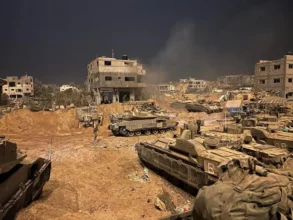
ICSPR stresses that the Gaza Strip continues to endure the killing and targeting of civilians even after the ceasefire announcement. The total number of casualties since 7 October 2023 has risen to 73,789 Palestinians killed and 174,798 injured. Since the beginning of the ceasefire on 11 October 2025, approximately 1,375 Palestinians have been killed, 4,686 injured, and 831 bodies recovered. Between 10 and 15 September 2026, ICSPR documented the killing of 27 Palestinians, including a woman and her unborn child, in addition to dozens of injuries.
Today, shelling, gunfire, and targeting continued in several areas of the Gaza Strip, including Gaza City, Sheikh Radwan, Jabalia, Al-Tuffah neighbourhood, and Sheikh Ajleen neighbourhood. Those killed and injured included children and a paramedic. ICSPR considers that the continuation of such violations after the announcement of a ceasefire confirms that any agreement not accompanied by effective international mechanisms for monitoring, verification, protection, and accountability remains incapable of providing security for civilians and allows Israeli violations and crimes to continue.
ICSPR affirms that the crime in Gaza is not confined to direct killing. It also extends to the destruction of the conditions necessary for life and the imposition of harsh living conditions that endanger the health and survival of the population. All six wastewater treatment plants in the Gaza Strip have ceased operating, while approximately 70% of pumping stations have become inoperative. More than 150,000 cubic metres of untreated wastewater are discharged daily, threatening water sources, the environment, and public health, and increasing the risk of disease outbreaks.
At the same time, hospitals and health centres face acute shortages of fuel, medicines, medical supplies, and spare parts. There are warnings that fuel supplies for more than 20 hospitals and health centres may stop, threatening these facilities’ ability to operate generators and medical equipment and to provide life-saving services. ICSPR stresses that the targeting of medical personnel and ambulances, including the killing of an ambulance driver while carrying out his humanitarian duty, constitutes a grave violation of the protection afforded by international law to medical staff and medical transport. It requires an independent investigation to establish both direct and command responsibility.
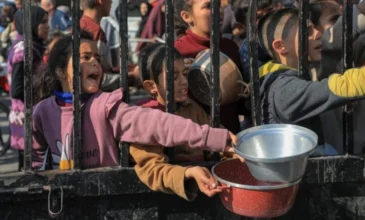
ICSPR considers that starvation in Gaza is not caused solely by food shortages. It results from an interlinked system of siege, restrictions on humanitarian aid, destruction of the economy, collapse of income sources, rising prices, and the absence of purchasing power. These factors leave the population unable to obtain its essential needs even when certain goods are available in markets.
As the number of humanitarian aid trucks is reduced to levels that do not correspond to the scale of overwhelming needs, and at a time when more than 350,000 Palestinians have lost their jobs and around 95% of young people in the Gaza Strip have no employment opportunities, reducing supplies does not merely mean fewer available goods. It means deepening poverty, hunger, and people’s inability to purchase food, medicine, and shelter materials. ICSPR stresses that the presence of food in markets does not mean that it reaches people who have neither income nor purchasing power, and that humanitarian aid, while indispensable, cannot replace the right to work, income, and a dignified life.
ICSPR warns that the continuation of this situation with the approach of winter multiplies the risks of humanitarian catastrophe, amid mass displacement, the absence of adequate shelter, shortages of clean water, shelter materials, heating supplies, and protection, as well as the destruction of infrastructure and transport. This impedes the ability of patients, injured persons, and persons with disabilities to reach medical care and exposes hundreds of thousands of civilians to further danger.
The Commission stresses that restricting humanitarian aid in a society where homes, employment opportunities, and productive capacity have been destroyed cannot be treated as a merely logistical matter. Its direct consequences for the rights to life, food, health, housing, and human dignity, and for people’s ability to remain on their land, must be recognised.
ICSPR affirms that what is taking place in the Gaza Strip cannot be separated from the broader system of occupation in the West Bank and occupied Jerusalem, where raids, arrests, killings, and the use of lethal force continue in parallel with settlement expansion, land confiscation, forced displacement, and settler violence. Palestinian citizen Ziad Mohammed Jaber, 54, was killed in the Umm Al-Sharayet area of Al-Bireh after being shot by Israeli occupation forces during a raid on the area, in a context of repeated use of lethal force.
Meanwhile, 165 settlers entered the Al-Aqsa Mosque compound under the protection of Israeli occupation police, as part of continuing attempts to impose new facts on the ground and undermine the existing legal and historical status quo in the city and its holy sites. ICSPR considers settlement expansion, annexation, forced displacement, and settler violence not as separate files, but as interconnected tools for reshaping the geographic and demographic reality of the occupied Palestinian territory and imposing facts by force.
ICSPR recalls that the International Court of Justice confirmed, in its 2024 Advisory Opinion, the unlawfulness of Israel’s continued presence in the Occupied Palestinian Territory and its associated settlement and annexation policies. The Court also affirmed the obligations of states, notably the obligation not to recognise as lawful the situation arising from these unlawful policies and not to render aid or assistance in maintaining it.un
In this context, ICSPR considers the action taken by more than 130 British legal experts, including 18 King’s Counsel, calling for expanded British measures against activities associated with the occupation and settlements, an important development in the legal discussion concerning state responsibility. The demands included extending restrictions to arms, services, and economic transactions that could contribute to maintaining the occupation and settlement enterprise. ICSPR stresses that respect for international law cannot remain limited to statements of condemnation; it must be transformed into practical measures and policies preventing states, companies, and institutions from contributing to the continuation of Israeli occupation crimes.
ICSPR considers that the testimonies revealed in the film “NAZA”, provided by 24 former personnel from Israeli military and intelligence institutions, constitute an important link in the accumulation of evidence concerning crimes committed in the Gaza Strip. The testimonies are significant because they come from persons who worked within the military and security establishment itself, and because they converge with Palestinian testimonies, field evidence, and the accumulated human rights and legal documentation. The film reportedly examines targeting systems used in Gaza and features accounts from 24 Israeli military and intelligence insiders.aa
The Commission stresses that these testimonies must not be reduced to their media dimension. They should be added to the body of accumulated evidence before the International Court of Justice and the International Criminal Court in a manner that enables the accountability of political and military officials before international justice. ICSPR therefore renews its call for international commissions of inquiry, investigators, experts, and the international press to be granted independent and safe access to the Gaza Strip, to inspect crime scenes, examine evidence, document testimonies, protect witnesses and crime scenes, and prevent the destruction, concealment, or manipulation of evidence.
ICSPR recalls that the International Criminal Court issued arrest warrants in November 2024 for Benjamin Netanyahu and Yoav Gallant on allegations of war crimes and crimes against humanity. These warrants are not political positions or recommendations that may be ignored; they are judicial orders issued by a competent court and must be respected and implemented in accordance with the relevant legal obligations. The ICC announced that the warrants were issued on 21 November 2024, citing reasonable grounds to believe that Netanyahu and Gallant bore criminal responsibility, including for the war crime of starvation as a method of warfare and crimes against humanity including murder, persecution, and other inhumane acts.icc-cpi+1
As Netanyahu travels to New York to participate in the United Nations General Assembly, amid reports that his aircraft’s route was altered because of concerns regarding arrest, protests, and mobilisations against him, his presence in New York poses a renewed test of the international community’s seriousness in respecting international justice. It confirms that accountability is no longer solely a Palestinian issue, but a test of the credibility of the international system and its ability to apply its rules equally.
ICSPR affirms that the continued killing of civilians; the targeting of ambulances and medical personnel; the starvation of the population; the reduction of aid; the destruction of livelihoods and income sources; and the abandonment of hundreds of thousands of people without employment or a genuine ability to purchase their basic needs, alongside settlement expansion, annexation, and displacement in the West Bank and occupied Jerusalem, constitute a real test of the credibility of the international system and the rule of law.
Responsibility is not measured by the number of condemnation statements issued. It is measured by the ability of the international community to transform law into protection, evidence into investigation, judicial orders into implementation, and international resolutions into tangible measures that end impunity, protect the Palestinian people, and bring ongoing crimes to an end.
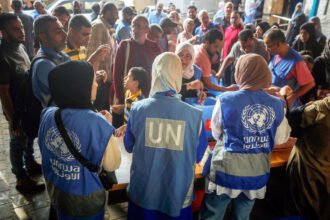
ICSPR stresses that international responsibility can no longer tolerate further delay. What is required is a shift from managing the crisis to addressing its causes, and from verbal condemnation to protection and accountability. This requires an immediate end to the killing of civilians and the guarantee of an effective and sustainable ceasefire in Gaza; the opening of crossings and the entry of sufficient quantities of food, medicine, water, fuel, humanitarian assistance, and shelter materials without obstruction; protection for hospitals, medical personnel, ambulances, and humanitarian workers; and investigations into all killings, attacks, starvation, displacement, and destruction.
It further requires guaranteed independent international access to Gaza; protection of evidence and witnesses; respect for and implementation of International Criminal Court orders; activation of universal jurisdiction; and the imposition of effective measures to prevent the continuation of occupation, settlement expansion, annexation, and forced displacement.
ICSPR calls on the United Nations and third states, in accordance with their obligations under international law, not to recognise the unlawful situation arising from occupation, settlement, and annexation, and not to render aid or assistance in maintaining it. It further calls for a review of military, economic, financial, trade, and service relations that may contribute to entrenching this situation.
The Commission also calls for serious action to stop war crimes in Gaza, settlement expansion, settler violence, and forced displacement; to protect Palestinians in the Gaza Strip, the West Bank, and occupied Jerusalem; to preserve the existing legal and historical status quo at holy sites; to guarantee the Palestinian people’s right to self-determination and independence; to end the occupation; and to prevent the imposition of political or security arrangements that diminish their inalienable national and legal rights.