
ICSPR Aid Cuts and Obstruction of Medical Supplies Threaten the Suspension of Health Services and the Collapse of Essential Living Conditions in Gaza

Date: 21 September 2026
Press Release
ICSPR: Aid Cuts and Obstruction of Medical Supplies Threaten the Suspension of Health Services and the Collapse of Essential Living Conditions in Gaza
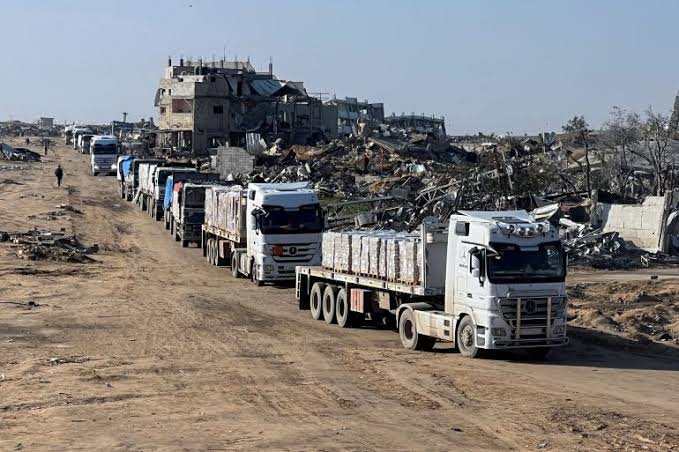
The International Commission to Support Palestinians’ Rights (ICSPR) warns of the rapidly deteriorating humanitarian situation in the Gaza Strip, as the Israeli blockade and restrictions on the entry of aid, fuel, and essential supplies coincide with declining international funding for the humanitarian response. This threatens more than two million Palestinians living under extremely harsh humanitarian conditions and affects, in an interconnected manner, food, health, water, sanitation, energy, transport, shelter, and protection.
ICSPR holds the Israeli occupation authorities responsible for the continued restrictions obstructing the entry of fuel, medicines, medical equipment, spare parts, water and sanitation supplies, shelter materials, and temporary housing units.
ICSPR affirms that the food crisis is worsening alongside the funding crisis. The World Food Programme has reported that approximately 1.5 million people in Gaza receive assistance every month, including around one million who receive food assistance, while approximately 1.4 million people face high levels of food insecurity. Due to funding shortages, the Programme was forced to reduce the value of cash assistance by 40% for approximately 375,000 people.reliefweb+1
Meanwhile, the Government Media Office in Gaza announced that the reported cuts could deprive approximately 400,000 people of essential assistance. ICSPR cites this figure as an estimate issued by the Government Media Office, while the World Food Programme continues to stress the need for hundreds of millions of dollars to sustain its operations.
ICSPR also warns of the ongoing collapse of the health sector. The Ministry of Health has announced that hospitals require approximately 2,500 litres of generator oil each month, and that a number of generators have already stopped operating due to shortages of oils, fuel, and spare parts. The remaining generators are operating under severe technical conditions.
At the same time, 28 out of 35 hospitals in the Gaza Strip have been partially or completely destroyed, according to the Palestinian NGO Network. The remaining facilities face shortages of fuel, medicines, consumables, medical equipment, and spare parts, in addition to disruptions in transportation for health personnel and restrictions on medical evacuation.
ICSPR stresses that the fuel and engine-oil crisis extends beyond hospitals and affects the entire humanitarian infrastructure. According to data from the United Nations Office for the Coordination of Humanitarian Affairs, only 13,445 litres of engine oil had been approved since 1 March 2026, while 92,778 litres remained pending approval.facebook+1
Of the pending quantities, 43,288 litres, or 47%, are intended for water, sanitation, hygiene, and waste-management services; 22,722 litres, or 25%, for health; 19,612 litres, or 21%, for operations and logistics; and 6,264 litres, or 7%, for food security. These supplies are essential for operating generators, vehicles, water facilities, desalination plants, wastewater systems, health facilities, food-distribution mechanisms, rescue operations, and rubble-removal equipment.
ICSPR underscores the gravity of the water and environmental situation. According to assessments, 91% of surveyed households face moderate to severe water insecurity. All six wastewater treatment plants in the Gaza Strip have ceased operations, approximately 70% of pumping stations have become non-functional, and more than 150,000 cubic metres of untreated wastewater are discharged every day. This threatens public health and increases the risks of disease outbreaks and environmental contamination.
These risks are compounded by the approaching winter season, amid damage to homes, overcrowding in displacement sites, and the pressing need for tents, insulation and heating materials, rainwater drainage, and temporary housing.
ICSPR considers that restrictions on medical evacuation further intensify the suffering of patients and injured persons. The Ministry of Health announced that the group scheduled for treatment in Egypt was reduced from 136 patients and companions to 72, and subsequently to 61 after 11 cases were returned. This confirms the need for a regular and effective medical-evacuation mechanism enabling all patients who require treatment unavailable in Gaza to access the necessary care without delay or unjustified restrictions.
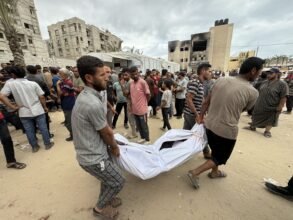
ICSPR affirms that these crises are escalating amid the rising toll of victims of genocide and continuing ceasefire violations. According to the latest Gaza Ministry of Health data, dated 21 September, 73,914 Palestinians have been killed and 174,952 injured since the beginning of the war. Since the ceasefire, 1,394 Palestinians have been killed and 4,839 injured, while 834 bodies have been recovered.sana+2
These figures demonstrate the urgent need to meet humanitarian and health needs at a time when the capacity of Gaza’s service systems to deliver humanitarian relief and recover is steadily declining.
ICSPR holds the Israeli occupation responsible for the continuation of the blockade and restrictions that obstruct the entry of aid and humanitarian supplies and impede the work of international organisations. It stresses that the international funding shortage must not become an additional factor deepening the catastrophe, and calls on donor states to urgently and sustainably close the funding gap.
The Commission further calls on mediators and the international community to compel the Israeli occupation to ensure the unhindered flow of food, medicine, fuel, shelter materials, equipment, and spare parts, and to guarantee that they reach the population and facilities with the greatest needs.
The International Commission to Support Palestinians’ Rights (ICSPR) calls on the United Nations, third states, regional and international organisations to take serious action and exert pressure on the Israeli occupation to guarantee the entry of humanitarian assistance and all required supplies—including fuel, equipment, spare parts, and essential items for hospitals, water and sanitation facilities, ambulance services, and civil defence.
It further calls for securing medical evacuation, temporary housing, and shelter materials as part of preparations for winter. What is required is not merely the management of a catastrophe or keeping Gaza at the minimum threshold of survival, but an end to the Israeli aggression and the protection of civilians’ rights to life, health, food, water, shelter, protection, and human dignity.