
ICSPR Escalating Security Chaos and Vigilantism Threaten Civil Peace and the Social Fabric in the Gaza Strip

Date: August 22, 2026
Press Statement
ICSPR: Escalating Security Chaos and Vigilantism Threaten Civil Peace and the Social Fabric in the Gaza Strip
The International Commission to Support Palestinian Rights (ICSPR) is following with profound concern, alarm, and deep regret the tragic developments and painful incidents witnessed in the Gaza Strip in recent days. These include the escalation of chaos and security breakdown, vigilante acts, and the use of bladed and firearms in family and individual disputes, resulting in killings, injuries, assaults, and direct threats to the lives and safety of civilians. Such developments risk grave consequences for civil peace and the social fabric, and threaten to transform individual disputes into broader family and community confrontations.
ICSPR affirms that Palestinian blood is a red line, and that no dispute regardless of its intensity or the parties involved—can justify the use of weapons, killing, intimidation, revenge, or retaliation. It warns of the danger of weapons becoming a means to settle disputes and impose influence, and of the growing phenomenon of family armament, which can turn individual altercations into collective confrontations, undermine the rule of law, and threaten what remains of social cohesion in the Gaza Strip.
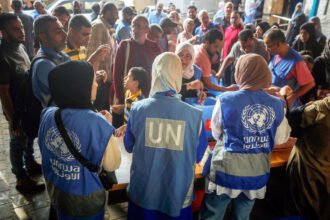
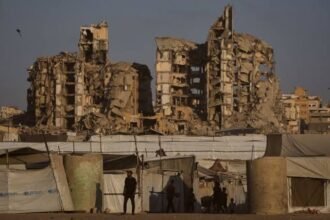
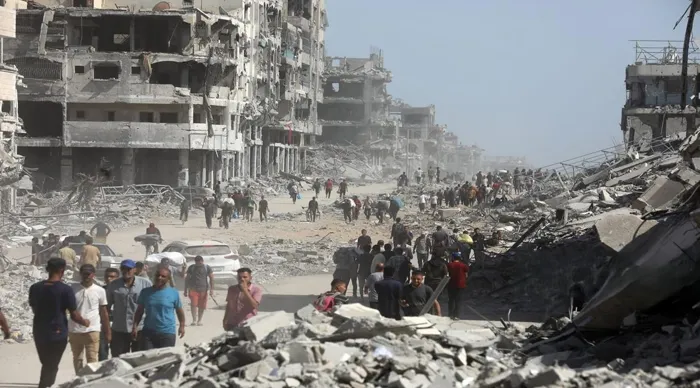
ICSPR believes that the seriousness of these developments cannot be separated from the catastrophic environment created by the genocide and Israeli military assault. Destruction, displacement, overcrowding, poverty, unemployment, psychological pressure, shortages of food, water, and humanitarian assistance, the collapse of services, the spread of weapons, weakened dispute-resolution mechanisms, and the declining ability to enforce the law have created an environment highly vulnerable to explosion. When access to food, water, or humanitarian assistance becomes a cause of conflict and bloodshed, it reveals a compounded crisis in protection and service delivery. This underscores the need to ensure that aid reaches people sufficiently, safely, regularly, and equitably, while protecting civilians, service centers, and aid-distribution queues.
ICSPR notes what it has documented regarding the rise in killings, shootings, and the use of weapons in altercations and family disputes, as well as the increased risks associated with chaos and crime. At the same time, it stresses that any allegations concerning the identity of perpetrators or the motives behind crimes must remain allegations until official investigations are completed. Responsibility must be determined through the law and the judiciary, away from rumors, incitement, revenge, and extrajudicial punishment.
ICSPR notes that the recent incidents constitute an extremely dangerous indication of the fragility of the security and social situation. These incidents include the killing of citizen Ahmad Assaf, 24, and the serious injury of his brother following an altercation in the Al-Tawam area north of Gaza on Saturday evening, according to circulating information. They also include the killing of one person and injury of others in an altercation involving gunfire in the Al-Katiba area west of Gaza City on Monday, August 17, as well as the earlier killing of two young men from the Abu Warda family in a shooting in the Sheikh Radwan neighborhood, followed by tensions and protests.
While extending its sincere condolences and solidarity to the families of the victims, ICSPR strongly condemns the resort to weapons and bloodshed to resolve disputes or seek revenge. Such acts constitute a grave assault on the rights to life, physical integrity, and personal security. Disputes, whatever their causes, must never become a pretext for killing, gunfire, intimidation, revenge, or retaliation.
ICSPR strongly condemns the Israeli occupation’s targeting of police personnel, leaders, and law-enforcement bodies in the Gaza Strip, as this weakens society’s capacity to protect its members and manage daily life. It affirms that the continued targeting of law-enforcement institutions and the destruction of the foundations of civilian life contribute to deepening the security and institutional vacuum and create conditions conducive to chaos, crime, and the imposition of faits accomplis.
ICSPR also warns that weakening law-enforcement institutions or obstructing their functions may open the way for outlaws, criminal groups, and entities linked to the occupation to impose a fait accompli, while increasing the risks of theft, assault, revenge, and internal fighting. It further stresses that the continuation of killings without the rapid and transparent identification of perpetrators fuels fear and rumors and opens the door to individual justice. This requires the publication of investigation results and the prosecution of those responsible in accordance with the law.
ICSPR affirms that combating crime, as well as addressing any suspicion of espionage or collaboration with the occupation, must be carried out exclusively through competent authorities and the judiciary. It categorically rejects summary executions, torture, cruel, inhuman, or degrading treatment, collective punishment, retaliation, private justice, and all forms of extrajudicial punishment. It further stresses the necessity of guaranteeing fair trials and due-process rights for every accused person, as the rule of law and judicial justice are the only means to combat crime and prevent descent into chaos and revenge.
At the same time, ICSPR stresses that protecting law-enforcement institutions does not mean granting them immunity from accountability. Rather, it requires enabling them to operate in accordance with the law and human rights standards, respecting human rights, remaining subject to oversight and accountability, and ensuring that no perpetrator of proven violations escapes punishment.
ICSPR calls upon families, clans, mukhtars, community elders, and reconciliation leaders to move beyond statements of condemnation toward practical measures. These must begin with holding their members accountable, withdrawing family and political protection from those who use weapons in internal disputes, refusing to conceal or protect perpetrators, refraining from interfering with justice, cooperating with competent authorities, preventing mobilization, revenge, and retaliation, and refusing to allow political or family affiliation to become a means of escaping legal responsibility.
ICSPR calls for the establishment of a unified national and community mechanism to safeguard civil peace. This mechanism should include governmental institutions, political, national and Islamic forces, families, clans, community elders, human rights and civil society organizations, and national and independent figures, in coordination with official institutions. It should work to prevent disputes, intervene early to contain them, support community reconciliation, and prevent mobilization and revenge. Under no circumstances should it become a security body or a substitute for the police, prosecution service, or judiciary. This mechanism is particularly needed during the transitional phase, pending the entry of the Gaza Administration Committee and the completion of agreed national arrangements to rebuild the justice system, judiciary, and law-enforcement bodies.
ICSPR also calls for the adoption of a national charter of honor for civil peace, rejecting the use of weapons in internal disputes; renouncing incitement, hatred, revenge, and retaliation; and committing families, factions, political forces, and community actors to withdraw protection from perpetrators of violence and cooperate with justice institutions.
ICSPR affirms that the growing national and community positions rejecting chaos and family violence must be translated into practical steps that go beyond statements, because protecting civil peace and rebuilding the political system are inseparable and mutually reinforcing processes.
ICSPR calls on all Palestinian forces, civil society organizations, clans, and all national, independent, and community figures to strengthen their role in protecting civil peace; end hate speech, incitement, and internal violence; respect political pluralism and freedom of opinion and expression; reject unilateralism and exclusion; and promote a culture of dialogue, pluralism, and national partnership.
ICSPR stresses that the upcoming elections must not become merely a competition for seats or a mechanism for reproducing division. Rather, they should constitute an entry point for rebuilding legitimacy and renewing the Palestinian political system on the basis of partnership, pluralism, democracy, and the rule of law, thereby providing a safe political, security, and social environment in which citizens can exercise their right to freely choose.
ICSPR affirms that the family is not a substitute for the state, the faction is not a substitute for institutions, weapons are not a substitute for the law, and revenge is not a substitute for justice.
ICSPR stresses that the urgent Palestinian priority is to prevent civil war and internal conflict, protect the internal front, restore national unity, and renew the Palestinian political system. Any comprehensive arrangements concerning security and weapons must be made within the framework of Palestinian national consensus. They must not be used as a tool for exclusion or settling scores, and must guarantee protection of the Palestinian person and their right to security, dignity, and the rule of law.
ICSPR calls upon the competent authorities to act urgently to stop manifestations of lawlessness; pursue perpetrators of killings, shootings, and assaults; seize and confiscate weapons used in crimes in accordance with the law; expedite investigations and announce their findings; and strengthen the roles of the police, prosecution, and judiciary, while fully respecting the rule of law, human rights, and fair-trial guarantees.
ICSPR calls on the international community and the United Nations to fulfill their legal and humanitarian responsibilities to protect civilians, halt Israeli occupation crimes, ensure the safe, regular, adequate, and equitable delivery of food, water, and humanitarian assistance, and prevent the Gaza Strip from becoming an area of security and institutional vacuum in which the most vulnerable civilians are the first victims.
ICSPR calls on media outlets, religious and community institutions, activists, and bloggers to fulfill their responsibilities in reducing tensions; rejecting incitement, rumors, and defamation; refraining from publishing unverified accusations or any material that may inflame family disputes; and promoting a culture of tolerance, dialogue, and reconciliation. Responsible media must be part of the system that protects society, not a factor that intensifies division and violence.
ICSPR affirms that Gaza, which is confronting occupation, military assault, genocide, and destruction, cannot bear an internal bullet, a family arms race, or renewed political or social violence. Protecting Palestinian society from collapse is not a political luxury; it is a national, human rights, and humanitarian duty. Saving Gaza begins with protecting its people from internal chaos, safeguarding civilians’ lives from revenge and retaliation, ensuring the basic necessities of life, and restoring security and justice.
International Commission to Support Palestinian Rights (ICSPR)