
ICSPR Israel’s Use of Kites as a Pretext to Kill Children, Target Civilians, and Enforce Forced Displacement, Alongside the Escalation of Settlement and Colonial Annexation Crimes, Constitutes a Systematic Policy to Eliminate Palestinian Rights

Date: 24 August 2026
Press Release
ICSPR: Israel’s Use of Kites as a Pretext to Kill Children, Target Civilians, and Enforce Forced Displacement, Alongside the Escalation of Settlement and Colonial Annexation Crimes, Constitutes a Systematic Policy to Eliminate Palestinian Rights
The International Commission to Support Palestinian Rights (ICSPR) condemns in the strongest terms the ongoing Israeli escalation in the Gaza Strip, including airstrikes and bombardment targeting residential areas and displaced persons’ tents in Al-Zawaida, Al-Nuseirat, Deir al-Balah, Khan Younis, Shuja’iyya, Rafah, and other areas.
According to preliminary field and medical information received during the past hours, these attacks resulted in the killing of at least three Palestinians and the injury of nine others, including children, displaced persons, and journalists.
Among the victims was four-year-old child Mohammed Abdulsalam Hassan Taha, who died from wounds sustained when the Afana barracks opposite the entrance to the First Maghazi Camp in Al-Zawaida was bombed. Young man Mohammed Nasser Abu Asad was also killed when Israeli aircraft targeted a tent housing displaced persons near the Martyrs of Al-Aqsa Hospital in Deir al-Balah.
Additional Palestinians were killed and injured in Al-Nuseirat, Al-Zawaida, and other areas. Journalist Ezz Al-Din Al-Batsh, aged 33, was injured by fire from an Israeli drone in the Shuja’iyya neighbourhood, along with other injuries across the Gaza Strip. This confirms that Palestinian civilians continue to be killed and targeted despite the ceasefire.
ICSPR affirms that this latest toll adds to the unprecedented human and health catastrophe caused by Israeli aggression and the genocidal war since 7 October 2023. The death toll has risen to approximately 73,420, with 174,369 injured.
Since the ceasefire began on 11 October 2025, approximately 1,286 Palestinians have been killed, in addition to 4,257 injured and 813 bodies recovered, while victims continue to fall almost daily.
These losses are worsening amid a profound humanitarian and health catastrophe. Approximately 94% of the population of the Gaza Strip requires shelter and basic supplies, while four out of every five families in shelters face critical or catastrophic levels of hunger.
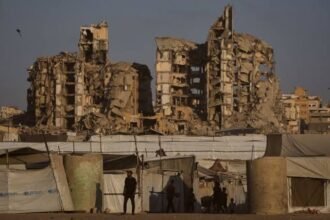
Only 12 oxygen stations out of 34 remain operational, alongside severe shortages of food, water, fuel, energy, medicine, and shelter materials, and an urgent need for the medical evacuation of patients and the wounded. This is compounded by the widespread destruction of homes, civilian facilities, and infrastructure, as well as the displacement of the majority of the population.
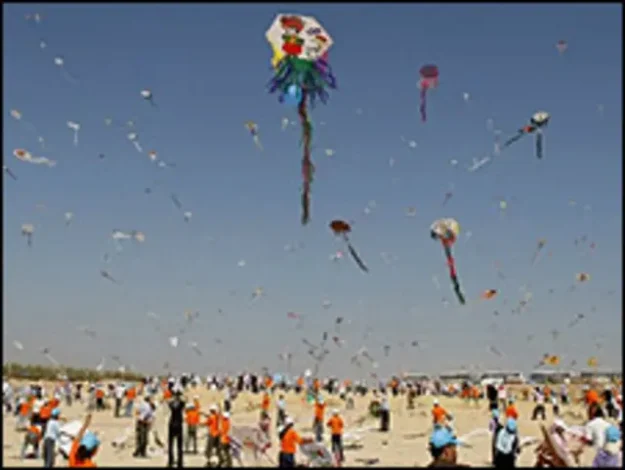
ICSPR expresses particular concern over Israeli threats to intensify attacks and assassinations and to target those launching balloons and kites, as well as the sources from which they are launched, including threats to evacuate residents from areas where these devices are allegedly launched.
The Commission considers that the combination of these threats with actual airstrikes, civilian casualties, and attacks on displaced persons’ tents goes beyond mere security rhetoric. It reveals an attempt to manufacture a political and military pretext under the label of an “imminent threat,” thereby facilitating the escalation of aggressive operations, violating the ceasefire, and preparing the conditions for a return to genocidal war and forced displacement.
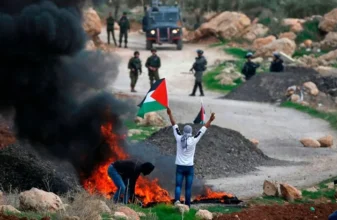
At the same time, ICSPR condemns the escalating Israeli crimes in the West Bank and Jerusalem, particularly the killing of martyr Fathi Hazem, known as Abu Raad, during the raid on his home in Jenin, and the killing of child Islam Al-Ajouri in the New Askar Camp east of Nablus.
The Commission also condemns the continuing raids, arrests, sieges, home demolitions, and land confiscations, as well as the escalation of settler terrorism and attacks against Palestinians, their property, and their lands.
These violations include the siege imposed, under the protection of occupation forces, on Palestinian homes in the village of Qusra since 9 August of this year, together with intimidation and the obstruction of basic and medical supplies.
ICSPR calls for the bodies of the martyrs being withheld to be handed over to their families. It affirms that these crimes must not be reduced to separate “security incidents,” but must be viewed within the broader context of control, coercion, terrorism, and colonial violence.
ICSPR condemns the occupation authorities’ issuance of tenders for the construction of 1,234 settlement units under the E1 plan, which targets approximately 3,400 settlement units in the vicinity of the Ma’ale Adumim settlement. This coincides with the number of settlers in the West Bank, including Jerusalem, reaching approximately one million settlers.
The Commission considers these developments evidence that settlement construction has become a central component of the project of de facto annexation. The E1 plan threatens the geographical contiguity of the West Bank, deepens the separation of its northern and central areas from the south, isolates East Jerusalem from its Palestinian surroundings, and undermines the possibility of establishing a contiguous and viable Palestinian state.
Accordingly, the project is not merely an urban expansion plan, but a tool for annexation and for changing the demographic and geographical reality of the occupied Palestinian territory.
ICSPR warns against Israeli measures aimed at legalising the execution of Palestinian prisoners, tightening solitary confinement, depriving prisoners of medical care, and eliminating fair-trial guarantees. It also warns of continuing reports of torture, ill-treatment, medical neglect, and deaths in detention, alongside increasingly frequent Israeli statements rejecting the establishment of a Palestinian state.
The Commission affirms that these measures and statements complement settlement construction, annexation, the fragmentation of the West Bank, and the isolation of Jerusalem in an attempt to prevent the realisation of Palestinian statehood and undermine the Palestinian people’s right to self-determination.
ICSPR affirms that the existence of kites, balloons, or drones does not grant the Israeli occupying power any licence to target civilians or residential areas, collectively punish their residents, or force them to flee.
It stresses that the use of force in occupied territory remains subject to the principles of distinction, proportionality, necessity, and precaution under international humanitarian law. Turning children’s toys or rudimentary devices into a “strategic threat” cannot justify targeting the civilian population.
The Commission warns that linking these devices to killing, bombardment, assassination, and evacuation constitutes a dangerous pretext for justifying acts and crimes prohibited under international law, particularly the targeting of civilians, collective punishment, and forced displacement.
ICSPR considers that what is taking place in Gaza, the West Bank, and Jerusalem is not a series of isolated events. Rather, it reveals a systematic Israeli policy aimed at forcibly reshaping Palestine politically, geographically, demographically, and legally.
This policy combines killing and displacement in Gaza; killing, raids, and settler terrorism in the West Bank; settlement construction, annexation, and Judaization; attempts to alter the legal and demographic status of Jerusalem; violations against prisoners; and rejection of the establishment of a Palestinian state.
The Commission affirms that this course seeks to transform the occupation from a situation that is supposed to be temporary and governed by international law into a permanent system of control, colonialism, settlement, and annexation, thereby undermining the essence of the Palestinian people’s right to self-determination.
ICSPR affirms that Israeli settlements in the occupied Palestinian territory violate international law and United Nations resolutions, particularly Security Council Resolution 2334. It warns that the E1 plan poses a direct threat to the geographical contiguity of the West Bank and to the possibility of establishing a viable Palestinian state.
The Commission also warns that continued displacement or demographic coercion in Gaza and the West Bank poses a grave danger to the demographic composition of the territory and to the Palestinian people’s right to self-determination.
It stresses that a Palestinian state is not an Israeli grant or an electoral issue within the occupying state. Rather, it is the realisation of an inherent and inalienable right of the Palestinian people.
ICSPR affirms that the continued absence of accountability is one of the main reasons for the occupation authorities’ and settlers’ persistence in committing international crimes. The growing gap between international resolutions and actual practice threatens the credibility of the international system and international law.
The Commission calls for a shift from mere condemnation to addressing these crimes as an integrated system of occupation, colonial settlement, annexation, displacement, racial discrimination, and impunity. This requires a comprehensive international political, legal, and economic response.
Accordingly, the International Commission to Support Palestinian Rights (ICSPR) calls for the following:
ICSPR calls on the mediators, the United States Administration, the United Nations, and the Security Council to take immediate and practical action to prevent the collapse of the ceasefire.
They must compel Israel to halt airstrikes, bombardment, assassinations, and evacuation threats; reject any security pretext used to justify the resumption of war or forced displacement; and establish an independent and effective mechanism to monitor the ceasefire, investigate violations, and hold those responsible accountable.
This is necessary to transform the ceasefire from a fragile arrangement into an effective mechanism for protecting civilians.
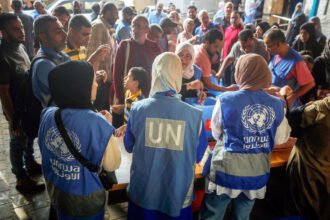
ICSPR calls for the immediate and adequate flow of humanitarian assistance and for food, water, fuel, medicine, and shelter materials to be secured. It also calls for the medical evacuation of patients and wounded persons, the rescue of what remains of the health system, and an urgent transition towards recovery and reconstruction.
The Commission affirms that humanitarian needs and reconstruction must not be turned into tools of political or military pressure on the population of Gaza.
Any international or stabilisation force in the Strip must operate under a clear and specific mandate in accordance with international law. Its mission must be to protect civilians, consolidate the ceasefire, and support the rule of law—not to protect the occupation or impose its arrangements by force.
ICSPR calls on the Security Council, the United Nations General Assembly, and States Parties to the Fourth Geneva Convention to fulfil their legal and political responsibilities.
They must take effective measures to halt settlement construction, annexation, displacement, and genocide; protect the civilian population; refuse to recognise the illegal situations imposed by the occupation; refrain from providing aid or assistance that contributes to their continuation; and impose targeted measures and sanctions on those responsible for international crimes, as well as on settlers and entities involved in settlement construction, violence, and its financing.
ICSPR calls on the United Nations, the European Union, and European, Arab, and Islamic states to move beyond statements of condemnation and warning towards practical and influential policies.
These policies should include strengthening the ban on settlement products, reviewing cooperation and funding relations that may contribute to settlement construction, imposing targeted sanctions on those involved in settlement construction, incitement, violence, and annexation, and using available political, economic, diplomatic, and legal tools to pressure Israel to halt the crimes and end the occupation.
The Commission also calls for urgent intervention to prevent the implementation of any death sentences against Palestinian prisoners and to ensure their rights in accordance with international law.
ICSPR calls for the continuation of justice and accountability processes before the International Criminal Court and the International Court of Justice.
It also calls for the continued documentation of crimes and the collection and preservation of evidence in accordance with international legal standards, as well as independent investigations into all killings, torture, ill-treatment, medical neglect, and violations committed against civilians and prisoners.
The Commission rejects any pressure or threats aimed at obstructing international justice or turning the accountability of perpetrators of international crimes into a subject of political bargaining.
ICSPR affirms that combating impunity is not a political option. It is a legal and moral obligation and an essential condition for redressing victims and preventing the recurrence of crimes.
ICSPR renews its call on the international community to move beyond condemnation and appeals towards ending Israeli aggression and the crimes of genocide and settlement construction, providing international protection, and imposing effective deterrent sanctions on the Israeli occupying state.
It also calls for support for the process of holding Israel accountable and prosecuting its leaders before international courts, and for enabling the Palestinian people to exercise their inalienable right to self-determination and establish their independent sovereign state on the borders of 4 June 1967, with Jerusalem as its capital.
International Commission to Support Palestinian Rights (ICSPR)