
From the 2014 Aggression to the Genocide in Gaza… Eleven Years of Impunity and the Failure of the International Community to Enforce Justice

Date: 7 July 2026
Press Statement
From the 2014 Aggression to the Genocide in Gaza… Eleven Years of Impunity and the Failure of the International Community to Enforce Justice
The International Commission to Support Palestinian People’s Rights (ICSPR) follows with deep concern and condemnation the ongoing genocide war waged by the Israeli occupying power against the Palestinian people in the Gaza Strip since 7 October 2023, which has now entered its third year, amid an unprecedented escalation of crimes of mass killing, systematic starvation, comprehensive destruction, forced displacement, and the systematic targeting of civilians and civilian objects, in flagrant violation of the Charter of the United Nations, international humanitarian law, international human rights law, the 1948 Convention on the Prevention and Punishment of the Crime of Genocide, the four Geneva Conventions, and the Rome Statute of the International Criminal Court.
The anniversary of the large-scale Israeli aggression on the Gaza Strip in 2014, which lasted for fifty-one days and resulted in the killing of more than 2,250 Palestinians and the injury of more than 11,000 others, as well as the destruction of thousands of homes, civilian facilities, and infrastructure, recalls a legal and political reality that has become firmly established: impunity has been, and continues to be, the principal factor behind the repetition and escalation of Israeli crimes, culminating in the genocide that the world is witnessing today.
International commissions of inquiry, United Nations bodies, the Human Rights Council, and international and Palestinian human rights organizations documented the grave crimes committed during the 2014 aggression and called for accountability for the perpetrators and justice for the victims. However, the absence of international political will, the failure of the international community to implement the recommendations of those commissions, and the double standards in the application of international law prevented accountability for Israeli officials, entrenched the policy of impunity, and gave the occupying authorities a lasting sense of immunity that encouraged them to continue committing international crimes against the Palestinian people.
ICSPR affirms that the ongoing genocide is not an isolated event from the context of previous crimes, but rather the natural consequence of decades of international failure to enforce international law and leniency in holding perpetrators of war crimes and crimes against humanity accountable. Every crime that passed without punishment, every UN report that remained ink on paper, and every international resolution that was obstructed or ignored contributed to building a political and legal environment that encouraged the occupying authorities to move from a policy of repeated aggression to the adoption of genocide, comprehensive destruction, starvation, and forced displacement as tools to achieve their colonial project.
The Palestinian experience has proven that impunity is no longer merely the result of the failure of international justice, but has become a direct cause of producing more serious international crimes. Absent justice did not prevent the repetition of crimes; rather, it encouraged the commission of even graver crimes, to the point of carrying out a genocide committed before the eyes and ears of the world, in an unprecedented challenge to the United Nations system, its Charter, and the peremptory norms of international law. Accordingly, the ongoing genocide was not a surprise, but the logical outcome of two decades of impunity, failure to implement the rules of international law, and inaction in holding perpetrators accountable.
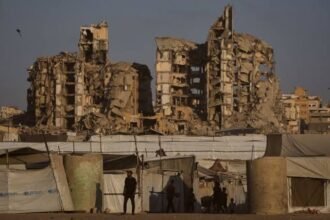
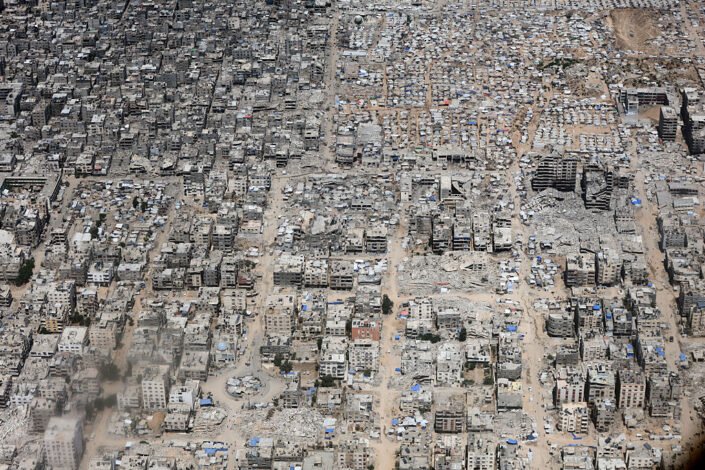
Field data indicate that more than 73,025 Palestinians have been killed and more than 173,368 others injured, in addition to tens of thousands missing under the rubble, while the total number of victims has exceeded 300,000, including the dead, injured, and missing, most of them children, women, and the elderly. The Gaza Strip has also been subjected to massive destruction affecting cities, residential neighborhoods, hospitals, schools, universities, water, electricity and sewage facilities, places of worship, and humanitarian premises, leading to the near-total collapse of the means of life.
At the same time, the occupying power continues to use starvation, siege, closure, and the prevention of the entry of food, medicine, fuel, and humanitarian aid as weapons of war, while targeting hospitals, ambulances, medical teams, journalists, relief workers, and shelters, in a grave violation of the four Geneva Conventions, the provisional measures issued by the International Court of Justice, and the customary rules of international humanitarian law.
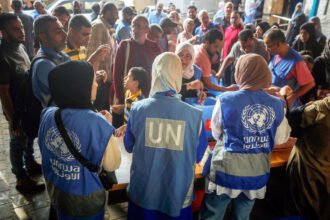
The occupying authorities also continue to implement a systematic policy aimed at reshaping the geographic and demographic reality in the Gaza Strip through forced evacuation orders, mass displacement, the expansion of military buffer zones, control over vast areas of the Strip, and the targeting of the United Nations Relief and Works Agency for Palestine Refugees in the Near East (UNRWA), as part of a plan aimed at imposing new colonial realities, undermining the foundations of Palestinian existence, and preparing the ground for annexation and forced displacement.
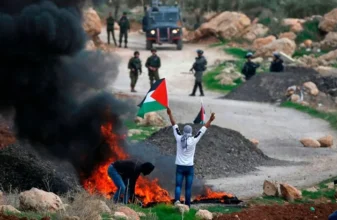
In the West Bank, including occupied Jerusalem, occupation crimes continue through extrajudicial killings, mass arrests, settlement expansion, settler attacks, house demolitions, and the imposition of collective punishment, confirming that the Palestinian people are subjected to a single colonial policy based on annexation, apartheid, ethnic cleansing, and the denial of their inalienable right to self-determination.
The danger revealed by the ongoing genocide is not limited to the scale of the crimes committed against the Palestinian people, but extends to the unprecedented threat it poses to the entire system of international law. The continuation of the crimes despite the binding measures issued by the International Court of Justice, the continued disregard for United Nations resolutions, and the continued flow of weapons and political and military support to the occupying power reveal a profound crisis in the system of collective protection established to prevent genocide and crimes against humanity, and confirm that selectivity and double standards have become among the main causes of undermining international justice and weakening confidence in it.
ICSPR further affirms that the continued supply by some states of arms, ammunition, and military equipment to the Israeli occupying power, or the provision of political and diplomatic cover, despite their knowledge of the serious risk of genocide and despite the provisional measures issued by the International Court of Justice, engages their international legal responsibility under the 1948 Convention on the Prevention and Punishment of the Crime of Genocide and constitutes a breach of their obligation to prevent the crime and to refrain from providing any form of assistance or support that contributes to its continuation.
While ICSPR affirms that individual criminal responsibility lies with the Israeli leaders and officials involved in planning, incitement, and execution of these crimes, it stresses at the same time that the responsibility of states does not stop at refraining from participation in the crime, but extends to the legal obligation to prevent it, to take all possible measures to stop it, and to refrain from providing any political, military, economic, financial, or logistical support that would directly or indirectly contribute to the continuation of international crimes, in accordance with the Convention on the Prevention and Punishment of the Crime of Genocide and the peremptory norms of international law.
The most dangerous outcome of the Palestinian experience over the past decades is that impunity has turned from a result of the failure of international justice into a direct cause of producing more dangerous international crimes. The international community, which failed to implement the recommendations of the international commissions of inquiry after the 2014 aggression, did not impose the measures and sanctions necessary to deter the occupation, and did not provide international protection to the Palestinian people, today bears political, moral, and legal responsibility for the continuation of the crime and for failing to fulfill its obligations under the Genocide Convention, the Geneva Conventions, and the Charter of the United Nations.
ICSPR affirms that justice is not a political slogan or a selective option, but rather an international legal obligation incumbent upon all states and international justice institutions. It also affirms that a ceasefire, despite its importance, is not sufficient to put an end to the crime in light of the continued mass killing, starvation, displacement, and destruction unless it is accompanied by effective international criminal accountability, an end to the occupation and settler colonialism, reparation for the victims, guarantees of non-repetition, and the enforcement of the rules of international law without selectivity or double standards. The world today stands before a historic and decisive test: either it upholds the supremacy of international law and restores the credibility of the international justice system by holding accountable the perpetrators of genocide and all other international crimes committed against the Palestinian people, or it allows the continuation of impunity and the law of the jungle, thereby undermining the international legal order, threatening international peace and security, and opening the door to the recurrence of genocide in other parts of the world.
The Palestinian experience has demonstrated that delayed justice does not prevent crime, but rather encourages its repetition, and that impunity was not merely a result of the genocide, but one of the main causes of its occurrence and continuation. ICSPR therefore renews its affirmation that the protection of international law begins with ending the policy of impunity, and that holding perpetrators of genocide and other international crimes accountable, ensuring justice for victims, ending the occupation and settler colonialism, and guaranteeing non-repetition are not merely political demands, but binding international legal obligations. Any failure to fulfill these obligations will not be limited in its effects to the continued suffering of the Palestinian people, but will also undermine the system of international justice, encourage the commission of further international crimes, threaten international peace and security, and make impunity the rule rather than the exception.
On this basis, the International Commission to Support Palestinian People’s Rights (ICSPR) calls upon the United Nations, the Security Council, the United Nations General Assembly, the High Contracting Parties to the four Geneva Conventions, the States Parties to the Rome Statute, and all states to take immediate action and adopt practical and binding measures in order to achieve the following:
-
An immediate and permanent halt to the genocide war and Israeli aggression against the Gaza Strip, and to ensure a comprehensive ceasefire and compliance with it.
-
To compel the Israeli occupying power to immediately and fully implement the provisional measures issued by the International Court of Justice, and to ensure the implementation of the arrest warrants issued by the International Criminal Court against all officials suspected of committing war crimes, crimes against humanity, and genocide.
-
To impose comprehensive and effective international sanctions on the Israeli occupying power, including a ban on the supply and transfer of arms, ammunition, and military equipment, the suspension of military and security cooperation, the review of partnership and cooperation agreements, and the adoption of deterrent economic and diplomatic measures until it fully complies with international law.
-
To end all forms of political, military, financial, economic, and diplomatic support that directly or indirectly contribute to the continuation of international crimes, in compliance with the legal duty to prevent genocide.
-
To immediately end the policy of siege and starvation, open all crossings on a permanent and unconditional basis, and ensure the free, safe, and sustained flow of humanitarian aid, food supplies, medicines, fuel, medical supplies, and shelter and reconstruction materials.
-
To end all policies of forced displacement, ethnic cleansing, and demographic and geographic alteration, guarantee the return of the population to their areas and homes, and begin the reconstruction of the Gaza Strip without any political or security conditions.
-
To provide urgent and effective international protection for Palestinian civilians, and dispatch international missions and commissions of inquiry to document the crimes, preserve evidence, and ensure that the perpetrators do not escape punishment.
-
To protect the United Nations Relief and Works Agency for Palestine Refugees in the Near East (UNRWA), ensure the continuation of its legal mandate and sustainable funding, and reject all measures aimed at undermining or replacing its role.
-
To activate the principle of universal jurisdiction and call on all states to open investigations and criminal prosecutions against Israeli officials involved in international crimes, freeze their assets, impose restrictions on their movement, and prevent their escape from justice.
-
To launch a binding international process to end the unlawful Israeli occupation, settler colonialism, and the apartheid regime, and to implement the advisory opinion of the International Court of Justice and the relevant United Nations resolutions, in a manner that guarantees the Palestinian people’s exercise of their inalienable right to self-determination and the realization of their fully sovereign independent Palestinian state on the borders of 4 June 1967 with East Jerusalem as its capital, as well as guaranteeing the right of Palestinian refugees to return, receive compensation, and recover their property in accordance with international law and international legitimacy resolutions.
End.