
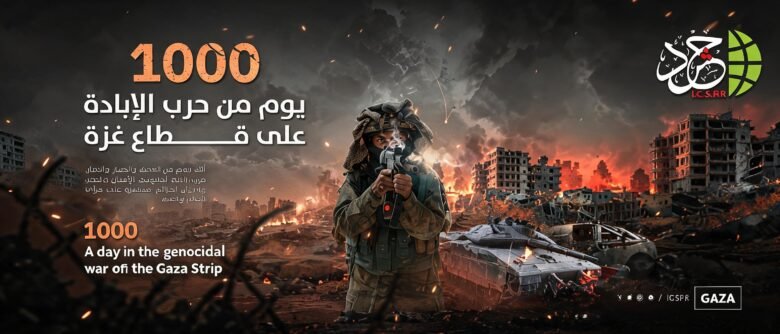
ICSPR After 1,000 Days of Genocide in the Gaza Strip and Escalating Occupation Crimes in the West Bank: The International Community Must Move from Condemnation to Imposing Binding Measures and Ending Impunity

Date: 3 July 2026
Press Release
ICSPR After 1,000 Days of Genocide in the Gaza Strip and Escalating Occupation Crimes in the West Bank: The International Community Must Move from Condemnation to Imposing Binding Measures and Ending Impunity
The International Commission to Support Palestinian Rights (ICSPR) is following with profound concern and outrage the continued perpetration by the Israeli occupation authorities of the crime of genocide against the Palestinian people in the Gaza Strip, alongside the escalation of war crimes, crimes against humanity, policies of ethnic cleansing, annexation, colonial settlement, and apartheid in the occupied West Bank, including East Jerusalem, as part of an official and systematic policy aimed at undermining Palestinian existence and imposing new demographic and geographic realities by force, in flagrant violation of international law, international humanitarian law, and international human rights law.english.
The passage of one thousand days since the beginning of the genocide in the Gaza Strip marks a decisive milestone and stands as overwhelming evidence of the moral, legal, and political failure of the international community to fulfill its obligations under the Charter of the United Nations, the 1948 Convention on the Prevention and Punishment of the Crime of Genocide, the four Geneva Conventions of 1949, and the Rome Statute of the International Criminal Court. The continuation of these crimes, despite the ceasefire announced on 9 October 2025, shows that this ceasefire did not translate into actual protection for civilians or an end to the aggression; rather, the killing, starvation, siege, destruction, and forced displacement have continued in a systematic manner amid the absence of international will to enforce international law, the failure to implement the provisional measures and orders issued by the International Court of Justice, and the lack of effective accountability before the International Criminal Court, all of which have encouraged the occupation authorities to continue their crimes under near-total impunity.
Since the ceasefire, occupation forces have intensified their direct targeting of civilians through the bombing of displacement tents, shelters, homes, health facilities, civilian gathering places, humanitarian aid distribution sites, public roads, and service institutions, while continuing the policy of starvation, siege, and obstruction of humanitarian aid, especially medicines, fuel, relief supplies, shelter materials, and reconstruction materials, thereby worsening the humanitarian catastrophe and turning the Gaza Strip into a devastated area no longer fit for life.
Documented field facts confirm that occupation forces continue to deliberately target civilians, including through the bombing of displacement tents in Al-Mawasi of Khan Younis and civilian gatherings in Gaza City, Deir al-Balah, Al-Nuseirat, and northern Gaza, resulting in the killing of more than 1,059 Palestinians and the injury of nearly 3,500 others, most of them women, children, and older persons, in addition to the continued demolition of residential neighborhoods, razing of agricultural lands, and expansion of buffer zones, clearly reflecting a determination to complete the project of forced displacement and the destruction of the foundations of Palestinian existence in the Gaza Strip.
At the same time, as the world marks one thousand days since the beginning of the genocide, humanitarian data reveal the scale of the unprecedented catastrophe caused by the Israeli assault. The number of those killed whose bodies reached hospitals has reached 73,066, in addition to 9,500 missing persons, most of whom remain under the rubble or whose fate is still unknown, and more than 173,514 wounded, including over 19,000 injured persons requiring long-term rehabilitation, approximately 5,400 amputees, 1,500 cases of paralysis, and 1,200 cases of vision loss.
More than 21,500 children, 12,500 women, more than 9,000 mothers, 22,500 fathers, 1,700 medical personnel, 145 civil defense workers, 262 journalists, around 570 humanitarian workers, and nearly 2,800 police personnel and humanitarian aid security staff have been killed, while 58,800 children have lost one or both parents. More than 2.3 million Palestinians have been subjected to genocide, starvation, and repeated forced displacement, and nearly 200,000 people have been forcibly displaced outside the Gaza Strip in one of the largest humanitarian catastrophes the world has witnessed since the Second World War.
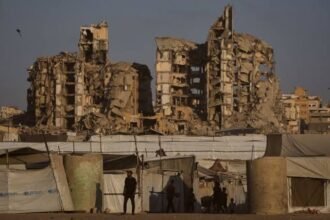
The occupation has also systematically destroyed more than 90 percent of citizens’ homes, buildings, infrastructure, and means of life in the Gaza Strip, and has militarily seized more than 70 percent of the territory through invasion, firepower, and forced displacement. It has dropped more than 250,000 tons of explosives on civilian areas, destroyed or rendered inoperable 38 hospitals and 96 primary health centers, targeted 197 ambulances, and committed at least 788 attacks on the health system, in addition to destroying 16 civil defense centers and 84 rescue and firefighting vehicles, while also destroying most of the schools, universities, government headquarters, media institutions, and economic facilities in the Strip, in blatant violation of the special protection afforded by international humanitarian law to medical facilities and ambulance and civil defense personnel.
The policy of systematic destruction has damaged or destroyed more than 510,000 housing units, including more than 410,000 units completely destroyed or rendered uninhabitable, and has forcibly displaced more than two million Palestinians, while more than 100,000 tents are now unfit for shelter and occupation authorities continue to block the entry of mobile homes and construction and reconstruction materials, as part of a policy intended to entrench forced displacement and prevent residents from returning to their areas.
Occupation forces have also systematically targeted the educational and cultural system, with all schools in Gaza suffering total or partial damage, dozens of universities and academic institutions destroyed, and more than 620,000 school students and over 90,000 university students deprived of continuing their education. More than 20,051 students, over 830 teachers, and 194 academics and researchers have been killed, in a clear effort to destroy the scientific and cultural foundation of the Palestinian people.
The attacks have extended to places of worship and heritage sites, with the occupation completely destroying more than 1,047 mosques, partially destroying 210 mosques, targeting three churches, and damaging and desecrating dozens of cemeteries, including the exhumation of graves and theft of the bodies of martyrs, in grave violation of international humanitarian law, which prohibits attacks on religious and cultural sites and protects the dignity of the dead.
The occupation has also used starvation as a weapon of war through the near-total closure of crossings, blocking the entry of hundreds of thousands of humanitarian aid trucks, fuel, and medicines, obstructing the work of international humanitarian institutions, and targeting food distribution centers, community kitchens, relief convoys, and water stations. This has caused the deaths of hundreds from hunger and malnutrition and exposed hundreds of thousands of children, patients, and pregnant women to the risk of death, in addition to targeting aid seekers while they were attempting to obtain food from centers linked to the so-called “Gaza Humanitarian Foundation” or while waiting for assistance, in flagrant violation of Article 54 of Additional Protocol I to the Geneva Conventions, which prohibits the starvation of civilians as a method of warfare.
Field realities indicate that the continuation of killing, starvation, siege, destruction, the targeting of civilian means of life, and the imposition of conditions that make life impossible prove that the crime of genocide has not ceased, but has instead taken multiple and continuous forms. These facts also raise serious legal and political questions about the effectiveness of the mechanisms produced by the recent political arrangements, including the Board of Peace emerging from President Donald Trump’s plan, which has failed to stop the violations, provide international protection to civilians, or ensure respect for international law. Field evidence suggests that this failure has in practice contributed to consolidating conditions that allow the crimes to continue, prolong the humanitarian catastrophe, and entrench forced displacement and the re-engineering of Gaza’s demographic reality.
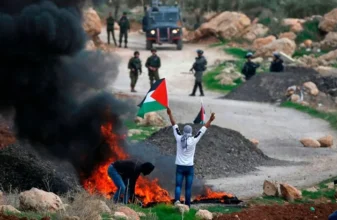
In the occupied West Bank, including East Jerusalem, occupation forces and settlers have continued to escalate their crimes. Since 7 October 2023, more than 1,100 Palestinians have been killed and more than 10,000 others injured as a result of field executions, assassinations, military incursions, and settler attacks, while occupation crimes have also led to the displacement of tens of thousands of residents alongside policies of home demolition, land confiscation, colonial settlement expansion, legalization of hundreds of settlement outposts, restrictions on freedom of worship at Al-Aqsa Mosque and the Ibrahimi Mosque, repeated settler incursions into Al-Aqsa, the entrenchment of temporal and spatial division, and the continued displacement of Palestinian communities and demolition of refugee camps, all within a systematic colonial policy aimed at changing the demographic and geographic reality of the occupied Palestinian territory and undermining the prospects for an independent Palestinian state.
As part of the policy of collective punishment, occupation authorities have intensified campaigns of arbitrary arrest. Since 7 October 2023, the number of arrests in the West Bank and Jerusalem has exceeded 24,000, in addition to thousands of citizens who were arrested and subjected to enforced disappearance in the Gaza Strip, while the fate of large numbers of them remains unknown. Crimes of torture, starvation, medical neglect, and enforced disappearance inside prisons and detention centers have led to the deaths of more than one hundred Palestinian prisoners and detainees since the beginning of the aggression, amounting to war crimes and crimes against humanity and constituting grave violations of the Geneva Conventions, the Convention against Torture, and international human rights law.english.
ICSPR affirms that what the Palestinian people are being subjected to in the Gaza Strip and the West Bank, including East Jerusalem, constitutes an integrated system of international crimes, including genocide, war crimes, crimes against humanity, apartheid, persecution, forced displacement, collective punishment, colonial settlement, and unlawful annexation. These crimes require international criminal accountability and impose a legal obligation on all states to prevent them, not to recognize the illegal situation resulting from them, and not to provide any form of support or assistance that contributes to their continuation.
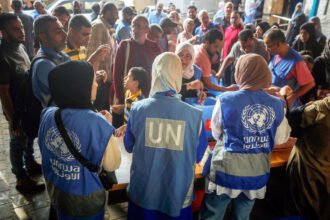
ICSPR also renews its absolute rejection of all attempts aimed at undermining the mandate of the United Nations Relief and Works Agency for Palestine Refugees in the Near East (UNRWA), diminishing its role, or replacing it with any alternative mechanisms, given that it is a UN agency established by a General Assembly resolution and remains a legal and political witness to the Palestinian refugee question and a fundamental guarantee for the protection of their rights, foremost among them the right of return and compensation in accordance with international legitimacy.
The Commission further emphasizes that the continued supply of weapons and ammunition to Israel, or the provision of any form of political, military, or economic support that contributes to the continuation of these crimes, gives rise to international legal responsibility for supporting states under the rules of state responsibility for internationally wrongful acts, and violates the international obligation to prevent genocide and not contribute to or facilitate it. This requires the immediate cessation of all forms of support that enable the occupation to continue its crimes.un+1
ICSPR stresses that the passage of one thousand days since the beginning of the genocide in the Gaza Strip is not merely a chronological marker, but a historic condemnation of the failure of the international justice system to fulfill its legal and moral obligations to prevent genocide, protect civilians, and enforce international law. This reality reveals the scale of international dereliction in implementing obligations arising from the UN Charter, the 1948 Genocide Convention, the four Geneva Conventions, and the Rome Statute, thereby enabling Israel to continue committing mass killings, starvation, systematic destruction, forced displacement, colonial settlement, and unlawful annexation in the absence of deterrent international measures, which undermines the credibility of the international legal order, encourages impunity, and threatens regional and international peace and security.
Accordingly, the International Commission to Support Palestinian Rights (ICSPR) calls on the international community, the United Nations, and the states parties to the Geneva Conventions to:
-
Ensure the immediate, permanent, and unconditional cessation of the crime of genocide and all Israeli military operations against civilians in the Gaza Strip, full compliance with the ceasefire, and an end to all forms of aggression.
-
Provide urgent and effective international protection for the Palestinian people in the Gaza Strip and the West Bank, including East Jerusalem, through United Nations mechanisms, and ensure respect for international humanitarian law and international human rights law.
-
Fully lift the Israeli siege, open all crossings, and guarantee the free, safe, and sustained flow of humanitarian aid, fuel, medicines, medical supplies, shelter materials, and reconstruction materials, while rejecting any mechanisms that diminish the humanitarian role of the United Nations or undermine the dignity of civilians.
-
Impose a comprehensive embargo on the export and transfer of weapons, ammunition, military equipment, and dual-use military technologies to Israel, and impose diplomatic and economic sanctions on Israeli officials involved in international crimes.
-
Implement the provisional measures and orders issued by the International Court of Justice, support ongoing investigations and proceedings before the International Criminal Court, execute arrest warrants issued by it, and ensure the prosecution of all those responsible for genocide, war crimes, and crimes against humanity.
-
Halt all policies of annexation, colonial settlement, forced displacement, and ethnic cleansing, revoke all illegal measures aimed at altering the legal and demographic status of the occupied Palestinian territory, and ensure the protection of civilians and civilian objects.english.
-
Guarantee the continued work of UNRWA, provide it with the necessary financial and political support, and reject all attempts to undermine its mandate or weaken its UN-authorized role
-
Enable the Palestinian people to exercise their inalienable right to self-determination, end the Israeli occupation and settler colonialism, establish the fully sovereign independent Palestinian state on the 4 June 1967 borders with East Jerusalem as its capital, and guarantee the right of Palestinian refugees to return, receive compensation, and recover their property in accordance with international law and relevant UN resolutions.
-
Call on the United Nations, the states parties to the Geneva Conventions, the European Union, the African Union, the League of Arab States, the Organization of Islamic Cooperation, all national and international human rights institutions, parliaments, trade unions, and civil society organizations to move beyond verbal condemnation and adopt binding legal, diplomatic, and economic measures that ensure an end to genocide, occupation, and settlement, enforce international law, and guarantee accountability and an end to impunity.
-
Strengthen Palestinian national unity, protect civil peace, and unify official and popular efforts to protect Palestinian existence, reinforce citizens’ resilience, and confront forced displacement and ethnic cleansing schemes in a way that preserves the unity of the land, the people, and the Palestinian cause.
In conclusion, ICSPR considers that the passage of one thousand days of genocide, starvation, forced displacement, and systematic destruction represents a stain on the conscience of humanity and a real test of the credibility of the international legal system. One thousand days of genocide are not merely a number; they are conclusive testimony to the failure of the international community to protect civilians and enforce international law, and to the urgent need to move from statements of condemnation to practical and binding measures capable of stopping the crimes, ending occupation and settler colonialism, achieving international justice, and ensuring an end to impunity.
Accordingly, the International Commission to Support Palestinian Rights (ICSPR) renews its call for the formation of an international humanitarian and legal coalition to protect the Palestinian people, guarantee effective action to stop the crime of genocide and all other occupation crimes, end occupation and settler colonialism, ensure accountability, justice, and reparations for victims, and enable the Palestinian people to exercise their inalienable national rights, foremost among them the right to self-determination, the establishment of their fully sovereign independent state with East Jerusalem as its capital, and the right of refugees to return, receive compensation, and recover their property in accordance with international law and resolutions of international legitimacy.