
ICSPR The Escalation of Israeli Killing, Siege and Attacks in Gaza, the West Bank and Jerusalem Undermines the Palestinian People’s Right to Protection and Self-Determination

Date: 2 October 2026
Press Release
ICSPR: The Escalation of Israeli Killing, Siege and Attacks in Gaza, the West Bank and Jerusalem Undermines the Palestinian People’s Right to Protection and Self-Determination
The International Commission to Support Palestinian Rights (ICSPR): What is happening in the occupied Palestinian territory confirms that the announcement of a ceasefire in the Gaza Strip has not yet translated into an actual cessation of killing, massacres, targeting of civilians, starvation and destruction. Nor has it been accompanied by any fundamental change in the reality of the siege or guarantees for the protection of civilians. At the same time, settlement-related attacks, demolitions, dispossession and restrictions are escalating in the West Bank, while incursions and the performance of Talmudic rituals inside and around Al-Aqsa Mosque are intensifying. These developments are accompanied by statements from officials in the occupation government calling for killing, genocide, settlement-related crimes and the displacement of Palestinians, revealing an interconnected and systematic system of international crimes based on the use of force and restrictions on movement, preventing access to food, medicine and water, destroying the means of life, placing pressure on the population, and targeting and confiscating land and property, as well as storming holy sites. This undermines the Palestinian people’s right to protection, existence and self-determination.
ICSPR stresses that the ceasefire has not translated into effective protection for civilians, as killing and targeting of civilians have continued even after the ceasefire of 11 October 2025, revealing the dangerous gap between the political announcement of de-escalation and the reality on the ground. According to the Ministry of Health in the Gaza Strip, as of 1 October 2026, 1,439 Palestinians had been killed, 5,052 injured, and the bodies of 834 people recovered since the beginning of the ceasefire.
This brings the cumulative toll since the beginning of the aggression to 74,040 Palestinians killed and 175,168 injured. The number of Palestinian journalists and media workers killed since the beginning of the war has also risen to 263 following the killing of journalist Mohammed Abdel Aziz Al-Najjar. This raises direct legal and political responsibilities for the Israeli occupation authorities for their disregard of the rules of international humanitarian law, and places a responsibility on mediators and the international community to intervene to protect civilians. Such protection must be measured by ending the Israeli aggression and military attacks against the population of Gaza, ensuring their security and the sanctity of their homes and shelters, and enabling them to safely access food, water, medicine and essential services.
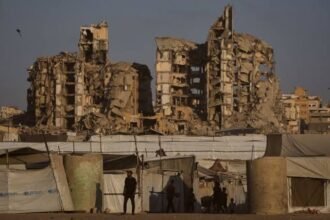
ICSPR stresses that the population of the Gaza Strip continues to experience a humanitarian catastrophe that worsens every day as a result of the occupation’s continued violations of the ceasefire agreement. In addition to targeting civilians, these violations are also taking a slower but broader form through the siege, obstruction of humanitarian aid and the entry of essential supplies, and impediments to restoring basic services and life-sustaining facilities. This turns hunger, thirst, disease and the collapse of public services into additional factors contributing to death, suffering and pain. During September, the movement of people and humanitarian assistance was widely disrupted. The Rafah Crossing remained closed for 20 out of 30 days, representing 66.6%, while the Kerem Shalom Crossing was disrupted for 26 out of 30 days, representing 86.6%. Only 1,197 people left the Gaza Strip, including 485 patients, 547 accompanying persons and 165 evacuation cases, while movement of people between Gaza and the West Bank remained suspended. The Zikim and Kissufim crossings also remained closed throughout the month. During the same period, 5,265 trucks entered through Kerem Shalom, of which only 139 carried shelter and relief supplies, 5 carried corrugated metal sheets, and 104 carried medical and health supplies, at a time when the Strip requires 600 trucks daily carrying aid, fuel, medical supplies, medicines, equipment, shelter materials and water and sanitation supplies.
ICSPR warns of the continued collapse of the health sector. Only 19 of 36 hospitals are operating partially, while medicines, diagnostic supplies, equipment, fuel and generator oils are suffering from severe shortages. Patients’ ability to receive life-saving treatment, including cancer and kidney patients and people with severe injuries, continues to face restrictions. The World Health Organization has also indicated that approximately 1.7 million people remain displaced, most of them living in overcrowded conditions with insufficient water and sanitation. Cases of acute watery diarrhea have risen sharply, while the risk of disease outbreaks is increasing due to contaminated water and weak health services. In addition, more than 40% of vital diagnostic equipment has remained stuck at crossings for approximately six months, while the Israeli authorities have rejected around 60% of medical equipment that humanitarian organizations attempted to bring into Gaza over the past six months. The World Health Organization has warned that large shipments of medical supplies face an average waiting period of 74 days for approval, confirming that none of Gaza’s hospitals is operating at full capacity. The humanitarian crisis is worsening as winter approaches, with shortages of food and fuel and declining capacity to operate operating rooms, intensive care units, incubators, laboratories, water networks and sanitation systems, deepening indirect deaths and increasing the risks of epidemics and malnutrition as food assistance declines.
Second: The West Bank — Settler Violence Becomes a Tool of Pressure and Dispossession
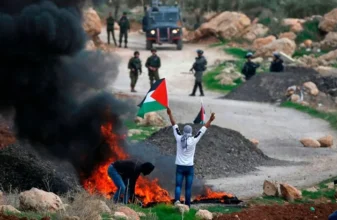
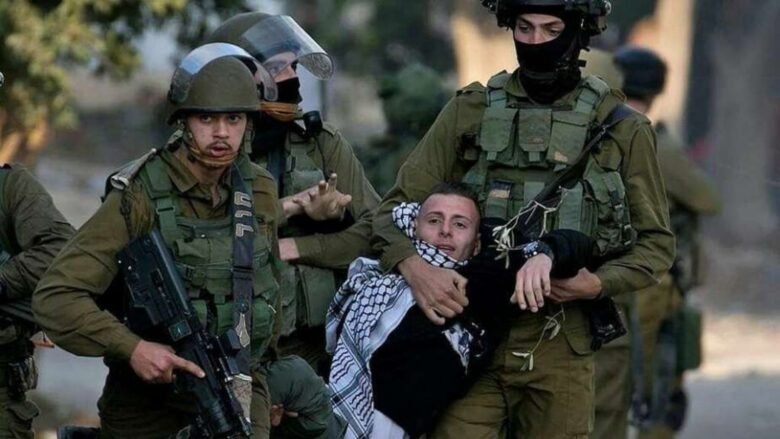
ICSPR’s information and documentation during the past month reveal a significant escalation in Israeli occupation and settler militia attacks and crimes targeting people, land, property and sources of livelihood. During September, occupation forces and settlers carried out 2,051 attacks, including 1,404 attacks by occupation forces and 647 by settlers. Settler attacks were concentrated in Ramallah and Al-Bireh, with 240 attacks; Nablus, with 129; Hebron, with 122; Bethlehem, with 48; Salfit, with 30; Jerusalem, with 28; Tubas, with 22; and Jenin, with 17. During the month, settler attacks resulted in the killing of three Palestinians and the injury of or harm to 88 civilians, including seven children and six women. The attacks also affected 14,600 trees, including 9,334 olive trees. Since the beginning of 2026 through the end of September, ICSPR has recorded 5,561 settler attacks resulting in the killing of 29 Palestinians. During September, settlers also attempted to establish 21 new settlement outposts, indicating that violence is inseparable from settlement expansion and control over land, the demolition of homes and structures, and the establishment of new outposts, creating a coercive environment that threatens the ability of Palestinian communities to remain and live securely in their areas.
During September, the occupation authorities issued military orders targeting the seizure of 9,108 dunams of citizens’ land, while the total area seized since the beginning of the year reached approximately 6,635 dunams, according to data from the Wall and Settlement Resistance Commission. They also carried out 62 demolition operations affecting 254 structures, including 89 inhabited homes, six uninhabited homes, 13 economic structures, 133 agricultural structures and 13 other structures. These facts reveal a clear intersection between military control, settlement expansion, the demolition of structures and violence on the ground. This makes the protection of civilians and their property, as well as their right to access their agricultural land and sources of livelihood, a legal obligation that cannot be treated as an internal security matter. The responsibility of the occupation authorities is not limited to preventing violations committed by their forces; it also includes taking effective measures to prevent, investigate and prosecute settler violence and terrorism, hold perpetrators accountable and ensure that they do not enjoy impunity. The Israeli occupation authorities have failed to do so, confirming, according to ICSPR, their full protection of settler crimes and the crime of colonial settlement.
ICSPR stresses that Israeli violations and crimes have taken on an additional dimension in Jerusalem through violations of the sanctity of religious sites and holy places, particularly Al-Aqsa Mosque. The Jerusalem Governorate reported that 11,409 settlers stormed Al-Aqsa Mosque during the Jewish holiday season, from Rosh Hashanah until the end of 1 October. This included 593 during Rosh Hashanah, 1,678 during the two days of Yom Kippur, and 9,138 during the first five days monitored during Sukkot, including 2,474 on 30 September and 1,910 on 1 October. These incursions were accompanied by an expansion of public Talmudic religious rituals inside and around the mosque, including collective prayers, prostration, chanting, dancing, singing and blowing the shofar, alongside the participation of Israeli government and religious political figures. This heightens serious concerns and threats regarding the existing historical and legal status quo at Al-Aqsa Mosque, in addition to the continued restrictions on Palestinian access to the mosque and the Old City.
ICSPR considers that the information and facts documenting the serious Israeli crimes and violations in Gaza, the West Bank and Jerusalem reveal the escalation and continuation of the killing and targeting of civilians, obstruction of access to food and medicine, weakening of the healthcare system, prevention of medical evacuation, destruction of property, attacks against journalists and farmers, obstruction of the work of international organizations, settlement expansion, settler violence and terrorism, demolition of homes and structures, restrictions on movement, incursions and measures affecting the status quo at holy sites. All these facts constitute war crimes, crimes against humanity and genocide under the rules of international humanitarian law and international human rights law.
ICSPR stresses that the duty to protect civilian populations does not lapse during ceasefire arrangements, and that the occupying power remains obligated under international law to ensure the protection of the population, respect property, facilitate medical and food supplies, and ensure the functioning of health services. States parties to the Geneva Conventions also bear responsibilities to respect and ensure respect for international humanitarian law.
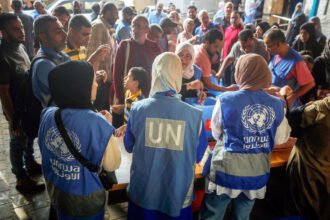
Accordingly, the International Commission to Support Palestinian Rights (ICSPR) calls for the siege, settlement expansion, settler violence and forced displacement not to be treated as separate issues, because the accumulation of these practices may lead to an actual transformation of the demographic, geographic and economic environment of the occupied Palestinian territory. This requires the international community, the United Nations and states parties to the Geneva Conventions to act immediately and effectively to ensure a comprehensive and sustainable cessation of all killing and targeting of civilians in the Gaza Strip; transform the ceasefire into effective and binding protection for the population; halt all demolition, bombing, shelling and gunfire; ensure that the truce is not used as a cover for continued violations; pressure Israel to lift restrictions on the entry of food, water, fuel, medicines, medical supplies, shelter materials and the restoration of essential infrastructure; ensure a regular, sufficient and unconditional flow of humanitarian assistance; accelerate the entry of medical equipment, diagnostic devices and spare parts; ensure the operation of hospitals, healthcare centers, water facilities and sanitation systems; maintain medical evacuations and reopen medical referral routes from Gaza to the West Bank, Jerusalem and countries capable of providing treatment; open crossings for the regular and safe movement of civilians, patients and wounded people; end restrictions preventing the movement of Palestinians between the Gaza Strip and the West Bank; and ensure the unhindered entry of United Nations, humanitarian and medical teams, while preserving the role of the United Nations Relief and Works Agency for Palestine Refugees (UNRWA) and strengthening its capacity to provide essential services to refugees.
ICSPR calls on the international community to provide an effective international protection mechanism for Palestinian civilians in Gaza, the West Bank and Jerusalem. This should include a mechanism for monitoring, verification and public reporting of violations; ensuring the protection of civilians, journalists, and medical and humanitarian workers; protecting farmers and residents in areas exposed to settler attacks; ensuring the protection of Al-Aqsa Mosque and other holy sites; and ensuring that international judicial bodies investigate all Israeli crimes and prosecute and hold perpetrators accountable in accordance with the rules of international and national jurisdiction, thereby ensuring that perpetrators of violations do not enjoy impunity. ICSPR also calls for serious action to ensure the protection of the rights of the Palestinian people, including their inalienable right to self-determination.