
ICSPR Amendments to the Elections Law Are a Positive Step, but Insufficient Without a Comprehensive National Process for Renewing Legitimacy

Date: June 15, 2026
Press Release
ICSPR: Amendments to the Elections Law Are a Positive Step, but Insufficient Without a Comprehensive National Process for Renewing Legitimacy
The International Commission to Support Palestinian Rights (ICSPR) is closely following the issuance of the amended Elections Law by decree and the accompanying decisions and announcements related to the electoral system and upcoming electoral processes, given their direct impact on the future of the Palestinian political system and the institutions representing the Palestinian people in Palestine and the diaspora.
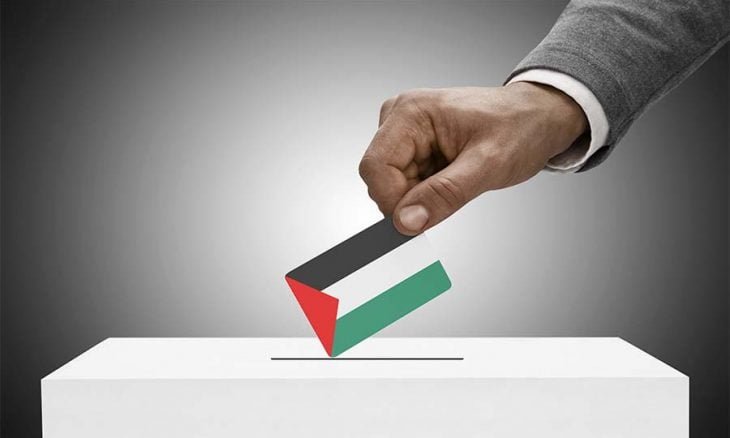
ICSPR affirms that free, fair, and periodic elections constitute a fundamental right of the Palestinian people and a constitutional and national entitlement that has long been overdue after years of democratic stagnation, erosion of legitimacy, and declining public confidence in institutions. Respecting the popular will remains the natural gateway to renewing legitimacy, strengthening political participation, and advancing the Palestinian political system.
In this context, ICSPR welcomes the positive amendments introduced by the decree-law, particularly the increase in the number of members of the Palestinian Legislative Council to 200, the reduction of the electoral threshold to 1%, the enhancement of women’s representation through the requirement that at least one woman be included among every three candidates, and the lowering of the minimum age for candidacy to 23 years. These amendments provide broader opportunities for youth, women, small electoral lists, and independent candidates, while promoting political pluralism and wider social representation.
However, the true value of any legal amendment cannot be measured solely by its technical or procedural content. Rather, it must be assessed within the political and constitutional context in which it is issued and its contribution to addressing the structural crisis facing the Palestinian political system, including the continued political, geographic, and institutional division, the stagnation of national reconciliation efforts, the erosion of representative institutions, and the persistence of unilateral decision-making in public affairs.
Moreover, the recent amendments were not the outcome of a comprehensive national dialogue or broad political consensus. Instead, they were introduced within a framework of unilateral decisions and measures that have affected the structure of the political system and its constitutional institutions, including constitutional declarations and institutional restructuring undertaken outside the framework of comprehensive national consensus. This raises legitimate political and legal questions regarding the approach to political reform and the future of the Palestinian political system.
At the same time, ambiguity continues regarding the nature of the Palestinian political system and the governing legal and political references, particularly in light of the overlap between the institutions of the Palestinian Authority, the Palestine Liberation Organization (PLO), and the State of Palestine. There remains an absence of a clear national vision defining the relationship between these frameworks and the role of each at the present stage.
This political and constitutional ambiguity comes at a time when the Palestinian cause is facing its most dangerous phase in decades, amid the ongoing genocide in the Gaza Strip, escalating annexation, settlement expansion, and Judaization policies in the West Bank and occupied Jerusalem, as well as continued attacks on the rights of Palestinian refugees and attempts to undermine Palestinian national rights. Accordingly, any electoral process must form part of a comprehensive national vision capable of addressing these existential challenges.
Democracy is not limited to electoral procedures or competition for seats; rather, it is a comprehensive system based on participation, partnership, pluralism, respect for the popular will, and the rule of law. Therefore, commitment to democracy cannot be used to justify exclusion, unilateralism, or bypassing national consensus. Instead, it requires the creation of a political and legal environment that guarantees inclusive participation, equal opportunities, and respect for electoral outcomes.
In light of the current national challenges, the success of any electoral process requires the highest levels of national consensus and thorough political, legal, and institutional preparation to ensure the rebuilding of a unified and effective Palestinian political system on democratic and participatory foundations. Furthermore, the proposed gradual electoral process and the absence of clear guarantees for conducting elections simultaneously and comprehensively raise serious concerns about repeating previous experiences of postponement and failure, particularly given Israeli restrictions related to occupied Jerusalem. These concerns are further compounded by the lack of clear mechanisms to ensure the participation of all Palestinians in Jerusalem, the Gaza Strip, the West Bank, the territories occupied in 1948, and refugee camps and diaspora communities, as well as proposals that could lead to the reproduction of political quotas or indirect appointments at the expense of direct elections and democratic legitimacy.
While recording these observations and concerns, ICSPR calls for:
- Ending unilateral policies and measures in the management of the electoral process and political reform.
- Launching an urgent and comprehensive national dialogue involving all Palestinian political forces, factions, civil society organizations, and national figures.
- Reaching consensus on a clear constitutional and political vision defining the nature of the Palestinian political system and the relationship between the institutions of the PLO, the Palestinian Authority, and the State of Palestine.
- Ensuring the conduct of free, fair, comprehensive, and simultaneous elections for all national institutions within a clear and binding timetable.
- Providing the legal and political guarantees necessary to ensure the participation of all Palestinians in Palestine and the diaspora, including residents of occupied Jerusalem.
- Examining and adopting an integrated national system for electronic or hybrid voter registration and voting that meets the highest standards of integrity, transparency, cybersecurity, and independent judicial oversight.
- Advancing a comprehensive political reform process beginning with ending the internal division and rebuilding the Palestine Liberation Organization and the institutions of the Palestinian political system on democratic and representative foundations.
ICSPR reiterates that genuine political reform cannot be achieved merely through amending laws or issuing decrees. Rather, it requires ending the division, launching a comprehensive national dialogue, and rebuilding national institutions on democratic and representative foundations. The Commission further stresses that elections should serve as a gateway to national unity, the restoration of democratic legitimacy, and the strengthening of Palestinian resilience, rather than a tool for reproducing division and deepening accumulated crises.
International Commission to Support Palestinian Rights (ICSPR)