
ICSPR: Condemns the Escalation of Israeli Occupation Crimes in Gaza and the West Bank and Calls for International Protection

Date: 30 September 2026
Press Release
ICSPR: Condemns the Escalation of Israeli Occupation Crimes in Gaza and the West Bank and Calls for International Protection
The International Commission to Support Palestinian Rights (ICSPR) strongly condemns the continued and escalating Israeli crimes and violations against the Palestinian people in the Gaza Strip, the West Bank, and occupied Jerusalem. ICSPR stresses that the successive developments on the ground reveal a systematic pattern involving the use of lethal force, targeting civilians, residential areas and vehicles, bombardment and gunfire, demolition and destruction operations, alongside settlement expansion, land confiscation, settler violence, forced displacement, and attacks on holy sites, amid the fragility of the ceasefire in the Gaza Strip. The sequence and simultaneity of these crimes reveal a systematic and ongoing policy targeting the Palestinian people, their land and property, and their rights to life, security and survival, while simultaneously seeking to impose new geographic, demographic and political realities in the occupied Palestinian territory.
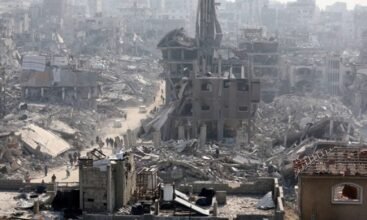
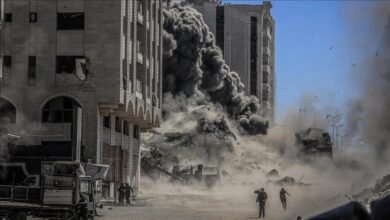
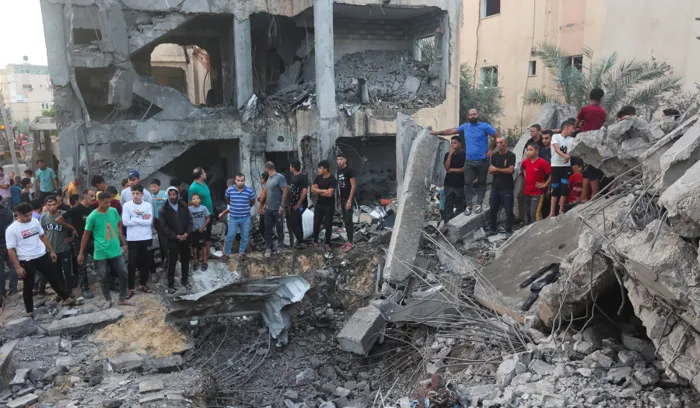
ICSPR stresses that the Gaza Strip has witnessed continued killing, bombardment and gunfire in recent hours and days despite the ceasefire. The Palestinian Ministry of Health reported that nine Palestinians were killed and 31 injured in hospitals across the Gaza Strip during the preceding 24 hours, bringing the number of Palestinians killed since the ceasefire began on 11 October 2025 to 1,431, with 5,026 injured, in addition to the recovery of the bodies of 834 Palestinians. The overall death toll since the beginning of the war has reached 74,032, with 175,142 injured. Israeli occupation crimes have resulted in the killing of Ahmed Akram Hamouda, Mohammed Ahmed Al-Najjar, Mousa Shaaban Shaaban, Abdullah Khader Al-Najjar, Muhannad Abu Al-Foul, Ezz Al-Din Al-Beik, Mohammed Abu Al-Shaer, Rania Maher Salama Saad, and Ahmed Abu Mour, in separate incidents. These incidents included airstrikes, gunfire and artillery shelling targeting various areas of the Gaza Strip, including homes, camps, residential areas and vehicles, alongside the demolition and destruction of buildings, confirming that civilians continue to live under the constant threat of death, injury and forced displacement. Among the most prominent crimes were the targeting by occupation forces of a residential apartment in Al-Nasr neighborhood in Gaza City, a group of civilians in the Halawa displacement camp in Jabalia, and other areas across the northern, central and southern Gaza Strip.
In a new crime added to the repeated series of crimes against civilians, Israeli occupation aircraft directly targeted a civilian vehicle in the Tal Al-Hawa neighborhood, southwest of Gaza City, on Wednesday afternoon. The attack resulted in the killing of five civilians and the injury of 13 others, including people who sustained injuries of varying severity, after the vehicle was destroyed and caught fire. This reflects the continuation of a dangerous pattern of lethal force in clear violation of the occupation’s obligations under international humanitarian law, effectively stripping the ceasefire agreement of its substance, leaving civilians exposed to continuous danger, and preventing a genuine transition from the Israeli offensive to humanitarian response, stability and recovery.
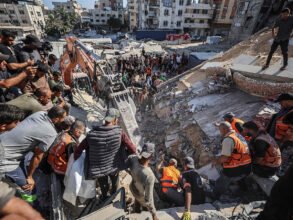
ICSPR stresses that the continuation of these crimes is contributing to the further deterioration of living conditions, the destruction of homes, facilities and infrastructure, and the collapse of health, water, sanitation, education and shelter services, while approximately 8,000 victims remain under the rubble. ICSPR further stresses that, one year after the ceasefire agreement, early recovery in Gaza remains far below the scale of needs. Essential services and infrastructure remain severely damaged, creating an urgent need to restore electricity, water, sanitation, waste management and health services, as well as to take urgent measures to prepare for winter amid the continuing shelter crisis and shortages of essential supplies and services. Data from the Palestinian Ministry of Health for 2025 also recorded 24,650 deaths in the Gaza Strip, including 17,286 cases, or 70.1%, classified by the Ministry as resulting from direct targeting of civilians, alongside rising indicators of child mortality, reflecting the prolonged effects of the war and the collapse of healthcare and essential services. ICSPR stresses that the continued deterioration of housing, limited shelter, restrictions on the entry of temporary housing units, and the worsening humanitarian needs as winter approaches create the conditions for a new wave of health and humanitarian risks. This requires an urgent international response that goes beyond providing aid and ensures the removal of obstacles to recovery and the protection of civilians.
ICSPR stresses that the West Bank is witnessing a daily and accelerating process of settlement expansion, land confiscation, demolitions, displacement, settler violence and restrictions on movement. Israeli military, administrative and settlement measures are converging to create a coercive environment that pushes Palestinians to leave their lands and properties as part of plans for colonial annexation. Between 13 June and 28 September 2026, Israeli planning authorities approved approximately 4,570 settlement housing units in Area C and 3,515 units in East Jerusalem, while the Ministry of Housing issued tenders for approximately 2,240 units in Area C, including 1,234 units in the E1 area. An order was also issued to seize privately owned Palestinian land in Area A near Qabatiya, south of Jenin, to establish a road serving settlements. This was the first explicitly reported case of the seizure of land in Area A under the Oslo Accords for settlement infrastructure purposes. During the same period, 536 civilian structures were demolished, confiscated or Palestinians were forced to demolish them, resulting in the displacement of 736 Palestinians, including 347 children.
ICSPR stresses that settler attacks and violence are also increasing within the same context. The United Nations documented more than 1,430 incidents during 2026 affecting approximately 260 Palestinian communities. Meanwhile, 630 incidents during the period covered by the UN report resulted in the killing of 11 Palestinians and the injury of 430 others, in addition to the displacement of 343 Palestinians from 17 communities. The number of Palestinians who have experienced complete or partial displacement since January 2023 has exceeded 6,3900 Palestinians from 127 communities, including 47 communities whose residents were completely displaced. During 2026 alone, approximately 3,800 Palestinians were displaced, nearly half of them children. ICSPR warns of the continued exposure of additional residential communities to displacement and the recurrence of forced displacement and transfer, which are prohibited under international law.
ICSPR has also documented a series of settler attacks against vehicles, agricultural land, trees and property in various parts of the West Bank, as well as the prevention of families from returning to their homes. In this context, the village of Jalud witnessed an attack carried out by more than one hundred settlers, during which homes belonging to a Palestinian family were burned and the family was prevented from returning. This occurred while the Israeli army had agreed to escort the family back, before the operation ended with the family being evacuated again following the escalation of the attacks. ICSPR considers that these incidents demonstrate how settler violence and terrorism can become a practical tool for displacement and the consolidation of control over land, particularly when Israeli occupation forces provide protection to settlers and occupation authorities fail to take effective measures to prevent the recurrence of such attacks and hold those responsible accountable.
ICSPR stresses that occupied Jerusalem and Palestinian holy sites remain at the heart of this escalation, as daily incursions and attacks on holy places coincide with settlement expansion, evictions, property confiscation and attempts to alter the existing realities in the city. In Hebron, hundreds of settlers stormed the Ibrahimi Mosque on 29 September, coinciding with the closure by occupation forces of roads and neighborhoods surrounding the mosque and the imposition of restrictions on Palestinian access to it. Mosque employees were prevented from entering, and the call to prayer was prohibited for the 97th consecutive day.
As hundreds of settlers continue to storm Al-Aqsa Mosque on a daily basis under the protection of Israeli forces, accompanied by Israeli government ministers, foremost among them Minister Ben-Gvir, and perform Talmudic religious rituals in its courtyards, efforts continue to alter the identity of Islamic religious sites. At the same time, occupation forces continue to impose further restrictions on Palestinians’ access to Islamic and Christian religious sites, particularly in Jerusalem, in violation of freedom of worship, threatening the historical and legal status quo of the holy sites and imposing new realities by force.
ICSPR considers that the crimes and developments in Gaza, the West Bank and Jerusalem reveal two parallel and interconnected tracks. In Gaza, the Israeli offensive, mass killing, destruction and targeting of all components and conditions necessary for human life continue despite the ceasefire, while settlement expansion, land confiscation, demolitions, displacement, settler violence and incursions into Al-Aqsa Mosque and the Ibrahimi Mosque in Hebron are accelerating in the West Bank and Jerusalem. While military force is being used directly in Gaza for killing and destruction, colonial settlement policies, restrictions, and military protection by the occupation army of settler violence and terrorism, alongside land confiscation, are being used in the West Bank and Jerusalem to gradually alter the reality on the ground. This consolidates control over people and land and threatens to entrench permanent realities of displacement and colonial annexation, undermine the territorial unity of the Palestinian people, and erode their right to self-determination.
ICSPR stresses that the documented crimes and violations constitute breaches of United Nations resolutions, the opinions and judgments of the International Court of Justice, the rules of international humanitarian law and international human rights law, and amount to war crimes, crimes against humanity, genocide, ethnic cleansing and apartheid. ICSPR further stresses that warnings issued by the United Nations and international and human rights organizations should be treated as an alarm requiring preventive intervention to prevent the completion of these crimes and provide international protection for the Palestinian people.
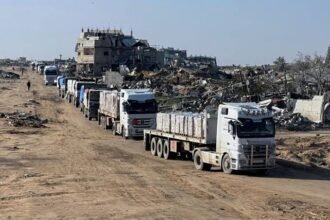
ICSPR holds the international community, particularly the UN Security Council, the UN General Assembly, the High Contracting Parties to the Geneva Conventions and the mediators, responsible for ensuring respect for international law and for going beyond merely documenting violations or expressing concern over them. It calls for action to halt genocide, settlement expansion, annexation and displacement; provide effective international protection for Palestinian civilians in the Gaza Strip, the West Bank and occupied Jerusalem; ensure an end to all killing, targeting, bombardment, demolition, destruction and displacement; transform the ceasefire in Gaza from a fragile arrangement into an effective and sustainable cessation of the Israeli offensive; deploy international protection forces; open the crossings and facilitate the entry of humanitarian aid, medical supplies, fuel, shelter and winterization materials, and equipment for removing rubble and unexploded ordnance; facilitate the medical evacuation of patients and wounded people; enable humanitarian institutions to operate without obstruction; and accelerate the transition from emergency humanitarian response to early recovery and reconstruction in a manner that protects the Palestinian presence.
ICSPR reiterates its calls for serious action to impose sanctions on the occupation and adopt targeted punitive measures against individuals, entities and companies involved in, financing or facilitating settlement activity, in accordance with states’ obligations under international law. ICSPR also calls on the International Criminal Court to open investigations into all incidents suspected of constituting international crimes, including killings and targeting in Gaza, attacks on homes, vehicles and displacement camps, demolitions and destruction, forced displacement, settler violence, land confiscation, settlement activity and attacks on holy sites, and to issue arrest warrants against those responsible in accordance with the Court’s jurisdiction and the relevant evidence and legal standards.
The International Commission to Support Palestinian Rights (ICSPR) stresses the need to rebuild the Palestinian political system, restore national unity and conduct comprehensive elections in a manner that restores the health and capacity of the political system to fulfill its role in defending the rights of the Palestinian people, strengthening their resilience, and building a national path that protects Palestinians and safeguards their land and the geographical and political unity of the Palestinian people. This must ensure that destruction, displacement and settlement do not become permanent realities, ultimately leading to an end to occupation, settlement and annexation and enabling the Palestinian people to exercise their inalienable right to self-determination.