

ICSPR: Those Who Survived Israeli Bombardment Must Not Die Beneath the Rubble of Their Homes Collapse of Damaged Buildings in Gaza Is an Ongoing Humanitarian Threat Requiring Urgent Intervention

Date: September 16, 2026
Press Release
ICSPR: Those Who Survived Israeli Bombardment Must Not Die Beneath the Rubble of Their Homes — Collapse of Damaged Buildings in Gaza Is an Ongoing Humanitarian Threat Requiring Urgent Intervention
The International Commission to Support Palestinian Rights (ICSPR) is following with grave concern the continued collapse of homes and buildings that were destroyed or severely damaged across the Gaza Strip, and the resulting deaths and injuries. Thousands of Palestinians remain inside structurally compromised buildings or near rubble and unsafe structures, amid the widespread destruction of residential neighborhoods, homes, and civilian infrastructure. This has created an extremely dangerous urban environment that lacks even the most basic conditions of safety and protection.
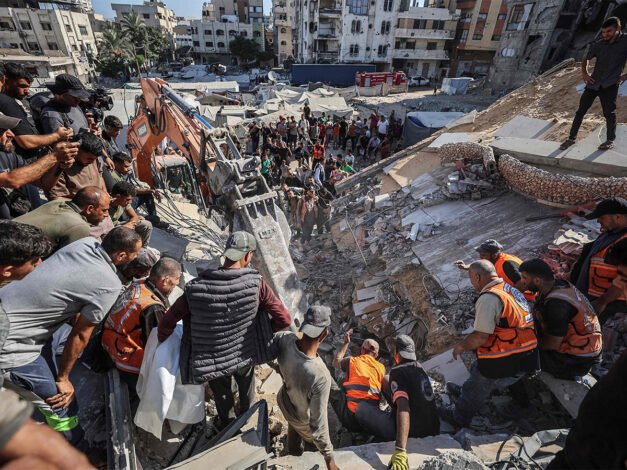
ICSPR warns that the collapse of damaged buildings is no longer a hypothetical risk or a future possibility; it has become a daily reality threatening civilian lives. On Wednesday, September 16, 2026, ICSPR documented the collapse of the six-story Al-Saada residential building in Gaza City, which had previously been damaged by Israeli bombardment during the genocide war. The building collapsed on its residents, resulting, according to preliminary information, in the killing of 20 Palestinians, including children and women, and the injury of 25 others. More than 68 people remain missing or trapped beneath the rubble, while search and rescue operations continue under extremely difficult conditions and amid a severe shortage of the machinery and equipment required to deal with the debris. Reports from the scene also indicated that the building had sustained severe damage from prior strikes and that rescue teams faced major equipment shortages.yallanews+1
ICSPR notes that dozens of Palestinians have previously been killed as a result of the collapse of buildings damaged by Israeli bombardment. The Al-Saada tragedy exposes another dimension of the humanitarian catastrophe in the Gaza Strip: buildings that were not completely destroyed may nevertheless have lost their structural integrity. Due to the absence of adequate housing alternatives and the continuing displacement crisis, civilians are often forced to remain in or return to unsafe buildings without sufficient engineering assessments to determine whether they are habitable.
As a result, civilians face a double threat: the danger of living in buildings at risk of collapse and the continued failure to provide safe and adequate alternative shelter. The collapse of Al-Saada building demonstrates the lethal consequences of leaving war-damaged structures unassessed, unsecured, and surrounded by displaced civilians and their tents.yallanews+1
ICSPR emphasizes that children, women, older persons, persons with disabilities, and families who have lost their homes or family members are among the groups most vulnerable to these catastrophic risks. Their vulnerability is compounded by restrictions on the entry of temporary housing units, safe and suitable tents, engineering equipment, debris-removal machinery, and search-and-rescue tools.
These risks are further intensified by damaged infrastructure, the accumulation of rubble inside residential areas, and the possible presence of unexploded ordnance and hazardous remnants buried beneath debris. Civilians should not be forced to choose between homelessness and residing in structures that place their lives in immediate danger.
The continued failure to assess or secure damaged buildings, combined with the accumulation of rubble near populated areas, constitutes a direct threat to the right to life and physical integrity. It adds a further source of death and injury for Palestinian civilians after years of genocide, bombardment, destruction, displacement, and loss of homes. The right to adequate housing and protection from life-threatening hazards does not cease during armed conflict; rather, the need to safeguard these rights becomes even more urgent amid large-scale humanitarian catastrophes.
ICSPR stresses that the response to this crisis must not be limited to rescue operations and the recovery of victims, despite their critical importance and the severe shortage of available equipment. An urgent, integrated preventive system is required. Such a system must begin with identifying damaged buildings, conducting immediate engineering assessments, classifying structures according to their level of risk, evacuating and securing buildings that threaten residents’ lives, and placing clear warning signs around hazardous sites.
These measures must be implemented in parallel with the provision of safe temporary housing for families who cannot return to their homes. Preventing collapse, rather than responding only after lives have been lost, must become an immediate humanitarian priority.
ICSPR holds duty-bearing humanitarian and legal actors responsible, foremost among them the Israeli occupying authorities with respect to the obligations arising from the continued occupation and the consequences of destruction, siege, and restrictions on the entry of essential materials and equipment. ICSPR also holds the international community, the United Nations, and States Parties to the Geneva Conventions responsible for taking urgent action to prevent these dangers from worsening.
This action must include ensuring the entry of search-and-rescue equipment, debris-removal machinery, heavy equipment, and the engineering expertise necessary to inspect and secure damaged buildings. The existing destruction must not be allowed to become an additional and systematic source of death and injury among civilians.
Accordingly, the International Commission to Support Palestinian Rights (ICSPR) calls for:
-
Immediate action to protect civilians from the risks posed by damaged and collapse-prone buildings, without waiting for further casualties.
-
An urgent and comprehensive engineering survey of damaged buildings and facilities, classifying them according to the degree of risk and identifying structures that pose a direct threat to residents’ lives.
-
The evacuation and securing of high-risk buildings, prevention of access to them, and the placement of clear and understandable warning signs for residents.
-
The provision of specialized engineering machinery and equipment for search and rescue, debris removal, and the recovery of victims, while enabling rescue teams to reach affected areas safely and rapidly.
-
The acceleration of debris-removal operations in a professional and safe manner, taking into account the risks of unexploded ordnance, toxic materials, and hazardous remnants, and adopting measures to protect workers and residents.
-
The provision of safe, adequate, and temporary housing for families unable to return to their homes, preserving their dignity and preventing them from being forced to live in buildings that endanger their lives.
-
Priority protection, evacuation, and shelter assistance for families that include children, women, older persons, persons with disabilities, and other groups most exposed to danger.
-
The documentation of all building-collapse incidents and their resulting deaths, injuries, and damage, and the preservation of relevant evidence, including engineering and medical records, to ensure their potential use in future accountability and reparation processes.
-
Urgent technical, engineering, and logistical support by the United Nations, humanitarian organizations, and States Parties to the Geneva Conventions, including debris-removal and search-and-rescue equipment and the expertise necessary to inspect and secure damaged buildings.
ICSPR affirms that Palestinian civilians in the Gaza Strip must not be moved from the danger of bombardment, forced displacement, and destruction to the danger of dying beneath the rubble of their damaged homes. Saving lives does not begin after a building collapses; it begins by preventing collapse whenever the danger is foreseeable, providing safe shelter to those who have lost their homes, and enabling rescue and engineering teams to carry out their duties.
ICSPR calls on the international community to treat the risks associated with destroyed and damaged buildings and accumulated rubble as a distinct humanitarian and human-rights emergency. This emergency requires an immediate and organized response to protect civilian lives, provide safe shelter, facilitate the entry of engineering equipment and rescue tools, and accelerate debris-removal operations in a manner that upholds the rights to life, physical integrity, adequate housing, and the dignity of Palestinian people.