
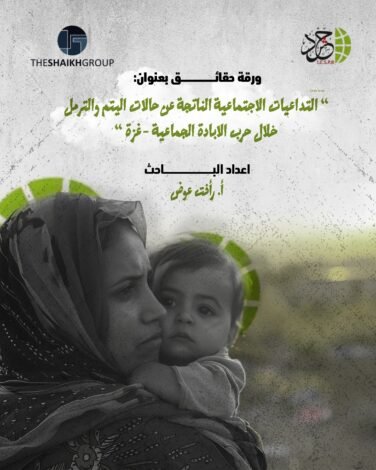
ICSPR issues a fact sheet titled “The Social Consequences Resulting from Orphanhood and Widowhood”

Date: 4 July 2026
Press Release
In partnership with The Shaikh Group and as part of the Youth Civil Society Activists Diploma Program
ICSPR issues a fact sheet titled: “The Social Consequences Resulting from Orphanhood and Widowhood”
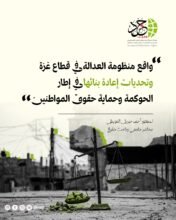
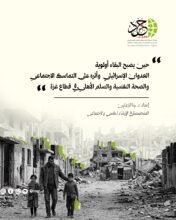
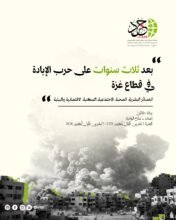
The International Commission to Support Palestinian People’s Rights (ICSPR), in partnership with The Shaikh Group and as part of the Youth Civil Society Activists Diploma Program, has issued a fact sheet addressing the social consequences resulting from the spread of orphanhood and widowhood cases in the Gaza Strip during the genocide war extending from 2023 to 2026. The paper sheds light on the scale of the humanitarian and social catastrophe caused by the loss of breadwinners and the disintegration of Palestinian families, while also outlining the legal responsibility borne by the Israeli occupation under international law.
The paper explains that since 7 October 2023 and through 2026, the Gaza Strip has been subjected to a systematic genocide war targeting the Palestinian people and all means of life, resulting in the killing of about 72,775 Palestinians and the injury of more than 172,750 others, in addition to large-scale forced displacement and the destruction of infrastructure, homes, and health, educational, and social institutions. It notes that this war has caused the disintegration of thousands of Palestinian families and an unprecedented rise in the numbers of orphans and widows as a result of targeting residential families and committing mass massacres against Palestinian households, while approximately 2.4 million Palestinians in the Gaza Strip have been subjected to policies of killing, starvation, and ethnic cleansing.
The paper shows that the effects of the genocide war are not limited to direct human losses, but extend to produce deep social, psychological, and economic consequences that threaten the Palestinian social fabric, especially with children losing their parents and thousands of women becoming heads of households under extremely harsh humanitarian conditions. It also affirms that these violations constitute a flagrant breach of international humanitarian law, the Geneva Conventions, the 1989 Convention on the Rights of the Child, and the 1979 Convention on the Elimination of All Forms of Discrimination against Women.
According to the statistics and figures presented in the paper, the number of massacres committed against Palestinian families exceeded 40,000 during the genocide war, while at least 6,020 families were wiped out with only one surviving member left behind. It also states that the Israeli occupation killed more than 21,510 children, that around 18,000 children in the Gaza Strip are unaccompanied or separated from their families, and that the number of orphans exceeded 56,348 children who lost one or both parents as a result of crimes and massacres committed against civilians.
The paper points out that more than 900 children have become amputees as a result of direct bombardment, while the number of women killed reached about 12,500, including around 9,000 mothers. It also estimates that the number of fathers killed is no less than 22,426, while the number of widowed women during the genocide war exceeded 26,370, with poverty in the Strip rising to more than 90% and unemployment reaching around 80%.
With regard to the social consequences, the paper notes that the genocide war has produced a catastrophic social reality inside the Gaza Strip, where thousands of families are now suffering from the loss of their primary breadwinner, directly affecting family, psychological, and social stability. These conditions have also contributed to the widening circle of poverty and deprivation, especially amid the absence of job opportunities and the scarcity of resources and humanitarian aid.
The paper stresses that orphaned children and widowed women suffer severe psychological trauma as a result of losing family members and witnessing scenes of killing and destruction, and that they face serious psychological and social challenges due to the loss of one or both parents. It explains that many children suffer from acute psychological disorders such as fear, anxiety, trauma, and depression, in addition to exposure to domination by relatives and violence linked to inheritance, custody, or care disputes, as well as family fragmentation in some cases.
On the economic level, the paper shows that widowhood has caused a large number of families to lose their main provider, leading to increasing poverty rates and depriving many children of natural family care, education, and social stability. It also states that continued displacement, destruction, and the absence of a safe environment have increased the likelihood of children being exposed to exploitation, violence, and forced early labor, alongside growing dependence of families on humanitarian assistance.
The paper explains that widowed women have found themselves facing multiplied living and social responsibilities under harsh economic and humanitarian conditions, particularly with the absence of sources of income, high unemployment, the collapse of basic services, the continuation of the siege, and the destruction of economic facilities. It adds that thousands of women have been forced to assume responsibility for supporting entire families in an environment lacking even the minimum requirements of a dignified life, which has intensified the psychological and social pressure on them and pushed some to seek work that does not match their abilities, schedules, or even their dignity.
In the educational and social dimension, the paper confirms that the war has severely affected the educational process, with many schools destroyed and others turned into shelters for displaced people, depriving thousands of children of education. It also notes that both women and children now face growing social difficulties due to the new responsibilities imposed on them under wartime conditions, especially inside shelters.
Within the framework of international law, the paper states that the crimes and violations committed against Palestinian civilians in the Gaza Strip constitute a grave breach of international humanitarian law, particularly the four Geneva Conventions of 1949, which prohibit the targeting of civilians, destruction of civilian property, forced displacement, and collective punishment. It also explains that these practices violate the Convention on the Rights of the Child, which guarantees children’s rights to life, protection, family care, and education, in addition to violating the Convention on the Elimination of All Forms of Discrimination against Women because women have been exposed to violence, poverty, and the loss of social protection.
The paper concludes that the broad targeting of Palestinian families and depriving civilians of the basic necessities of life amounts to genocide requiring international legal accountability, especially in light of the continuing policy of impunity. It further affirms that the genocide war in the Gaza Strip has caused an unprecedented social and humanitarian catastrophe, with one of its most prominent outcomes being the sharp rise in the number of orphans and widows and the disintegration of thousands of Palestinian families, which requires urgent international intervention to protect civilians and provide support and care for the most affected groups.
In light of this, ICSPR recommends an immediate halt to the ongoing genocide war against the Palestinian people, holding the Israeli occupation accountable for the violations and crimes committed against civilians, documenting these violations and prosecuting those responsible before competent international courts, and activating international accountability mechanisms. It also calls for the provision of protection programs and psychosocial support for orphaned children and widowed women, strengthening the international humanitarian response to meet the basic needs of affected families, ensuring education and health care for children affected by the genocide war, supporting economic empowerment programs for widowed women, and launching community initiatives to support families that have lost their breadwinner.
ICSPR affirms that this paper comes within the framework of its efforts to highlight the catastrophic social and humanitarian consequences caused by the genocide war in the Gaza Strip and to push toward serious international action that ensures protection for the most vulnerable groups, foremost among them orphaned children and widowed women, and safeguards their basic human and social rights.
It should be noted that this paper does not necessarily reflect the views of ICSPR or The Shaikh Group.