
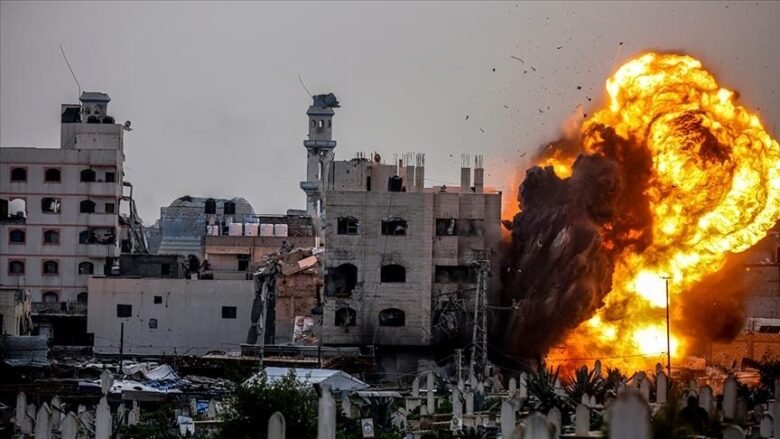
Systematic Israeli Escalation in the Gaza Strip Amid an Unprecedented Humanitarian Catastrophe and Continued Targeting of Civilians and the Social and Security Structure

Date: May 8, 2025
Press Release
Systematic Israeli Escalation in the Gaza Strip Amid an Unprecedented Humanitarian Catastrophe and Continued Targeting of Civilians and the Social and Security Structure
The International Commission to Support Palestinian Rights – ICSPR is following with grave concern the continuation of Israel’s large-scale aggression against the Gaza Strip and the escalating crimes of bombardment and direct targeting of civilians, residential neighborhoods, tents of displaced persons, and civil and security facilities, within the framework of a systematic policy aimed at the Palestinian people and the social structure, alongside the continuation of the suffocating blockade and restrictions on the entry of humanitarian aid and essential supplies, further deepening the unprecedented humanitarian catastrophe affecting more than two million Palestinians in the Strip.
Over the past hours and days, Israeli occupation forces have continued their airstrikes, artillery shelling, and gunfire across different parts of the Gaza Strip, committing further killings as part of a repeated pattern of direct attacks against civilians and civilian objects, while also expanding their deployment inside the Strip through what has been called the “orange line,” which cuts off approximately 11% of Gaza’s territory and raises the total restricted and prohibited areas for Palestinians to around 64% of the Strip’s total area, thereby intensifying forced overcrowding and pushing the population into no more than 36% of the territory amid the collapse of basic services and growing health and environmental risks.
Within this context of direct targeting, it was announced that Azzam Khalil al-Hayya, son of Hamas leader and chief negotiator Dr. Khalil al-Hayya, was killed of wounds he sustained following an Israeli strike targeting a gathering of civilians near Sahaba Building on al-Wahda Street in Gaza City’s al-Daraj neighborhood, which also killed Hamza Ayman al-Sharbasi and injured a number of civilians.
Israeli strikes also killed a number of civilians, including:
-
Mohammad Taysir Ziyad Kashko (15 years old)
-
Mohammad Fathi Hamdan Kashko (43 years old)
-
Hamdan Mohammad Fahmi Kashko (20 years old)
These victims were killed when tents sheltering displaced persons in al-Safadi land on Kashko Street in the al-Zaytoun neighborhood of Gaza City were targeted while residents were carrying out service work related to draining wastewater near their tents.
In Khan Younis, a drone targeted a civilian vehicle near the University College of Applied Sciences southwest of the city, killing Naseem Suleiman Hassan al-Kilzani and injuring more than 22 civilians in an area densely populated by displaced persons.
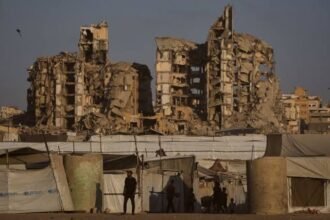
Shelling has also continued against residential neighborhoods and civilian gatherings, including al-Daraj, al-Zaytoun, al-Nasr, and al-Jalaa Street, while victims remain trapped under rubble and in the streets, as ambulance and civil defense teams are unable to reach many targeted areas because of the intensity of bombardment and the danger of field conditions.
As part of the continued targeting of law-enforcement bodies, the Ministry of Interior and National Security announced the killing of several police and security officers, including:
-
Captain Anwar Zuhair Abu Hasira
-
Assistant Hassan Osama Dawood
-
Lieutenant Colonel Mohammad Jamal al-Ghandour
They were killed as a result of Israeli attacks on police points, security patrols, and gatherings of security personnel while carrying out civil duties related to maintaining order and securing civilians and public and private property, including the targeting of a temporary police point near the destroyed Sheikh Radwan Police Station, which also killed Mahmoud Mohammad Suhweil (14 years old), a child who was selling bread to help support his family.
ICSPR stresses that civilian police forces in all their branches are considered civilian objects protected under international humanitarian law, as they perform tasks related to maintaining public order, securing civilian life, and organizing daily affairs, and their personnel or headquarters may not be targeted unless they directly participate in hostilities, something the occupation authorities have not demonstrated in any of their repeated attacks against them.
ICSPR further warns that the repeated Israeli targeting of police and security personnel is intended to undermine the civilian structure, spread chaos and fear among civilians, and create a deliberate security vacuum that facilitates the movement of armed gangs and collaborators with the occupation, leading to increased looting, assaults on civilians and property, and obstruction of the protection of humanitarian aid in displacement areas.
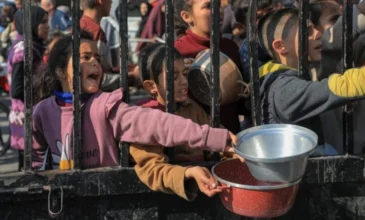
These crimes are taking place alongside an unprecedented humanitarian catastrophe, as international reports confirm that around 2.1 million Palestinians are trapped within less than half of the Gaza Strip, amid the accelerating collapse of the health sector, acute shortages of food, safe drinking water, medicines, fuel, and cooking gas, and alarming increases in malnutrition, especially among children and pregnant women, while hospitals and medical centres remain unable to respond to the growing humanitarian needs.
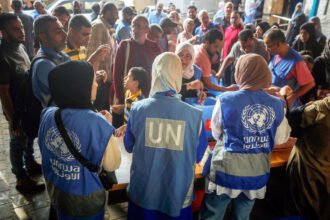
Under the continuing blockade, the quantities of humanitarian aid entering the Strip remain limited and far from sufficient to cover even the minimum of the rapidly worsening humanitarian needs.
ICSPR affirms that the targeting of displaced persons’ tents, residential areas, civilian gatherings, and security guard points, together with ongoing unlawful killings, siege, starvation, and forced displacement, constitutes an escalating pattern of grave violations of international humanitarian law and a clear breach of the Geneva Conventions, especially with regard to the protection of civilians during armed conflict, the prohibition on targeting civilian objects, and the ban on collective punishment. ICSPR stresses that the continuation of large-scale killings and the targeting of civilians, alongside policies of siege, starvation, movement restrictions, and shrinking the geographic space available to the population, forms an integrated pattern of acts amounting to war crimes and crimes against humanity, and falling within the prohibited acts under the 1948 Convention on the Prevention and Punishment of the Crime of Genocide.
Accordingly, ICSPR calls for the following:
-
An immediate and comprehensive halt to all attacks and military operations against the civilian population, and an end to the targeting of civilians, civilian law-enforcement bodies, and police and security personnel while carrying out their civil duties and protecting people and property.
-
The immediate lifting of the blockade on the Gaza Strip, an end to policies of starvation and collective punishment, and the guaranteed entry of humanitarian aid, food, medical supplies, and fuel in a sufficient, safe, and unrestricted manner.
-
Action by the international community, the United Nations, and the High Contracting Parties to the Geneva Conventions to provide effective international protection for Palestinian civilians and prevent ongoing policies of forced displacement and the shrinking of the geographic space available to the population.
-
The opening by the International Criminal Court of investigations into all killings and unlawful targeting, including attacks on displaced persons’ tents, civilian gatherings, and police and security personnel, in preparation for holding those responsible accountable and ending impunity.
-
The activation of international accountability mechanisms and the prosecution of Israeli leaders before competent international courts, given that the violations committed in the Gaza Strip amount to war crimes, crimes against humanity, and grave breaches of international humanitarian law.
-
The provision of financial and humanitarian support to victims of the ongoing catastrophe, and support for UNRWA and all international and local institutions in order to strengthen humanitarian response and prevent the collapse of essential service sectors and the widening of humanitarian disasters.