

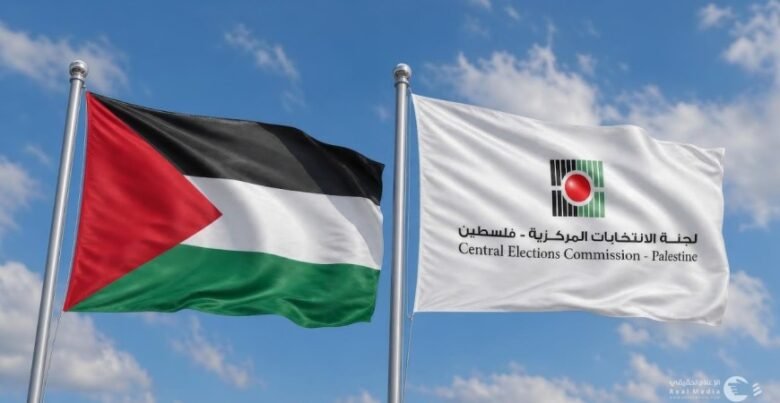
ICSPR: Postponing Elections Until September 2027 Will Not Resolve the Legitimacy Crisis; A Binding National Process Is Needed to Rebuild the Political System and Renew Legitimacy

Date: 10 October 2026
Press Release
ICSPR: Postponing Elections Until September 2027 Will Not Resolve the Legitimacy Crisis; A Binding National Process Is Needed to Rebuild the Political System and Renew Legitimacy
The International Commission to Support Palestinian Rights (ICSPR) condemns the postponement of the legislative elections, which had been scheduled for 28 November 2026, and the setting of 11 September 2027 as the date for holding presidential and legislative elections simultaneously. ICSPR warns that postponing the electoral process without binding legal, political, and implementation guarantees will exacerbate the legitimacy crisis, deepen the trust gap between citizens and institutions, and reproduce the pattern of electoral paralysis witnessed in 2021. This comes at a time when the Palestinian people are facing a genocidal war, forced displacement, settlement expansion, annexation, and attempts to eliminate their national rights.
ICSPR affirms that elections are an inherent constitutional and democratic right, not a grant from the leadership or a privilege bestowed by factions according to their political calculations. Postponement must not be used as a means of extending political mandates or denying citizens their right to choose, hold accountable, and replace their representatives. Announcing a new election date is insufficient unless it is accompanied by clear legal guarantees, a binding timetable, and independent mechanisms to prevent further postponements and ensure that the electoral process is administered within the legal mandates of the competent institutions, free from unilateral political decisions.
ICSPR stresses that the Palestinian crisis is not merely a dispute over the timing of elections; it is a crisis of the political system, reflected in the continued division, the paralysis of representative institutions, the monopolization of decision-making, and the decline of accountability and national partnership. Accordingly, ICSPR calls for transforming the period leading up to September 2027 into a time-bound national process to rebuild the political system, unify institutions, and renew legitimacy. This process should be based on comprehensive dialogue grounded in the National Reconciliation Document, involving all political forces and factions, independent figures, women, youth, civil society organizations, and representatives of Palestinians in the homeland and the diaspora. It should culminate in a unified national program, an implementation plan, and publicly announced monitoring and accountability mechanisms.
ICSPR emphasizes that national dialogue must pave the way for elections and establish the conditions necessary for their success, rather than become an alternative to elections or a cover for procrastination and the division of influence at the expense of the popular will. It also calls for safeguarding the independence of the Central Elections Commission, protecting public freedoms, ensuring equal opportunities, preventing the use of public institutions and security agencies to serve the interests of any party, and respecting the results of the ballot.
ICSPR maintains that restrictions imposed by the Israeli occupation, particularly in occupied Jerusalem, the Gaza Strip, and the West Bank, must not become a permanent justification for postponing elections or a veto over the will of the Palestinian people. ICSPR calls for a national, diplomatic, and human rights plan to confront these restrictions, alongside serious international action to ensure the participation of Palestinians wherever they reside. It also calls for an independent assessment of the feasibility of electronic and remote voter registration and voting, subject to strict safeguards for confidentiality, integrity, identity verification, auditing, and appeals, without excluding safe and accessible in-person alternatives.
ICSPR stresses that renewing legitimacy cannot be achieved through presidential and legislative elections alone. It also requires rebuilding the Palestine Liberation Organization (PLO) and renewing its institutions, electing the Palestinian National Council in a manner that ensures genuine representation of Palestinians in the homeland and the diaspora, ending exclusion and the monopolization of decision-making, and adopting transparent mechanisms for participation and accountability. These steps are essential to rebuilding the national political system on the foundations of partnership, pluralism, and the popular will.
The responsibility of the leadership and political forces does not end with announcing a new date. It extends to ensuring the conditions necessary for holding elections and respecting their results, ending the division, and subjecting public decision-making to popular accountability. Legitimacy derives not from decrees and closed-door agreements, but from the will of the people. Dialogue must pave the way for elections, not replace them, and confronting the occupation must protect democracy rather than justify its suspension.
Accordingly, the International Commission to Support Palestinian Rights (ICSPR) calls for the following:
- Adopting a binding legal electoral timetable covering all stages of the electoral process, with guarantees against further postponements through unilateral political decisions, while respecting the legal mandates of the Central Elections Commission and other relevant authorities.
- Launching comprehensive, time-bound national dialogue that culminates in a unified program and an implementation plan to end the division, unify institutions, and renew legitimacy, supported by independent monitoring and accountability mechanisms.
- Guaranteeing the independence of the Central Elections Commission, protecting public freedoms, ensuring equal opportunities and the integrity of the electoral process, and respecting election results.
- Adopting a national and international plan for inclusive electoral participation in Jerusalem, Gaza, the West Bank, and the diaspora, and confronting Israeli occupation interference through political, legal, and diplomatic action.
- Conducting an independent legal and technical assessment of electronic and remote voting, ensuring the security, confidentiality, transparency, and auditability of the electoral process, as well as the right to challenge its results.
- Rebuilding the Palestine Liberation Organization and electing the Palestinian National Council on democratic and participatory foundations that ensure genuine representation of Palestinians in the homeland and the diaspora, end exclusion and the monopolization of decision-making, and guarantee the effective participation of all components of Palestinian society at home and abroad.
- Calling on the United Nations and the international community to fulfill their responsibilities by pressuring the Israeli occupation to cease obstructing Palestinian political rights and supporting free, inclusive, and fair elections that respect Palestinian rights and the popular will.
The International Commission to Support Palestinian Rights (ICSPR)