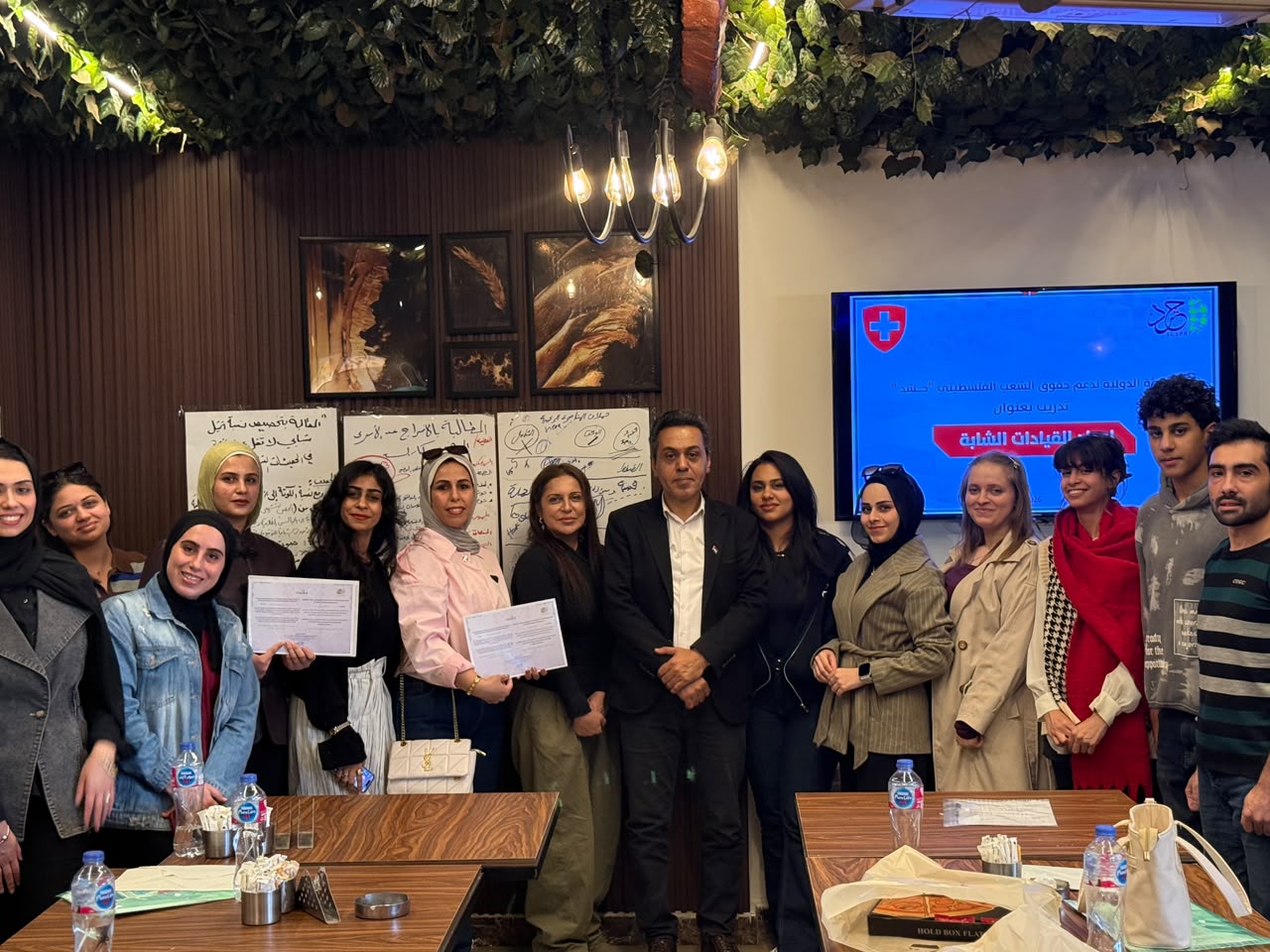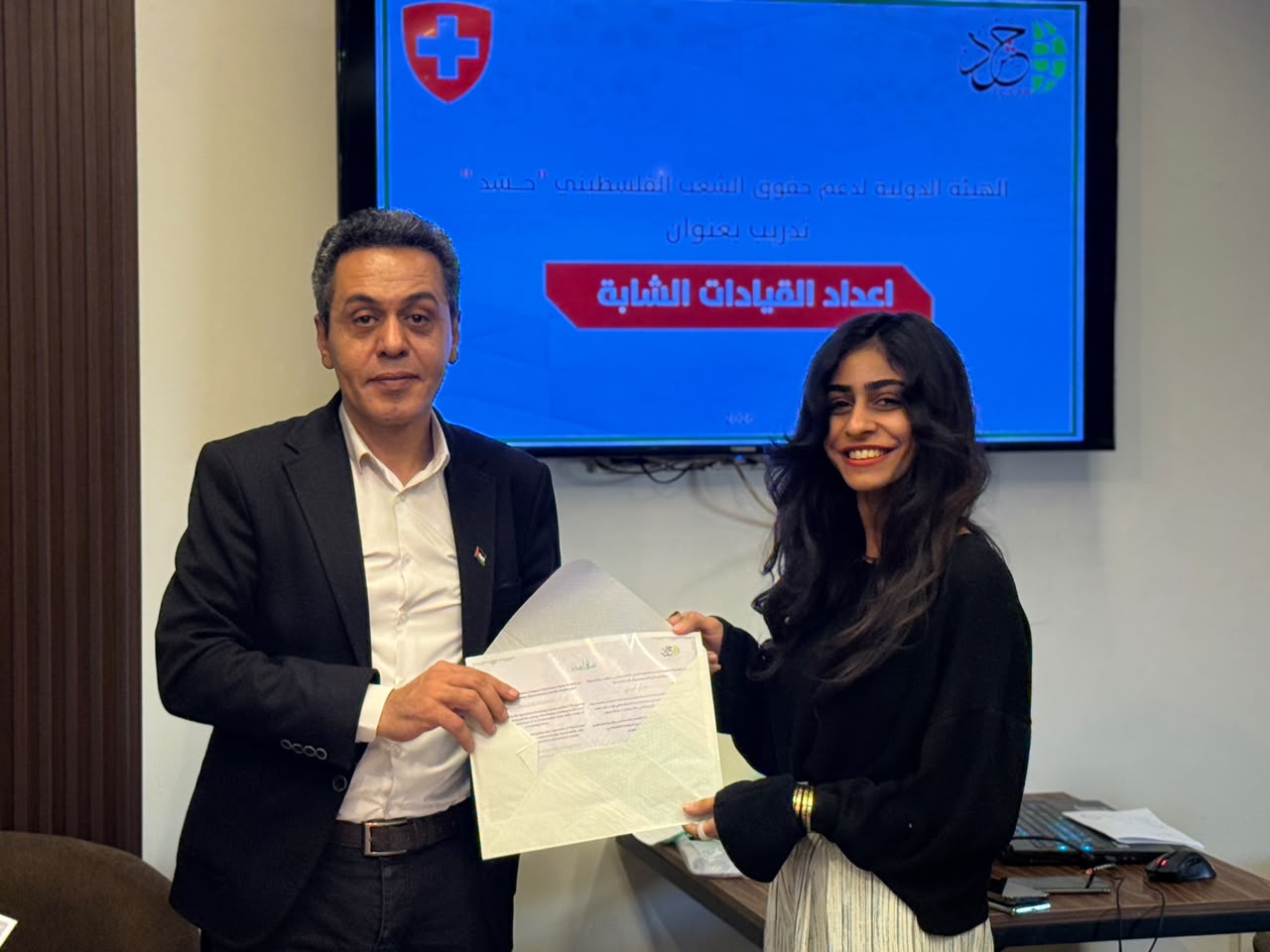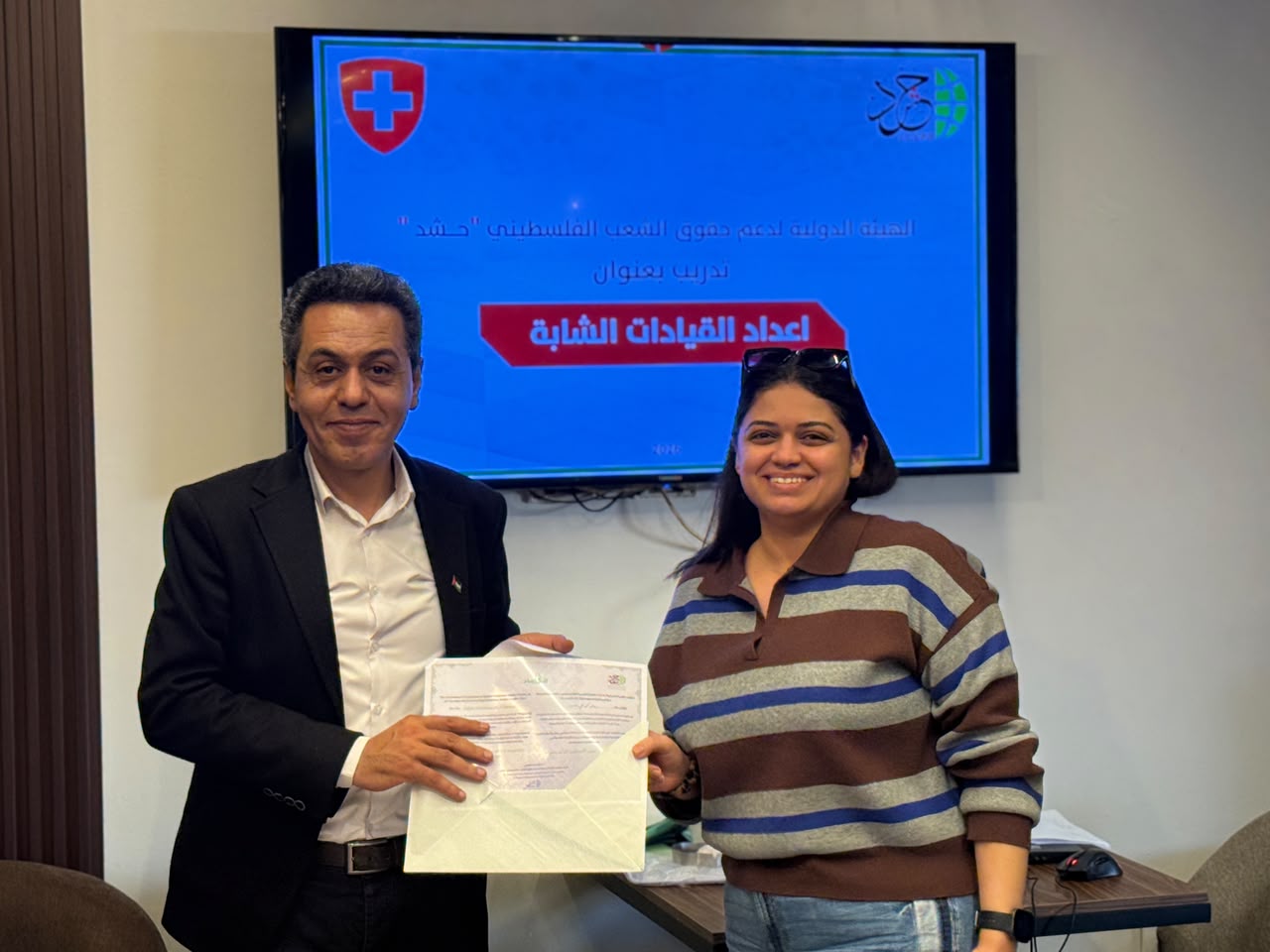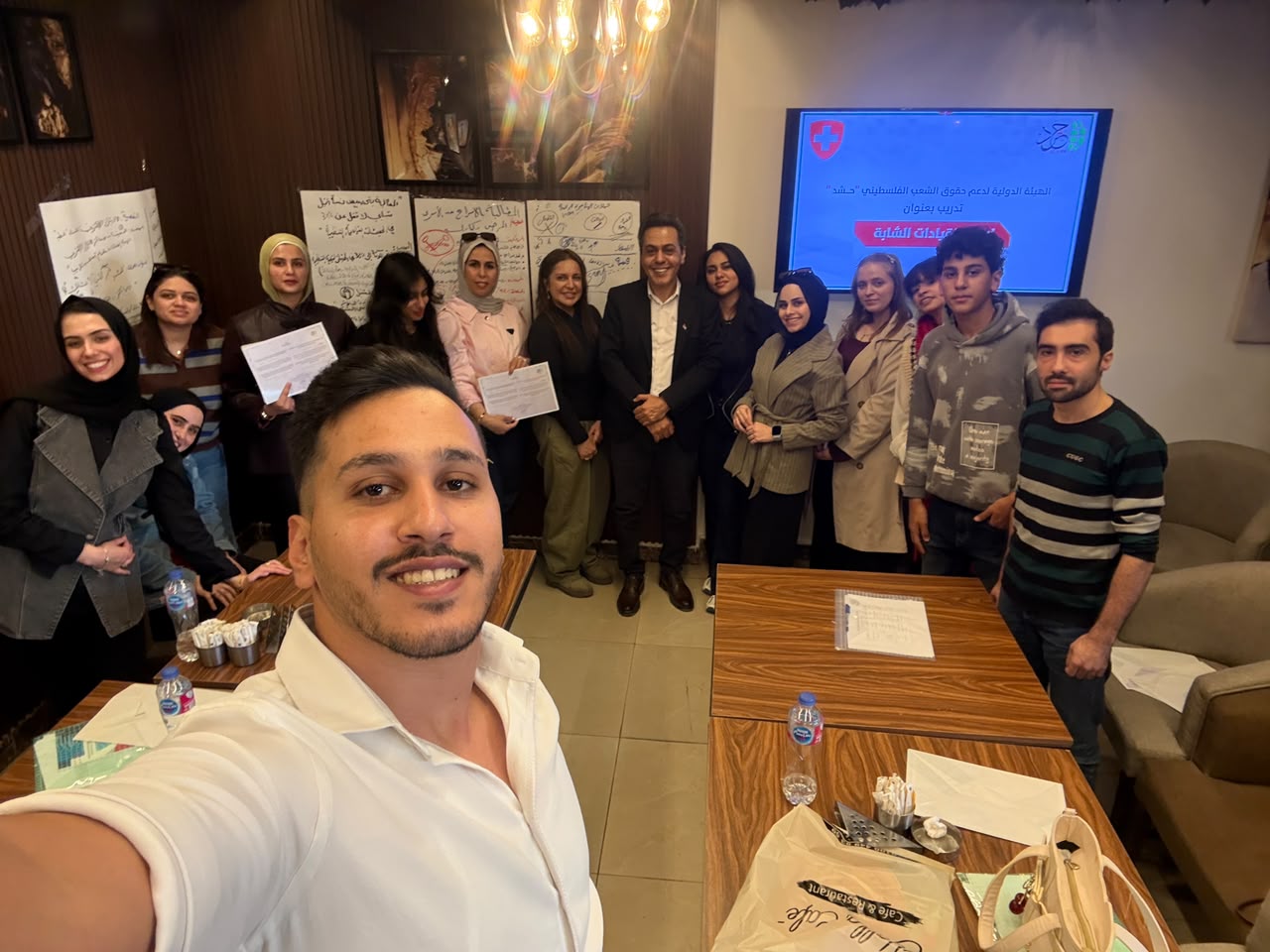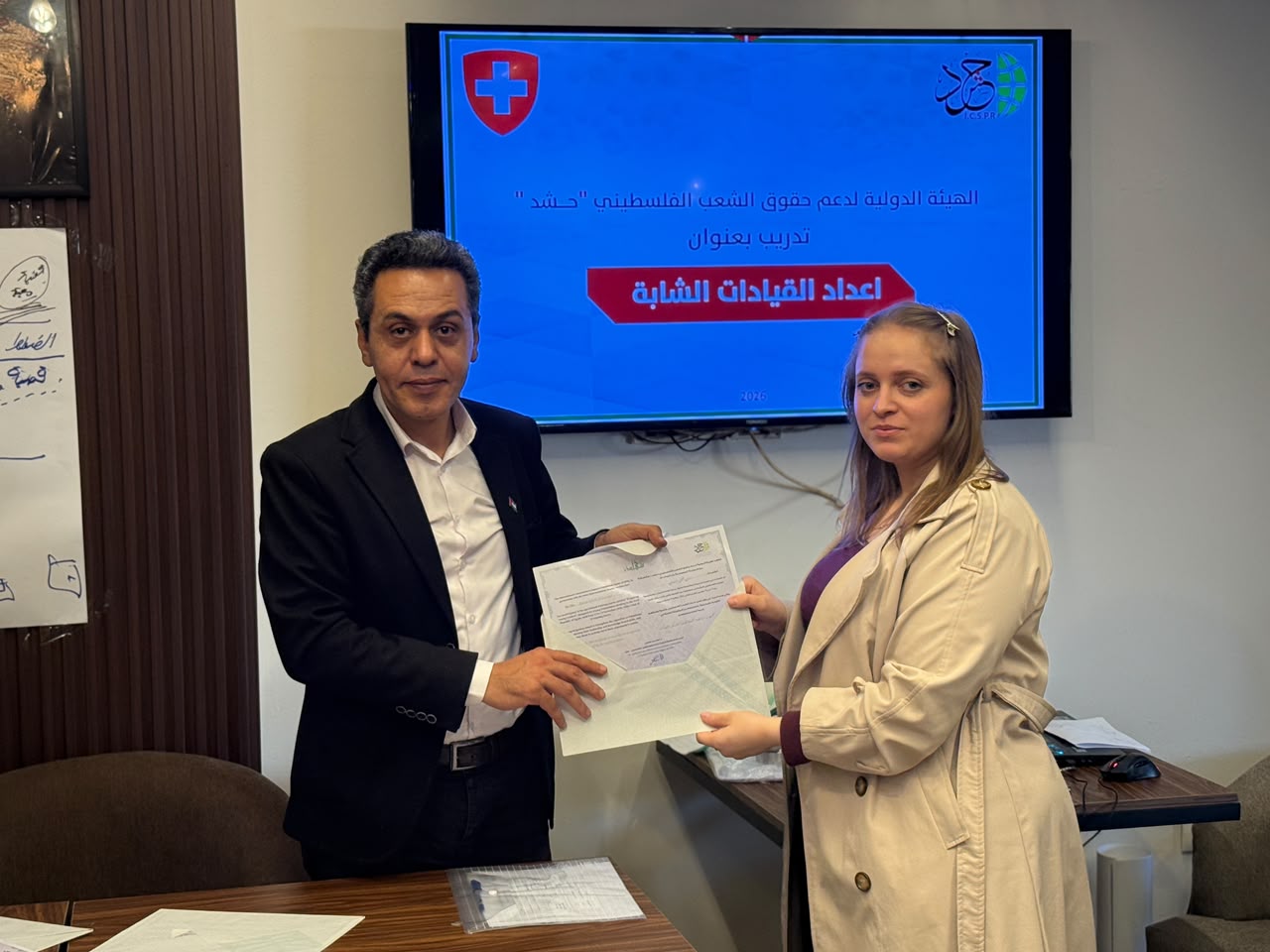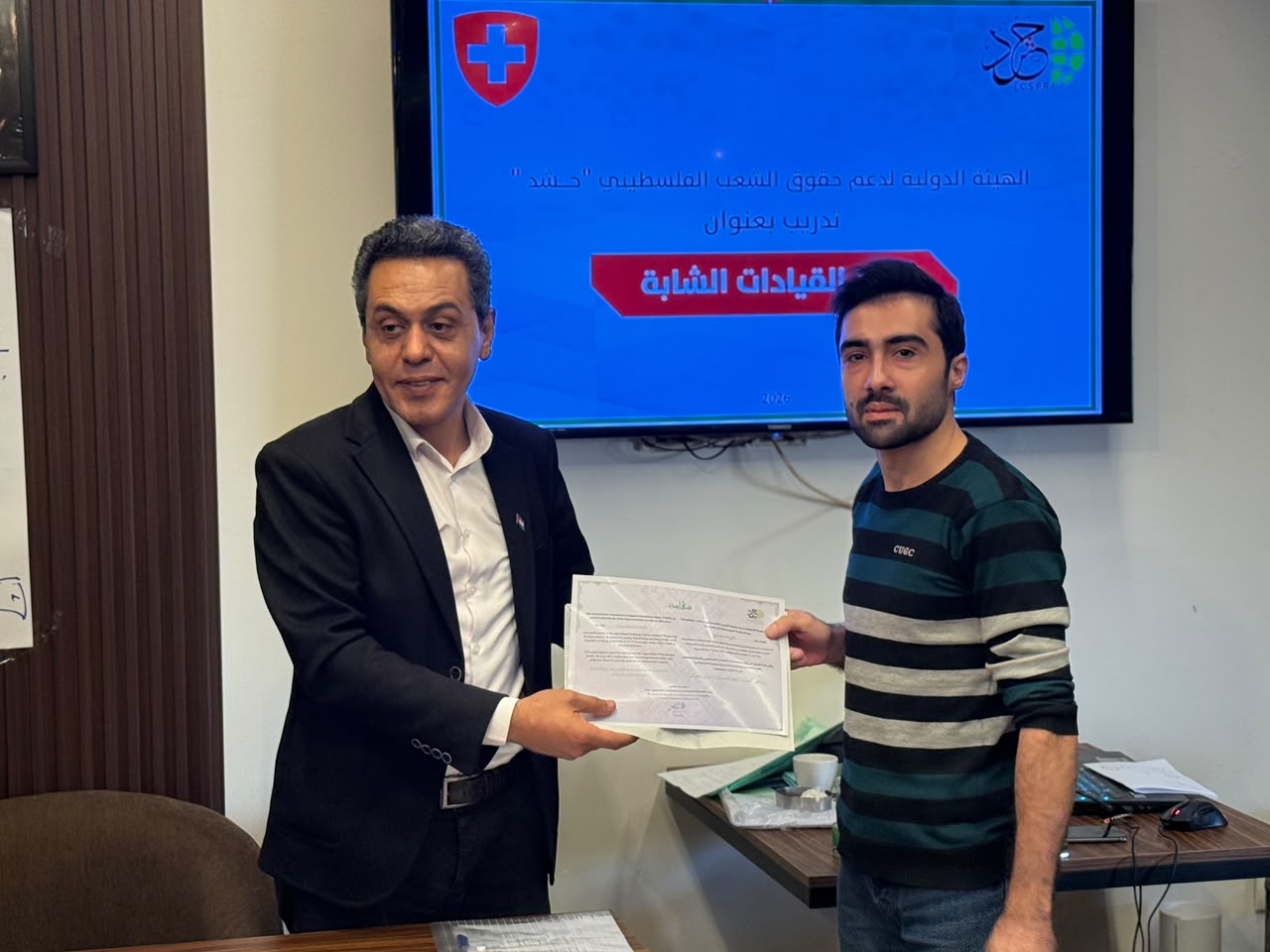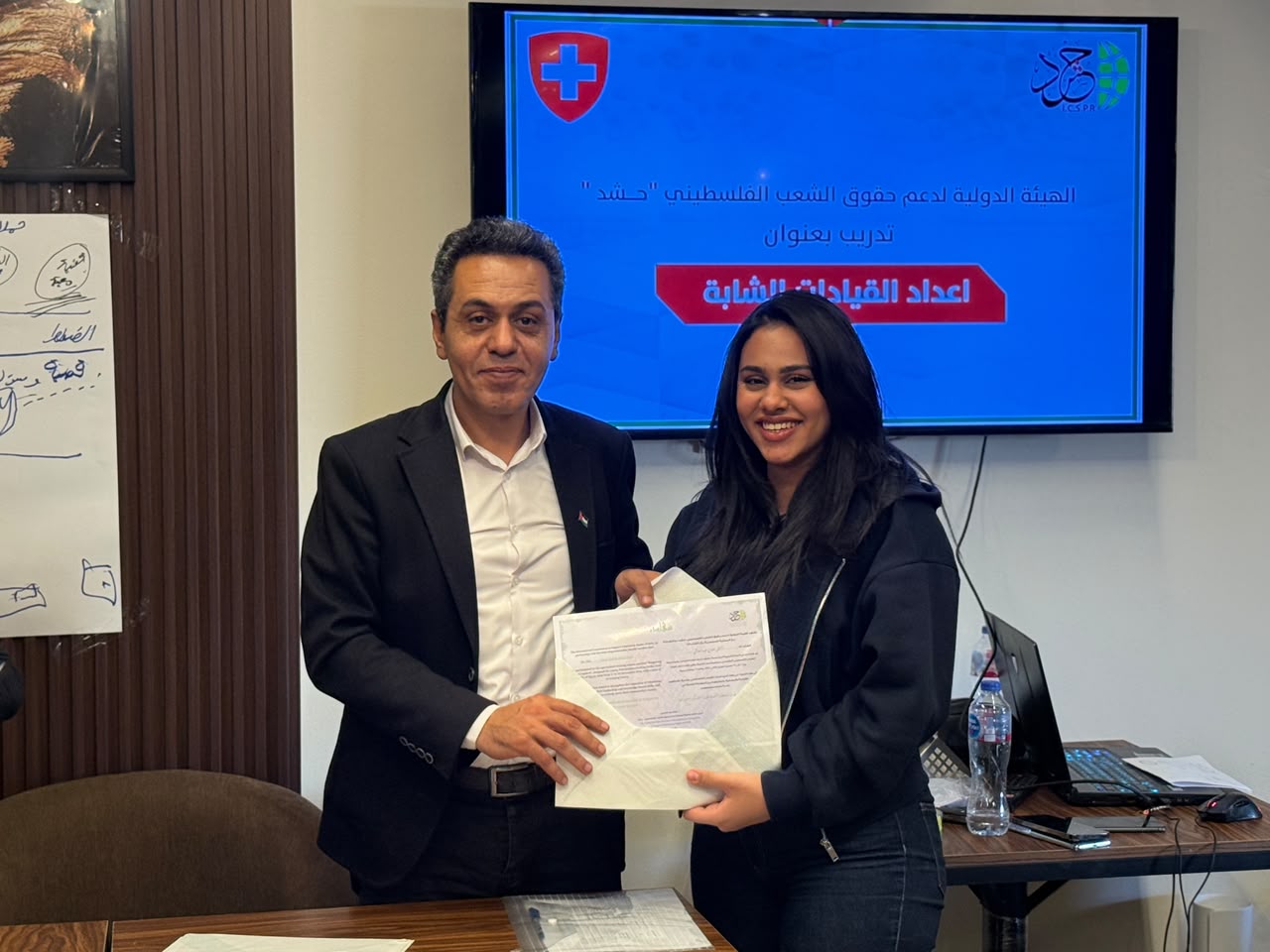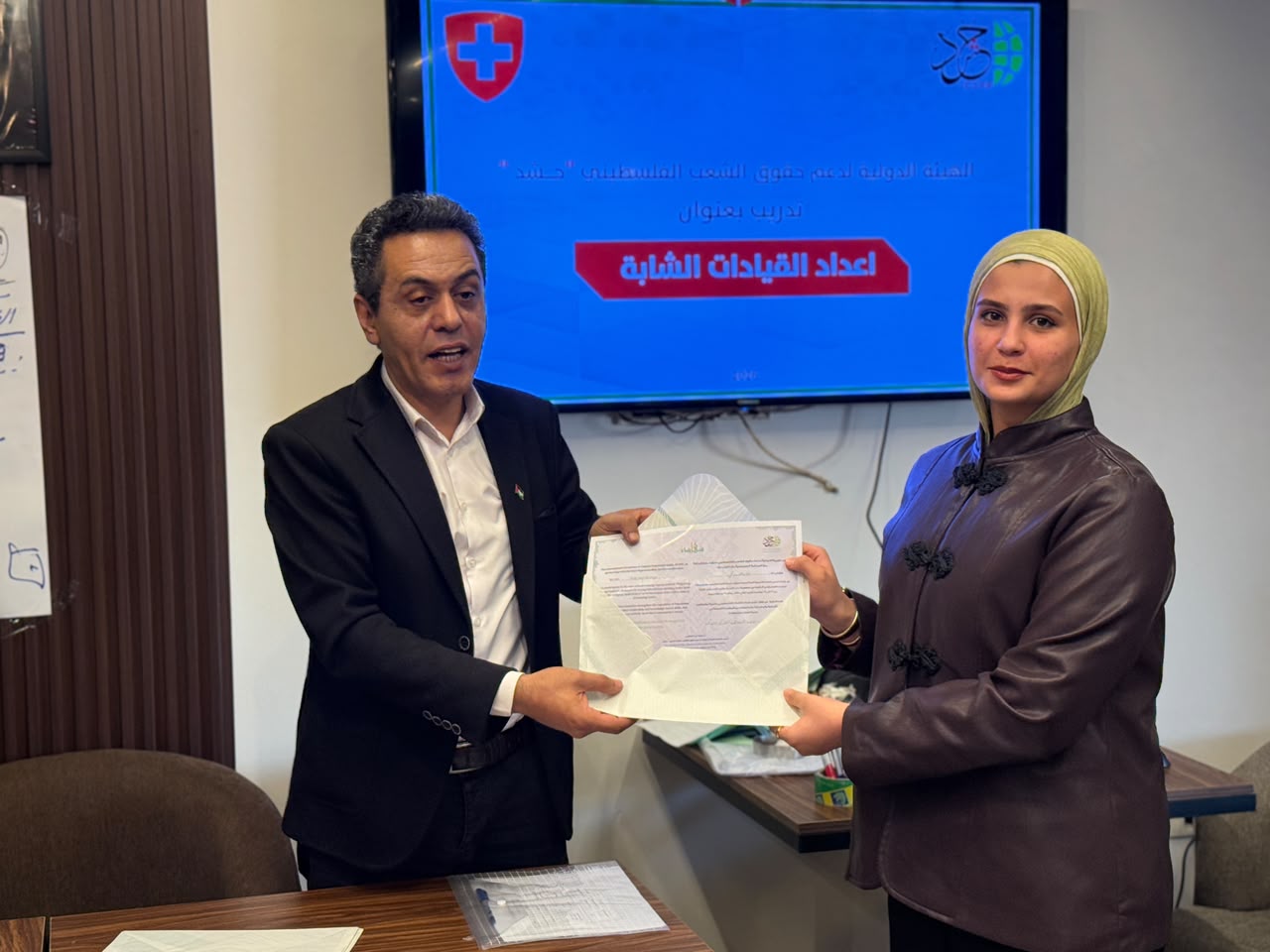

From Displacement to Leadership and Impact ICSPR Concludes Youth Leadership Training Course in Cairo with the Participation of 20 Young Palestinian Men and Women

Date: 21 November 2026
Press Release
From Displacement to Leadership and Impact: ICSPR Concludes Youth Leadership Training Course in Cairo with the Participation of 20 Young Palestinian Men and Women
Abd Alati: Palestinian youth are not merely beneficiaries of recovery efforts; they are partners in leading them and shaping a future founded on greater justice and dignity.
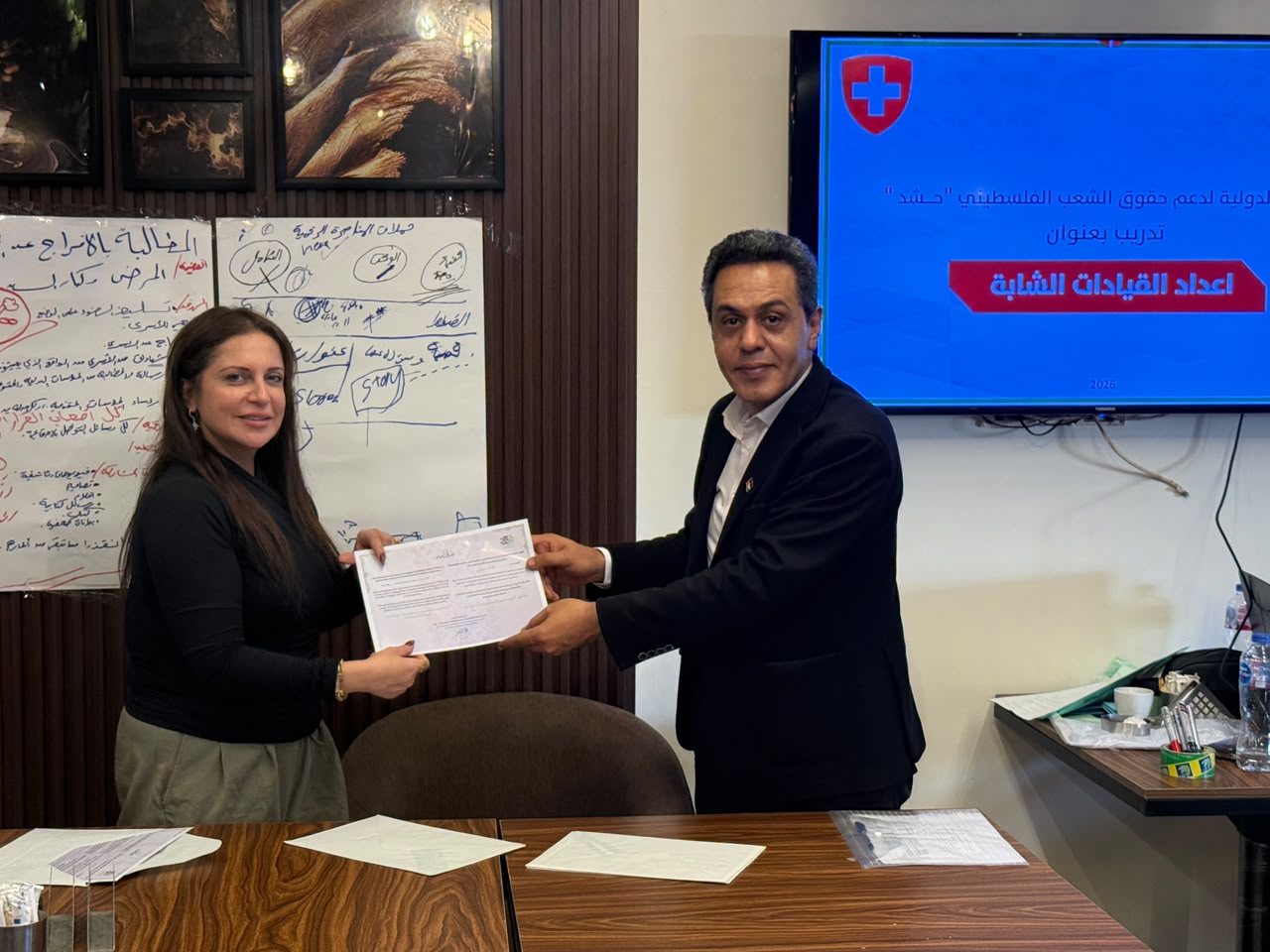
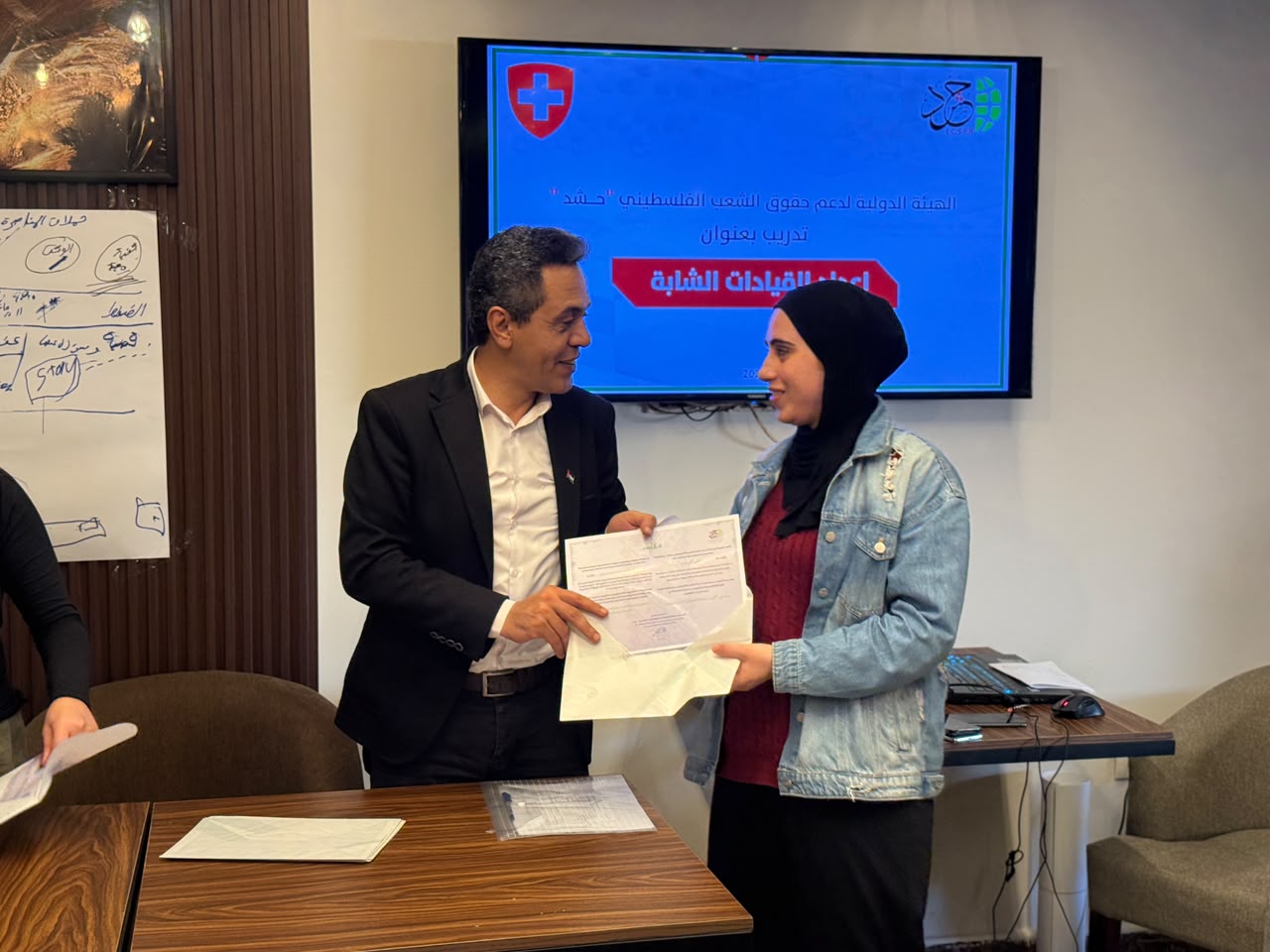
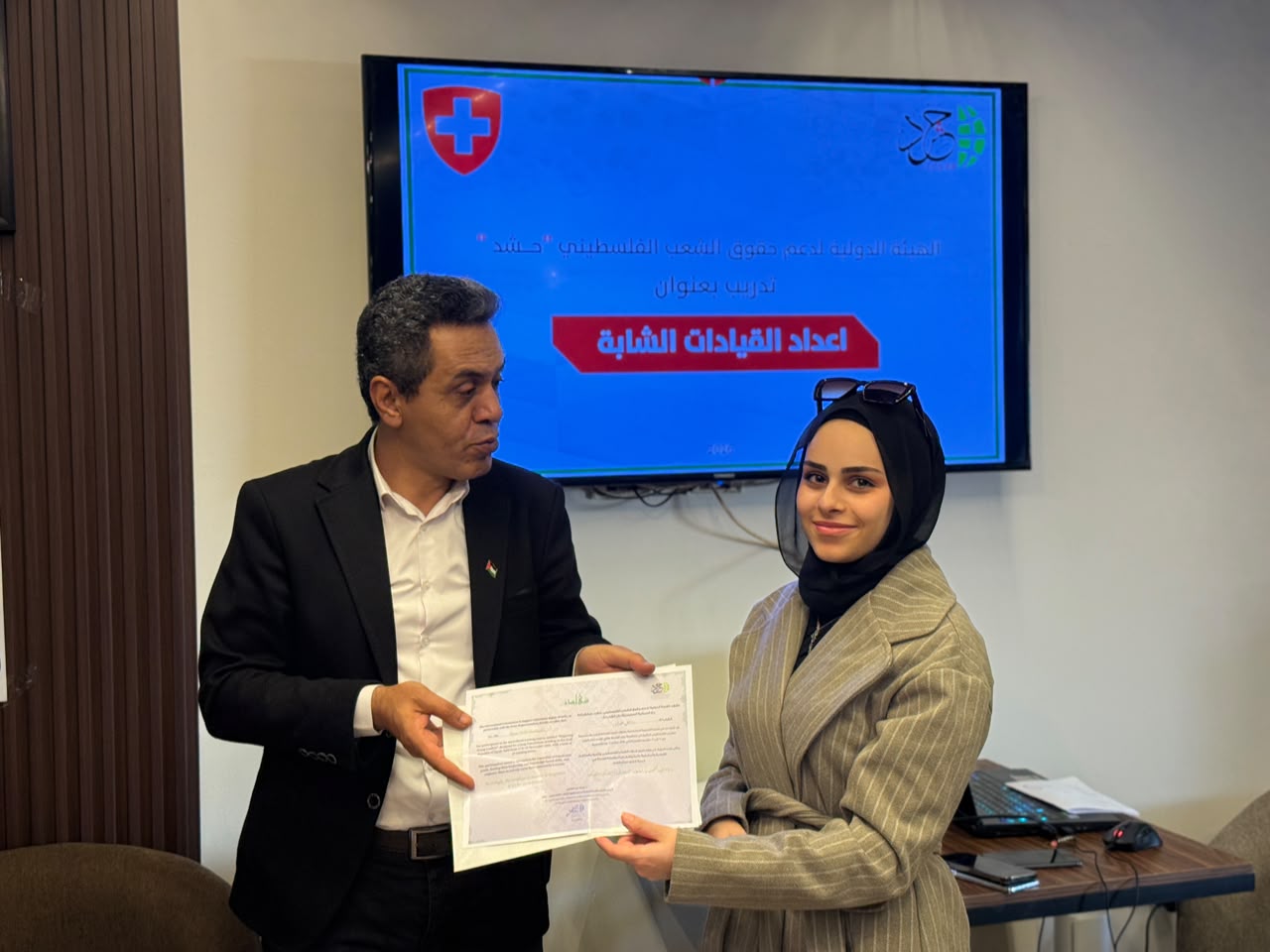
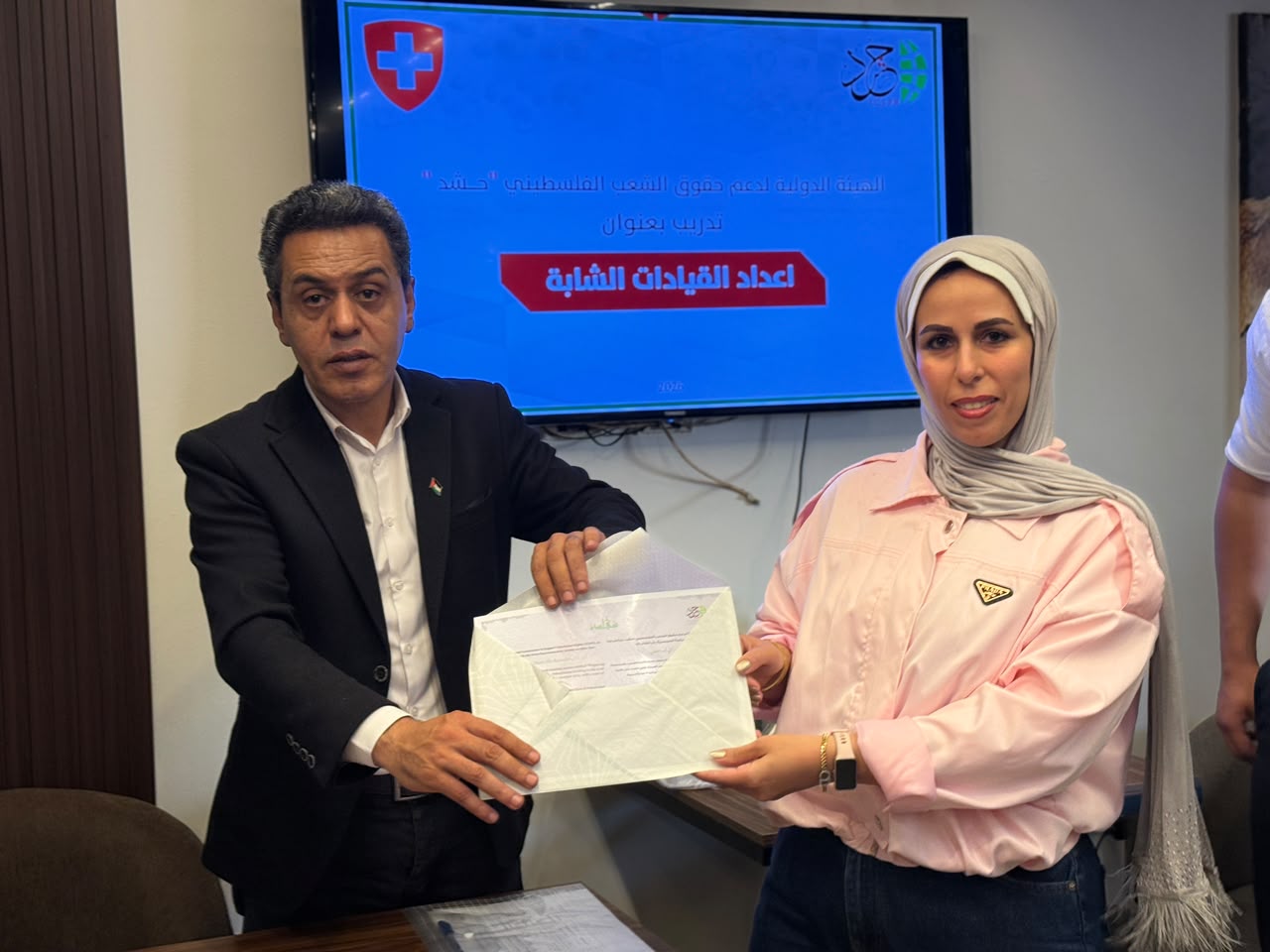
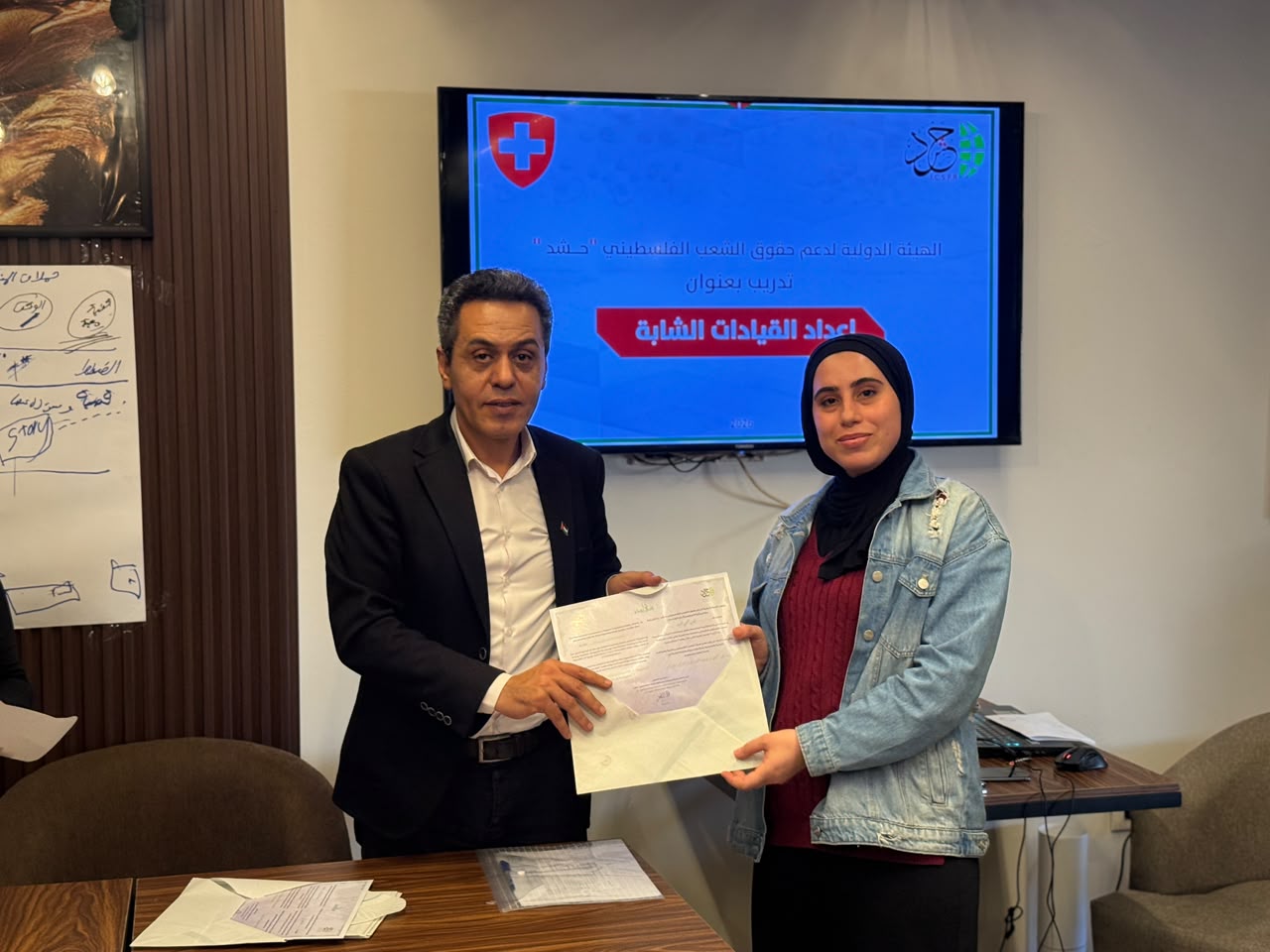
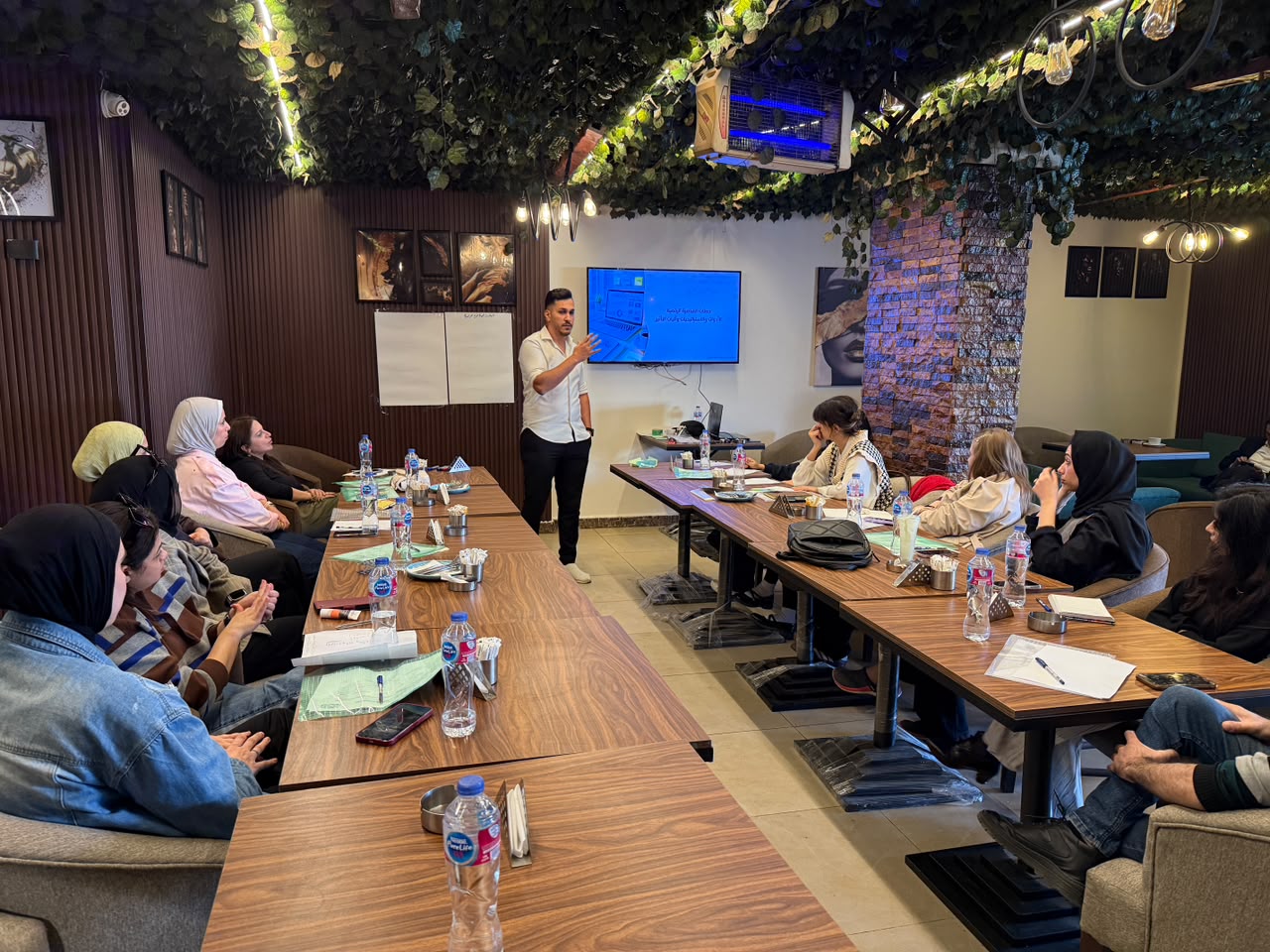
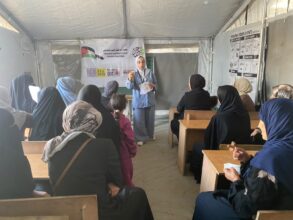
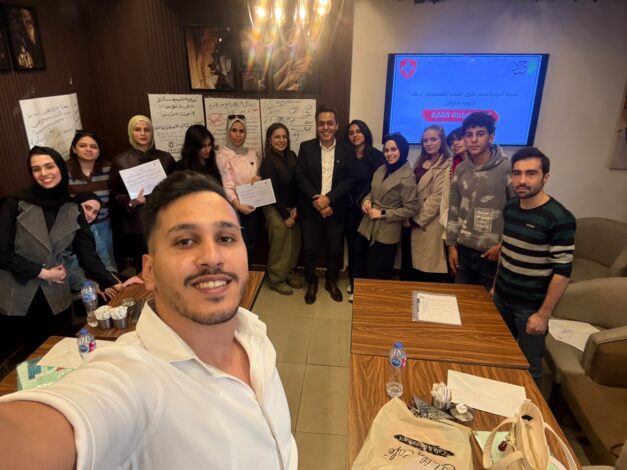
The International Commission to Support Palestinian Rights (ICSPR), in partnership with the Swiss Representation, concluded its specialized training course entitled “Preparing Young Leaders,” with the participation of 20 young Palestinian men and women displaced to Cairo. The training experience aimed to transform the potential and challenges facing young people amid war and displacement into opportunities for leadership, initiative, and community impact, while strengthening their role in protecting rights and participating in the recovery and reconstruction of Palestinian society.
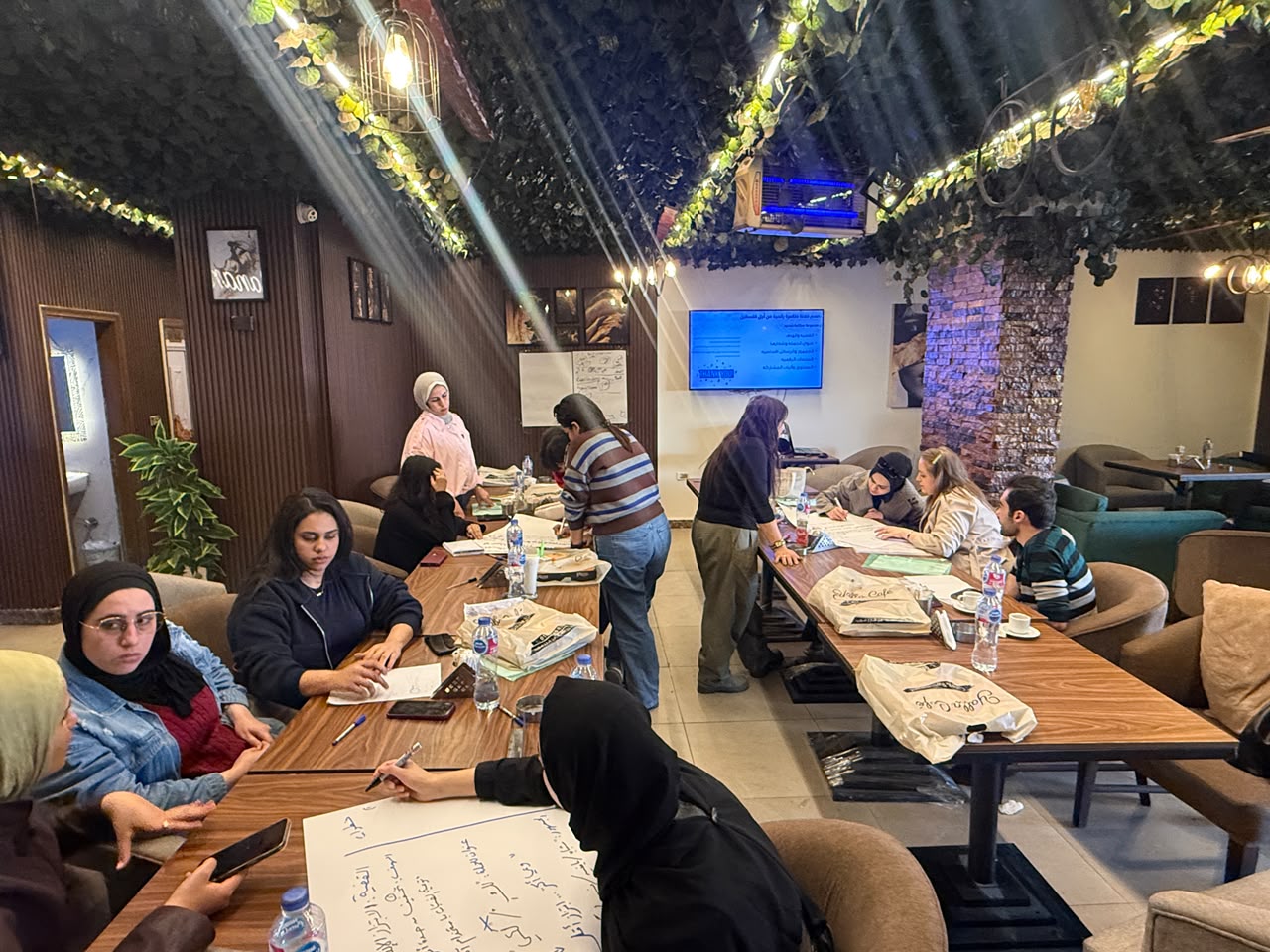
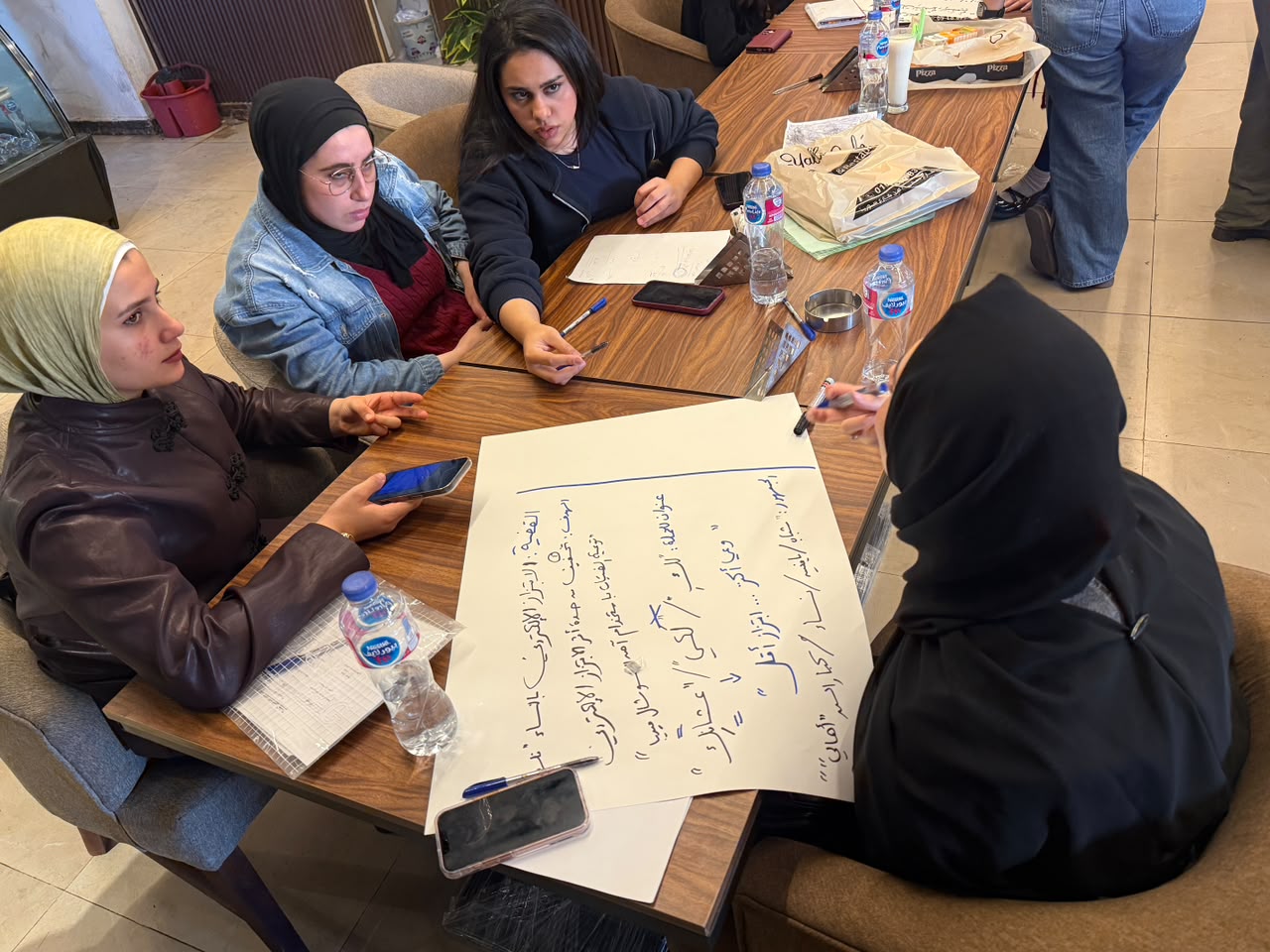
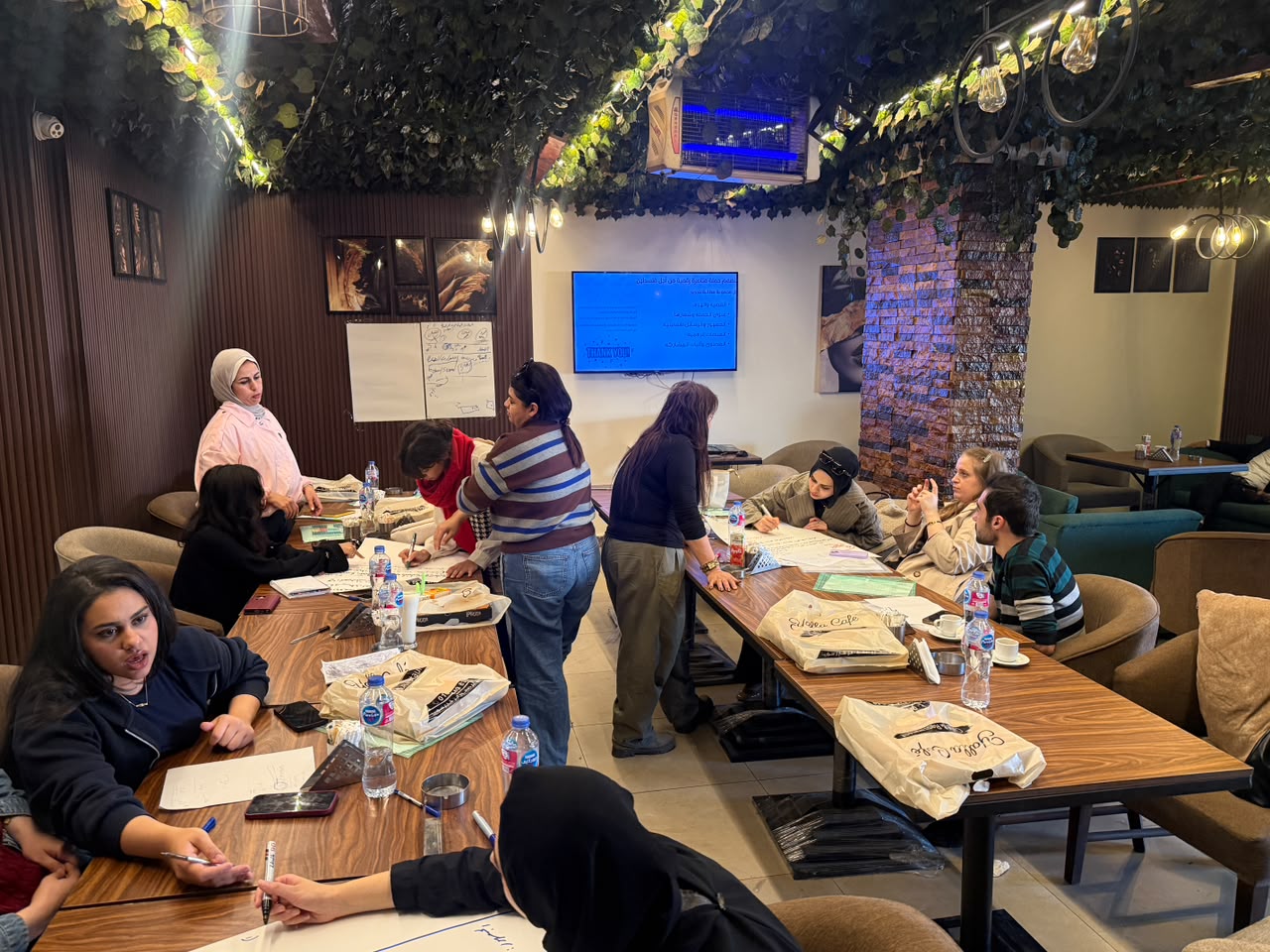
Over three intensive training days, the course combined theoretical knowledge with practical application, providing participants with a space for learning, dialogue, exchanging experiences, and developing skills. The comprehensive programme addressed the current Palestinian situation and its challenges, human rights and youth rights, mechanisms for defending human rights, effective leadership skills, community participation, psychological recovery, the design and implementation of community initiatives, and digital advocacy and campaigning.
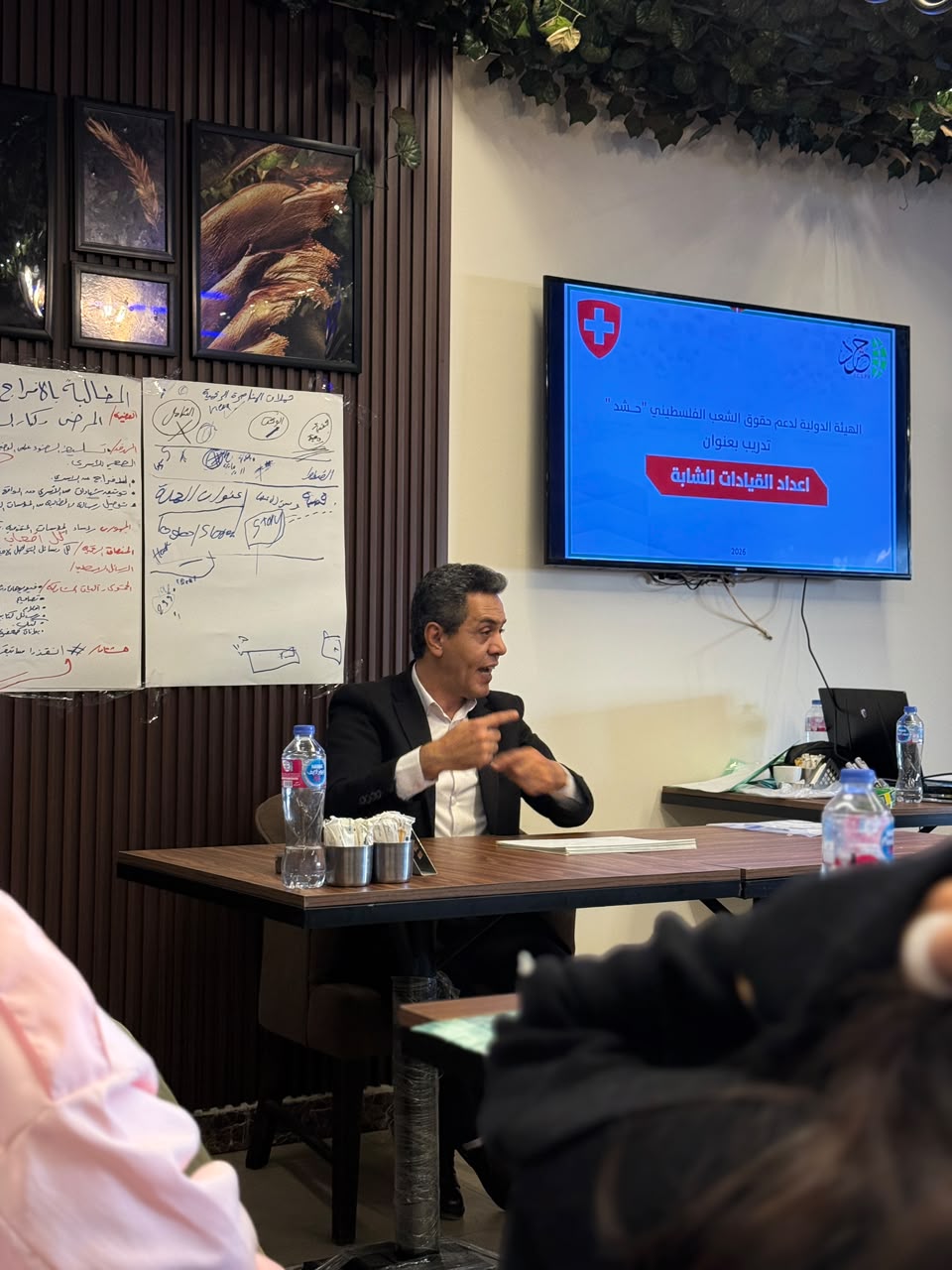
During the training sessions delivered by Dr. Salah Abd Alati, an expert in training and capacity building, participants discussed the reality of the Palestinian cause and the current national and humanitarian challenges, human rights and youth rights, mechanisms for defending rights, and the importance of strengthening youth participation in public life, rebuilding institutions, holding elections, and leading community initiatives. The sessions also addressed the promotion of democracy, citizenship, civil peace, and transitional justice.
Abd Alati emphasized that investing in Palestinian youth means investing in society’s ability to recover, rebuild, and shape its future. He noted that young people who have experienced war, displacement, and the loss of stability possess valuable potential and experience that must be transformed into a positive force capable of leading initiatives, protecting rights, and contributing to rebuilding the social fabric.
He stressed that young people are genuine partners in setting priorities and leading change, making it essential to strengthen their participation in national and community decision-making. He further highlighted that empowering young people, alongside women, represents a fundamental pathway towards building a more participatory, just, and cohesive Palestinian society.
Under the leadership development component, trainer Ms. Mona Abu Ramadan delivered specialized sessions addressing leadership concepts, the roles and responsibilities of leaders, communication and teamwork skills, team motivation, and positive influence. These sessions aimed to strengthen participants’ ability to take initiative, assume responsibility, and lead community work.
Dr. Lina Al-Za’anin also delivered a session on psychological recovery, addressing the impact of war and displacement on mental health, mechanisms for coping with psychological pressures and challenges, and strengthening psychological resilience and adaptability as essential foundations for restoring initiative, participation, and leadership capacities.
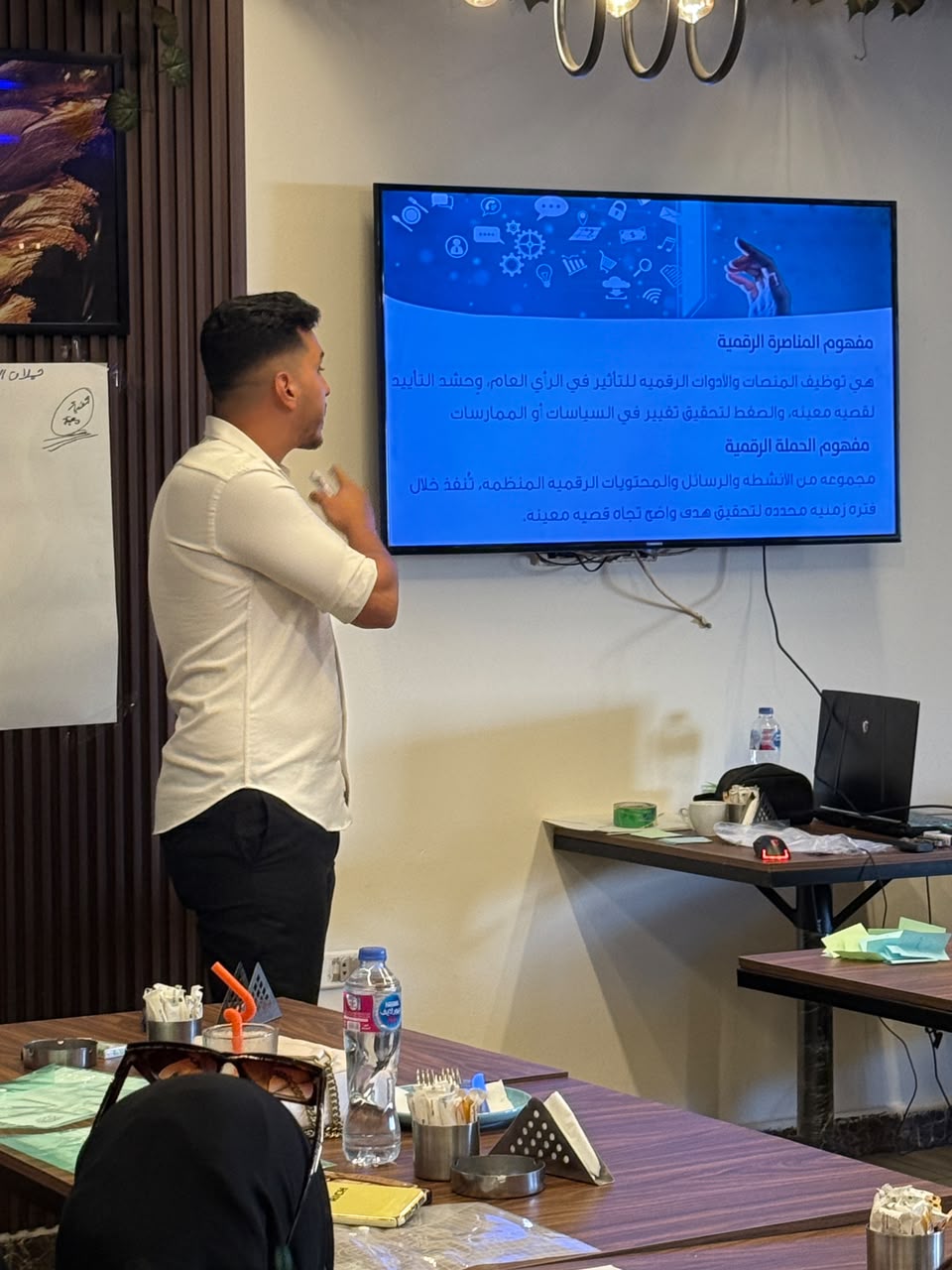
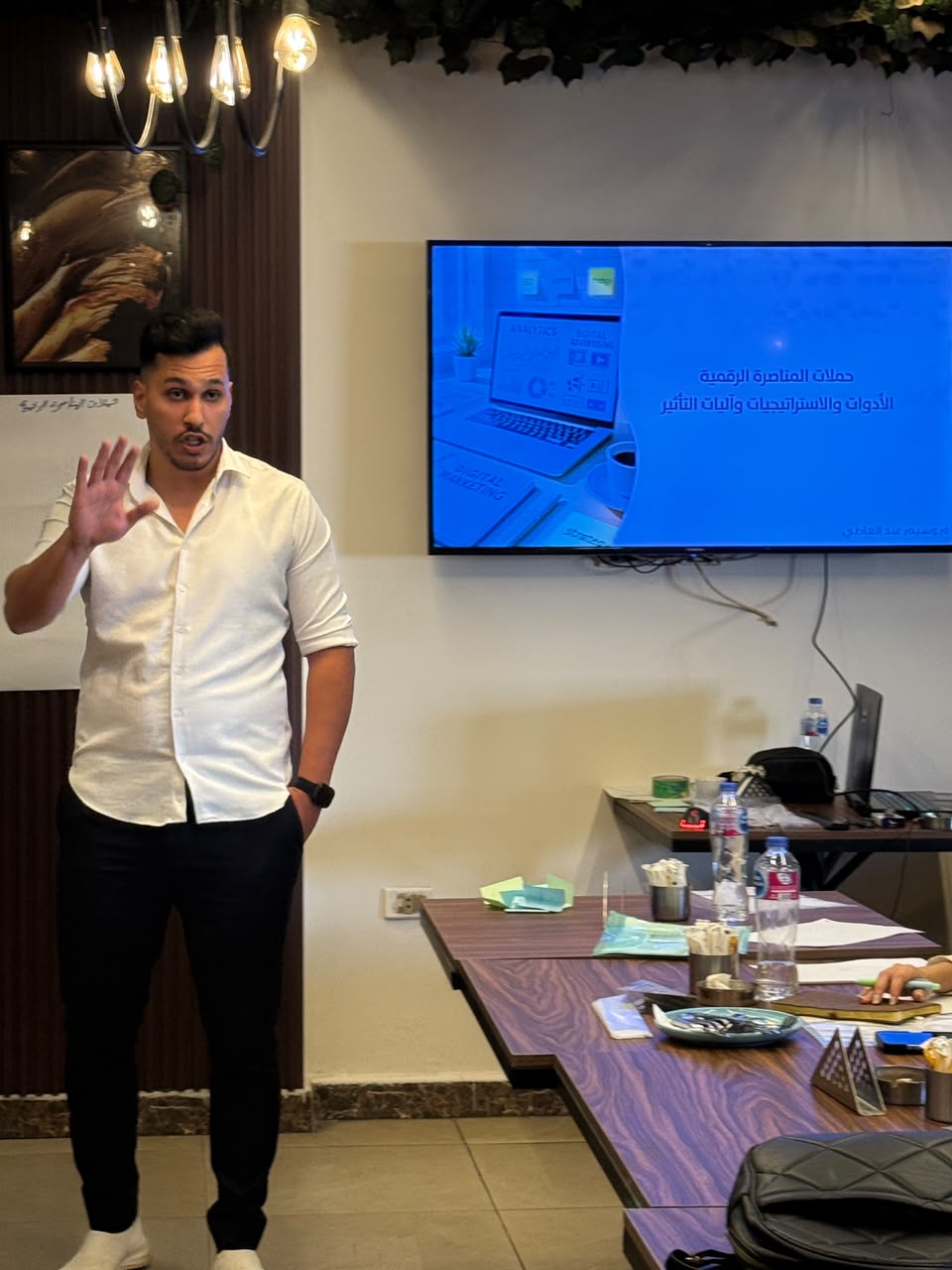
Eng. Waseem Abd Al-Atti concluded the training programme with a specialized session on digital advocacy and campaigning. The session explored campaign planning approaches, identifying target issues and audiences, developing communication messages, and utilizing digital platforms and social media to communicate the Palestinian narrative, advocate for rights, mobilize support, and influence public opinion.
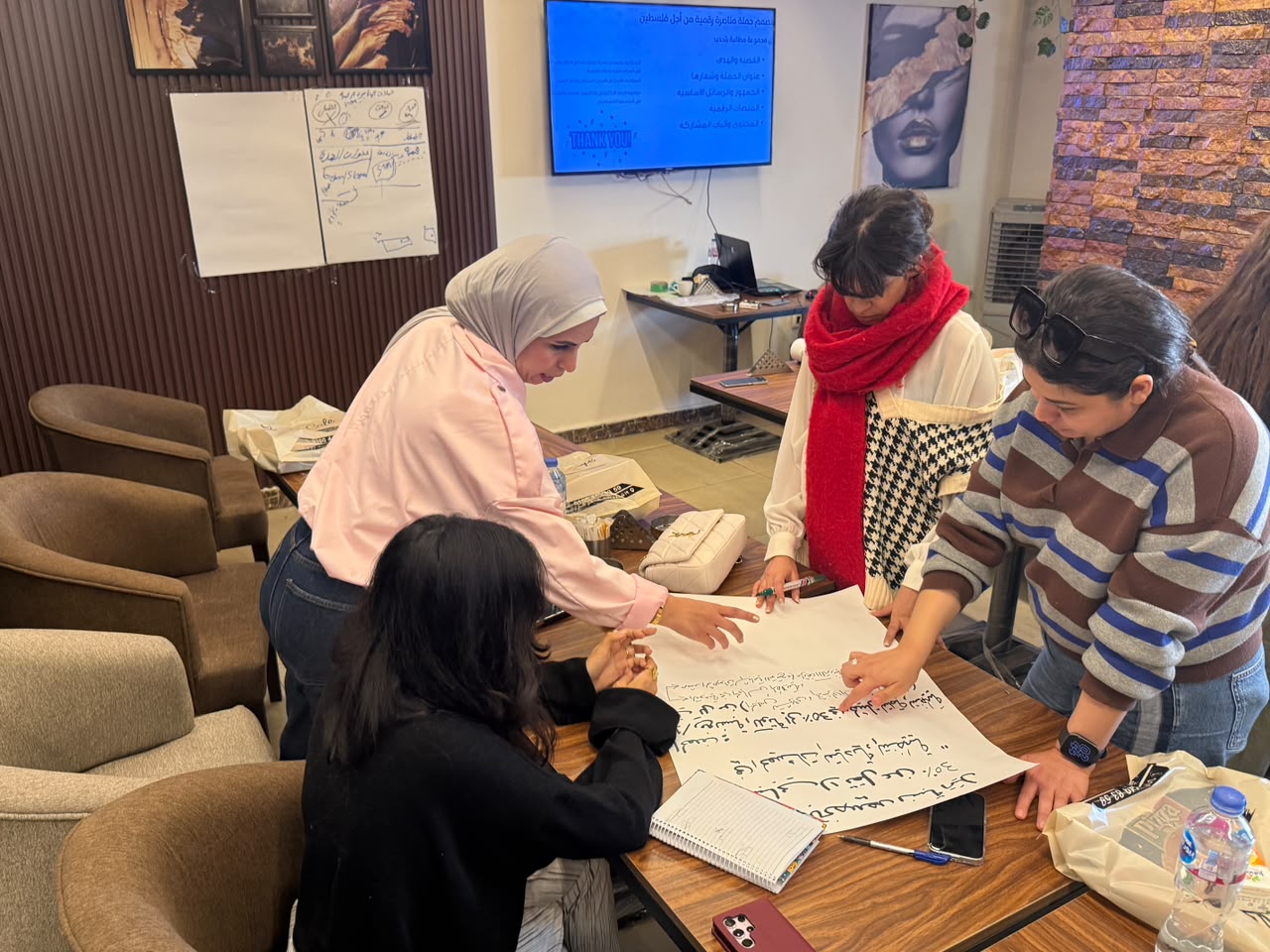
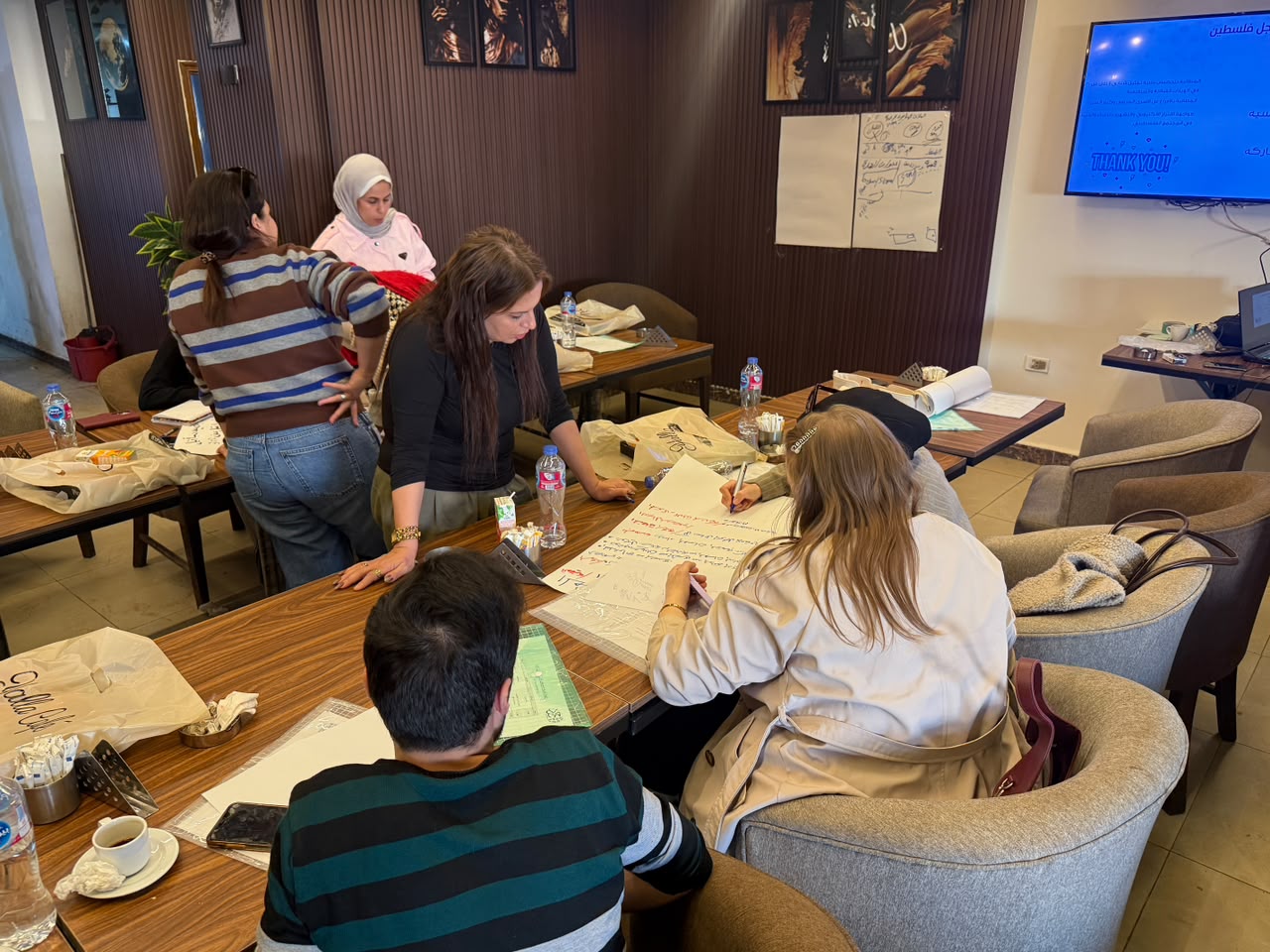
The course witnessed notable engagement from participants through discussions, exercises, practical activities, and the exchange of ideas and experiences. These activities culminated in the development of initial concepts for community initiatives and advocacy campaigns that respond to the needs and challenges facing Palestinian communities, while promoting solidarity, mutual support, community participation, and the protection of human rights.
ICSPR affirmed that the conclusion of this course does not mark the end of a training activity, but rather the beginning of a broader process of action and initiative. This process aims to translate the knowledge and skills acquired into the design and implementation of youth-led initiatives that contribute to promoting civil peace and transitional justice, advocating for Palestinian rights, protecting human rights, and expanding the participation of young people and women in recovery and reconstruction efforts.
Despite the harsh realities of war and displacement, Palestinian youth are not a generation waiting for the future; they are a generation capable of taking part in shaping it. This is the vision underpinning ICSPR’s approach: investing in people, empowering them, and creating opportunities for leadership, initiative, and meaningful impact are fundamental to protecting the rights of Palestinian youth and the Palestinian people. They also constitute the foundation for any genuine and sustainable recovery and for building a Palestinian society capable of rising again, protecting its rights, and preserving its dignity.