
ICSPR: More Than 21,000 Patients and Injured Persons in Gaza Await Medical Evacuation, While Restrictions on Treatment and Medicine Shortages Threaten Thousands of Lives

Date: 18 November 2026
Press Release
ICSPR: More Than 21,000 Patients and Injured Persons in Gaza Await Medical Evacuation, While Restrictions on Treatment and Medicine Shortages Threaten Thousands of Lives
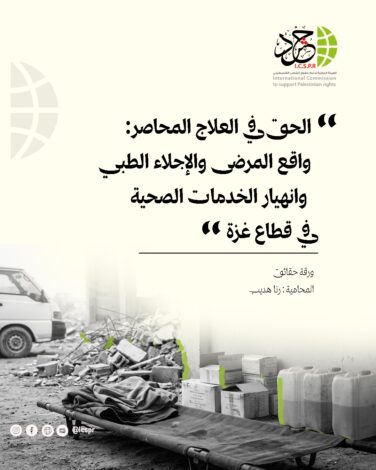
The International Commission to Support Palestinian Rights (ICSPR) has issued a fact sheet entitled “The Right to Treatment Under Siege: The Situation of Patients, Medical Evacuation, and the Collapse of Health Services in the Gaza Strip.” Prepared by lawyer Rana Hudeib, the fact sheet examines the deterioration of the healthcare system, the growing waiting lists for treatment outside the Gaza Strip, and the acute shortage of medicines and medical supplies. It calls for urgent international intervention to protect patients and injured persons and ensure their access to life-saving healthcare.
ICSPR warned that patients face a dual threat: declining access to treatment within Gaza and the disruption of access to specialized medical services outside the Strip. It stressed that delays in diagnosis, treatment, and medical evacuation can turn treatable conditions into more complex and life-threatening cases. The Commission emphasized that access to healthcare is a fundamental right, not a privilege or temporary form of assistance subject to political and administrative considerations.
Thousands of Patients on Waiting Lists, with 2,027 Deaths While Awaiting Medical Evacuation
According to Ministry of Health data cited in the fact sheet, the number of patients and injured persons registered on waiting lists for medical travel reached 21,468 as of 29 October 2026, including 6,430 cases classified as high priority for evacuation.
The fact sheet also indicates that Ministry of Health data issued on 7 October reported the deaths of 2,027 patients while awaiting medical evacuation, highlighting the severe consequences of delays for patients requiring medical interventions unavailable locally.
Meanwhile, only 209 patients and injured persons were able to travel for treatment during October, according to a Ministry statement issued on 4 November. The total number of patients and injured persons who had left Gaza for treatment between February and 29 October 2026 stood at approximately 3,056.
ICSPR stressed that these figures reveal the widening gap between the scale of medical needs and the number of available evacuation operations. It called for an increase in the number of patients permitted to leave for treatment and the adoption of a clear and transparent mechanism for managing waiting lists, based on medical priorities and protecting patients from unjustified delays.
Hospitals Operating Partially and a Sharp Decline in Primary Healthcare
The fact sheet explains that the crisis is not limited to damage to healthcare facilities. It also involves a substantial decline in their actual capacity to provide comprehensive care, from examinations and diagnosis to treatment, follow-up, rehabilitation, and long-term care.
According to World Health Organization (WHO) statements dated 24 September 2026, cited in the fact sheet, only 19 of Gaza’s 36 hospitals were partially operational, with no hospital functioning at full capacity.
The fact sheet also examines data included in UNICEF’s 2026 Humanitarian Appeal, indicating that only 10 of the 222 primary healthcare centres were fully operational, while 119 were functioning partially.
ICSPR warned that the deterioration of these services undermines early disease detection, follow-up care for patients with diabetes, hypertension, and chronic illnesses, as well as maternal and child healthcare and vaccination services. It also places additional pressure on hospitals already struggling with limited capacity, shortages of medical personnel and equipment, and insufficient fuel.
Medicine Shortages Disrupt Cancer and Blood Disease Treatments
The fact sheet highlights the Ministry of Health report issued on 5 November 2026 concerning the availability of medicines and medical consumables during October. The report warned that 42% of essential medicine items and approximately half of all medical consumable items had reached stock-out levels.
According to the report cited in the fact sheet, shortages have affected chemotherapy and hormonal therapy medicines, immunosuppressants, and coagulation factors, resulting in the disruption of treatment protocols for approximately 55% of patients receiving these types of treatment.
ICSPR clarified that this percentage applies specifically to the patient groups receiving the aforementioned treatments and does not represent the overall proportion of patients across the Gaza Strip. It also noted that shortages of laboratory testing materials and diagnostic equipment further aggravate the crisis by delaying diagnosis and the monitoring of treatment responses.
The Commission further warned of the risks facing patients with kidney failure, heart disease, diabetes, and blood disorders, as well as injured persons requiring surgery and regular medical follow-up, amid disrupted supplies and difficulties accessing treatment outside Gaza.
Mothers and Newborns Facing Pressure Beyond Healthcare Capacity
The fact sheet addresses the deterioration of maternal and child healthcare services and the difficulties pregnant women face in accessing regular check-ups, medical examinations, safe delivery services, and emergency obstetric care, amid shortages of medicines and therapeutic nutrition and the harsh conditions of displacement and overcrowding.
According to Health Cluster data cited in the United Nations Office for the Coordination of Humanitarian Affairs (OCHA) report issued on 5 November and referenced in the fact sheet, occupancy rates in neonatal units reached 151% in September, while occupancy in special care units for newborns reached 199%. Approximately 63% of births during the same month were classified as high-risk deliveries.
The Commission called for urgent support for incubators and neonatal care units, the provision of necessary medical supplies and personnel, and the expansion of antenatal care, vaccination, and therapeutic nutrition services, emphasizing that these essential services cannot be postponed.
The Right to Healthcare Includes Rehabilitation and Mental Health Services
The fact sheet emphasizes that the medical needs of injured persons do not end upon discharge from hospital or the completion of surgical interventions. Thousands of injured people are living with life-changing injuries that require physical and occupational therapy, prosthetic limbs, assistive devices, reconstructive surgery, and psychosocial support.
It cites World Health Organization estimates published in May 2026, indicating that approximately 43,000 people have sustained life-changing injuries, with around one-quarter of those affected being children. More than 5,000 limb amputations have been recorded since October 2023.
ICSPR stressed that the absence of rehabilitation services increases the risk of long-term disabilities, restricts mobility, independence, and social inclusion, and places additional burdens on families and caregivers. It also called for the integration of mental health and psychosocial support services into primary healthcare, emergency care, and rehabilitation programmes, alongside support for patients, their families, and healthcare workers.
A Health Crisis Interconnected with the Deterioration of Food, Water, and Shelter Conditions
The fact sheet explains that protecting public health cannot be separated from ensuring adequate food, clean water, sanitation, and suitable shelter. Overcrowding, accumulated waste, and deteriorating hygiene conditions are increasing the risks of infectious diseases.
In discussing the findings of the SMART nutrition survey conducted in June 2026, the fact sheet reports a stunting prevalence of 12.2% among children under five in the areas covered by the survey, alongside poor dietary diversity among younger children. It clarifies that these findings do not represent the entire population of the Gaza Strip, as areas inaccessible due to security and logistical constraints were excluded from the survey.
The Commission emphasized that the response must combine treatment, prevention, adequate nutrition, and improvements in environmental and living conditions, rather than being limited solely to the provision of medicines or the operation of emergency departments.
Calls to Open Crossing Points, Protect Healthcare Facilities, and Ensure Accountability
The International Commission to Support Palestinian Rights (ICSPR) called for a comprehensive and permanent end to the war, the opening of crossing points, and the facilitation of medical travel for patients and injured persons requiring treatment unavailable inside the Gaza Strip, without arbitrary procedures or unjustified delays. Priority must be given to critical cases, children, cancer patients, and pregnant women.
The Commission also called for the immediate and unrestricted entry of essential and specialized medicines, medical consumables, laboratory testing materials, medical equipment, spare parts, and fuel, while ensuring the regular flow of supplies. It further stressed the need to protect hospitals, healthcare centres, ambulances, and medical personnel and enable them to carry out their duties without threats or obstruction.
ICSPR urged the United Nations, international organizations, and concerned states to expand arrangements for receiving and treating patients, support the operation of healthcare facilities, rehabilitate damaged medical infrastructure, and provide the necessary funding and technical assistance to restore essential and specialized health services.
It also called for documenting and investigating violations affecting the right to health and ensuring accountability. The Commission emphasized that protecting patients, injured persons, healthcare facilities, and medical personnel, as well as facilitating humanitarian assistance and medical supplies, constitutes a set of legal and humanitarian obligations that must not be obstructed.
ICSPR concluded by stressing that saving Gaza’s healthcare system requires coordinated and simultaneous action to ensure access to treatment within the Strip and medical evacuation for patients in need, while restoring healthcare, diagnostic, rehabilitation, and preventive services. This is essential to ensure that waiting lists do not remain a symbol of ongoing suffering and the loss of opportunities for survival.