
Al-Duyuk Al-Tahta Homes in Jericho Settlement Seizure Under Occupation Protection, Amid Suspicions of Forgery and Identity Impersonation That Demand the Truth Be Revealed and Those Responsible Be Held Accountable

Date: 13 Nov 2026
Press Release
Al-Duyuk Al-Tahta Homes in Jericho: Settlement Seizure Under Occupation Protection, Amid Suspicions of Forgery and Identity Impersonation That Demand the Truth Be Revealed and Those Responsible Be Held Accountable
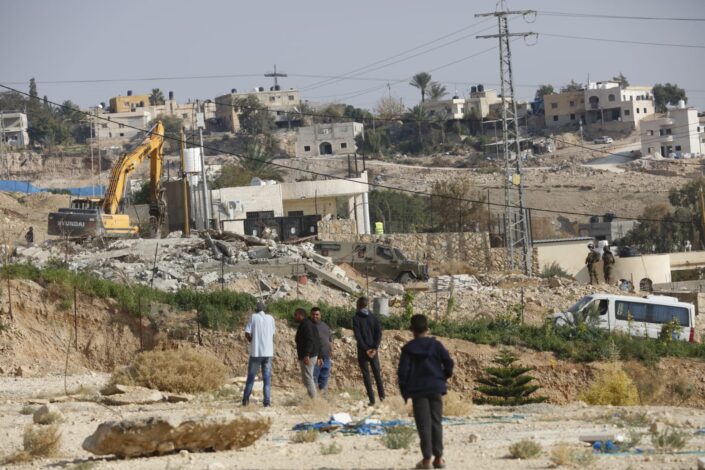
The International Commission to Support Palestinian Rights (ICSPR) is following with grave concern the developments surrounding the entry of groups of settlers into a number of homes in the Al-Duyuk Al-Tahta area, west of Jericho, their seizure of these properties and the raising of Israeli flags over them, under the protection of the occupation forces. These events have been accompanied by claims that the properties were purchased, alongside suspicions involving the forgery of property documents and powers of attorney, impersonation of property owners, and the use of falsified documents, according to statements issued by the relevant Palestinian authorities and reports circulated by the media.
ICSPR considers that this case goes beyond the seizure of a number of homes. It exposes a dangerous intersection between the settlement project and policies aimed at imposing facts on the ground, as well as attempts to exploit real estate transactions and documentation to facilitate control over Palestinian property. This requires a comprehensive legal and national response based on safeguarding rights, uncovering the truth, and holding accountable everyone proven to be involved, regardless of their status or position.
What happened in Al-Duyuk Al-Tahta must not be reduced to a property dispute or a disagreement over the validity of alleged sale contracts. Nor should it be treated merely as an internal security matter. It is directly linked to protecting Palestinian land against settlement expansion and creeping annexation, safeguarding public and private property, and ensuring that Palestinian institutions fulfill their responsibility to protect citizens’ rights and enforce the law without selectivity or exception.
First: Settlement Seizure Is a Crime Within the Context of the Occupation and Annexation Project
Official information confirms that settlers seized buildings in the Al-Duyuk Al-Tahta area, which is classified as Area C, under the protection and support of the occupation army. Following a field inspection conducted on 5 November 2026, the Palestinian Land Authority clarified that the targeted buildings are located within Basin No. (6), on Plots No. (14) and (24). Plot No. (14) is state-owned property, while Plot No. (24) is privately owned and has been registered in the names of its historical owners since before 1967.
The Land Authority also confirmed that it had not issued any official records, plans, or documents concerning either plot to any party, and that the Jericho Land Registration Department had conducted no transactions involving them. Claims concerning alleged sales, documents, or powers of attorney remain under investigation by the competent authorities.
These facts place Israeli claims regarding the purchase of the properties under a serious obligation to provide legal proof. Such claims cannot be used as a pretext to seize the buildings or impose a new settlement reality. Merely claiming to have purchased a property, or presenting documents whose validity remains disputed, does not establish a legal right against the original property owners, nor does it legitimize settlers’ seizure of properties by force or under the protection of the occupation army.
ICSPR affirms that Israeli settlements in the occupied Palestinian territory are unlawful under international humanitarian law. Article 49(6) of the Fourth Geneva Convention prohibits an occupying power from transferring parts of its civilian population into the territory it occupies. Article 46 of the Hague Regulations also protects private property and prohibits its confiscation, while Article 55 limits the occupying power’s authority to administer and use public assets and property; it does not grant it the right to dispose of them as though it were the sovereign authority.
In its advisory opinion issued on 19 July 2024, the International Court of Justice determined that Israel’s continued presence in the Occupied Palestinian Territory is unlawful and affirmed that it must be brought to an end as rapidly as possible. The Court also called for an end to new settlement activities and the evacuation of settlers, in addition to the obligation of states not to recognize the unlawful situation or provide aid or assistance in maintaining it.
Accordingly, the primary international responsibility for settlement activity and the seizure of land and property rests with the occupying power. This responsibility is not diminished by claims concerning real estate transactions or suspicions that Palestinian individuals may have been involved in facilitating them.
Second: Suspicions of Forgery and Identity Impersonation Reveal the Seriousness of the Property-Transaction Dimension of the Case
ICSPR takes note of the announcements made by the Palestinian security forces, as well as media reports quoting their official spokesperson, Major General Anwar Rajab, regarding the continuation of investigations and the existence of suspects. It also notes reports concerning the dismantling of an organized network suspected of involvement in forging property documents and powers of attorney, impersonating property owners, and using documents whose authenticity is questionable.
Media outlets have also circulated accounts of possible fraudulent methods, including approaching owners of homes threatened with demolition and misleading them into believing that the buyers were Palestinian individuals from within the Green Line, and that the sale procedures were intended to help them suspend demolition orders before Israeli courts. Subsequently, claims emerged that the properties had been transferred to settlement-related entities.
ICSPR stresses that, serious as they are, this information must remain within the framework of facts and suspicions attributed to their respective sources until investigations are completed and judicial findings are announced. Nevertheless, the possibilities raised by these reports require the case to be treated as a matter that may involve an organized pattern of property fraud, rather than ordinary real estate transactions.
The use of forged powers of attorney, impersonation of owners, manipulation of identities, signatures and seals, exploitation of property owners’ absence or residence abroad, disposal of the shares of heirs and partners without valid authorization, and the use of intermediaries and front entities are all practices that require careful examination of every stage of the transactions under investigation.
No sale or transfer of ownership should be accepted as valid merely because a contract, power of attorney, or document is in circulation. The legal assessment must be based on the validity of the title deed, the legal capacity and authority of the person making the transaction, the authenticity of their consent, the validity of signatures and seals, the scope of authorization, the rights of heirs and partners, and compliance with the registration procedures required under the applicable law.
If forgery, identity impersonation, or fraud is established, those responsible must bear criminal liability. Such findings would also provide grounds to challenge the transactions, powers of attorney, documents, and legal consequences based upon them, in accordance with the nature of each transaction and the provisions of the competent law.
Third: Conflicting Accounts Require the Disclosure of Documents, Not an Exchange of Accusations
ICSPR has followed Palestinian and Israeli media reports concerning settlers’ claims that they purchased the homes, the nature of the documents on which they rely, and the Israeli military’s position regarding their entry into the area.
While the Palestinian Land Authority confirmed that no transactions had been conducted and no official documents had been issued by it concerning the two plots under review, Israeli media outlets reported that the settlers’ entry had not been coordinated in advance with the army, and that military forces subsequently intervened to secure their presence.
Information has also differed regarding the number of homes seized, although several reports have referred to eight homes. ICSPR stresses that the final number, the nature of the properties, and the rights associated with them must be established on the basis of official Palestinian field inspection records and documentation.
These discrepancies make it necessary to publish the available documents, identify the source of each claim, verify the ownership and transactions in question, and clarify the relationship between the settlers’ entry and the military protection provided by the occupation forces.
ICSPR warns that continued ambiguity and the absence of comprehensive official information create room for rumors and the political and social exploitation of the case. This undermines the rights of property owners and public confidence in institutions, and may allow settlement entities to exploit conflicting accounts in order to impose new facts on the ground.
Fourth: No Immunity for Anyone Involved, and No Conviction Outside the Courts
ICSPR affirms that protecting Palestinian land does not mean exempting anyone from accountability. Likewise, confronting settlement activity must not become a cover for concealing forgery, fraud, or violations of citizens’ property rights.
The Commission calls for accountability for everyone proven to have been involved in forging documents, impersonating individuals, facilitating property seizures, or disposing of public or private property without a legal basis, regardless of their status, position, or connections. This must be accompanied by guarantees of the presumption of innocence, the right to defense, and a fair trial.
Investigations must not be limited to intermediaries and brokers. They should extend to all parties proven to be connected to the events, the entities that issued or certified the documents, the sources of funds, transfers and commissions, front companies and beneficiaries, and any employees or officials proven to have facilitated or participated in the acts, or neglected their duties.
At the same time, ICSPR rejects the public defamation of property owners, heirs, or suspects; the circulation of unauthenticated documents; the leveling of collective accusations; and the exploitation of the case to settle political or personal scores. Criminal responsibility is individual and can only be established through evidence and proper judicial procedures.
Fifth: Palestinian Institutions Must Ensure Transparency and Accountability and Protect Property Rights
Referring the case to the competent authorities and continuing the investigations are necessary steps. However, they do not relieve Palestinian institutions of their obligation to provide clear answers to the public, identify responsibilities, and address shortcomings in protecting public and private property and real estate records.
ICSPR emphasizes that protecting land cannot be achieved through statements alone. It requires an institutional system capable of preventing document manipulation, verifying powers of attorney and identities, documenting ownership and property rights, and providing legal protection to their holders.
Any general measures restricting real estate transactions must also be clearly defined, specific, temporary, proportionate, and grounded in law. They must not become discriminatory restrictions on citizens’ rights based on their identity or place of residence, nor collective punishments that infringe upon the rights of property owners and parties acting in good faith. What is required is legal and technical scrutiny based on risks and evidence, not collective suspicion or unjustified deprivation of rights.
Sixth: ICSPR’s Demands and Proposed Measures
In light of the above, the International Commission to Support Palestinian Rights (ICSPR) calls for the following:
- Establishing an independent and professional national investigative committee comprising the Public Prosecution, the Land Authority, the Ministry of Justice, security and oversight bodies, the Commission Against the Wall and Settlements, the Palestinian Bar Association, and experts in property rights and land registration. The committee should investigate all aspects of the case according to a publicly announced timetable.
- Publishing a detailed official report concerning Basin No. (6), and Plots No. (14) and (24), clarifying the nature of ownership, registered rights, the number of buildings and homes that were raided or seized, the affected rights holders, and the documents or transactions that have been verified.
- Conducting a comprehensive technical and judicial investigation into suspicions of forgery involving contracts, powers of attorney, identities, signatures, and seals; verifying their sources and the entities that issued or certified them; and examining the chain of ownership transfers and the legal status of each party.
- Tracing the sources of funds, financial transfers, and commissions; identifying intermediaries, front entities, and beneficiaries; and investigating any external extensions or connections where evidence establishes their existence.
- Taking the necessary precautionary judicial measures to prevent the disposal of properties or the creation of rights over them on the basis of forged documents or transactions subject to serious suspicion, while safeguarding the rights of original owners, heirs, partners, and bona fide third parties.
- Guaranteeing affected property owners’ right to legal assistance, redress, and compensation in accordance with the law, and ensuring that they are not made to bear the consequences of occupation policies or subjected to exploitation because of their economic circumstances or the demolition threats they face.
- Reviewing procedures for protecting state property, private ownership, and real estate records; developing a unified system to verify powers of attorney, authorizations, and identities issued inside and outside Palestine; and establishing a secure national database for property rights.
- Announcing the findings of the investigation to the public to the extent that doing so does not compromise the confidentiality of proceedings or the rights of the parties, and holding everyone whose responsibility is established accountable without selectivity or immunity.
- Documenting the seizure of property, the military protection provided to settlers, and any accompanying violations; and referring the facts and evidence to the relevant international mechanisms, including the International Criminal Court, to examine whether war crimes or other crimes within its jurisdiction may have been committed, in accordance with the requirements of international law.
- Calling upon states and the United Nations to fulfill their legal responsibilities in confronting settlement activity and annexation, to refrain from recognizing the unlawful facts imposed by the occupation, to refrain from providing aid or assistance in maintaining them, and to take practical measures to protect the Palestinian people and their property.
Seventh: Palestinian Land Is a Right Protected Not by Slogans, but by the Rule of Law
The Al-Duyuk Al-Tahta case represents a genuine test of national and institutional responsibility in protecting land and property rights. It highlights the need to move beyond reactive responses toward a sustained strategy to confront settlement activity, the transfer of Palestinian property to settlement interests, and document manipulation. Such a strategy must be based on documentation, oversight, litigation, and accountability.
We reject the use of alleged sales as a cover to legitimize settlement activity. We reject the use of forgery and fraud, if proven, as a means of evading accountability or harming citizens’ rights. At the same time, we reject the use of the suspects’ case to obscure the international responsibility of the occupying power for seizing land and providing protection to settlers.
There is no legitimacy for settlement activity under the cover of contracts; no ownership can be acquired through forgery and identity impersonation; no immunity should be granted to anyone proven to have been involved in transferring Palestinian land or facilitating its seizure; and the occupying power must not be exempted from its international responsibilities.
Protecting Palestinian land requires confronting the occupation and settlement activity, fully uncovering the truth, safeguarding the rights of property owners, holding everyone proven to be involved accountable, reforming the system for protecting property rights, and strengthening judicial independence and institutional transparency.
Palestinian land is not a commodity to be manipulated, the rights of its owners are not subject to bargaining, and its protection is a national and legal responsibility that permits neither selectivity nor delay.
The International Commission to Support Palestinian Rights (ICSPR)