
ICSPR: Winter in Gaza Threatens the Lives of Hundreds of Thousands of Displaced People; Calls for Urgent International Action to Save Civilians, Provide Shelter and Humanitarian Assistance, and Lift the Blockade

Date: 7 November 2026
Urgent Humanitarian Statement and Appeal
ICSPR: Winter in Gaza Threatens the Lives of Hundreds of Thousands of Displaced People; Calls for Urgent International Action to Save Civilians, Provide Shelter and Humanitarian Assistance, and Lift the Blockade
The International Commission to Support Palestinian Rights (ICSPR) issues an urgent humanitarian appeal to the United Nations and its agencies, states, international and regional organizations, donors, humanitarian and human rights institutions, and people of conscience around the world, calling for immediate action to save civilians in the Gaza Strip from an escalating humanitarian catastrophe as winter and severe weather conditions set in. This comes amid the continued Israeli aggression, blockade, and widespread destruction, the absence of safe shelter, and the deteriorating living, health, and environmental conditions facing hundreds of thousands of displaced people.
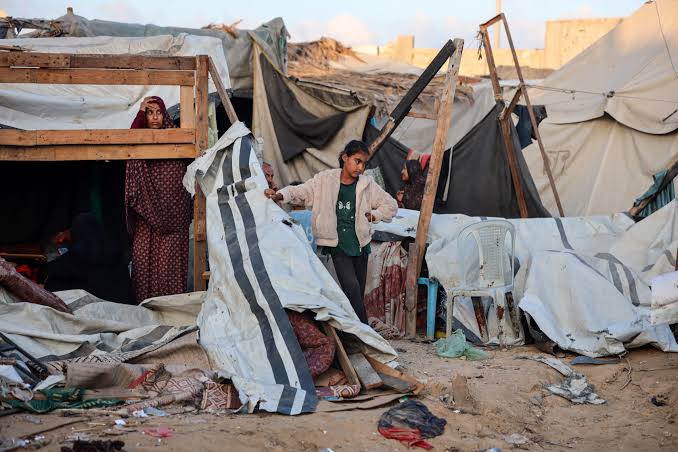
The first hours of the recent weather depression have exposed the scale of the tragedy endured by the people of the Gaza Strip. The Government Media Office announced that approximately 70,000 tents had been flooded within just 12 hours. Meanwhile, Gaza Municipality reported that around 350,000 displaced people urgently need shelter and winter supplies. The Civil Defense announced that it had received more than 1,500 distress calls from families whose tents had been damaged, with entire displacement camps flooded across various parts of the Strip. Structural collapses and damage to buildings and walls have also been recorded, amid warnings that cracked and structurally unsound homes are at risk of collapse due to rainfall, strong winds, and water saturation of their foundations. This is happening while rescue teams and municipalities are unable to respond adequately because of shortages of vehicles, water pumps, fuel, and equipment.
The severity of the catastrophe is compounded by the fact that approximately 1.6 million Palestinians are living in deteriorating tents and overcrowded displacement camps inundated by rainwater. According to UNRWA estimates, 94% of the population of the Gaza Strip are now in urgent need of shelter assistance. Displaced families face acute shortages of habitable tents, blankets, mattresses, clothing, and heating equipment, alongside the absence of adequate health and hygiene conditions and proper rainwater drainage and sanitation systems. These circumstances threaten to exacerbate the spread of diseases and epidemics, particularly among children, women, older persons, patients, and persons with disabilities.
What the people of Gaza are enduring cannot be reduced to the consequences of a weather depression or a temporary shelter crisis. Rather, it is an extension of a humanitarian catastrophe caused by years of genocidal war, aggression, blockade, destruction, and displacement, and further aggravated by the continued prevention of the entry of temporary housing units, humanitarian assistance, and materials necessary to rehabilitate infrastructure and provide shelter.
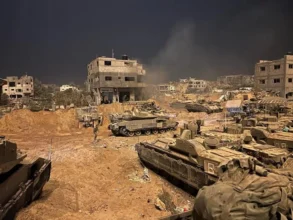
ICSPR holds the Israeli occupation primarily responsible for these conditions, as the occupying power, due to its control over the crossings and restrictions on the movement of people and goods, as well as its prevention or obstruction of the entry of tents, caravans, fuel, medical supplies, rescue equipment, and materials required for rehabilitation, recovery, and reconstruction. This is compounded by the continued Israeli control over approximately 70% of the Strip’s territory and the confinement of residents to limited, overcrowded areas that lack the basic necessities of life. These conditions increase the risks of forced displacement and undermine the population’s ability to withstand the prevailing climatic and humanitarian challenges.
Furthermore, the continued restrictions on crossings and the failure to implement humanitarian commitments associated with the Trump Plan, despite the adoption of UN Security Council Resolution 2803, raise serious questions about the seriousness of international arrangements and the effectiveness of announced guarantees. They also underscore the urgent need for practical and binding international action that goes beyond statements and pledges.
ICSPR affirms that protecting civilians, ensuring their basic needs, and guaranteeing the rapid, safe, and unhindered delivery of humanitarian assistance are binding legal obligations under international humanitarian law, particularly the Fourth Geneva Convention. These obligations must not be subjected to political bargaining or used as instruments of pressure or collective punishment. Furthermore, the continued obstruction of relief efforts and deprivation of the means of survival, in the context of aggression, destruction, and displacement, require serious international investigations and accountability concerning potential responsibility for war crimes, crimes against humanity, and the crime of genocide, in accordance with the relevant legal elements and standards.
In light of its humanitarian and human rights responsibilities, ICSPR calls upon the international community to take immediate action and implement the following measures:
- Provide new tents resistant to rain and strong winds, caravans, temporary housing units, and safe shelter materials; replace damaged tents; and ensure the provision of blankets, mattresses, winter clothing, and safe heating equipment, prioritizing families who have lost their shelter, as well as children, women, older persons, patients, and persons with disabilities.
- Provide water pumps, heavy machinery, rescue equipment, fuel, spare parts, and protective gear for Civil Defense and municipal teams. Support emergency response and ambulance services, reopen roads, clear rubble, and secure alternative shelters for families whose tents have been flooded or whose homes are at risk of collapse.
- Ensure the opening of all crossings to allow the entry of humanitarian assistance, goods, fuel, medicines, medical supplies, shelter materials, rescue equipment, recovery supplies, and reconstruction materials in sufficient and regular quantities, without conditions or restrictions. Reopen the Rafah crossing for the movement of individuals in both directions, and ensure the departure of patients, injured persons, and humanitarian cases, as well as the return of stranded individuals.
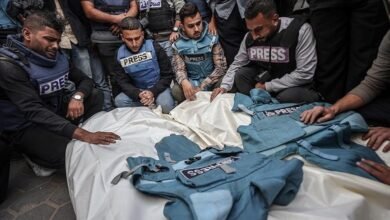
- Adopt practical and binding international measures to protect the population from aggression, violations, and forced displacement; ensure respect for the rules of international humanitarian law; and prevent civilians from being left at the mercy of the blockade and harsh weather conditions. Provide protection for humanitarian and medical workers and Civil Defense teams.
- Immediately launch a comprehensive national and international plan to rehabilitate infrastructure, water and sewage networks, electricity systems, roads, and health and educational facilities; remove rubble; secure damaged homes; and provide the necessary funding. Ensure that humanitarian assistance and reconstruction are not used as tools of political blackmail, displacement, or the imposition of arrangements that undermine Palestinian national rights.
- Urgently return to the UN Security Council, the General Assembly, and other United Nations bodies to secure binding resolutions and measures guaranteeing a ceasefire, the entry of humanitarian assistance and essential supplies, the lifting of the blockade, the implementation of humanitarian commitments, and the provision of international protection. Ensure follow-up on the implementation of Resolution 2803 in a manner that safeguards civilians and their rights and prevents any circumvention of international law.
- Support the work of the International Criminal Court, the International Court of Justice, and independent UN mechanisms, ensure investigations into crimes and violations, pursue accountability for those responsible, and impose effective international measures and sanctions. These should include halting the supply of weapons and equipment used to commit violations and ending forms of support that contribute to their continuation.
- Provide funding and resources to municipalities, Civil Defense, health and relief institutions, and civil society organizations, enabling them to respond to emergency needs. Strengthen coordination among official, civil, and community institutions, support solidarity initiatives and social cooperation, and protect the unity of Palestinian society in all its components against schemes of displacement, fragmentation, and impoverishment.
- Strengthen Palestinian social unity and solidarity among all its components, forces, and institutions, prioritize the national and humanitarian interest, ensure the foundations for resilience and a dignified life, and thwart all attempts to impose forced displacement or make life impossible in the Gaza Strip.
An Appeal to the Free People of the World and the Human Conscience
The International Commission to Support Palestinian Rights (ICSPR) appeals to the United Nations, Arab and Islamic states, the European Union, regional unions, humanitarian and human rights organizations, trade unions, universities, popular institutions, and people of conscience around the world not to abandon the children, women, older persons, and patients of Gaza to face the cold, flooding, and disease in tents that offer no protection against rain and wind.
The suffering of displaced people must not become a seasonal spectacle repeated with every weather depression while the root causes of this catastrophe remain in place due to the Israeli blockade and aggression and the obstruction and prevention of the entry of shelter materials and humanitarian assistance.
The International Commission to Support Palestinian Rights (ICSPR)