
ICSPR Sends Memorandum to UN and International Bodies on Gaza’s Environmental Catastrophe, Calls for Accountability for the Occupation and the Integration of Environmental Justice into Recovery and Reconstruction

Date: 6 November 2026
Press Release
ICSPR Sends Memorandum to UN and International Bodies on Gaza’s Environmental Catastrophe, Calls for Accountability for the Occupation and the Integration of Environmental Justice into Recovery and Reconstruction
The International Commission to Support Palestinians’ Rights (ICSPR) has sent a human rights and legal briefing memorandum to a number of competent UN and international bodies on the occasion of the International Day for Preventing the Exploitation of the Environment in War and Armed Conflict. The memorandum addresses the environmental catastrophe in the Gaza Strip and the Israeli occupation’s responsibility for the destruction of natural resources and the effects of war-related pollution. It calls for urgent international action to stop violations, investigate damage and sources of contamination, hold those responsible accountable, and ensure the rehabilitation of natural resources and reparations for the damage caused.
The Commission addressed its memorandum to the United Nations Secretary-General; the Secretary-General’s Special Coordinator for the Middle East Peace Process; the President of the Human Rights Council; the United Nations High Commissioner for Human Rights; the Prosecutor of the International Criminal Court; Francesca Albanese, the Special Rapporteur on the situation of human rights in the Occupied Palestinian Territory; the Director-General of the World Health Organization; the Executive Director of the United Nations Environment Programme; and the International Committee of the Red Cross.
ICSPR affirmed that this occasion, observed annually on 6 November pursuant to United Nations General Assembly Resolution 56/4 of 2001, comes amid a prolonged environmental catastrophe that has affected the Gaza Strip since October 2023. This catastrophe has resulted from large-scale Israeli military operations, the destruction of ecosystems, natural resources, and vital infrastructure, and the waste and pollutants left by hostilities, with long-term health and environmental consequences.
The Commission explained that the consequences of the war have not been confined to killings, destruction of the built environment, and displacement. They have also affected land, water, air, agricultural soil, the marine environment, and biodiversity, threatening the essential conditions for life and confronting recovery and reconstruction with challenges that may persist for decades.
Citing the United Nations Environment Programme’s second assessment, issued in September 2025, ICSPR stated that approximately 78% of buildings in the Gaza Strip had been damaged or destroyed, generating more than 61 million tonnes of debris. Approximately 97% of tree crops, 95% of shrub-covered land, and 82% of annual crops had also been damaged, demonstrating the extensive scale of environmental and agricultural degradation.
The Commission noted that the joint assessment issued by the United Nations, the World Bank, and the European Union in April 2026 estimated the volume of debris at more than 68 million tonnes and the cost of its removal and management at over USD 1.7 billion. Estimated environmental recovery and rehabilitation needs amounted to approximately USD 2.65 billion. ICSPR stressed that these figures demonstrate that reconstruction cannot be limited to buildings, but must also address pollution and explosive remnants of war and restore agricultural land, water sources, and damaged ecosystems.
The Commission warned that accumulated debris represents one of the most serious environmental and public health challenges, particularly as rubble is mixed with construction materials, industrial and medical waste, fuel, sewage, and unexploded ordnance. It cited UNEP’s warning that approximately 15% of the debris may be subject to relatively high levels of contamination from asbestos, industrial waste, and heavy metals, requiring specialised procedures for inspection, sorting, and treatment.
ICSPR stressed that removing debris without prior inspection and classification could expose residents and workers to additional risks, given the spread of dust and airborne particles and the possible presence of thousands of buried or unexploded bombs and munitions beneath the rubble and in residential and agricultural areas.
The memorandum addressed reports concerning the use of white phosphorus munitions in parts of the Gaza Strip. It noted that the November 2024 report of the Office of the United Nations High Commissioner for Human Rights cited reports of their use between November 2023 and February 2024 in Gaza City, Al-Shati refugee camp, Jabalia, Beit Lahia, Khan Younis, and areas of the Central Governorate. The report also documented a young child’s injury from white phosphorus at a school in Al-Bureij refugee camp on 25 December 2023.
The Commission affirmed that the risks extend beyond immediate injuries to include the possible migration of white phosphorus residues into water and sediments, alongside the risk of soil and water contamination from explosive residues, heavy metals, and chemicals associated with munitions. It called for independent and comprehensive laboratory testing of soil, water, and sediments to identify the pollutants, their distribution and concentrations, and their health and environmental effects.
ICSPR also warned of the serious deterioration in air quality caused by explosions, fires, and dust from collapsed buildings, as well as the burning of waste and plastics and the use of more polluting combustion sources due to shortages of fuel and cooking gas. It explained that these practices increase exposure to particulate matter and substances harmful to the respiratory system, particularly in overcrowded displacement sites, amid the absence of an adequate system for continuous air-quality monitoring.
Regarding agricultural land, the Commission referred to an assessment issued by the Food and Agriculture Organization of the United Nations and the United Nations Satellite Centre on 18 August 2026. The assessment showed that only 448 hectares approximately 3% of the Gaza Strip’s total agricultural land remained both accessible and undamaged, based on data covering the period up to 24 June 2026.
The Commission explained that the destruction of trees and crops, bulldozing of land, loss of vegetation cover, and soil compaction caused by military activities affect soil fertility and its ability to absorb water. These impacts increase the risks of surface runoff and flooding and impede groundwater recharge and the restoration of agricultural production and food security.
ICSPR noted that the reduction in accessible agricultural land is linked not only to physical damage but also to restrictions on access. It stressed that denying farmers access to their natural resources, obstructing repairs to wells and facilities, and restricting the entry of production inputs prolong environmental degradation and undermine livelihoods.
The memorandum also addressed the collapse of water and sanitation systems. It explained that UNEP’s 2025 assessment indicated an 84% reduction in water storage and pumping capacity, with only nine of 54 facilities remaining operational, including just three undamaged facilities. The remaining desalinated-water supply capacity had also fallen to approximately 31% of its October 2023 level, while none of the wastewater treatment facilities was operating at the time of the assessment.
The Commission affirmed that the destruction of networks, increasing reliance on cesspits, and discharge of untreated wastewater threaten the coastal aquifer, soil, the marine environment, and fish resources, affecting public health, food sources, and fishers’ livelihoods. It warned that continued restrictions on the entry of repair and operating equipment obstruct the restoration of these services and prolong pollution.
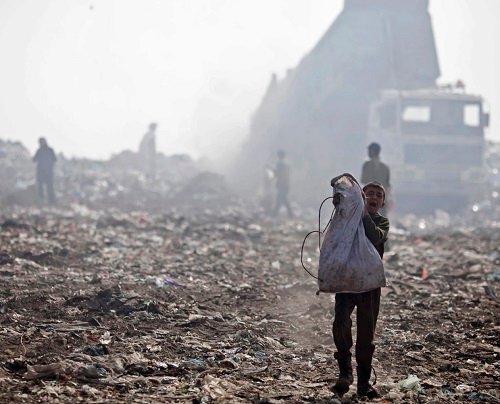
ICSPR also examined the worsening solid and medical waste crisis. It noted that UNEP’s preliminary assessment in 2024 showed that five of six solid-waste management facilities had been damaged and that approximately 1,200 tonnes of waste were accumulating daily around camps and shelters by November 2023.
The Commission explained that disruptions to waste collection, transport, and treatment, alongside shortages of fuel and equipment, have contributed to the proliferation of uncontrolled dumpsites, the mixing of household waste with medical and industrial waste, and increased open burning, heightening the risks of pollution and disease outbreaks. It called for urgent intervention to restore the waste-management system, separate medical and hazardous materials, and dispose of them in accordance with environmental and health standards.
The Commission further warned of the deterioration of natural habitats, wetlands, and coastal environments, including environmentally sensitive areas in Wadi Gaza. It stressed that the loss of vegetation, water pollution, and accumulated waste threaten biodiversity and weaken ecosystems’ ability to regenerate, regulate the water cycle, stabilise soil, and improve air quality.
ICSPR affirmed that protecting the environment during armed conflict is a legal obligation, not a secondary issue or merely an ethical consideration. It referred to the principles of distinction, proportionality, and precaution, and the prohibitions on targeting civilian objects and unlawfully destroying property. It also outlined Articles 35(3) and 55 of Additional Protocol I of 1977 concerning the protection of the natural environment against widespread, long-term, and severe damage.
The Commission highlighted the occupying Power’s obligations under Article 55 of the Hague Regulations of 1907 to preserve public property, forests, and agricultural land and refrain from depleting them. It also referred to Article 53 of the Fourth Geneva Convention, which prohibits the destruction of property unless such destruction is rendered absolutely necessary by military operations.
It further drew attention to Article 8(2)(b)(iv) of the Rome Statute, which criminalises, subject to its conditions, intentionally launching an attack in the knowledge that it will cause widespread, long-term, and severe damage to the natural environment that would be clearly excessive in relation to the concrete and direct military advantage anticipated. The Commission called for investigations into violations and the determination of individual and state responsibility.
ICSPR stressed that reparations for environmental damage must include the rehabilitation of agricultural land, water, soil, and natural habitats; the removal of hazardous materials and explosive remnants of war; compensation for environmental, health, and economic losses; and guarantees of non-repetition.
The Commission affirmed that environmental pollution is directly linked to the population’s rights to life, health, water, food, housing, and a clean, healthy, and sustainable environment. Women, children, older persons, persons with disabilities, and communities dependent on natural resources bear a substantial share of these impacts amid displacement and declining essential services.
ICSPR called on the United Nations, the international community, and competent judicial and human rights bodies to act immediately to stop environmental violations, open independent investigations, document damage and sources of contamination, guarantee access to land and natural resources and the entry of equipment and materials needed for repair and remediation, hold those responsible accountable, and ensure reparations.
The Commission concluded its memorandum by affirming the need to integrate environmental justice as an essential component of recovery and reconstruction in the Gaza Strip. It stressed that justice is not achieved through rebuilding structures alone, but requires restoring land, water, air, and natural resources and guaranteeing Palestinians’ right to a safe, healthy, and dignified environment. It further affirmed that the end of military operations does not mean the end of the war’s environmental consequences, and that leaving this damage without remediation and accountability threatens to extend its effects across successive generations.