
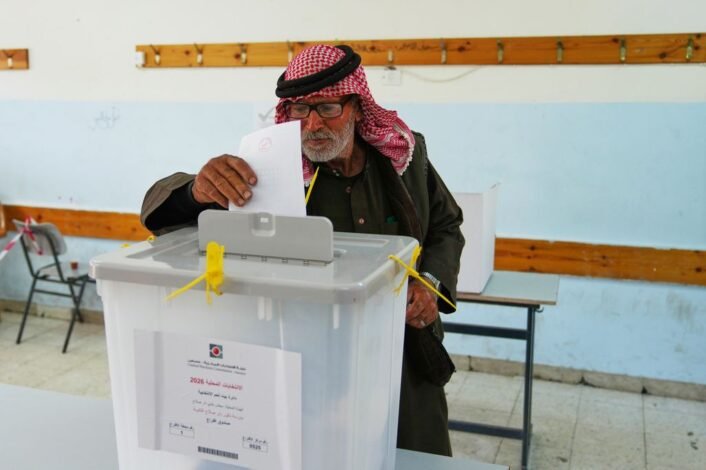
ICSPR: Elections Are a Right of the People and a National Entitlement That Must Be Implemented within a Comprehensive Process to Renew Legitimacies and Rebuild the Palestinian Political System

Date: 9 September 2026
Press Release
ICSPR: Elections Are a Right of the People and a National Entitlement That Must Be Implemented within a Comprehensive Process to Renew Legitimacies and Rebuild the Palestinian Political System
The International Commission to Support Palestinian Rights (ICSPR) affirms that elections are not a technical procedure or a political entitlement that can be postponed according to factional calculations. Rather, they are an inherent right of the Palestinian people and an essential instrument for exercising their right to self-determination, choosing their representatives, and renewing the legitimacy of their national institutions.
Accordingly, the legislative elections scheduled for 28 November 2026 must be treated as an existing national entitlement that must be implemented and as an opportunity to restore respect for the popular will after years of division, the suspension of democratic life, and a crisis of legitimacy and trust in institutions. They must not become an occasion to reproduce the same causes of the crisis or to replace the will of voters with closed agreements or top-down arrangements.
ICSPR: The Commission commends the preparations of the Central Elections Commission and calls for it to be enabled to complete the process with independence, professionalism, and transparency. This includes completing all legal, technical, and logistical requirements, including the electoral register, polling centers, staffing and training, electoral materials, communication and transport, simulations and testing, vote-counting procedures, the announcement of results, and appeals, on the basis that elections will take place on schedule.
ICSPR also stresses the need to protect public, media, and organizational freedoms and the freedom to campaign; guarantee equal opportunities; prevent the misuse of administrative or security influence, vote buying, pressure on voters, hate speech, incitement, and accusations of treason; enable women, youth, persons with disabilities, displaced persons, and marginalized groups to participate; and ensure independent national and international monitoring.
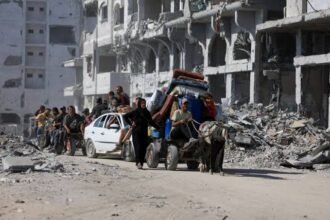
ICSPR: The Gaza Strip must be a full and non-excludable part of the electoral process. War, destruction, displacement, and humanitarian and security conditions must not become a pretext for depriving its residents of their political right. The Commission calls for special arrangements for displaced persons inside the Strip and for those forced to leave it, including those in Egypt and other countries, in a manner ensuring that their electoral rights are not lost due to forcible displacement.
This requires developing secure legal and technical mechanisms for registration, verification, and in-person or electronic voting wherever possible, in coordination with competent Palestinian bodies and Palestinian embassies in host countries.
ICSPR: The Commission calls on the international community to pressure the occupying power to ensure that all electoral supplies reach the Gaza Strip at the appropriate time and in adequate quantities. This includes ballot boxes, papers, seals, ink, sealing and preservation materials, and all other equipment, in order to prevent crossings, movement restrictions, or restrictions on materials from being used as tools to obstruct the process.
ICSPR also calls on the Central Elections Commission to develop solutions and contingency plans guaranteeing the participation of Gaza’s residents in the elections, rather than allowing any Israeli obstacles to become a justification for canceling or postponing them.
ICSPR: The Commission affirms the need to provide independent, effective, and accessible electoral justice from all areas, particularly the Gaza Strip. This requires ensuring that the Electoral Cases Court can exercise its jurisdiction effectively; establishing a judicial branch or chamber capable of operating in the Strip within the legal framework; or creating a secure electronic mechanism for submitting and tracking appeals and receiving decisions, while ensuring prompt adjudication, judicial independence, and data confidentiality.
The right to litigation is an inherent component of electoral integrity. Geographic barriers or conditions of war must not deprive any voter, candidate, or list of electoral justice.
ICSPR: Occupied Jerusalem is an integral part of the electoral process. The right of Jerusalemite Palestinians to stand as candidates, vote, participate in campaigns, monitor the process, and take part in all stages of the elections must be guaranteed.
The Commission rejects any Israeli measures aimed at preventing elections from being held in Jerusalem. At the same time, it warns against turning the occupation into the effective decision-maker able to obstruct elections or determine who may stand, vote, or participate. ICSPR calls on the international community to protect the electoral process in Jerusalem and pressure Israel to stop any interference that undermines Palestinians’ right to political participation and self-determination.
ICSPR: National dialogue and political understandings are a national necessity at this stage. However, their function must be to protect elections, provide the conditions for their success, regulate competition, ensure respect for results, and facilitate transition to partnership. They must not become a substitute for the ballot box.
ICSPR rejects the use of consensus to postpone elections, distribute seats and positions, or impose appointment and quota-sharing. Consensus that protects the people’s right to choose and guarantees pluralism is welcomed; consensus that predetermines who represents the people confiscates the essence of the democratic process.
Political forces are therefore required to compete fairly before citizens, build alliances and electoral lists, present programs and competence, and accept the results of the ballot box and the judiciary—not negotiate over the citizen’s right to vote.
ICSPR: The Commission calls for the preparation of a national plan to confront any Israeli obstruction or emergency development on the ground. The plan should include the legal, technical, logistical, and political measures necessary to guarantee the continuity, inclusiveness, and integrity of the process.
Preparing plans and scenarios does not mean searching for alternatives to elections. Rather, it means protecting elections from obstruction. The objective is not to postpone or replace the 28 November entitlement, but to address every obstacle in a manner that preserves the people’s right to vote.
ICSPR: The Commission rejects any attempt to replace direct legislative elections in the Gaza Strip, the West Bank, and Jerusalem with appointed councils, electoral assemblies, or any arrangements that grant factions or the executive authority the right to determine the composition of the Legislative Council independently of voters’ will.
The specific nature of Palestinian National Council elections in the diaspora, and the need for special arrangements to enable Palestinians abroad to participate, must not become a pretext for replacing direct elections within Palestine with indirect mechanisms. The Legislative Council derives its legitimacy from direct elections, and any formula based on appointment or quota-sharing would reproduce the crisis of legitimacy rather than resolve it.
ICSPR: At the same time, the Commission affirms the need to hold Palestinian National Council elections and rebuild the Palestine Liberation Organization on democratic and representative foundations that include Palestinians in the homeland and the diaspora.
It calls for the development of practical and flexible mechanisms for the participation of Palestinians abroad, including secure electronic registration and electronic voting in accordance with legal and technical safeguards, direct voting in embassies and consulates wherever possible, and other methods that expand participation while preserving integrity. ICSPR considers that difficulties in certain countries must be an incentive to develop democratic solutions, not a justification for appointment or quota-sharing.
ICSPR: The Commission calls for the reactivation of unions, syndicates, popular frameworks, professional bodies, and their branches through genuine, periodic, and free elections, based on proportional representation that guarantees pluralism and non-exclusion. It rejects factional quota-sharing and political appointment.
Reform cannot be achieved by reproducing the same individuals, structures, and policies under new consensus-based labels. Such an approach can only reproduce the crisis and deepen the gap of trust between citizens and institutions. Democracy instead requires renewing leadership, rotating responsibility, and ensuring accountability from the grassroots to the highest levels.
ICSPR: Renewing legitimacy must be an integrated process that does not stop at legislative elections. The Commission therefore calls for setting a clear date to hold presidential elections as soon as possible, completing National Council elections, and rebuilding the Palestine Liberation Organization on democratic and representative foundations that ensure the participation of Palestinians in the homeland and the diaspora.
This would end the state of fragmented legitimacy and rebuild the political system on the basis of partnership, the rule of law, accountability, and democratic rotation of power. Continued division, ambiguity regarding dates for renewal, or the reproduction of appointment and quota-sharing will keep the political system captive to its crisis rather than opening the way toward genuine national reform.
ICSPR: The Commission holds the international community—particularly the United Nations, the European Union, and states capable of influencing the occupying power, especially the United States—politically, legally, and morally responsible for stopping Israeli occupation crimes and protecting the Palestinian right to political participation and self-determination.
This requires pressuring Israel to prevent the obstruction of or interference in elections, ensuring that electoral materials reach Gaza, protecting the process in Jerusalem, guaranteeing the freedom of movement of voters, candidates, and observers, supporting independent international monitoring, and treating any Israeli interference in the electoral process as an infringement of the Palestinian people’s fundamental political rights.
ICSPR: The remaining period until 28 November must be a period of implementation and intensive preparation, not a period for searching for alternatives or reproducing postponement. The Commission reiterates its demand for legislative elections to be held on time with the full participation of Gaza, the West Bank, and Jerusalem; for displaced persons and Palestinians forced to leave Gaza to be enabled to exercise their electoral right; for technical and logistical readiness to be completed and all electoral supplies to be delivered; for electoral justice, judicial independence, and the independence of the Central Elections Commission to be safeguarded; and for freedoms, equal opportunities, and independent monitoring to be protected.
ICSPR further rejects any Israeli veto or interference; rejects appointed councils and electoral assemblies as an alternative to direct elections for the Legislative Council within Palestine; rejects quota-sharing in unions, syndicates, and popular frameworks; calls for National Council elections to be completed through democratic mechanisms enabling diaspora participation; calls for presidential elections to be scheduled during the first quarter of 2027; and calls for rebuilding the Palestine Liberation Organization on democratic and representative foundations.
ICSPR: The essence of Palestinian political reform requires returning legitimacy to its natural source: the Palestinian citizen. Free, inclusive, and fair elections are the path to rebuilding trust, renewing Palestinian institutions, and ending division.
The International Commission to Support Palestinian Rights (ICSPR) will continue its independent human-rights and monitoring role in following the electoral process, monitoring and documenting any violations, interference, or attempts at obstruction, and defending Palestinians’ right to political participation without guardianship or exclusion, based on a clear principle: the Palestinian citizen’s voice is stronger than division, the will of the people is greater than quota-sharing, and the ballot box must not be held hostage to occupation or internal obstruction.
International Commission to Support Palestinian Rights (ICSPR)