
ICSPR Four Palestinians Killed within 24 Hours and 100 Killed in the West Bank Since the Start of the Year The Occupation Is Waging a Comprehensive War against the Land, the People, and the Palestinian Authority

Date: 8 September 2026
Press Release
ICSPR: Four Palestinians Killed within 24 Hours and 100 Killed in the West Bank Since the Start of the Year — The Occupation Is Waging a Comprehensive War against the Land, the People, and the Palestinian Authority
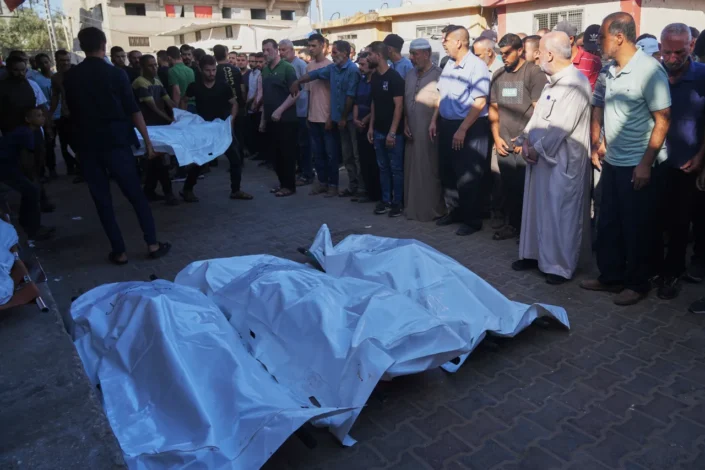
The International Commission to Support Palestinian Rights (ICSPR) condemns in the strongest terms the killing of four Palestinians during the past 24 hours by Israeli occupation forces in the governorates of Qalqilya, Nablus, and Tulkarm. This raises the number of Palestinians killed in the West Bank to 100 since the beginning of the current year, clearly indicating that the West Bank and occupied Jerusalem have entered a stage of systematic and open Israeli aggression and escalation.
Among those whose deaths were announced by the Palestinian Ministry of Health are Mahmoud Mohammed Arabi Mohsen, 34, from the town of Qabalan, who died of wounds inflicted by Israeli occupation gunfire while his body remains withheld, and Abdul Karim Mohammed Khader Suleiman, 28, from the town of Aqraba, who was killed by Israeli occupation gunfire on the morning of 8 September while his body remains withheld.
ICSPR affirms that the continued killings and withholding of the bodies of martyrs, together with arrests, raids, and siege measures, cannot be regarded as separate security incidents. Rather, they form part of a systematic policy targeting Palestinians’ lives, security, existence, and right to remain on their land. In this context, ICSPR recalls that occupation forces have recently carried out extensive military operations in Jenin, Tulkarm, Nur Shams, and other areas, accompanied by the evacuation of residents, destruction of homes and infrastructure, and the prevention of residents from returning. According to United Nations data, this has displaced more than 33,000 Palestinian refugees from the Jenin, Tulkarm, and Nur Shams refugee camps and their surroundings since the beginning of 2025.
This requires serious international action to stop killings and excessive use of force, ensure protection for Palestinian civilians, open independent investigations into all killings, and hold accountable those responsible for issuing and executing orders that violate the rules of international law.
ICSPR: The military and security escalation is accompanied by a broad campaign of raids, arrests, forced evacuations, and collective punishment. On 8 September, occupation forces launched raids and arrest campaigns in multiple areas of the West Bank and occupied Jerusalem, affecting 19 Palestinians, including two children and formerly detained persons. They also conducted operations in Osarin, Shuafat, Anata, and Meithalun.
In Tulkarm, occupation forces raided and closed the headquarters of the Tulkarm Zakat Committee and arrested a number of Palestinian workers from the Gaza Strip. After the forces withdrew, the body of the worker Asaad Mleihat, a resident of Gaza, was found inside the headquarters. This is a crime requiring an investigation to determine the circumstances of his death.
Occupation forces also compelled residents of homes opposite the Tulkarm refugee camp to evacuate, continuing the policy of using evacuation and displacement as military tools. In Jerusalem, occupation forces announced on 8 September the start of what they described as a “focused military operation” in Anata and Shuafat refugee camp, accompanied by the closure of entrances, arrests, and restrictions on residents’ movement. The Jerusalem Governorate described what is taking place as systematic aggression and collective punishment targeting Palestinian residents and disrupting their daily lives.
ICSPR affirms that these practices, together with continuing eviction orders, home demolitions, and land seizure, constitute an integrated system aimed at emptying Palestinian areas of their residents and reshaping them demographically and geographically in a manner serving the annexation and settlement project.
ICSPR: The Commission particularly warns that the escalation on the ground is accompanied by a direct Israeli threat by the Israeli Minister of War against the Palestinian Authority and its institutions, threatening to turn the West Bank into an arena of comprehensive war. On 7 September, Israeli Minister of Defense Israel Katz threatened to launch a “comprehensive war” against the Palestinian Authority. On the same day, Finance Minister Bezalel Smotrich declared that the Palestinian Authority was “finished,” called for its overthrow, and spoke of a coming war in the West Bank to disarm Palestinians. On 8 September, Minister of National Security Itamar Ben-Gvir declared the need to dismantle the Palestinian Authority.
ICSPR considers these statements dangerous because they are made by ministers in the occupation government and coincide with escalating military and settlement operations on the ground. They therefore constitute a political indication of a project aimed at undermining Palestinian institutions and imposing direct Israeli control over the West Bank. ICSPR warns that launching a comprehensive war in the West Bank, or targeting the Palestinian Authority and its civilian and security institutions, would constitute an extremely dangerous escalation. It could open the way for a wide wave of killings, arrests, forcible displacement, and destruction of property and infrastructure, while threatening regional and international stability.
Accordingly, the International Commission to Support Palestinian Rights (ICSPR) calls on the international community, particularly the United Nations and the European Union, to convey a clear and binding message to the Israeli government that any attack on the Palestinian Authority, its institutions, or West Bank residents will be met with immediate political, economic, and legal measures and sanctions.
ICSPR: The Commission also condemns the accelerating escalation in settlement activity, settler violence, and land confiscation as interconnected tools of the de facto annexation project. Since 2 September 2026, settlers, under the protection of occupation forces, have killed Omar Mohammed Naji al-Naasan, 19, and Khalil Rassem Khalil Shahada, 16, in the town of al-Mughayyir east of Ramallah. ICSPR documented this incident as part of a pattern of joint attacks by settlers and Israeli forces.
The past days have also witnessed other settler attacks against Palestinians and their property, while the United Nations has documented a broad escalation in settler violence during 2026. On 7 September, 104 settlers stormed the Al-Aqsa Mosque compound, performed Talmudic rituals, and carried out provocative tours, constituting a dangerous escalation targeting the existing historical and legal status quo at the mosque and in the holy city.
On 8 September, the Israeli Central Court rejected a request to freeze the tender for the E1 settlement project, while approximately 1,665 dunums of land were placed under settlement control in preparation for the construction of approximately one thousand settlement units in the central West Bank. ICSPR affirms that E1 is not an ordinary settlement project. It is one of the most dangerous projects for fragmenting the West Bank, separating East Jerusalem from its Palestinian surroundings, and threatening the territorial contiguity between the northern and southern West Bank, thereby heightening the risks of annexation and forcible displacement.
ICSPR considers that the combination of settlement expansion, land confiscation, settler violence, military protection, evacuation, and demolition constitutes one integrated system for producing a new colonial reality on the ground.
ICSPR: The Commission commends the measure announced by the United Kingdom on 8 September concerning the imposition of a ban on the import of goods originating from illegal Israeli settlements, the imposition of the strongest legal sanctions on settlements and those contributing to their funding or expansion, and the announcement by the British Foreign Secretary rejecting applications for arms licenses and other exports that contribute significantly to the occupation.
ICSPR: The Commission commends the positions of European states that have announced measures to ban or restrict the import of settlement products, including the United Kingdom, France, Canada, Denmark, Finland, Iceland, Ireland, Norway, Poland, Portugal, Spain, and Sweden. It considers these measures an important development in moving from political condemnation to economic and legal pressure.
However, ICSPR clearly affirms that, despite their importance, these measures are insufficient and disproportionate to the scale of the crimes and the dangers of the annexation, settlement, and displacement project. What is required is a transition to a comprehensive and binding international sanctions system that is not limited to settlement products, but targets the financial, economic, and military structures enabling the occupation to continue settlement crimes.
Such measures should include freezing the assets of settlers, entities, and companies involved in settlement expansion and displacement; imposing travel bans on them; prohibiting trade, investment, and services connected to settlements; pursuing companies that participate in building settlements, constructing roads, or confiscating land; ending any funding, exemptions, or cooperation that contributes to entrenching settlements; expanding restrictions on the export of arms, equipment, and technology used to repress Palestinians, protect settlers, or carry out demolition and displacement operations; and reviewing economic, security, and military cooperation agreements with Israel on the basis of respect for international law.
ICSPR: The Commission affirms that the international community is facing a genuine test of the credibility of the international legal system. Continued reliance solely on statements and condemnations will encourage the Israeli government to continue its project.
ICSPR calls on the United Nations, the Security Council, the General Assembly, the European Union, States Parties to the Geneva Conventions, and States Parties to the Rome Statute to stop the escalating Israeli war in the West Bank and Jerusalem; prevent any comprehensive war against the Palestinian Authority; provide immediate international protection for Palestinian civilians; end killings, arrests, displacement, forced evacuations, home demolitions, and land confiscation; return displaced persons to their areas; stop settlement expansion and the E1 project; protect Jerusalem and Al-Aqsa Mosque; hold Israeli officials and settlers accountable for the crimes committed; and ensure serious international investigations to prosecute occupation leaders and their partners.
The Commission also calls on states that have begun imposing sanctions and bans on settlement products to expand and coordinate them and transform them into a collective international policy that includes financial, economic, political, and military sanctions. Such measures must not be confined to targeting final products while companies, banks, contractors, and investors continue financing the settlement infrastructure.
ICSPR affirms that protecting the Palestinian people requires a serious program of action to end occupation, settlement expansion, and colonial annexation; enable the Palestinian people to exercise their inalienable right to self-determination and establish their independent, sovereign state with Jerusalem as its capital; and ensure accountability, justice, and an end to impunity for war criminals.