
ICSPR: Escalating U.S. Sanctions Against the International Criminal Court Are a Systematic Attempt to Undermine Justice and Shield Israel

Date: 22 Aug 2026
Press Statement
ICSPR: Escalating U.S. Sanctions Against the International Criminal Court Are a Systematic Attempt to Undermine Justice and Shield Israel
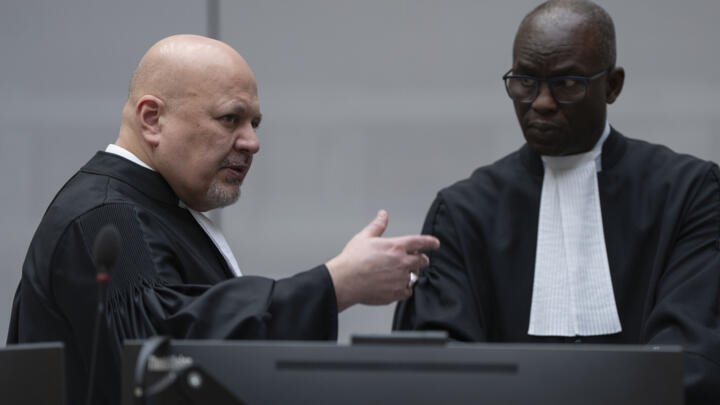
The International Commission to Support Palestinian Rights (ICSPR) strongly condemns the U.S. administration’s imposition of new sanctions on the President of the International Criminal Court (ICC), Japanese Judge Tomoko Akane, and the Senior Counsel in the Office of the Prosecutor, Abdallah S. These measures include asset freezes and restrictions on financial transactions. ICSPR considers them a dangerous escalation in a continuing U.S. policy targeting the Court, its judges, prosecutors, and staff, in a systematic attempt to intimidate the international judicial institution, deter it from exercising its mandate, and undermine its independence, integrity, and the rule of international law.
ICSPR stresses that these sanctions are not a temporary political disagreement with the Court, nor merely an objection to a particular judicial decision or procedure. Rather, they constitute a new link in an escalating pattern of pressure, threats, and sanctions targeting the Court and its officials whenever it approaches the exercise of its jurisdiction over the most serious international crimes, particularly in the Palestinian situation. The targeting of the President of the Court and senior prosecution officials represents a qualitative escalation, demonstrating that the objective goes beyond objection to a judicial measure and seeks to influence the Court’s independence and capacity to carry out its functions.
ICSPR recalls that it has repeatedly warned in previous statements and reports that targeting judges and prosecutors with personal and political sanctions and threats constitutes an attempt to subject international justice to the logic of power. Current developments confirm the continuation and escalation of this approach, sending a dangerous message that any judge or prosecutor exercising their mandate in cases involving alleged genocide and war crimes by the United States and Israel may become subject to punishment and political pressure.
ICSPR believes that the U.S. escalation comes within a political and judicial context connected to repeated Israeli attempts to challenge the Court’s jurisdiction, contest its procedures, and obstruct investigations and prosecutions related to crimes committed in the Occupied Palestinian Territory. This is particularly relevant to crimes allegedly committed by Israeli officials and leaders, including war crimes, crimes against humanity, and genocide—the gravest international crimes. The convergence of Israeli pressure with U.S. sanctions therefore raises serious concerns of a coordinated course of action whose practical purpose is to weaken the Court’s ability to exercise its jurisdiction and hold perpetrators of international crimes accountable. The U.S. administration has itself linked the sanctions to the Court’s investigations and proceedings involving Israeli and American officials.
ICSPR affirms that disagreement with the Court’s jurisdiction or decisions does not justify punishing its judges, prosecutors, or staff. Questions of jurisdiction, admissibility, and procedural challenges must be resolved under the Rome Statute, the relevant legal rules, and established judicial mechanisms—not through economic sanctions or political threats. Economic and political power must not be turned into an instrument for pressuring the judiciary or determining who is subject to international law and who is exempt from it.
ICSPR emphasizes that targeting judges because of their decisions, or prosecutors because they are performing their professional duties, constitutes a direct attack on the independence of international justice and a threat to the separation between politics and justice. The ICC has described the latest sanctions as a blatant attack on the independence of a neutral judicial institution, affirming that threatening judges and judicial actors for applying the law places the international legal order itself at real risk.
ICSPR warns that the effects of these sanctions are not limited to the individuals targeted. They may extend to the Court’s capacity to investigate, collect evidence, and prosecute perpetrators of crimes, as well as to the level of international cooperation with the Court. They may also undermine the confidence of victims and affected communities in the value of international justice. Weakening the Court or intimidating those working within it sends a dangerous message to perpetrators of international crimes that political protection may become a wall preventing accountability.
ICSPR considers the Palestinian situation a fundamental test of the credibility of the International Criminal Court and the international system for combating impunity. Protecting the Court does not mean granting it immunity from criticism or accountability; rather, it means safeguarding its independence so that it can apply the law on the basis of evidence and legal standards, without selectivity or political pressure, to all persons and crimes falling within its jurisdiction, regardless of the nationality or political position of those responsible.
ICSPR welcomes the growing international positions rejecting U.S. sanctions, foremost among them Spain’s position opposing the targeting of the Court and its officials, as well as the position of United Nations Secretary-General António Guterres, who expressed “deep concern” over the sanctions and affirmed that the Court is a central pillar of the international criminal justice system. ICSPR also welcomes Japan’s condemnation of the sanctions imposed on ICC President Judge Tomoko Akane and its renewed support for the Court and its role in prosecuting the gravest international crimes.
ICSPR further welcomes the European position supporting the Court’s independence, including statements by European Commission President Ursula von der Leyen and European Council President António Costa expressing firm support for the President of the Court and its officials, and emphasizing the need for them to carry out their duties independently and without external pressure. ICSPR also welcomes the positions rejecting the sanctions issued by France, the Netherlands, and Germany. These positions are particularly significant given that the Netherlands hosts the Court’s headquarters in The Hague.
ICSPR believes that the widening international rejection confirms that this issue is no longer a bilateral dispute between Washington and the Court. Rather, it has become a test of the international community’s capacity to protect the independence of international justice when accountability reaches crimes and suspects shielded by political protection. The convergence of positions from the United Nations, the European Union, European states, Japan, and the Netherlands—alongside the Court’s own position—must be transformed into legal, political, and institutional action to protect the Court from intimidation, sanctions, and coercion.
ICSPR calls on States Parties to the Rome Statute to move beyond statements of solidarity and take political, legal, and practical measures to protect the Court, its judges, prosecutors, and staff; strengthen cooperation with it; provide the financial and institutional support necessary for the continuation of investigations and prosecutions; and fulfill their obligations under the Rome Statute, including cooperation with the Court and implementation of its decisions and orders in accordance with the law.
ICSPR calls on the United Nations, the European Union, the Human Rights Council, States Parties to the Rome Statute, and regional and international organizations to adopt a clear collective position rejecting unilateral U.S. sanctions and political and economic pressure aimed at influencing the work of the Court. It further calls for the development of practical mechanisms to protect the independence of international justice and those working within it from all forms of intimidation or retaliation.
ICSPR calls on the U.S. administration to immediately revoke the sanctions imposed on ICC officials, end its policy of threats and sanctions against the Court’s judges, prosecutors, and staff, respect the independence of international justice, and cease using political and economic influence to shield any person from accountability for international crimes.
ICSPR renews its call on the International Criminal Court to continue carrying out its mandate with full independence, integrity, and impartiality; to proceed with investigations and prosecutions concerning all crimes within its jurisdiction, including crimes committed in the Occupied Palestinian Territory; and to resist all political and economic pressure while ensuring victims’ rights to truth, justice, accountability, and reparation.
ICSPR affirms that sanctions do not erase crimes, threats do not extinguish victims’ rights, and political power does not confer immunity from international criminal responsibility. The core of this confrontation is not between a state and a court, but between the rule of law and the logic of impunity and the law of the jungle. The independence of the International Criminal Court is not a privilege for judges; it is a safeguard for victims and for the international community as a whole. Protecting the Court from intimidation and retaliation is therefore a shared international responsibility, so that political power or international alliances do not become a passport to impunity for the gravest crimes affecting humanity as a whole.
International Commission to Support Palestinian Rights (ICSPR)
Gaza – Palestine