
ICSPR Organizes an International Digital Seminar Titled “Suing the State Department: U.S. Legal Accountability and the Voices of Gaza”

Date: 21 Aug 2026
Press Release
ICSPR Organizes an International Digital Seminar Titled “Suing the State Department: U.S. Legal Accountability and the Voices of Gaza”
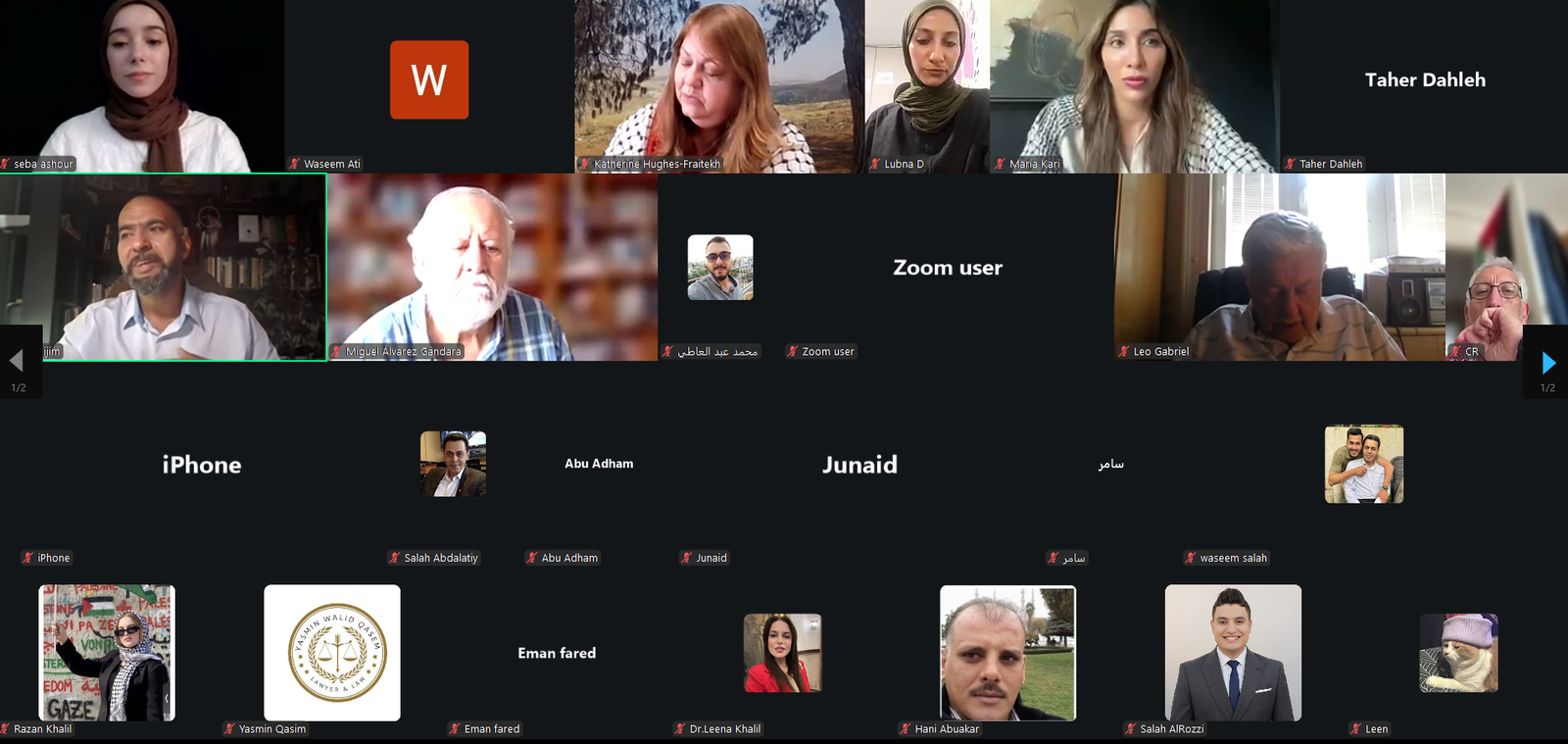
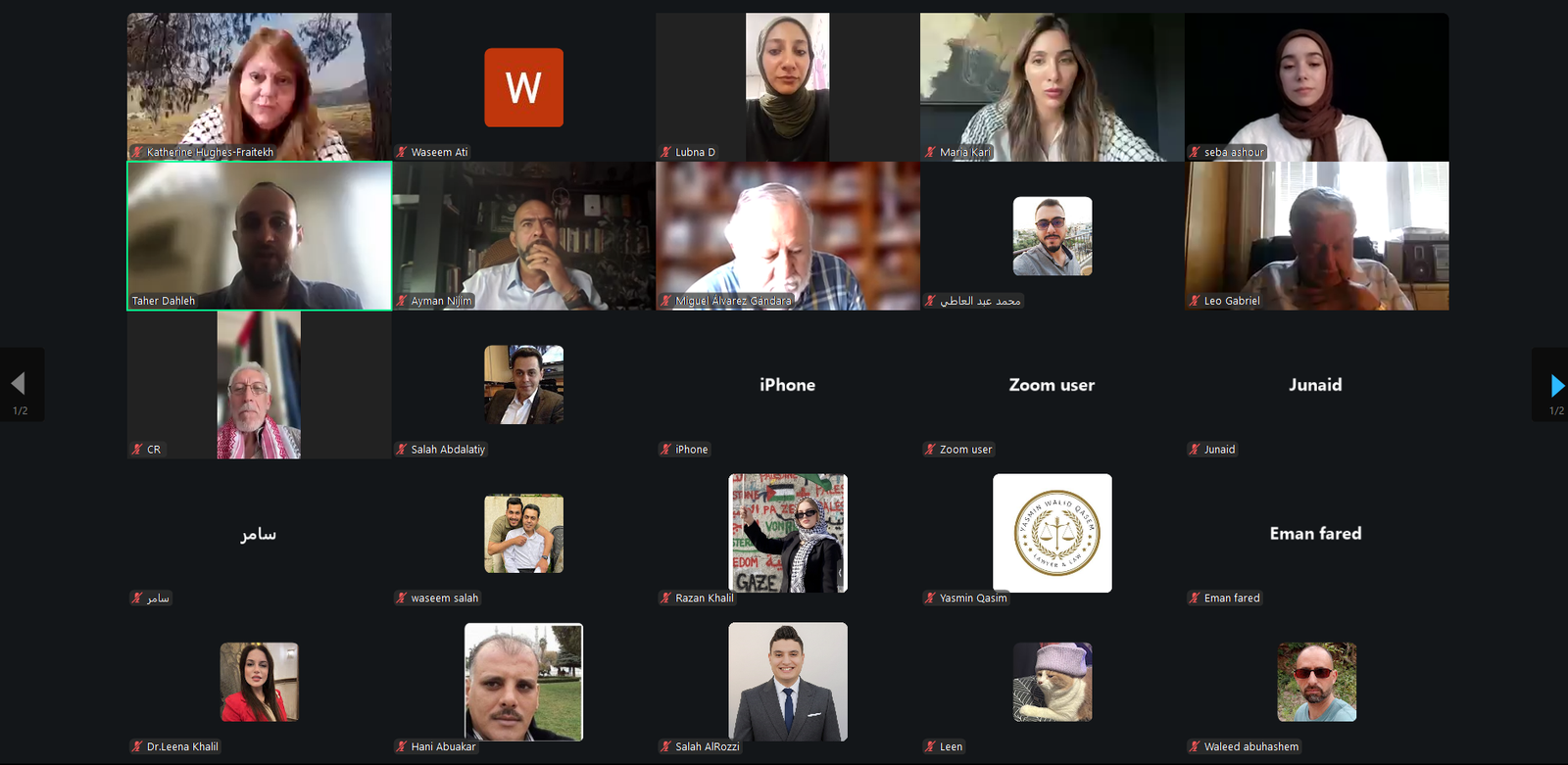
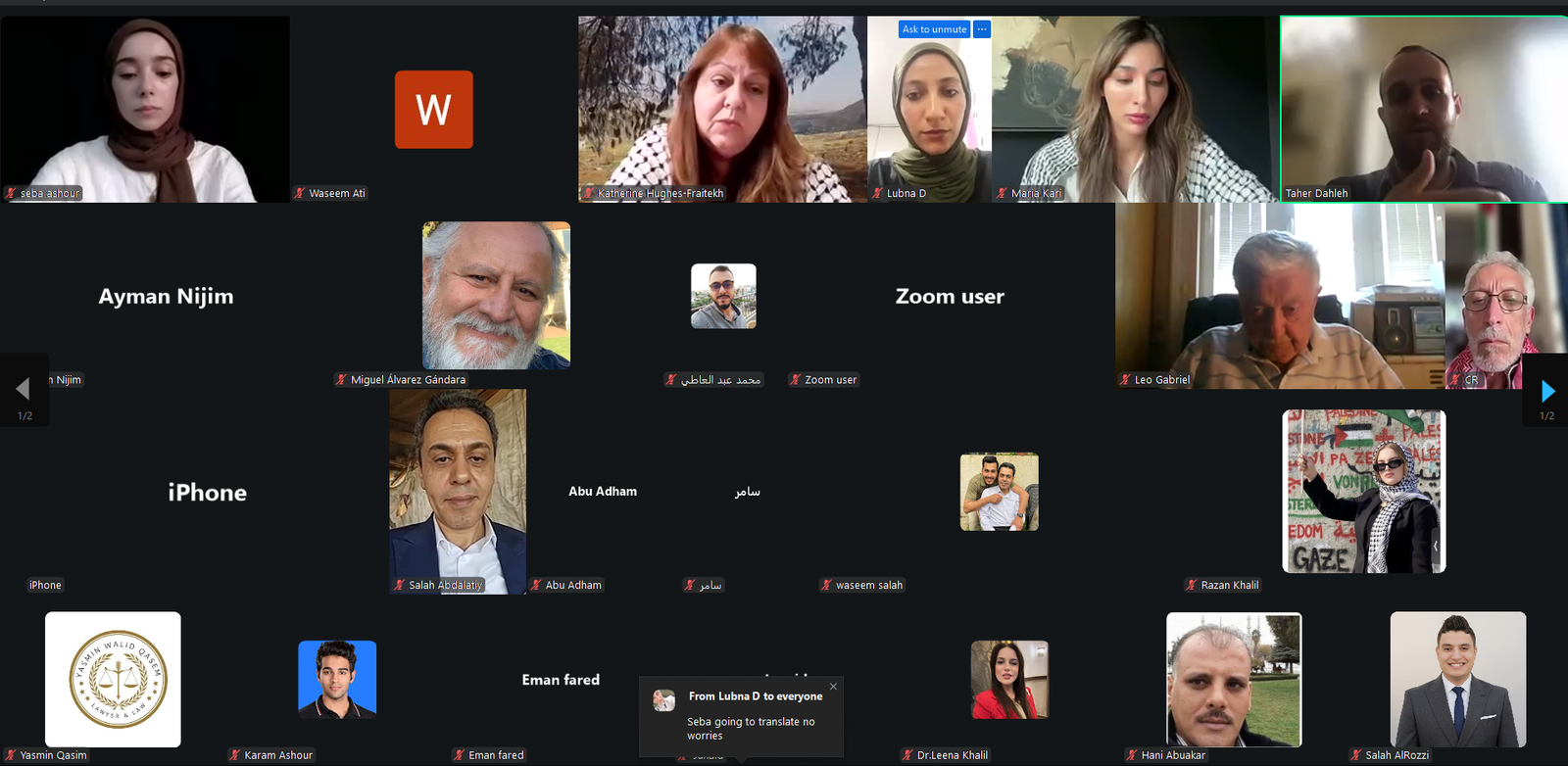
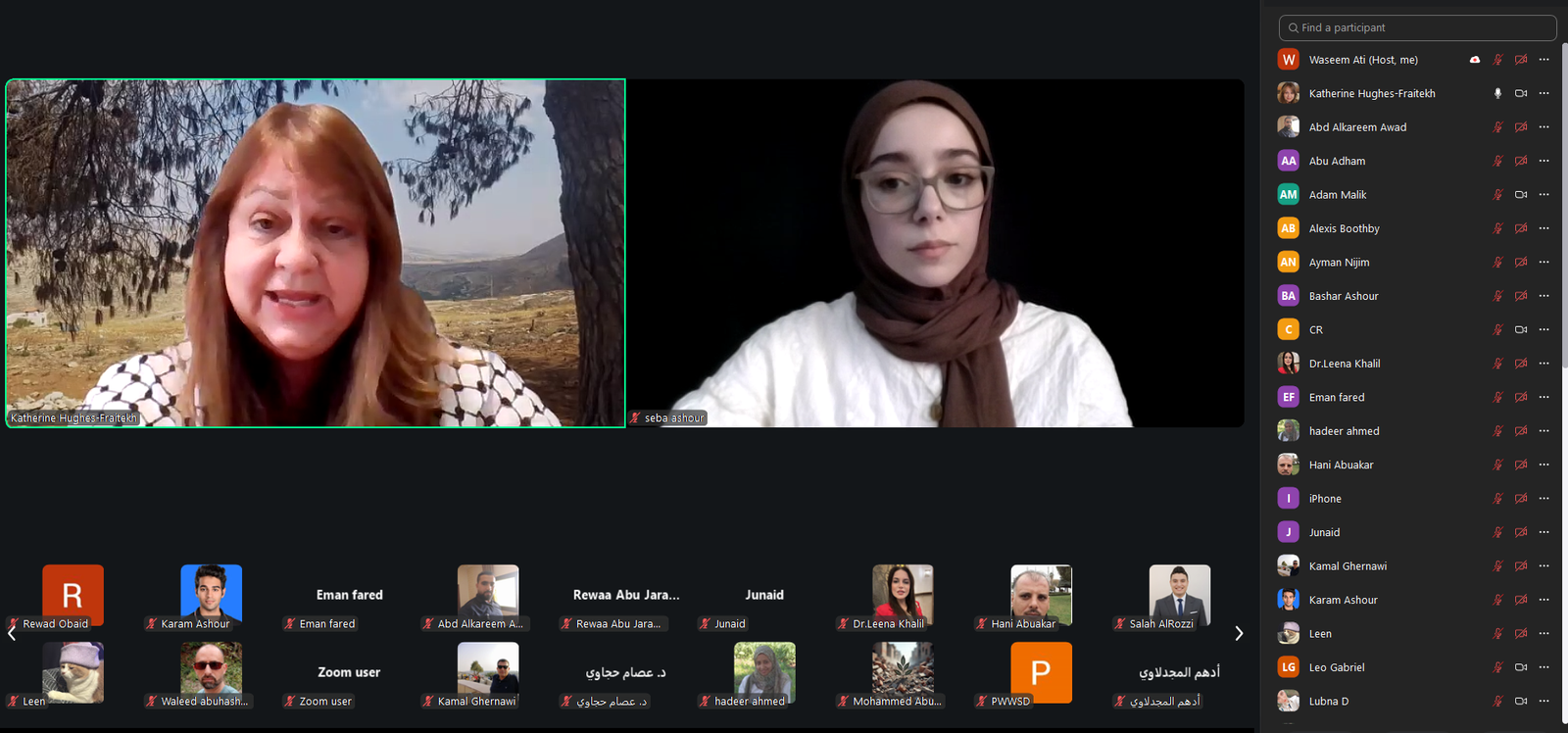
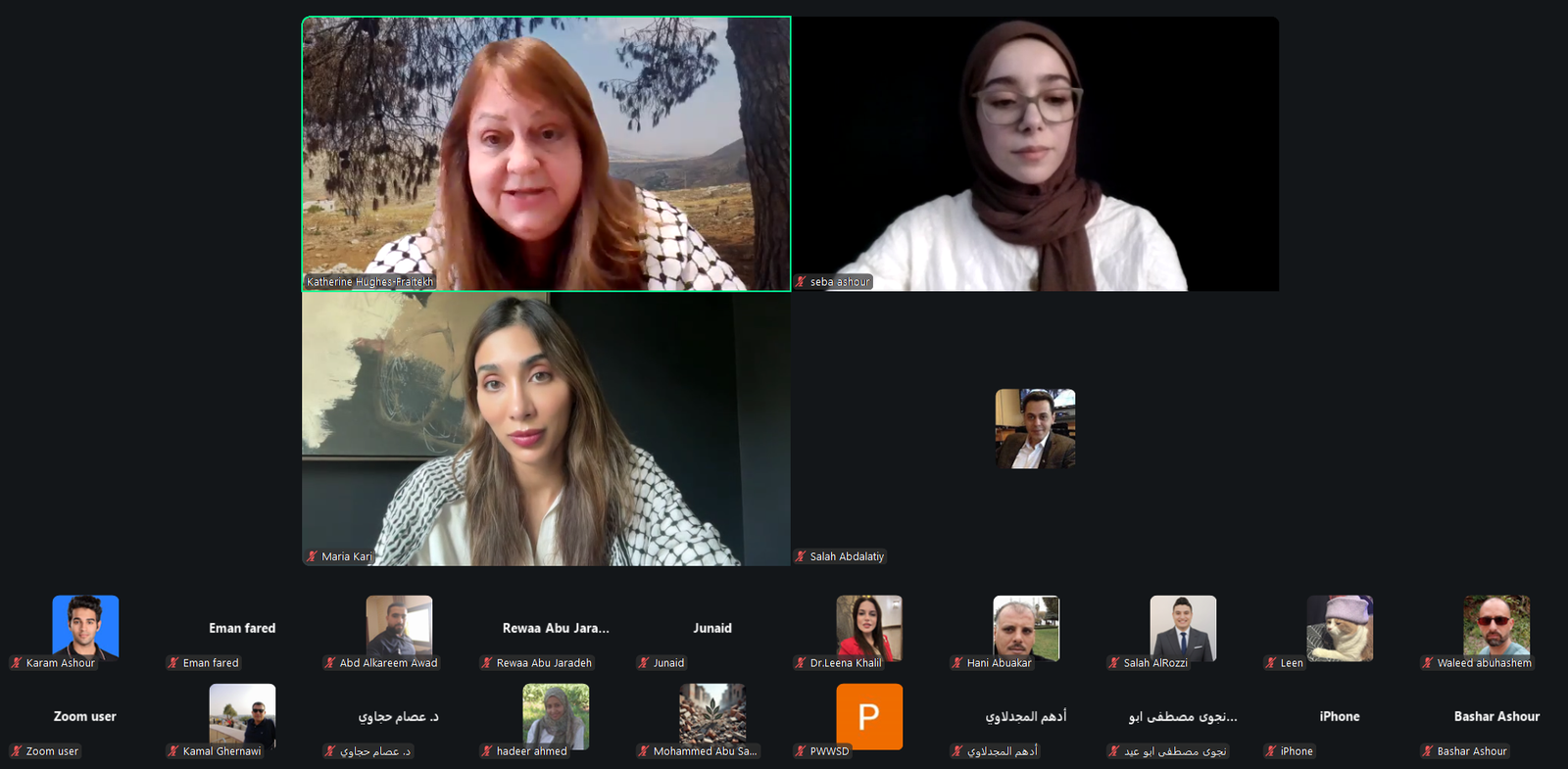
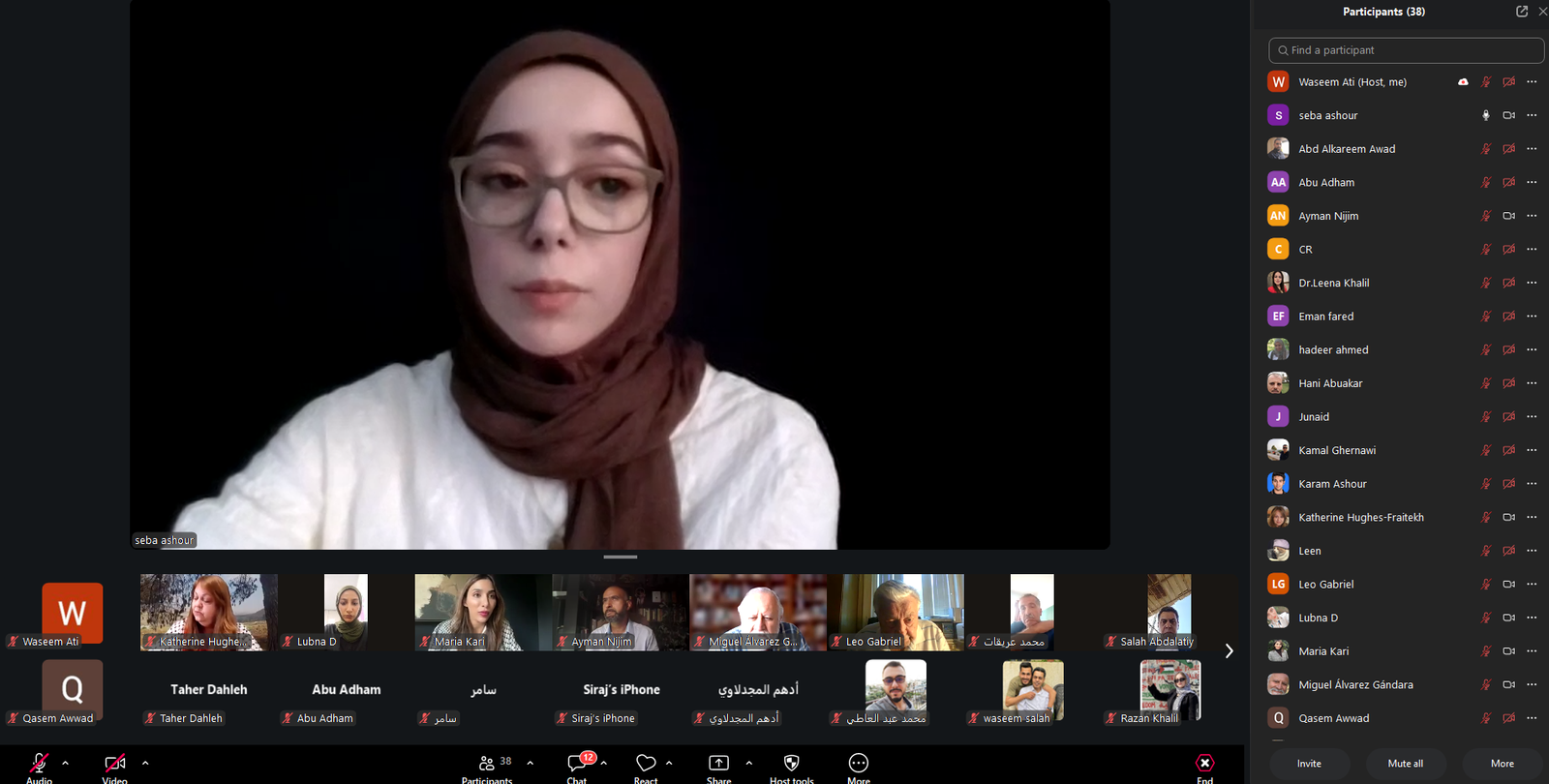
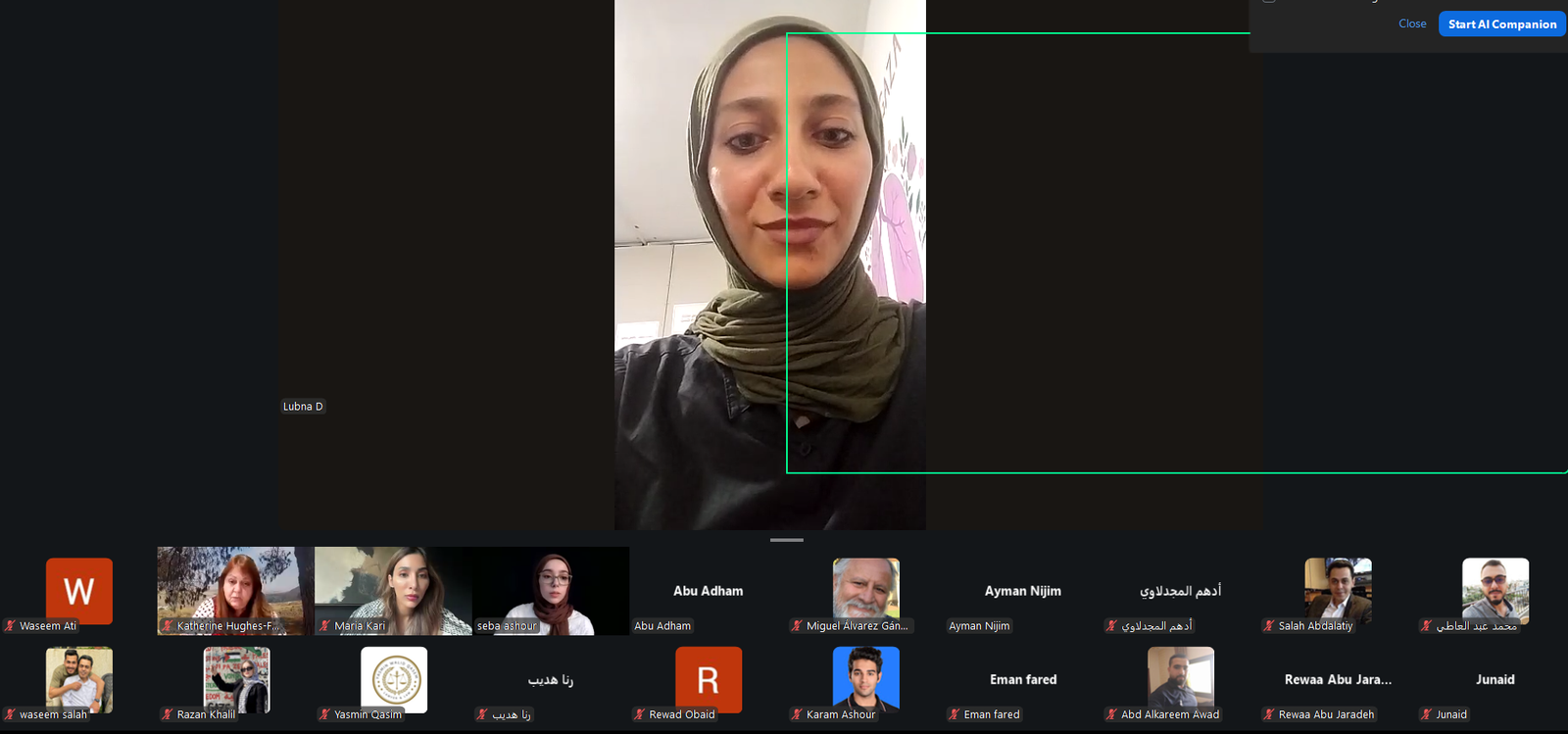
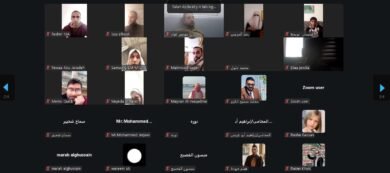
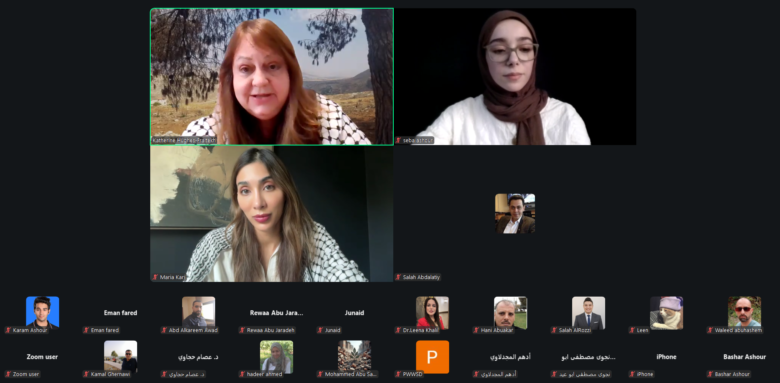
The International Commission to Support Palestinian Rights (ICSPR ) organized an international digital seminar on Thursday, August 20, 2026, entitled “Suing the State Department: U.S. Legal Accountability and the Voices of Gaza.” The seminar was held in Arabic and English and brought together a distinguished group of human rights defenders, lawyers, academics, and activists from Palestine, the United States, and several countries around the world.
The session was moderated by Ms. Saba Ashour and Ms. Lubna Deeb from ICSPR International Advocacy Department. The report was prepared by Mr. Firas Ashour under the supervision of Dr. Salah Abdul Ati, President of the International Commission to Support Palestinian Rights (ICSPR).
The seminar was held amid growing international legal and grassroots mobilization to confront war crimes and genocide against the Palestinian people, as well as ongoing efforts to hold U.S. institutions accountable for their role in military funding and political and legal complicity in crimes committed in the Gaza Strip.
The seminar aimed to examine legal cases filed in the United States to hold the U.S. State Department and administration accountable; highlight the importance of including the testimonies of genocide survivors in Gaza within official judicial and historical records; and explore ways to integrate strategic litigation with youth and grassroots mobilization, arms embargo campaigns, and tax-resistance initiatives. It also addressed the importance of framing litigation as a liberatory and humanitarian act that contributes to victims’ collective recovery and confronts policies of erasure and destruction.
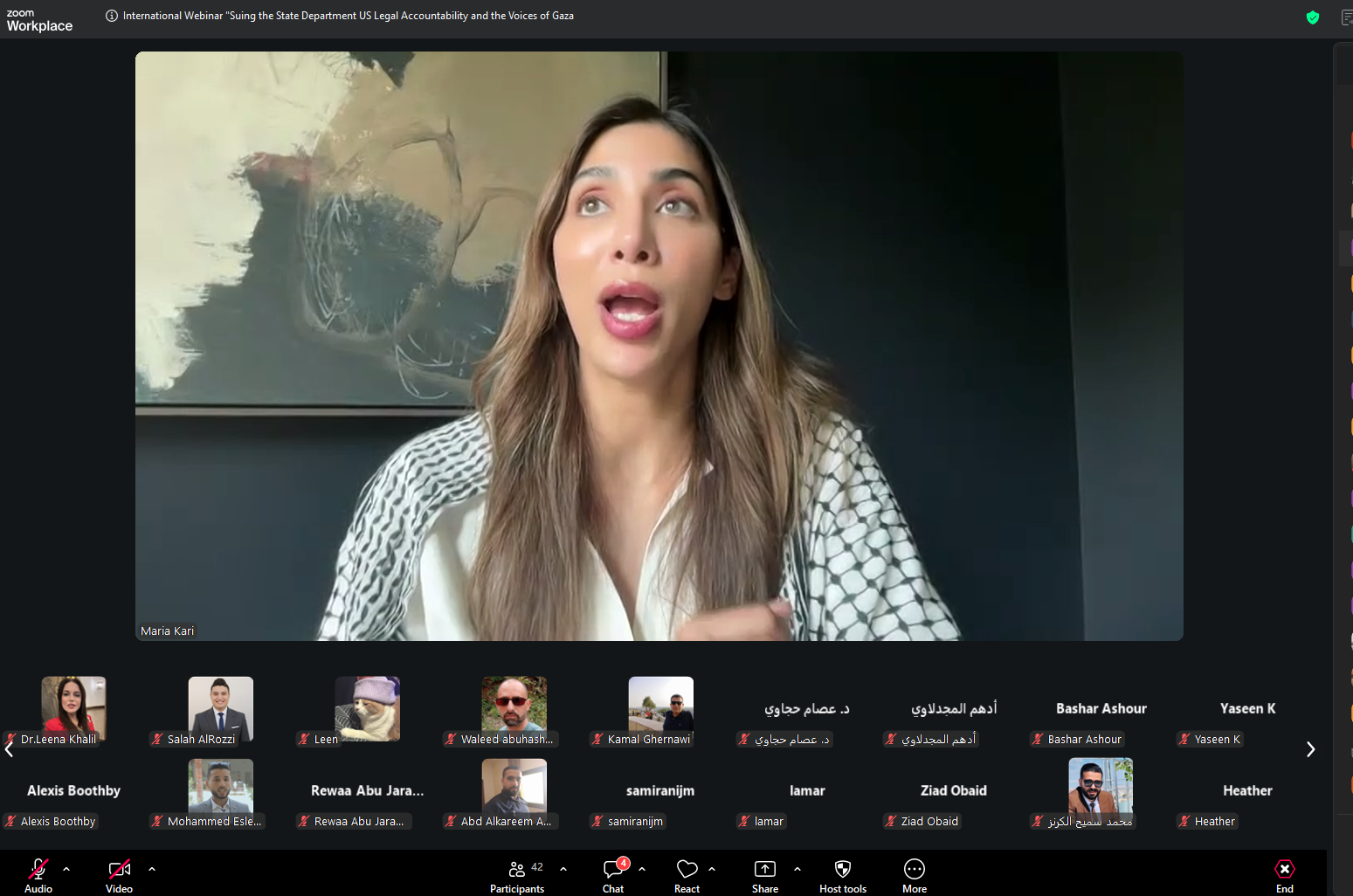
Ms. Maria Kari, human rights lawyer and Director of Project TAHA, opened her intervention by shedding light on mechanisms of U.S. executive complicity in crimes committed in Gaza. She reviewed her work in preparing amicus curiae briefs before federal courts and the lawsuits filed against the U.S. State Department concerning the evacuation of U.S. citizens and Palestinians during the war.
Kari stressed that the U.S. administration applied double standards in evacuation operations after October 7, 2023. While it provided rapid and fully funded evacuation services for Israeli Americans, Palestinian Americans were left trapped under bombardment in Gaza without effective protection or consular support. She further noted that bureaucratic delays in processing evacuation requests led to grave humanitarian consequences, including the killing and injury of U.S. citizens and green-card holders.
Mr. Taher Dahleh, a lead organizer with the Palestinian Youth Movement (PYM), addressed the role of grassroots organizing in North America in reshaping public awareness of the Palestinian cause. He emphasized that legal work cannot be separated from mass pressure and community-based organizing.
Dahleh explained that, through its branches across the United States and Canada, the movement has organized weekly demonstrations, sit-ins, and student encampments, while leading campaigns for an arms embargo against Israel. He stated that these efforts have moved Gaza from being treated solely as a humanitarian issue to a political and electoral issue that exerts pressure on decision-makers. He also stressed the need to provide popular and media support for lawyers and human rights defenders, as well as for cases brought before the courts.
In her intervention, Ms. Kathrein Hughes Fraitekh, a human rights activist and representative of Solidarity 2020 and Beyond, affirmed that the struggle for the Palestinian people’s right to self-determination requires broadening the international solidarity front to include countries of the Global South, rather than confining mobilization to Western capitals.
Fraitekh reviewed the organization’s efforts to support anti-genocide mobilization and facilitate protests outside U.S. and Israeli embassies in several countries, including Kenya, Zimbabwe, Cambodia, and Thailand. She stressed that global solidarity is a key tool for breaking the isolation imposed on Gaza and expanding political and popular pressure to stop the crimes and hold perpetrators accountable.
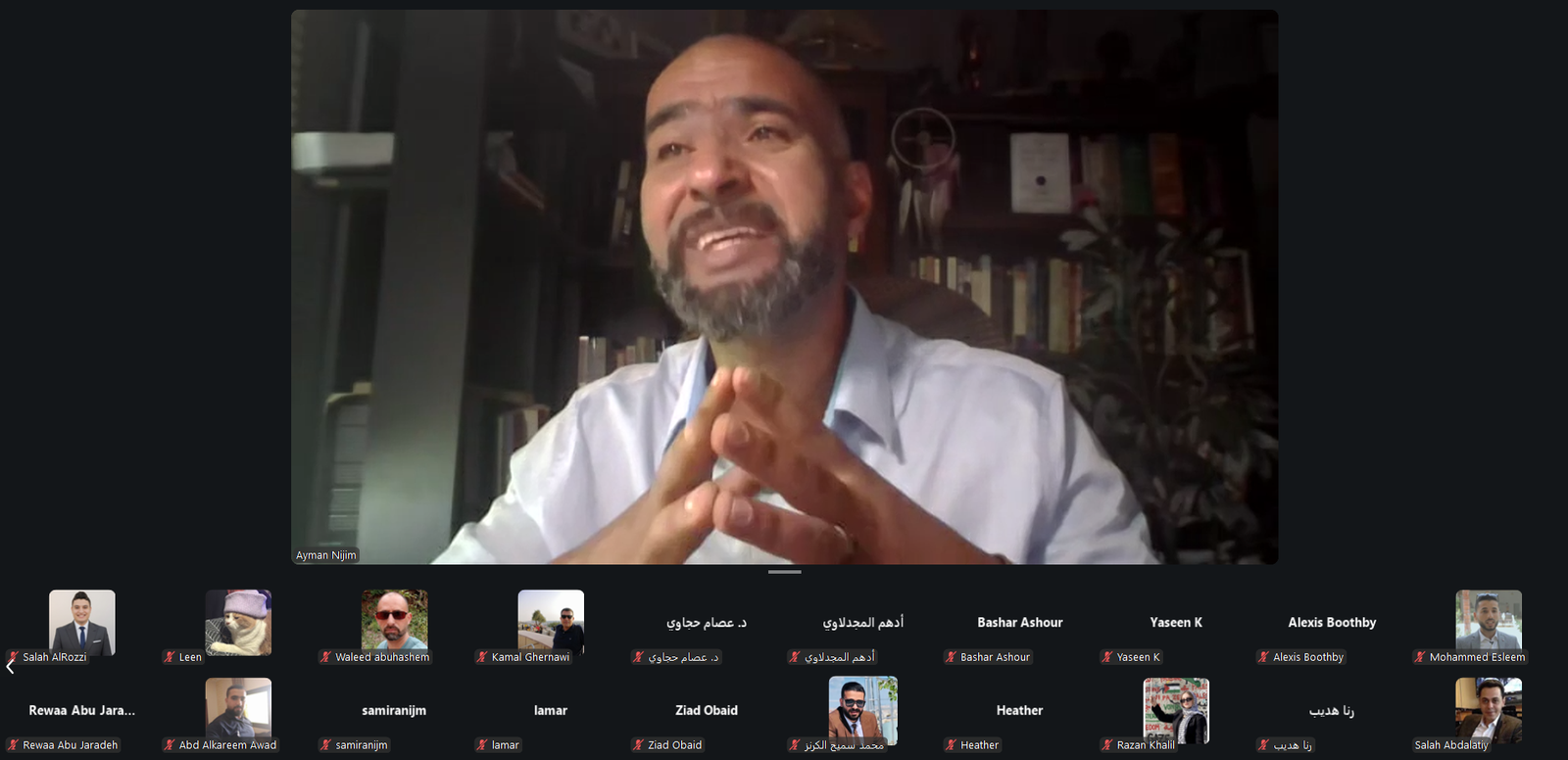
Dr. Ayman Nijim, a scholar of liberation psychology and one of the plaintiffs in the Center for Constitutional Rights (CCR) case against several senior U.S. officials, delivered an intervention on the relationship between genocide, collective trauma, and liberatory recovery.
Nijim affirmed that the ongoing genocide in the Gaza Strip cannot be separated from years of systematic siege and starvation policies. He noted that litigation and documentation are not merely legal or technical procedures, but liberatory tools that enable victims to reclaim their psychological and political agency, secure recognition of the crimes committed against them, and confront policies of civilizational and human erasure.
He added that the live broadcasting of atrocities in Gaza has created what he described as a “global trauma revolution,” transforming millions of viewers around the world from passive observers into active participants in solidarity movements, and contributing to a tangible shift in global collective awareness of the Palestinian cause.
Participants discussed the challenges facing cases brought before U.S. federal courts, particularly the use of the Political Question Doctrine, through which courts decline to hear cases related to foreign policy or military funding on the grounds that they fall within the exclusive authority of the executive branch.
The participants affirmed that courts’ refusal to hear certain cases does not mean that such cases have failed. Rather, these lawsuits have contributed to establishing an important legal, documentary, and historical record by placing victims’ testimonies and evidence of genocide into official judicial records. This strengthens the possibility of relying on such evidence before international courts and in legal and academic references in the future.
The seminar also addressed the expansion of recourse to regional and international mechanisms, including submitting files to the Inter-American Commission on Human Rights (IACHR) and the International Criminal Court (ICC). Participants further emphasized the need to confront sanctions and legal harassment targeting lawyers and organizations cooperating with the ICC or advocating for legal accountability.
Participants warned of the escalating internal repression in the United States targeting students, activists, and human rights defenders—particularly those who have expressed solidarity with Gaza—and stressed the need to protect the rights to freedom of expression, peaceful assembly, and advocacy for international justice.
The participants agreed on a number of strategic steps to integrate legal advocacy with grassroots mobilization and field documentation, including:
-
Establishing a joint and secure documentation operations room to transfer and archive evidence and live testimonies from Gaza, linking field documentation and investigation organizations with legal teams in the United States and Europe.
-
Supporting legal cases challenging U.S. executive sanctions imposed on those cooperating with the ICC, while protecting targeted students, residents, and activists from repression and deportation campaigns.
-
Forming a legal, human rights, and technical delegation to investigate the role of major technology companies, including WhatsApp and Microsoft, in facilitating targeting operations and violations against Palestinians.
-
Expanding the “Taxpayers Against Genocide” campaign, strengthening boycott initiatives, tax resistance, and arms embargo campaigns, and supporting student mobilization and grassroots coalitions.
-
Preparing and publishing periodic legal and media materials in Arabic and English to strengthen the reach of the Palestinian narrative and human rights documentation among international institutions and media outlets.
At the conclusion of the seminar, participants emphasized that justice for the Palestinian people requires continued legal, human rights, grassroots, and media action at local and international levels. They called for the development of effective mechanisms to document crimes and protect witnesses and human rights defenders.
They also stressed that the reconstruction of Gaza and recovery from the consequences of genocide cannot be separated from legal accountability, the prosecution of those responsible for the crimes, an end to military and political support for the occupation, and the Palestinian people’s right to freedom, dignity, and self-determination.