
Opening of the Rafah Crossing A Partial Humanitarian Step Under Israeli Restrictions

Date: 3 February 2026
Press Statement
Opening of the Rafah Crossing A Partial Humanitarian Step Under Israeli Restrictions
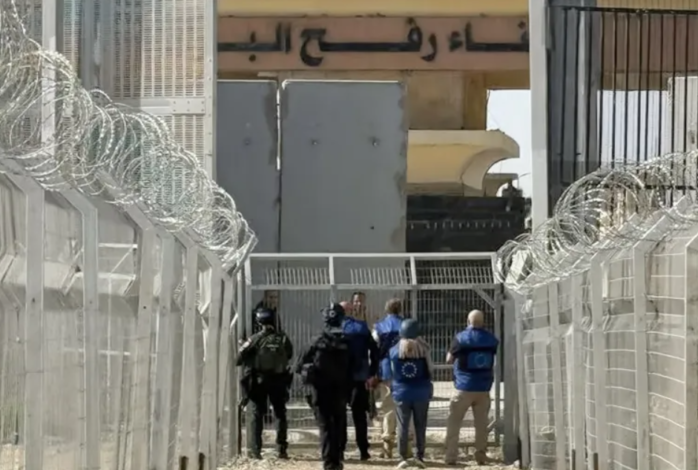
The International Commission to Support Palestinian People’s Rights welcomes the reopening of the Rafah Crossing in both directions, considering it an inherent legal right and a vital humanitarian passage necessary to break the near-total closure and the tightened siege imposed on the Gaza Strip. This step is particularly crucial for patients, the wounded, and those stranded outside the Strip, who suffer daily from severe restrictions on freedom of movement and access to essential services.
The International Commission (ICSPR) strongly condemns the intensified Israeli restrictions on the operation of the crossing, which turn travel and return into a symbolic procedure that falls short of a genuine and comprehensive opening. The Commission notes that the requirement of prior security approvals, the limitation on the number of travelers, and the imposition of complex procedures for citizens’ travel—especially the return of those stranded outside the Gaza Strip—transform the crossing, from the Palestinian side, into a tool of control and domination rather than a humanitarian passage. This may force Palestinians into involuntary abstention from exercising their right to movement and subjects freedom of movement to the logic of collective punishment and political blackmail.
The International Commission (ICSPR) points out that, yesterday, on the first day of the crossing’s operation, the Israeli occupation allowed only five patients to leave Gaza, each accompanied by two escorts, after long waiting periods, complex security procedures, and prior approvals from the occupation authorities, before permitting them to move toward the Egyptian side of the crossing. This comes at a time when the Gaza Strip is experiencing a severe health-sector collapse, with approximately 22,000 critical medical cases in urgent need of treatment outside Gaza, underscoring the limited and symbolic nature of this step compared to the actual humanitarian needs.
The International Commission (ICSPR) also notes that the Egyptian authorities allowed 50 individuals to reach the Palestinian side of the crossing yesterday; however, the occupation authorities forcibly returned 38 of them and permitted the entry of only 12 individuals. These individuals were subjected to prolonged procedures of inspection, detention, and coercive interrogation, with the aim of emptying the process of “opening the crossing” of its humanitarian content. This constitutes a clear violation of the freedom of movement, travel, and return to one’s homeland as guaranteed under international humanitarian law and international human rights law.
The International Commission (ICSPR) affirms that field testimonies from returnees reveal a systematic pattern of collective humiliation and psychological punishment at the Israeli inspection checkpoint in front of the Rafah Crossing. The violations included beatings, degrading body searches, prolonged shackling for hours, confiscation of personal belongings, and threats of killing or arrest. In addition, entire buses were turned back after being allowed to reach the crossing, as only one bus out of six was permitted to enter without any legal justification, amounting to a grave violation of human dignity and the right to freedom of movement and travel.
The International Commission (ICSPR) warns of the seriousness of testimonies provided yesterday by some returning travelers regarding the participation of armed militia elements supported by the Israeli occupation, known as the “Abu Shabab group,” in inspection and abuse operations against returning travelers. This represents a dangerous escalation that reveals an unlawful delegation to commit violations against civilians and confirms that the Israeli occupation deliberately employs pressure, coercion, and abuse to terrorize Palestinians and prevent the return of those stranded outside the Gaza Strip.
The International Commission (ICSPR) stresses that these practices amount to cruel, inhuman, and degrading treatment, prohibited under the Fourth Geneva Convention and the International Covenant on Civil and Political Rights. They constitute a grave violation of the dignity of the Palestinian people, particularly women, the elderly, and patients who were subjected to such harsh treatment, and expose the systematic Israeli use of these criminal gangs for political and punitive purposes.
The International Commission (ICSPR) affirms that opening the crossing under these conditions remains merely symbolic and constitutes a flagrant violation of the 2005 Agreement on Movement and Access, international humanitarian law, and United Nations Security Council resolutions, including Resolution No. 2803, as well as the ceasefire agreement. This places direct legal and moral responsibility on the international community and mediators to halt the violations, ensure freedom of movement with dignity, and increase the number of returnees and travelers allowed to cross through the Rafah Crossing.
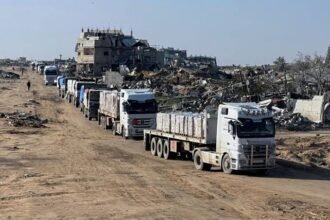
The International Commission (ICSPR) commends the Egyptian efforts to preserve the humanitarian character of the crossing and to reject its transformation into a tool of blackmail or forced displacement. It stresses the necessity of making the crossing a genuine gateway to life that guarantees freedom of movement, urgent medical evacuation, family reunification, and the regular flow of humanitarian aid, free from any political or security considerations, in order to protect the dignity of the Palestinian people and put an end to the occupation’s crimes against returnees.
Finally, the International Commission (ICSPR) calls on mediators, third states party to the Geneva Conventions, and the United Nations to exert pressure to تثبيت وقف إطلاق النار (ensure the consolidation of the ceasefire), secure Israel’s withdrawal from the Gaza Strip, guarantee the opening of all crossings, lift the siege on Gaza, facilitate the travel and return of citizens through the Rafah Crossing, and pressure the Israeli occupying power to cease its violations against travelers and returnees stranded outside the Strip.