
Israeli Occupation Escalates Genocide in the Gaza Strip Despite Talks on the Second Phase Agreement, Intensifying Killings, Destruction, Attacks on the Healthcare System, and the Imposition of New Facts on the Ground

Date: August 1, 2026
Press Release
Israeli Occupation Escalates Genocide in the Gaza Strip Despite Talks on the Second Phase Agreement, Intensifying Killings, Destruction, Attacks on the Healthcare System, and the Imposition of New Facts on the Ground
The International Commission to Support Palestinian Rights (ICSPR) strongly condemns the continued perpetration by the Israeli occupation forces of genocide, crimes against humanity, and war crimes against the Palestinian people in the Gaza Strip. These crimes are manifested through the escalation of mass killings, the direct targeting of civilians, the bombardment of homes, residential neighborhoods, and displacement tents, attacks on hospitals and healthcare facilities, the issuance of forced displacement orders, the continuation of siege and starvation policies, and the systematic destruction of civilian infrastructure. These actions constitute flagrant violations of international humanitarian law, the 1948 Convention on the Prevention and Punishment of the Crime of Genocide, the Four Geneva Conventions, the Rome Statute of the International Criminal Court, and the provisional measures ordered by the International Court of Justice.
ICSPR affirms that the past three days have witnessed a significant escalation across various areas of the Gaza Strip, as Israeli occupation forces continued carrying out killings and direct attacks against civilians while simultaneously bombing inhabited homes and civilian and medical facilities. This pattern demonstrates the continuation of a military strategy aimed at inflicting the greatest possible harm on the civilian population and destroying the means of life.
During this period, ICSPR documented a series of Israeli attacks that resulted in the killing and injury of civilians, including children and women. Child Zaid Mohammed Nofal was killed after an apartment opposite Al-Bureij Municipality was bombed. Eight-year-old Rateel Abdullah and Abdullah Al-Balawi were killed following an attack on a tent sheltering displaced persons in Al-Mawasi, Khan Younis. Abdul Rahman Al-Kurdi and Ibtisam Subh were killed in an attack targeting a civilian gathering in Gaza City. Hassan Ibrahim Qahman and Alaa Imad Al-Taramsi were killed after Israeli forces targeted a group of civilians near Al-Ghazali Junction in Sheikh Radwan neighborhood, northwest of Gaza City. Citizen Saber Abu Rabie was also killed in shelling near the Deir al-Balah roundabout, in addition to other victims of continuous airstrikes across different areas of the Gaza Strip.
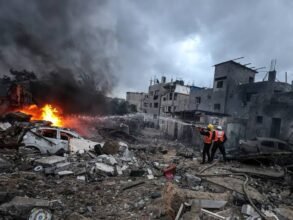
Israeli attacks also targeted civilian gatherings and residential areas on Al-Wehda Street, Al-Mukhabarat Street, Sheikh Radwan neighborhood, Jabalia Al-Balad, Al-Khulafaa area, Abu Arif Street, Al-Zawaida, the vicinity of Al-Yarmouk Stadium, and several areas in Khan Younis and Deir al-Balah. These attacks were accompanied by artillery shelling of eastern Jabalia and the Al-Tuffah and Al-Zeitoun neighborhoods, as well as drone fire directed at civilians, resulting in dozens of casualties, some of them critically injured.
ICSPR further documents the continued policy of destroying homes and residential neighborhoods. Israeli forces bombed homes belonging to the Al-Qanou, Al-Naouq, Al-Hawajri, Abu Amra, Shamia, and Matar families, in addition to homes in Al-Shati Refugee Camp, Al-Saftawi area, Al-Maghazi Refugee Camp, and the vicinity of a UNRWA clinic. Several of these homes had been threatened with evacuation beforehand, resulting in extensive destruction of civilian property, damage to neighboring buildings, and the displacement of additional Palestinian families.
ICSPR stresses that targeting homes after forcibly evacuating their residents forms part of a systematic policy aimed at destroying the residential environment and rendering vast areas of the Gaza Strip uninhabitable. This policy contributes to the consolidation of forced displacement and the imposition of demographic and geographic changes by force, constituting a grave violation of international humanitarian law and amounting to war crimes and crimes against humanity.
Israeli occupation forces have also continued targeting what remains of Gaza’s healthcare system. They bombed warehouses storing medicines and medical supplies at Al-Aqsa Martyrs Hospital, causing the loss of vital stocks of medicines and essential medical supplies and spreading panic among patients, their companions, and medical personnel. The attack also caused extensive damage to the hospital’s surroundings and nearby displacement tents, reflecting the ongoing policy of targeting hospitals, medical personnel, ambulances, and obstructing the entry of medicines, fuel, and essential supplies, thereby placing the lives of thousands of patients and wounded individuals at risk.
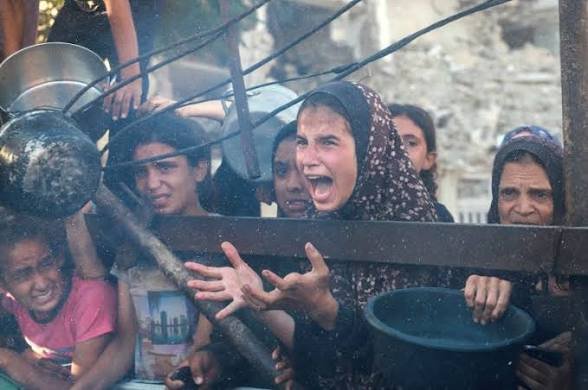
Israeli forces have likewise continued targeting locations sheltering displaced persons. Tents housing displaced families in Al-Mawasi, Khan Younis, and near Al-Aqsa Martyrs Hospital were bombed while new evacuation orders were issued for several areas across the Gaza Strip, including Al-Shati Refugee Camp, Al-Maghazi, and the vicinity of Al-Ahli Arab Hospital, triggering new waves of displacement under bombardment and fear.
According to the latest statistics released by the Palestinian Ministry of Health in Gaza, hospitals in the Strip received eight fatalities during the past 48 hours, including seven newly killed victims and one person who succumbed to previous injuries, in addition to 76 injured persons. A number of victims remain trapped under the rubble and on the roads due to the inability of ambulance and civil defense crews to reach them.
The total number of victims since the ceasefire entered into force on October 11 has risen to 1,222 killed and 4,053 injured, in addition to 804 bodies recovered. Since October 7, 2023, the cumulative toll of the Israeli aggression has reached approximately 73,349 killed and 174,162 injured. Furthermore, the death toll from the collapse of a building previously damaged by Israeli bombardment has risen to 33 fatalities, reflecting the ongoing catastrophic consequences of the widespread destruction caused by the aggression.
ICSPR believes that the continuation of these crimes over such a short period and in a repeated and systematic pattern confirms that what is taking place in the Gaza Strip is not merely a series of isolated military operations, but rather a comprehensive policy targeting the Palestinian people and the very foundations of their survival through mass killings, widespread destruction, siege, attacks on essential services, and forced displacement.
Despite positive indications suggesting that arrangements for the second phase of the ceasefire agreement are nearing completion under the proposed framework and United Nations Security Council Resolution 2803, alongside reports of regional and international efforts to oversee its implementation, the continued military escalation by the Israeli occupation reveals the danger of exploiting the period preceding any agreement to impose new realities on the ground, deepen destruction and displacement, and undermine the prospects of any political process.
ICSPR emphasizes that no agreement can achieve its humanitarian and legal objectives unless it is accompanied by an immediate and permanent ceasefire, the complete withdrawal of Israeli occupation forces from the Gaza Strip, the lifting of the blockade, the unrestricted entry of humanitarian and medical assistance, the safe return of displaced persons, the launch of reconstruction efforts, and the establishment of binding international mechanisms for monitoring, implementation, and accountability.
ICSPR calls upon the United Nations, the Security Council, the General Assembly, the High Contracting Parties to the Geneva Conventions, the International Criminal Court, and the Human Rights Council to take urgent action to halt Israel’s genocide and war crimes, provide international protection for civilians and medical facilities, impose a comprehensive embargo on the export and transfer of weapons used in the commission of international crimes, accelerate criminal investigations and prosecutions against those responsible for genocide, war crimes, and crimes against humanity, and ensure that perpetrators are not granted impunity, thereby safeguarding the Palestinian people and upholding international humanitarian law, justice, peace, and international security.