
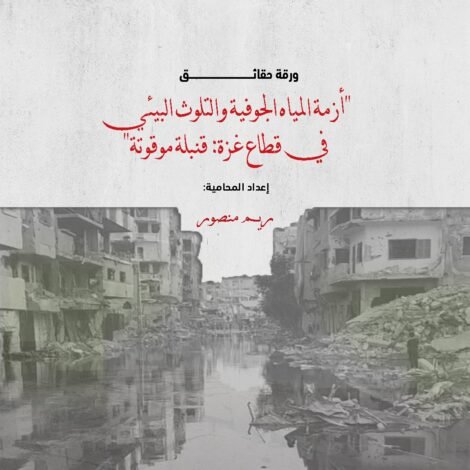
ICSPR Issues Fact Sheet Titled “Groundwater Crisis and Environmental Pollution in the Gaza Strip A Ticking Time Bomb”
 wasem aa
Send an email
wasem aa
Send an email
Date: March 10, 2026
Press Release
ICSPR Issues Fact Sheet Titled: “Groundwater Crisis and Environmental Pollution in the Gaza Strip: A Ticking Time Bomb”
The International Commission to Support Palestinian Rights – ICSPR issued a fact sheet titled “Groundwater Crisis and Environmental Pollution in the Gaza Strip: A Ticking Time Bomb,” prepared by lawyer Reem Mansour. The paper highlights the serious consequences of the deterioration of water and environmental conditions in the Gaza Strip following the recent Israeli assault, and the direct threat this situation poses to public health, the environment, and the right to a dignified life.
The paper explains that the Gaza Strip is among the most water- and environmentally-vulnerable areas in the world, as its population relies almost entirely on groundwater extracted from the coastal aquifer as their primary source of water. However, the recent Israeli military offensive has dramatically worsened the water crisis due to the large-scale destruction of water and sewage infrastructure, the targeting of treatment facilities, and the leakage of untreated wastewater and toxic substances into the soil and groundwater.
According to the paper, this situation has led to a severe deterioration in water quality, with rising levels of salinity and bacterial and chemical contamination, rendering the majority of water unfit for human use and creating a direct threat to public health and the environment.
The fact sheet further notes that groundwater remains the almost exclusive source for meeting the population’s domestic, agricultural, and industrial water needs. Yet excessive extraction from the aquifer, seawater intrusion into its layers, and the discharge of large quantities of untreated wastewater due to the shutdown of sewage and desalination plants have significantly intensified water scarcity. As a result, many residents have been forced to rely on unsafe water sources, including contaminated wells or improvised rainwater collection methods, increasing the risk of waterborne diseases such as diarrhea and gastrointestinal infections.
The paper also warns of future environmental risks related to the leakage of hazardous chemicals and remnants of military projectiles into the soil and groundwater, particularly as rainfall facilitates the movement of these pollutants into the aquifer, potentially causing long-term environmental and health impacts.
In addition, the report notes that Gaza has been experiencing unprecedented environmental deterioration due to the widespread destruction of civilian infrastructure, including wastewater treatment plants, sewage networks, waste dumps, and industrial and agricultural facilities. This has led to the infiltration of large quantities of chemical and microbial pollutants into the soil, groundwater, and the marine environment.
Health reports cited in the paper also document a significant increase in illnesses linked to environmental pollution and the lack of clean water, including respiratory diseases, acute diarrhea, gastrointestinal infections, and viral hepatitis, in addition to the spread of lice, scabies, and skin diseases, particularly amid overcrowding and deteriorating living conditions.
The fact sheet indicates that more than 2.2 million people in the Gaza Strip—nearly half of them children—are facing severe humanitarian and health conditions due to war, environmental contamination, and shortages of food and clean water. Health reports have recorded more than 1.2 million respiratory infections, in addition to hundreds of thousands of cases of acute diarrhea and other infectious diseases associated with the deterioration of public health conditions.
The paper also presents a number of figures illustrating the scale of the environmental catastrophe in the Gaza Strip. A large percentage of water and sanitation facilities have been damaged or destroyed, including wells, water networks, pumping stations, and desalination plants. Consequently, the amount of water available to residents has dropped dramatically, reaching as little as three liters per person per day in some areas—far below the minimum level recommended by the World Health Organization of 15 liters per person per day.
The paper further notes that more than 97% of the water in Gaza’s coastal aquifer no longer meets drinking water standards due to severe contamination, seawater intrusion, and the infiltration of sewage. In addition, vast areas of agricultural land have been destroyed or bulldozed, further exacerbating the environmental and food security crisis in the territory.
In its conclusion, the paper warns that the groundwater crisis and environmental pollution in Gaza are not merely environmental disasters, but constitute a direct threat to the rights to life, health, and human dignity. It emphasizes that the systematic destruction of water infrastructure and contamination of the aquifer may have long-term environmental and health consequences that will affect future generations.
The paper calls for urgent international action to pressure for an end to attacks on water and environmental infrastructure, which are protected civilian objects under international humanitarian law. It also urges the facilitation of safe access for maintenance and emergency teams to repair wells, water networks, and treatment facilities, as well as the provision of urgent technical and financial support to rehabilitate the groundwater aquifer and conduct an independent environmental assessment to monitor pollution levels in water, soil, and the marine environment, in addition to ensuring the entry of equipment and materials necessary for water treatment and solid waste management in Gaza.
To read the full paper, click here.