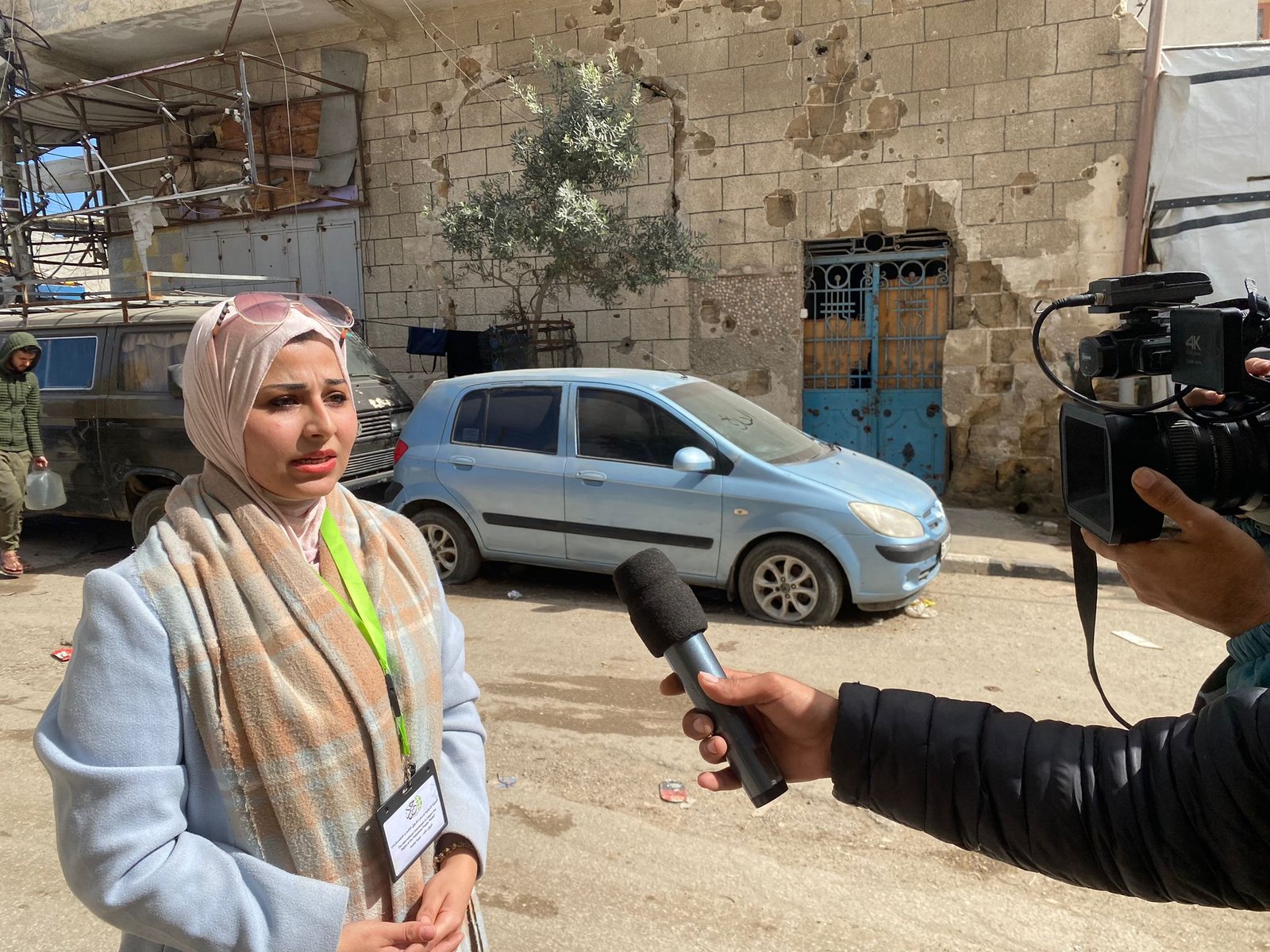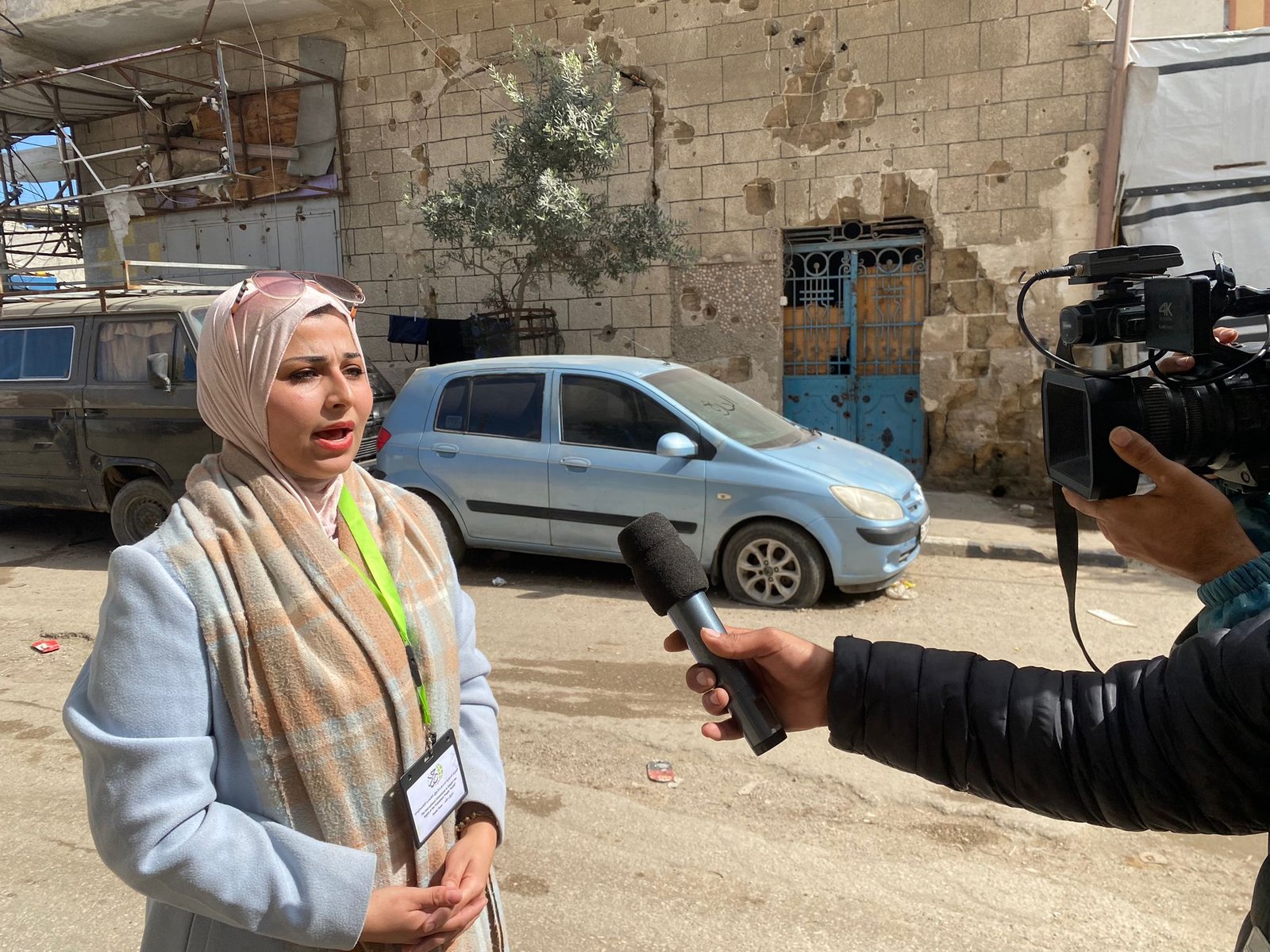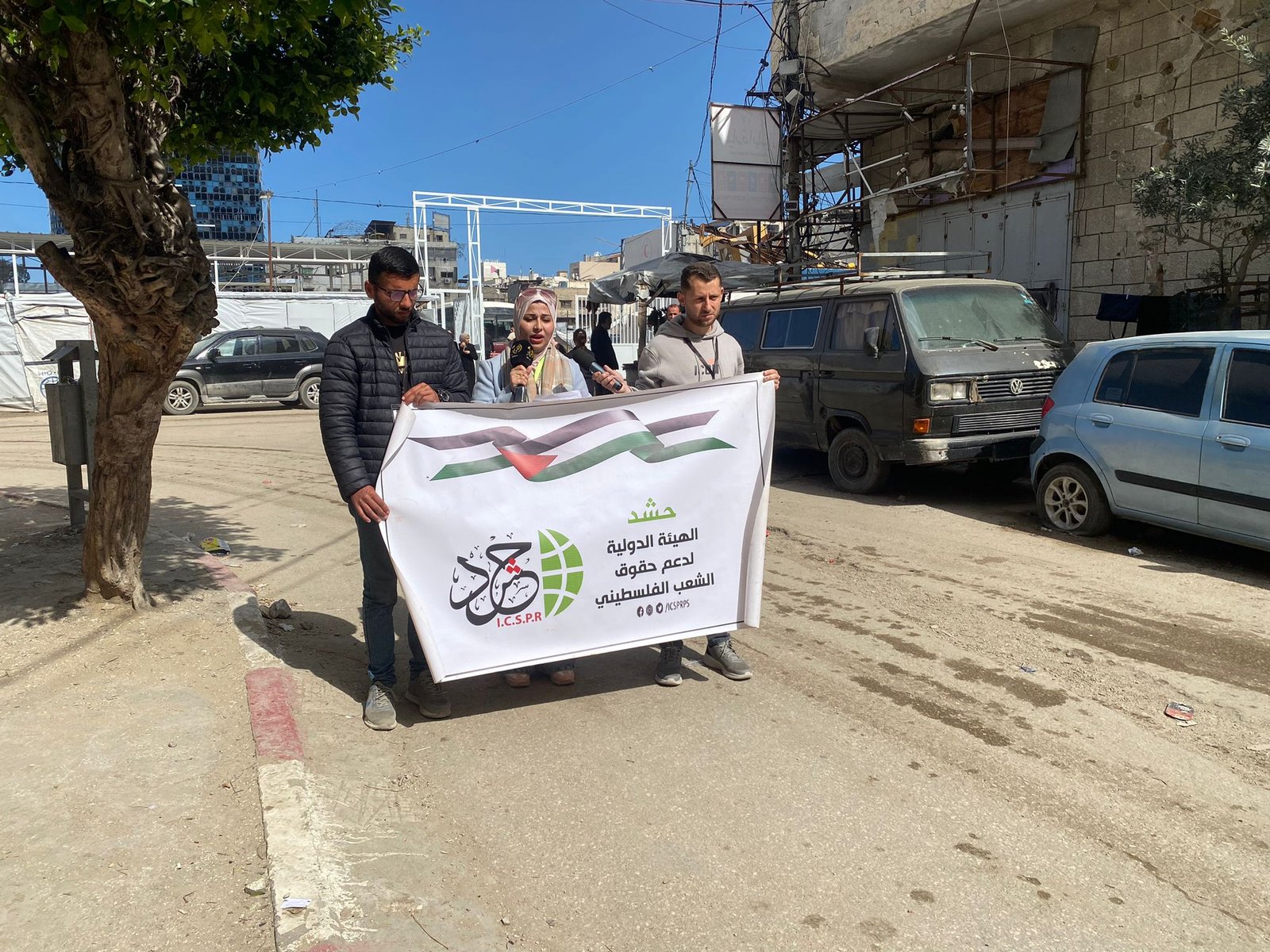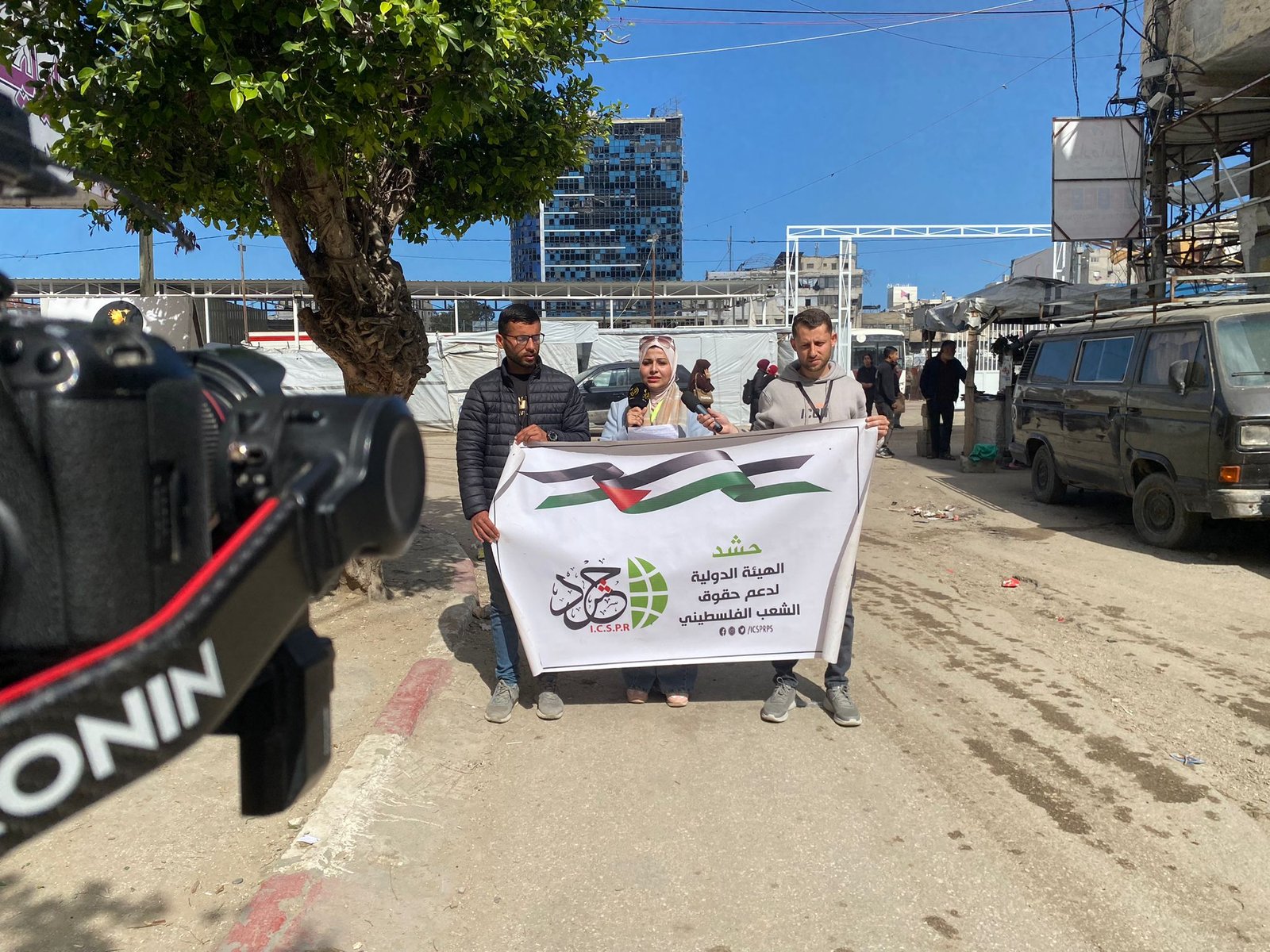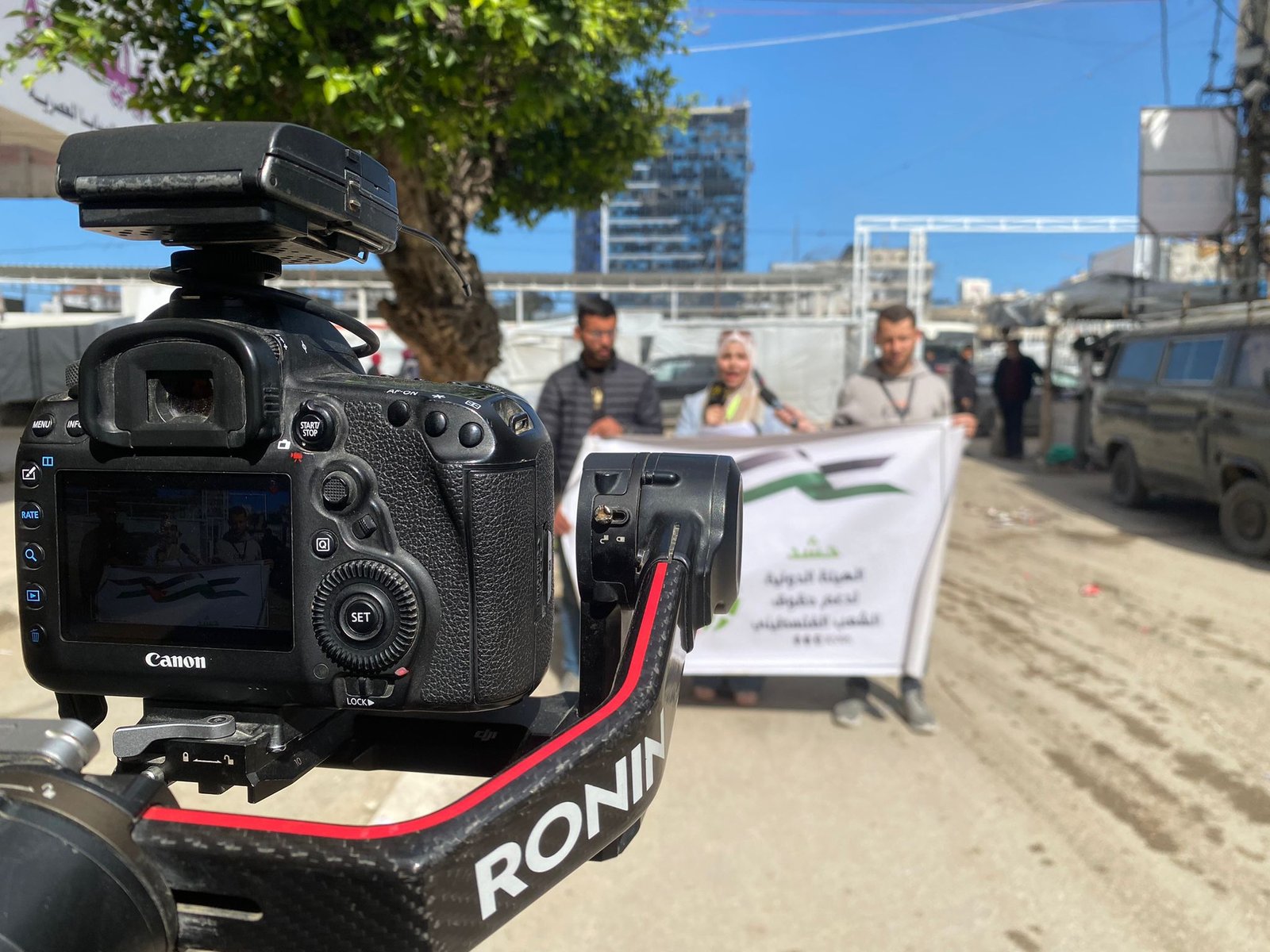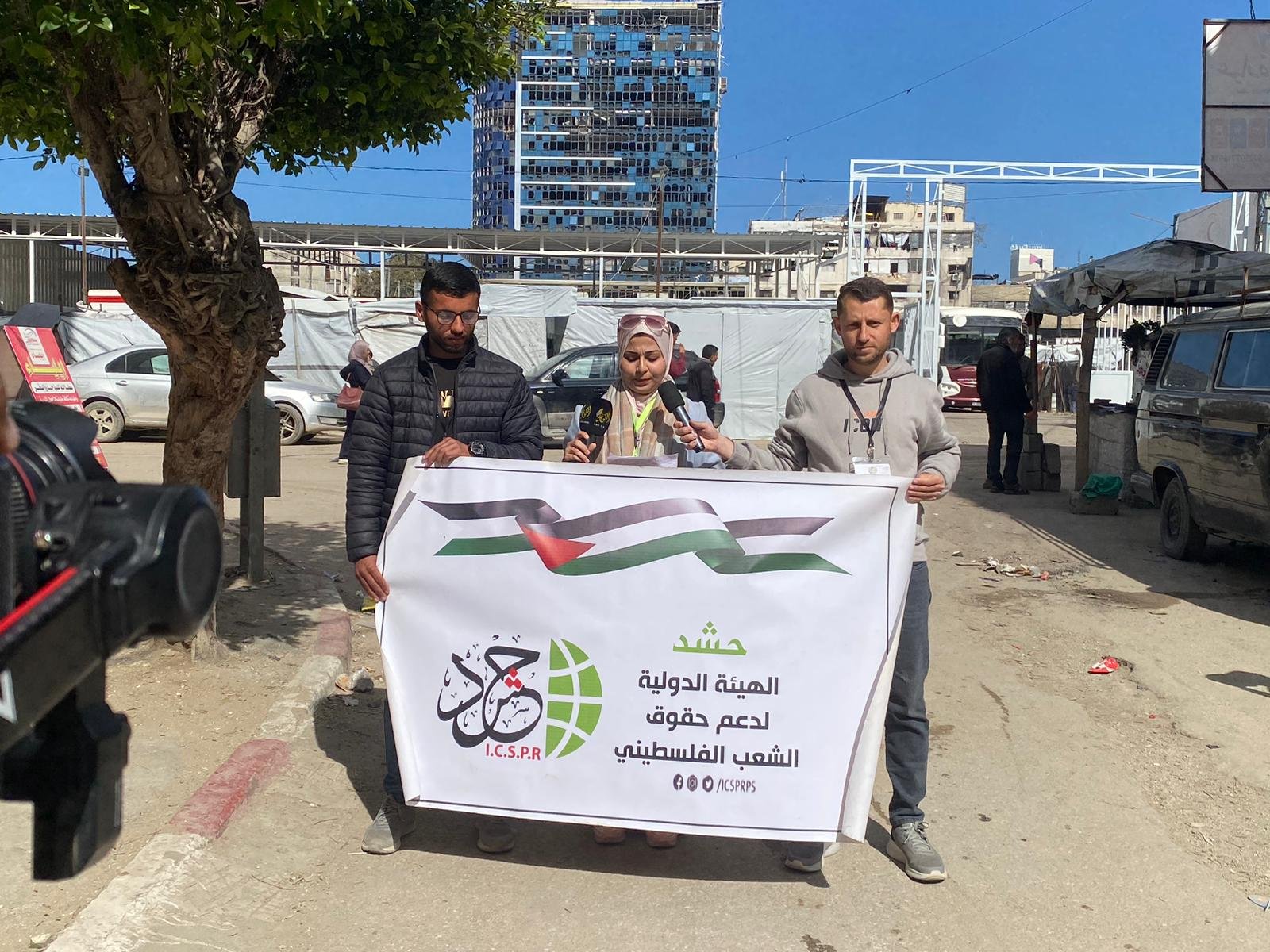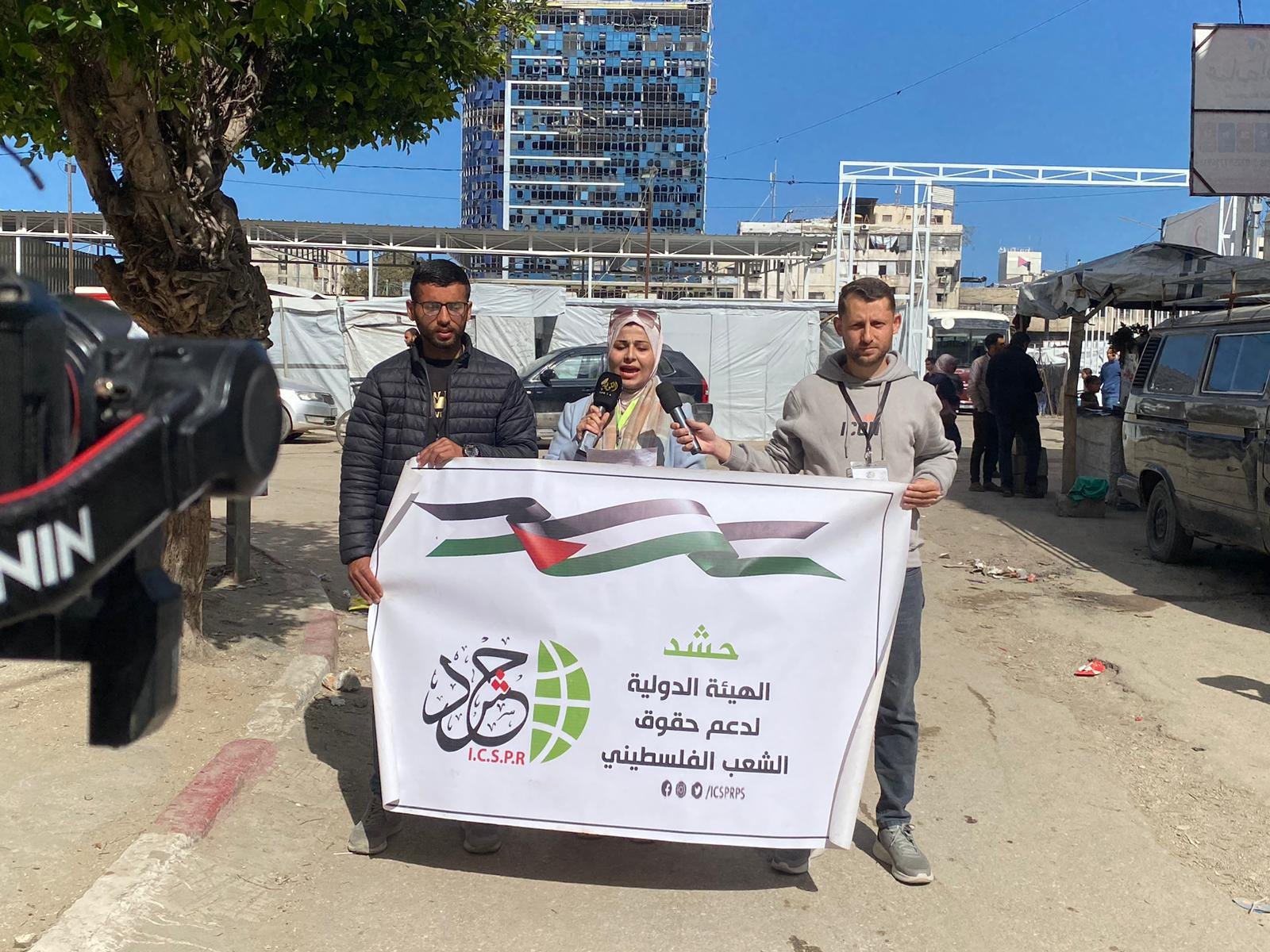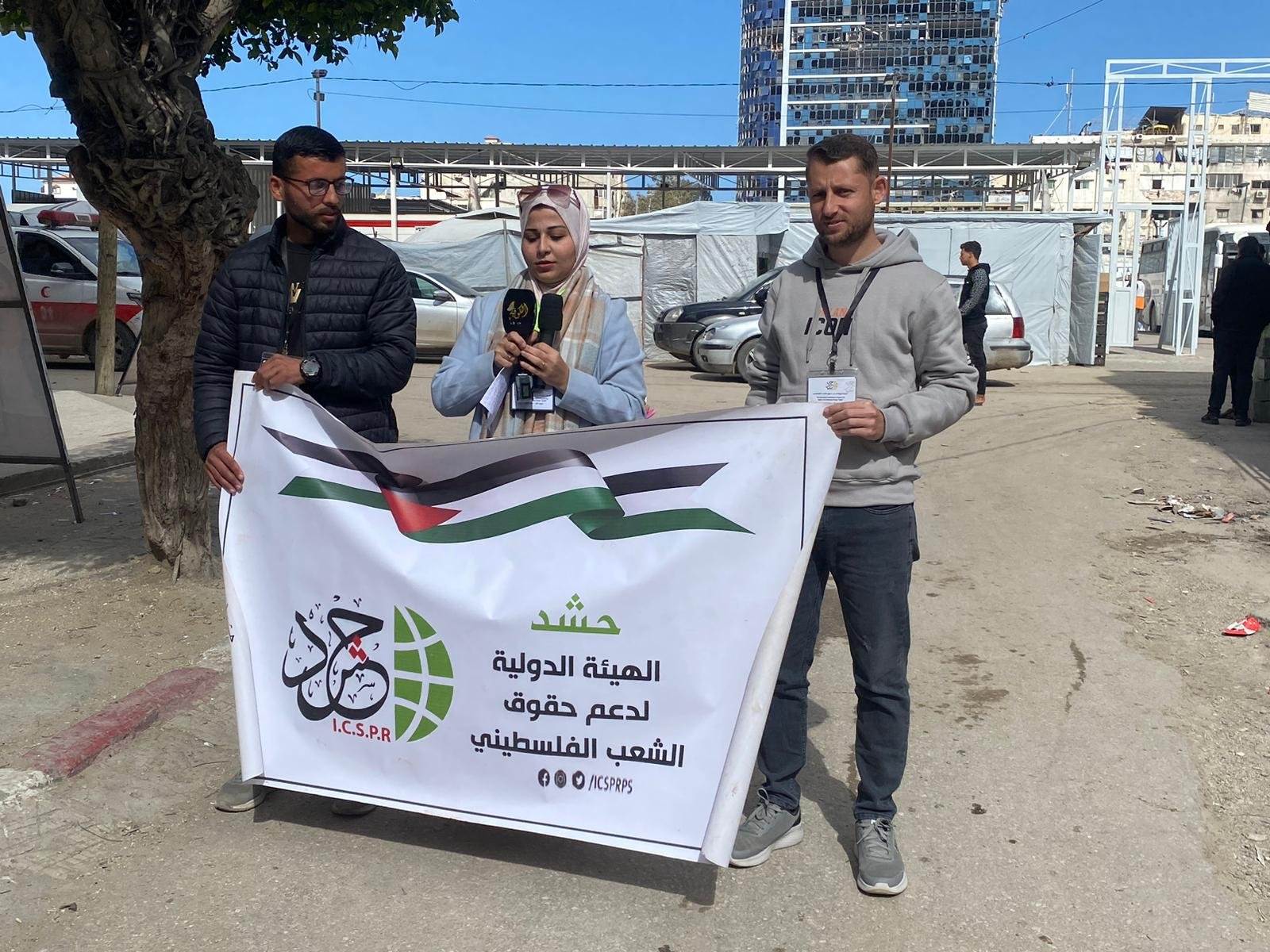

ICSPR Holds a Press Conference on the 50th Anniversary of Land Day in Front of the Red Crescent Building in Gaza
 wasem aa
Send an email
wasem aa
Send an email
Date: March 30, 2025
Press Conference
ICSPR Holds a Press Conference on the 50th Anniversary of Land Day in Front of the Red Crescent Building in Gaza
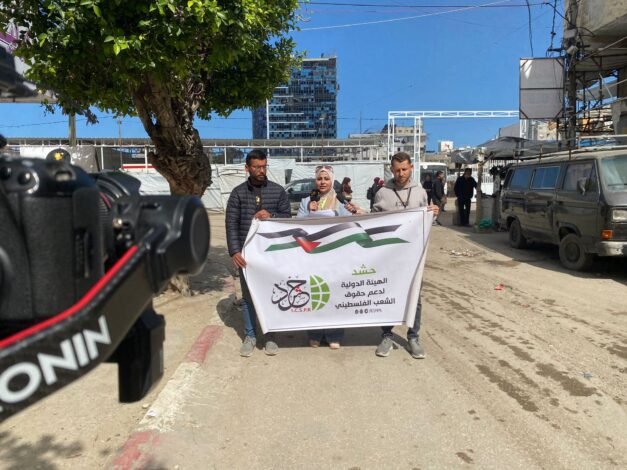
The International Commission to Support Palestinian People’s Rights (ICSPR ) held a press conference yesterday in front of the Red Crescent building in Gaza City – Al-Saraya, marking the 50th anniversary of Land Day, with the participation of representatives of civil society organizations, human rights activists, and media professionals.
The conference was opened by lawyer Rana Hdeib, who highlighted the significance of this anniversary, stressing that it is no longer merely a remembrance of a historical event, but has become a daily embodiment of the existential struggle faced by the Palestinian people under the most severe conditions since the Nakba of 1948.
Hdeib affirmed that this anniversary comes at a time when the Palestinian people in the Gaza Strip are facing an ongoing genocide that has entered its third year, resulting in the killing of more than 72,000 Palestinians and the injury of over 171,000 others, in addition to the destruction of approximately 80% of the basic means of life. She noted that these are part of systematic policies aimed at uprooting people from their land through starvation, deprivation of water, and the obstruction of humanitarian aid.
She pointed out that the occupation is entrenching a catastrophic humanitarian reality by obstructing the entry of fuel and medical supplies, and targeting civilian personnel responsible for securing the delivery of aid, contributing to the spread of chaos and turning Gaza into an uninhabitable area.
In this context, Hdeib explained that the occupation seeks to impose new geographical realities in the Gaza Strip by expanding what is known as the “Yellow Line” and establishing military zones and positions across large areas, entrenching long-term military control and seizing more of Palestinian land, alongside policies of forced displacement affecting more than two million people.
She added that these policies coincide with the continued imposition of a colonial reality in the West Bank, where the occupation controls more than 67% of its area, while pursuing a policy of “spatial suffocation” through checkpoints and settlement expansion, in addition to escalating armed settler attacks against Palestinian civilians.
Regarding Jerusalem, Hdeib affirmed the continuation of systematic Judaization policies, including isolating the city from its Palestinian surroundings and preventing Palestinians from accessing places of worship, in a clear violation of religious and national rights.
She also addressed the escalation of violations against Palestinian prisoners, noting the approval of the so-called “Prisoners’ Execution Law,” which she described as a dangerous legislation that legalizes killing and undermines fair trial guarantees, warning of its serious implications for prisoners’ lives.
Hdeib further highlighted the continuation of grave violations against Palestinian detainees, including torture and inhumane treatment, in clear breach of international humanitarian law.
In conclusion, she emphasized that these policies fall within an expansionist colonial approach aimed at reshaping the Palestinian reality by force and undermining the fundamental rights of the Palestinian people, foremost among them the right to self-determination.
At the end of the conference, ICSPR reaffirmed that the land will remain the core of the conflict, and that all attempts to impose a fait accompli will not undermine the inalienable rights of the Palestinian people.
The Commission called for the following:
- Urgent international action, led by the United Nations, to stop the crime of genocide and provide international protection for the Palestinian people.
- Urging the International Criminal Court to expedite the issuance of arrest warrants against leaders of the occupation responsible for war crimes and crimes against humanity.
- Imposing economic and diplomatic sanctions on the occupying power and holding it accountable as a state practicing apartheid.
- Restoring Palestinian national unity, ending division, and building a unified national strategy based on political partnership.
- Calling on free people around the world to take action and pressure their governments to assume their responsibilities, stop the occupation’s crimes, and ensure its end.
End