
ICSPR and The Shaikh Group Organize a Comprehensive Dialogue Session on Palestine and the Gaza Strip
 wasem aa
Send an email
wasem aa
Send an email
Date: March 25, 2025
Press Release
ICSPR and The Shaikh Group Organize a Comprehensive Dialogue Session on Palestine and the Gaza Strip
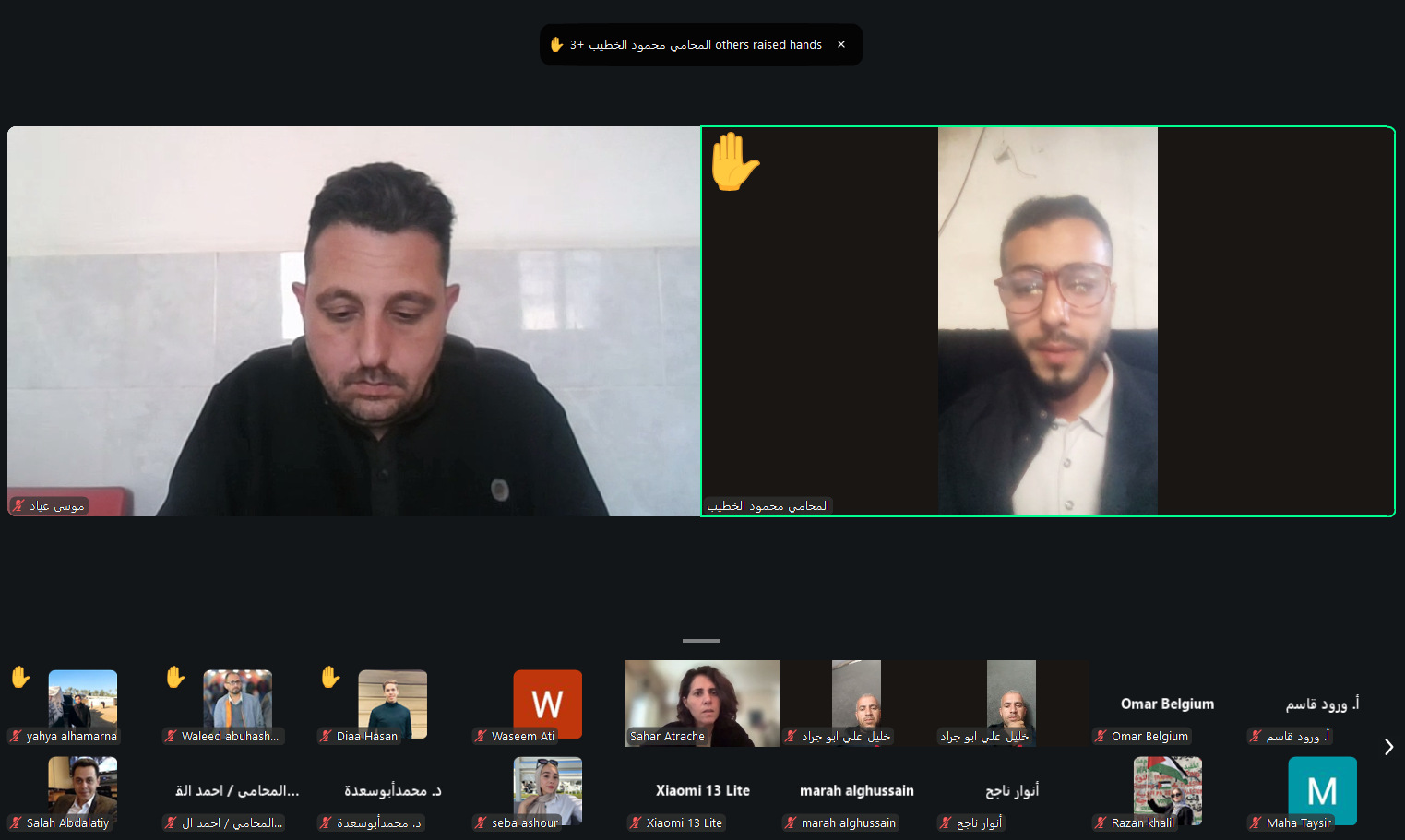
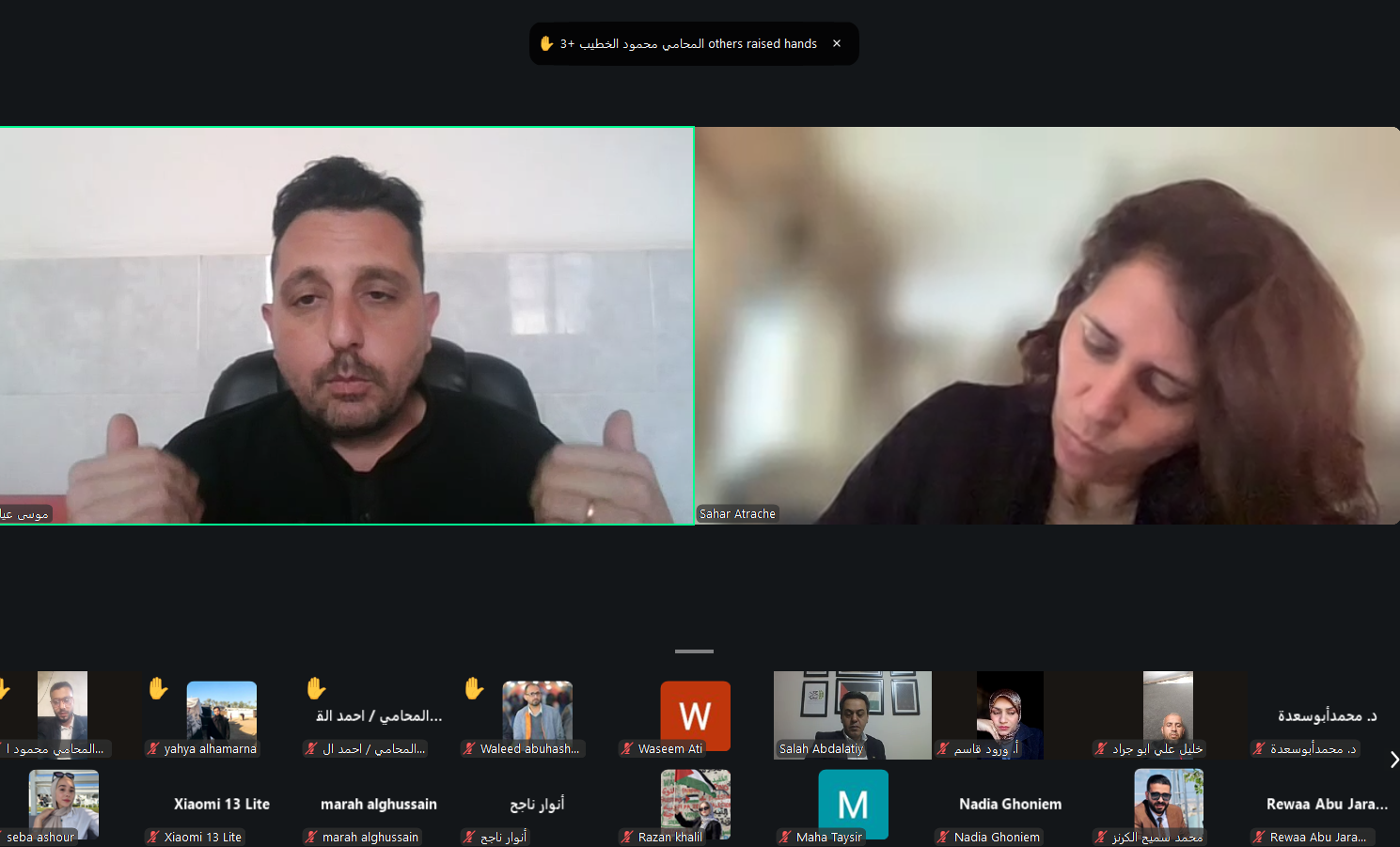
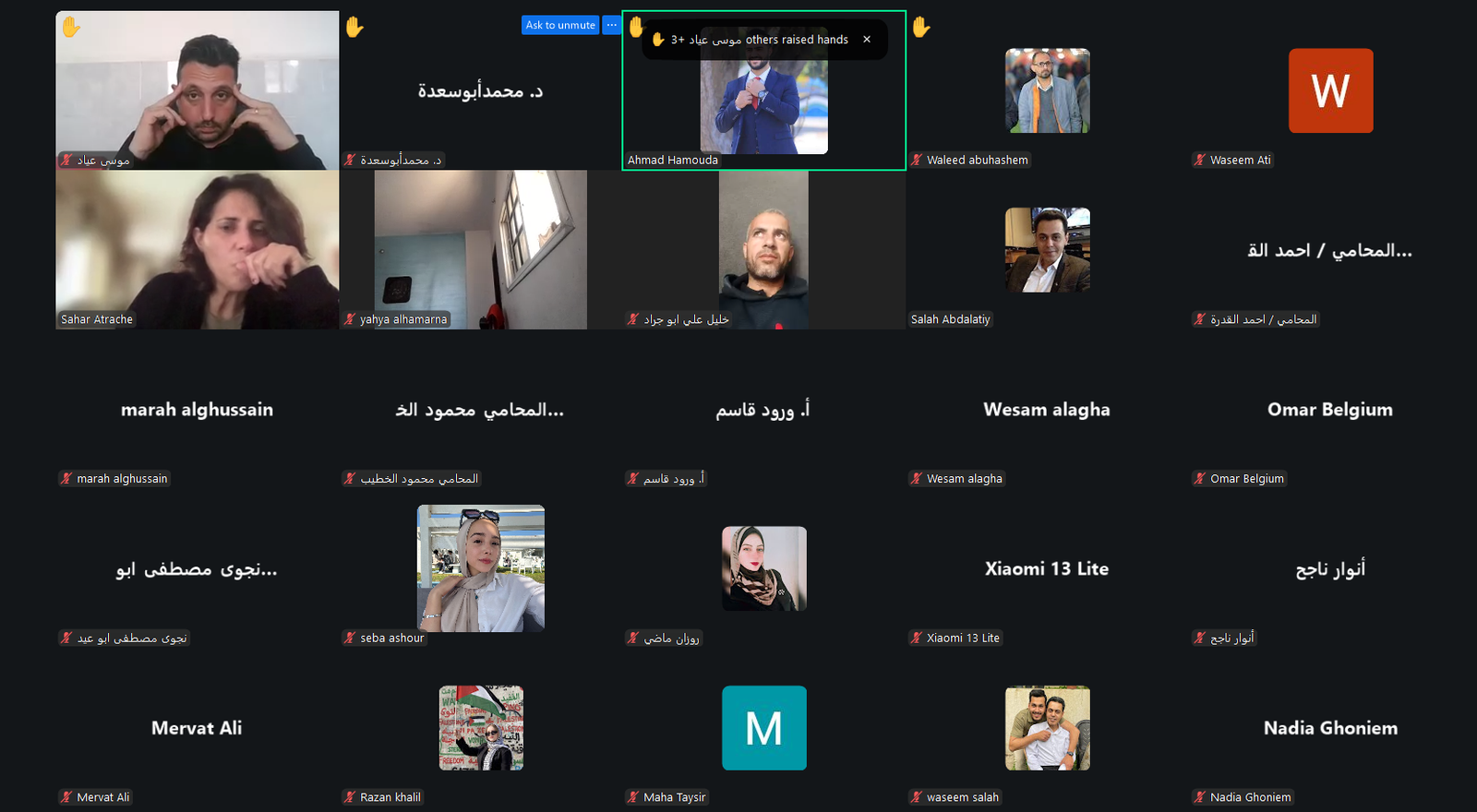
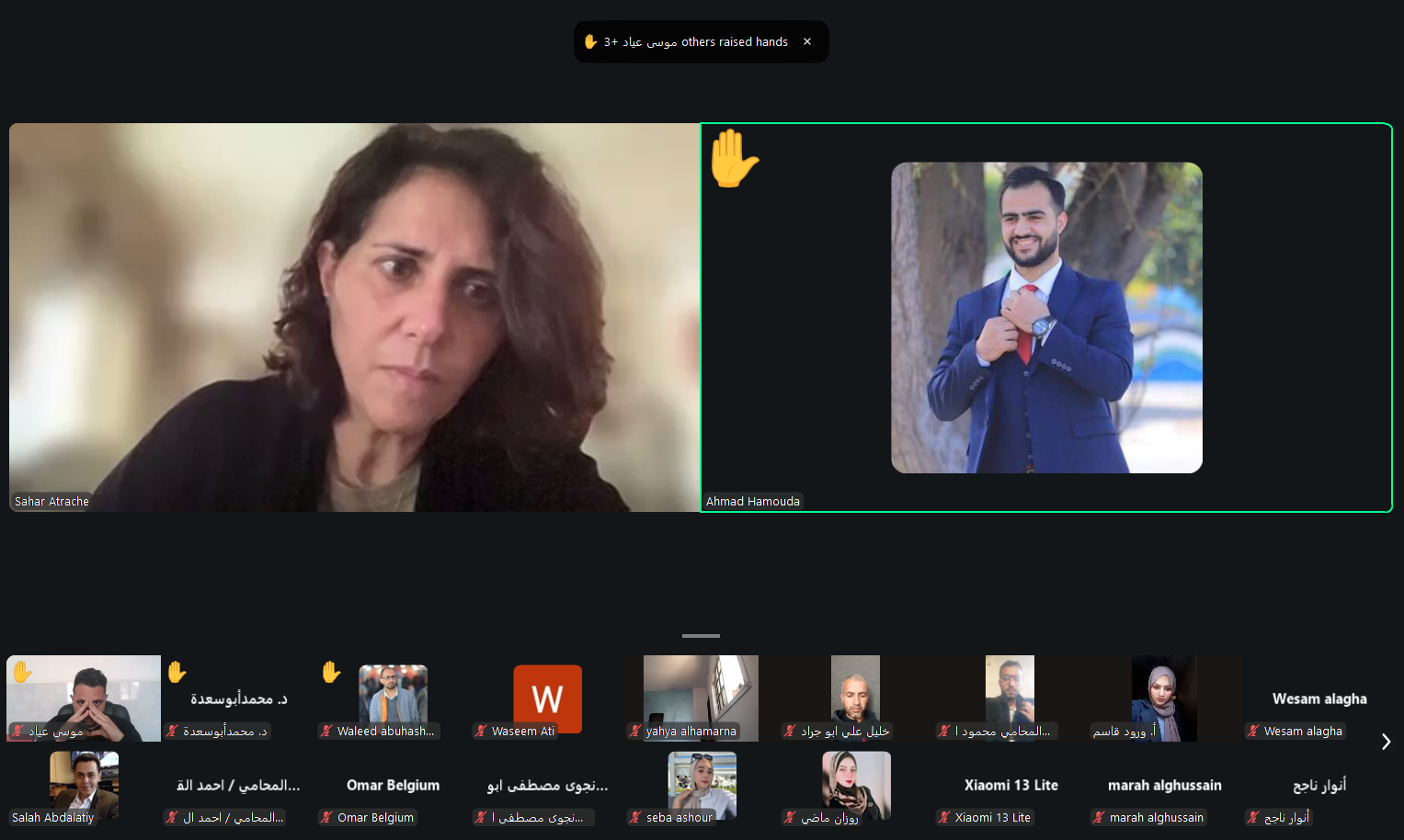
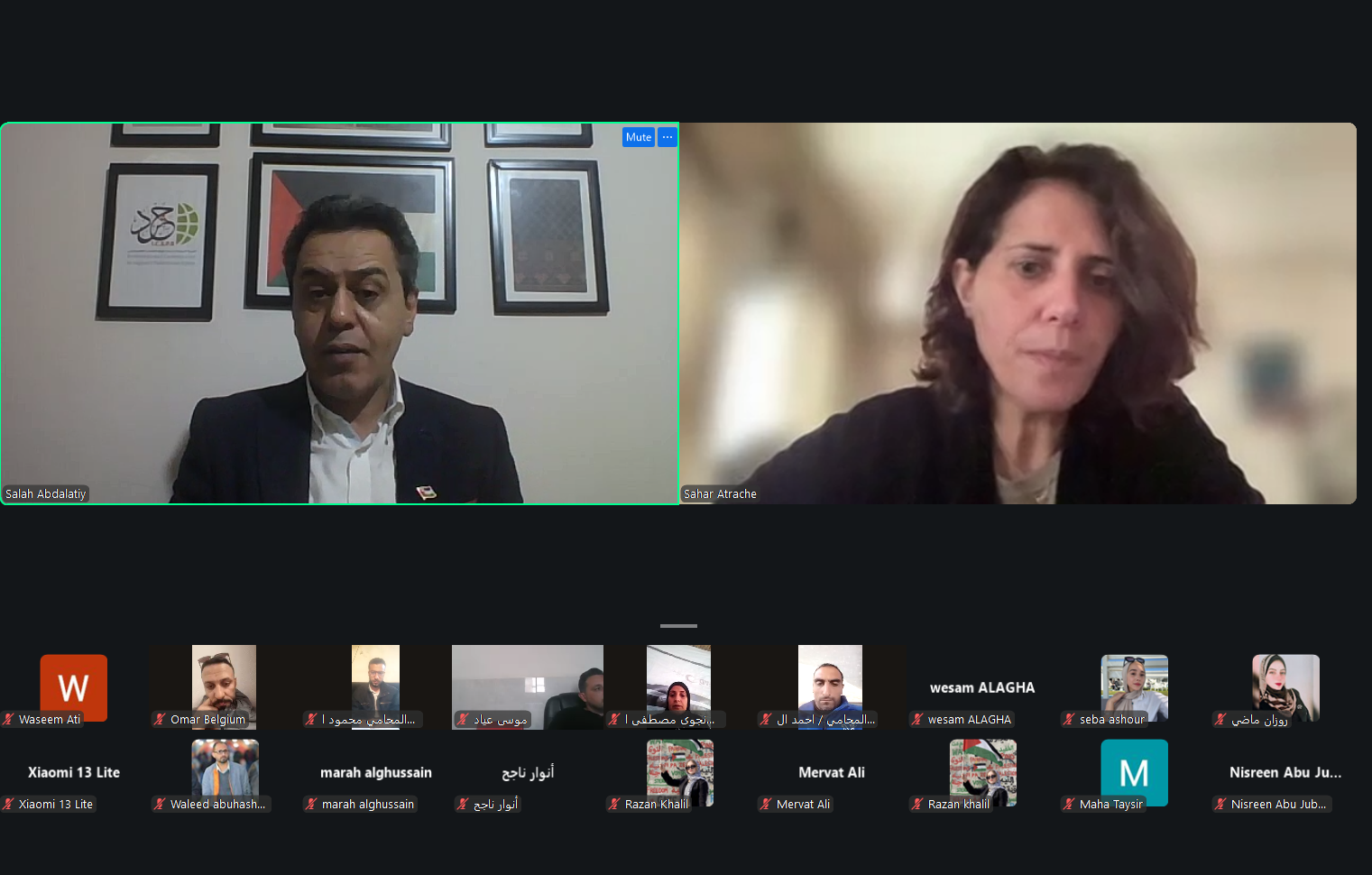
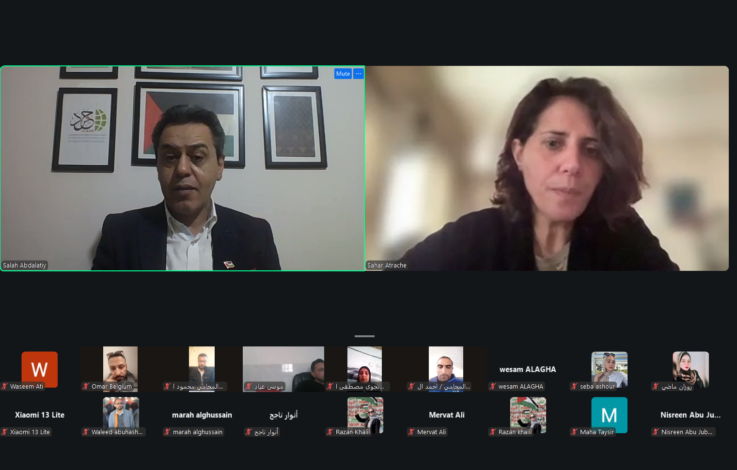
The International Commission to Support Palestinian Rights (ICSPR), in partnership with The Shaikh Group (TSG), organized today a comprehensive dialogue session via Zoom titled: “The Situation in Palestine, Especially the Gaza Strip, and the Perspectives and Views of Youth and Civil Society Regarding the Peace Council and the Administrative Committee for Gaza, and the Implications of the Regional War on the Palestinian Cause.”
The session was moderated by Ms. Sahar Al-Atrash, Programs Director at The Shaikh Group, who welcomed participants and emphasized that this meeting represents a vital platform for building a comprehensive national vision to address current challenges, discussing the humanitarian situation in Gaza and the West Bank, and enhancing the participation of youth and civil society in shaping national policies.
The session opened with remarks by Dr. Salah Abdel Ati, Chairman of ICSPR, who highlighted the critical stage facing the Palestinian cause. He noted that the ongoing Israeli genocide in Gaza coincides with escalating aggression in the West Bank and Jerusalem, amid deep regional shifts resulting from the U.S.–Israeli–Iranian war. These developments have reshaped international priorities and pushed the Palestinian issue to the margins of global attention, while Israel continues to impose new realities on the ground.
Gaza Strip
Participants stressed that Gaza is no longer merely a battlefield, but rather a testing ground for reshaping the political and security reality of the Strip. They emphasized that continuous bombardment, destruction of infrastructure, siege, starvation, and violations of fundamental rights constitute not only a humanitarian crisis but also part of a broader strategy aimed at restructuring Gaza and linking it to security and political control, potentially leading to the creation of a low-sovereignty entity.
They pointed out that the suspension of the Peace Council and the Administrative Committee, along with the freezing of reconstruction plans, has created an administrative and political vacuum, exacerbating the suffering of residents and weakening their resilience. This comes amid Israeli obstruction of humanitarian aid, ongoing mass displacement, and extreme poverty.
Participants affirmed that the humanitarian situation is catastrophic: more than 72,000 fatalities, over 171,000 injured, half a million people facing food insecurity, and 90% of the population displaced or living in temporary shelters. More than 80% of vital infrastructure has been destroyed, and basic services are largely absent. They described Gaza as a testing ground for Palestinian resilience in the face of regional and international pressures.
West Bank and Jerusalem
Participants discussed the situation in the West Bank and Jerusalem, stressing that settlement expansion, land annexation, and control over holy sites—including escalating attacks on Al-Aqsa Mosque—aim to fragment Palestinian society and impose new realities, taking advantage of global distraction due to the regional war. They noted that these policies undermine the prospects for an independent Palestinian state and weaken national institutions.
Internal Political Crisis
Participants emphasized that ongoing division and the weakness of national institutions represent a fundamental threat. The absence of unified leadership and a clear strategy has led to declining public trust. They stressed the need to rebuild the Palestine Liberation Organization and the national project, end internal division through comprehensive national dialogue involving all factions, establish a temporary leadership framework for the current phase, and reform institutions based on national partnership. They also proposed holding elections and utilizing electronic registration as an alternative under current conditions.
Civil Society and Youth
Participants highlighted that civil society and youth represent the last line of defense. They contribute to delivering humanitarian services, documenting Israeli violations and crimes, promoting social cohesion, and exerting legal and political pressure both locally and internationally. They also help fill the administrative vacuum caused by institutional paralysis. Supporting these actors and strengthening youth engagement was identified as a national priority and a cornerstone of societal resilience.
Regional and International Implications
Participants discussed the direct impact of the U.S. and Israeli war on Iran and its implications for the Palestinian cause, warning of the risk of further genocide, displacement, Judaization, and the imposition of humanitarian solutions without political rights amid global distraction. They stressed the need for Palestinians to reorganize internally and unify their ranks through a shared national program, as the international community currently focuses on crisis management rather than resolution. This requires intensified international pressure to uphold Palestinian rights and protect civilians.
Recommendations
At the conclusion of the session, participants issued a set of practical recommendations, including:
- Urging mediators and the international community to تثبيت ceasefire agreements, halt violations, lift the blockade on Gaza, and ensure the delivery of humanitarian aid to all السكان.
- Activating the National Committee for Gaza Administration to ensure an effective humanitarian response.
- Protecting civilians in Gaza, the West Bank, and Jerusalem, and addressing Israeli crimes including arrests, killings, and starvation.
- Advancing reconstruction and recovery efforts through cooperation between the United Nations, the Palestinian Authority, the private sector, and civil society.
- Strengthening national unity, ending division, and adopting a clear national strategy under unified leadership.
- Expanding the role of civil society and youth in policymaking and service oversight.
- Leveraging international solidarity, media, and diplomacy to advance accountability mechanisms, boycott efforts, and sanctions against Israel.
Participants also stressed the importance of working with mediators and the international community to halt ongoing Israeli violations in Gaza and the West Bank, protect civilians, strengthen humanitarian response and recovery, ensure the functioning of the National Committee to alleviate suffering in Gaza, and adopt a unified national program that combines resilience and resistance while activating international accountability mechanisms.