
ICSPR: A Worsening Humanitarian Catastrophe in Gaza Amid Ongoing Israeli Violations of the Ceasefire, Continued Blockade, and Obstruction of Aid

Date: 25 November 2025
Press Release and Urgent Humanitarian Appeal to Save the Lives of Gaza’s Residents
ICSPR: A Worsening Humanitarian Catastrophe in Gaza Amid Ongoing Israeli Violations of the Ceasefire, Continued Blockade, and Obstruction of Aid
The International Commission to Support Palestinians (ICSPR) expresses its deep concern over the ongoing humanitarian catastrophe in the Gaza Strip, where more than 2.1 million Palestinians continue to live under unprecedented conditions of forced displacement, extreme poverty, and the absence of basic necessities for survival. Although a ceasefire has officially been in place since 11 October 2025, the Israeli occupation continues to violate the agreements, killing 347 Palestinians and injuring 889 others since the ceasefire took effect. The humanitarian crisis persists due to Israel’s obstruction of humanitarian aid and the imposition of severe restrictions on border crossings, depriving civilians of food, medicine, tents, temporary shelters, heaters, fuel, and other essential items.
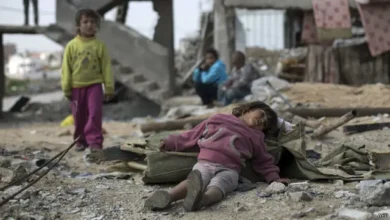
ICSPR documented the flooding of thousands of tents in displacement areas following a second wave of heavy rain, which mixed with sewage water—posing grave health and epidemic risks to children, women, and the elderly. Among the harrowing accounts is that of a woman who gave birth yesterday and woke up today to find herself and her newborn sinking in water. Similar scenes were witnessed across the tented camps, where families found their belongings submerged, wondering how they would make it through the night or protect themselves from the rain—reflecting the daily suffering endured by civilians without safe shelter.
ICSPR reports that municipalities and civil defense teams are unable to address the flooding due to the lack of heavy machinery and fuel, while more than 35,000 unexploded ordnance remain scattered across homes and camps, putting civilians at constant risk of death or injury. Hospitals face severe shortages of medicines and medical supplies, alongside rising cases of respiratory and skin diseases, and malnutrition affecting 70% of children, according to UN agencies.
ICSPR further documents that since the ceasefire began, the Israeli occupation has allowed only 150–200 aid trucks per day into Gaza, although the Strip needs at least 600 trucks daily to meet basic humanitarian needs. Thousands of trucks remain stuck at the crossings, and hundreds of thousands of tents, temporary shelters, and essential relief items are denied entry. Meanwhile, 90% of Gaza’s population suffers from severe food insecurity.
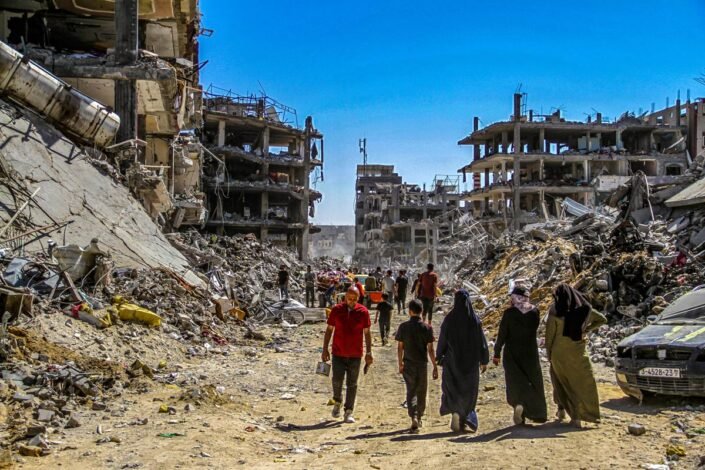
ICSPR notes that thousands of civilians continue to live in tents and destroyed shelters, amid the ongoing systematic Israeli bombardment that has leveled homes and neighborhoods, producing an estimated 61 million tons of rubble. Gaza is experiencing a widespread collapse of infrastructure, including water and sewage networks, with no safe shelter available for displaced families. The occupation continues to prevent residents from returning to their homes located behind the so-called “Yellow Line,” which now swallows more than half of the Strip’s territory.
ICSPR affirms that these policies constitute collective punishment, and represent a grave violation of international humanitarian law and human rights treaties, including Article II(c) of the Convention on the Prevention and Punishment of the Crime of Genocide, which prohibits subjecting civilians to living conditions intended to destroy them in whole or in part. The blockade and obstruction of humanitarian aid also amount to crimes against humanity.
ICSPR stresses the importance of the recent Advisory Opinion of the International Court of Justice, which called on Israel to facilitate relief programs in Gaza—particularly those implemented by UNRWA—and to refrain from obstructing them, reflecting international consensus against attempts to dismantle the Agency’s crucial humanitarian role.
ICSPR calls on the United Nations, third States, regional organizations, and the international community to act immediately and effectively, in accordance with their legal and moral responsibilities, to save the lives of Palestinians in Gaza, stop the ongoing genocide against them, lift the blockade on all crossings, and ensure the full and sustainable entry of humanitarian aid before it is too late, in order to protect civilians and preserve human rights and dignity.
ICSPR emphasizes the urgent need to:
-
Ensure the consolidation of the ceasefire, the withdrawal of Israeli forces from the Strip, the lifting of the blockade, and the full opening of all border crossings to allow the entry of food, medicine, tents, caravans, blankets, fuel, and emergency shelter materials.
-
Guarantee the entry of 600 aid trucks daily to meet growing humanitarian needs, and allow the entry of heavy equipment for municipalities and civil defense teams to respond to emergency calls, address flooding, remove rubble, and permit civil defense teams, technical crews, medical personnel, and journalists to access the Gaza Strip.
-
Launch an urgent plan to enhance humanitarian response, recovery, and reconstruction efforts, including the provision of safe temporary housing, weather-resistant shelters, sewage and electricity networks, and essential services for affected populations, while enabling humanitarian organizations—especially UNRWA—to operate freely and deliver essential services to Gaza’s residents.
-
Increase international pressure on the Israeli occupation to uphold the ceasefire, comply with its humanitarian obligations, and provide all logistical facilities required for the entry of aid.
Finally, ICSPR calls on all free peoples and societies worldwide—who have marched in support of freedom, justice, and against genocide—to continue and amplify their popular and human rights mobilization ahead of the International Day of Solidarity with the Palestinian People, to pressure for an end to Israeli crimes and to prevent the continuation of the humanitarian catastrophe in Gaza.