
ICSPR Organizes a Human Rights Workshop on the Situation of Palestinian Prisoners and Ways to Support Their Cause and Strengthen National and International Advocacy Efforts

Date: 13 November 2026
Press Release
ICSPR Organizes a Human Rights Workshop on the Situation of Palestinian Prisoners and Ways to Support Their Cause and Strengthen National and International Advocacy Efforts
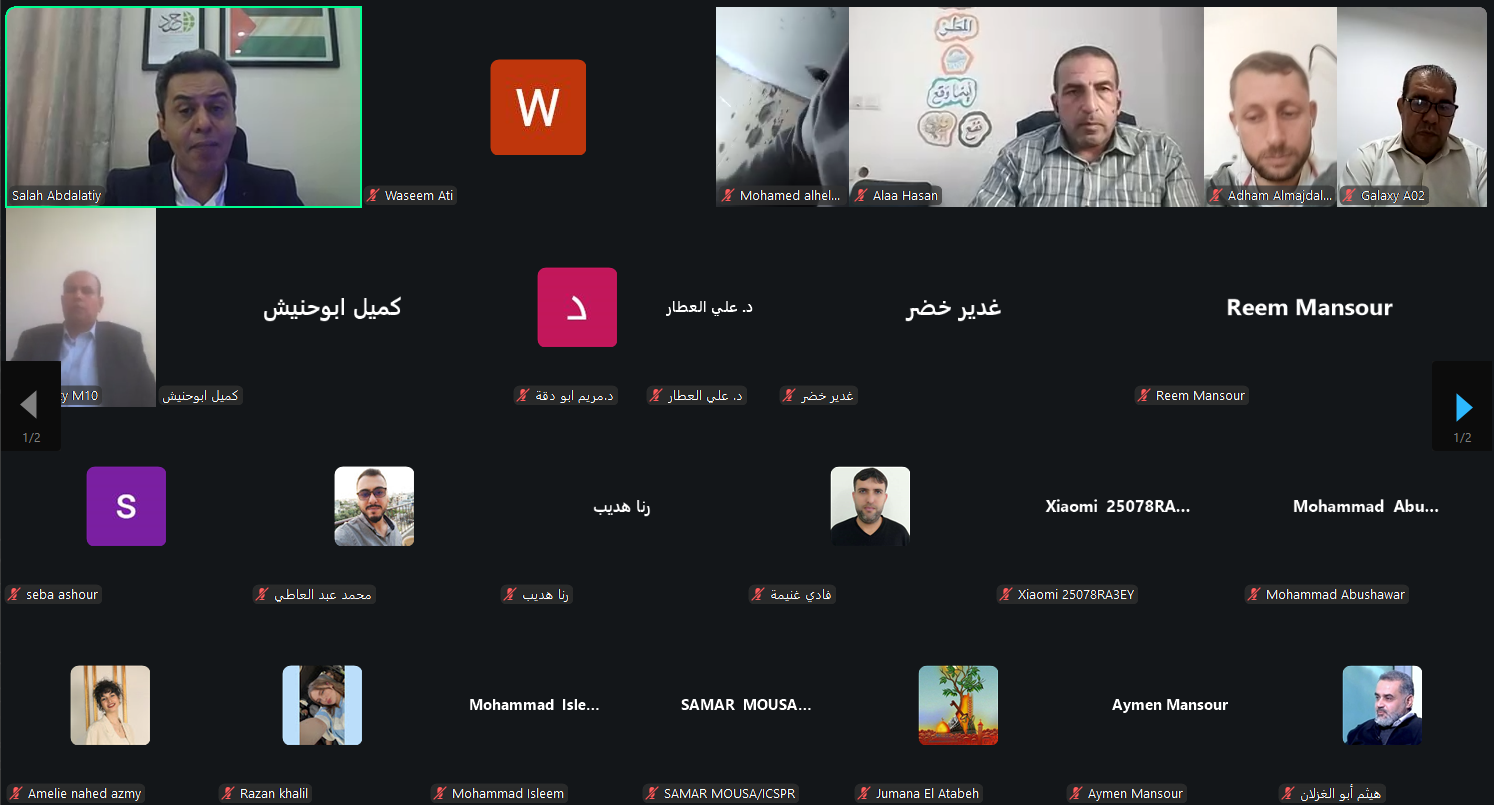
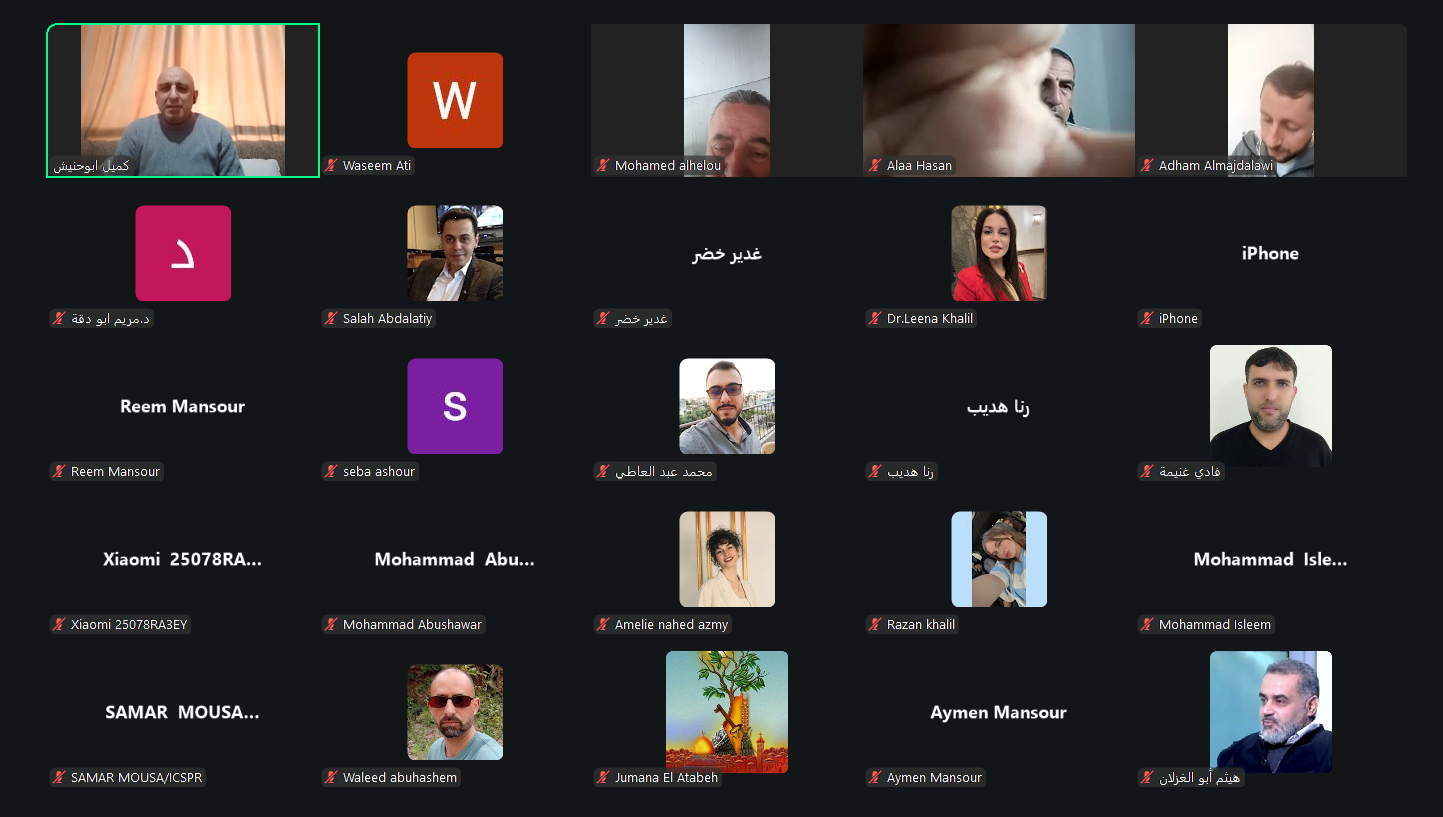
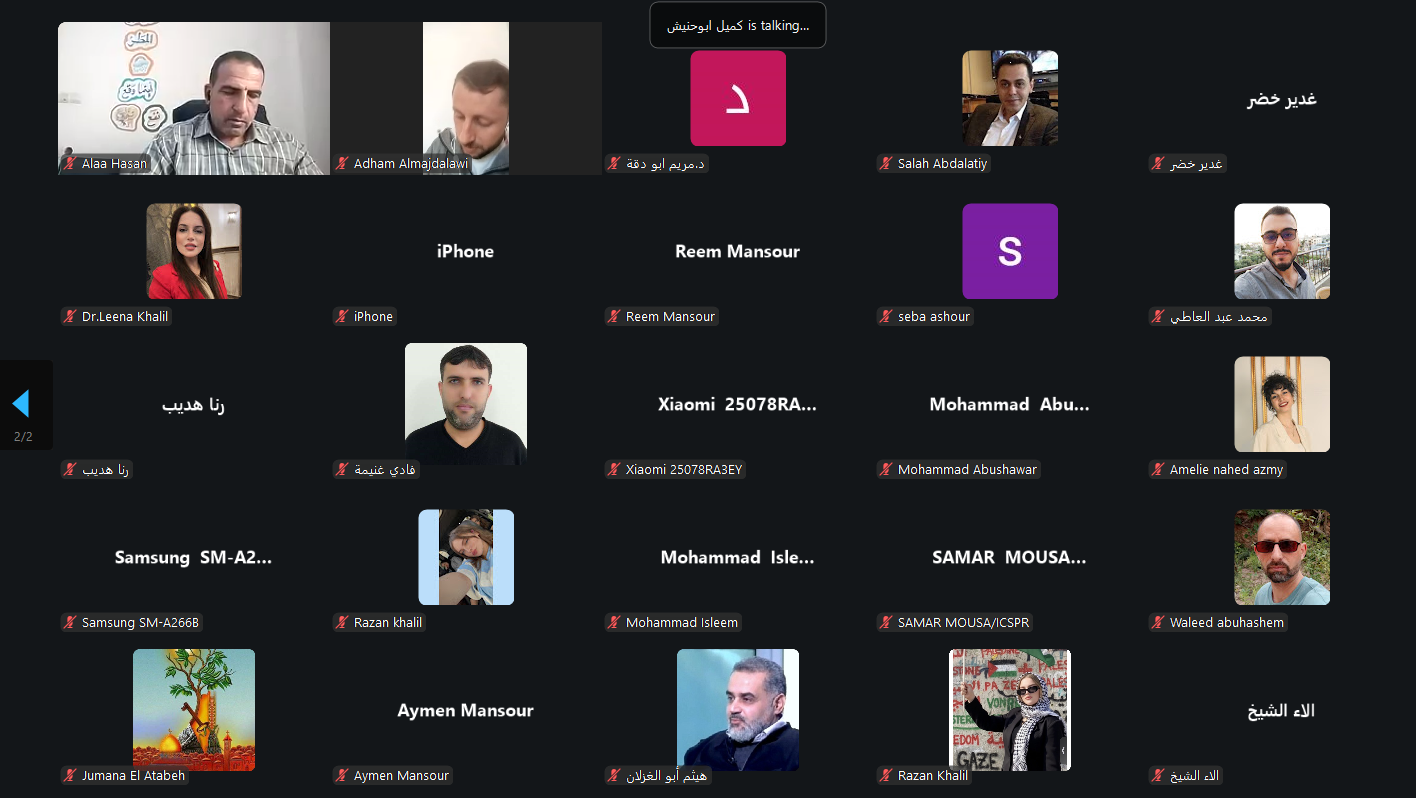
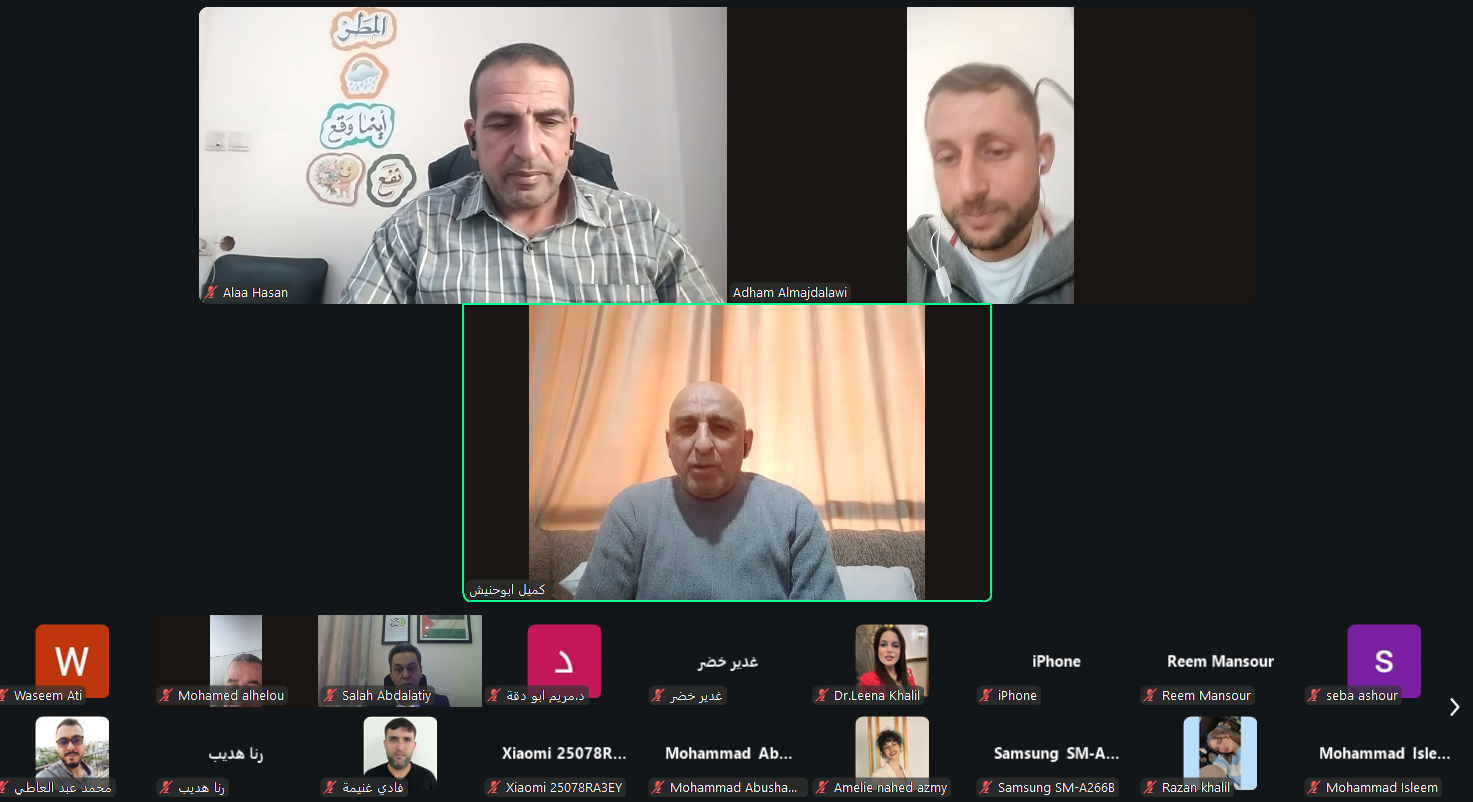
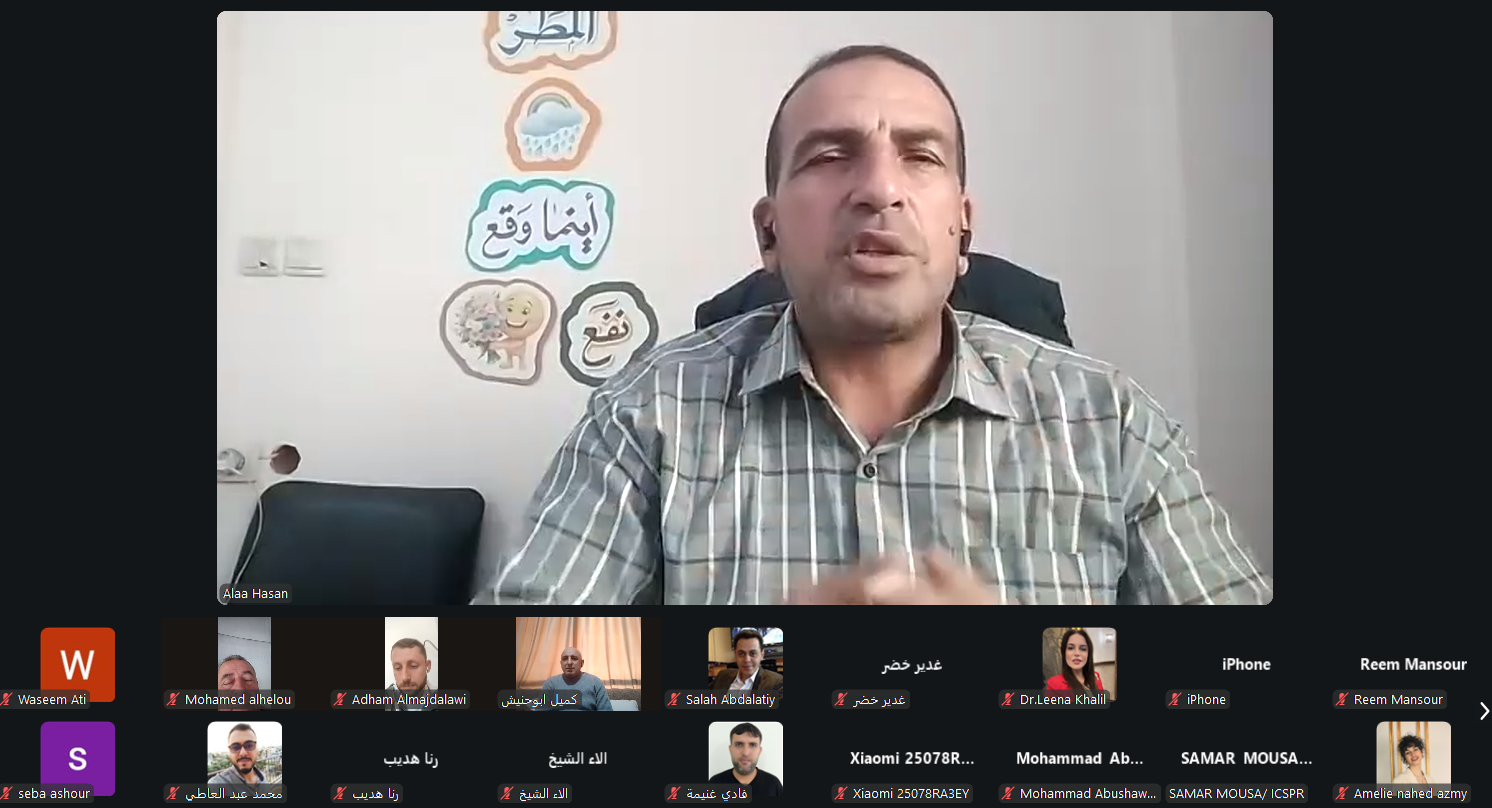
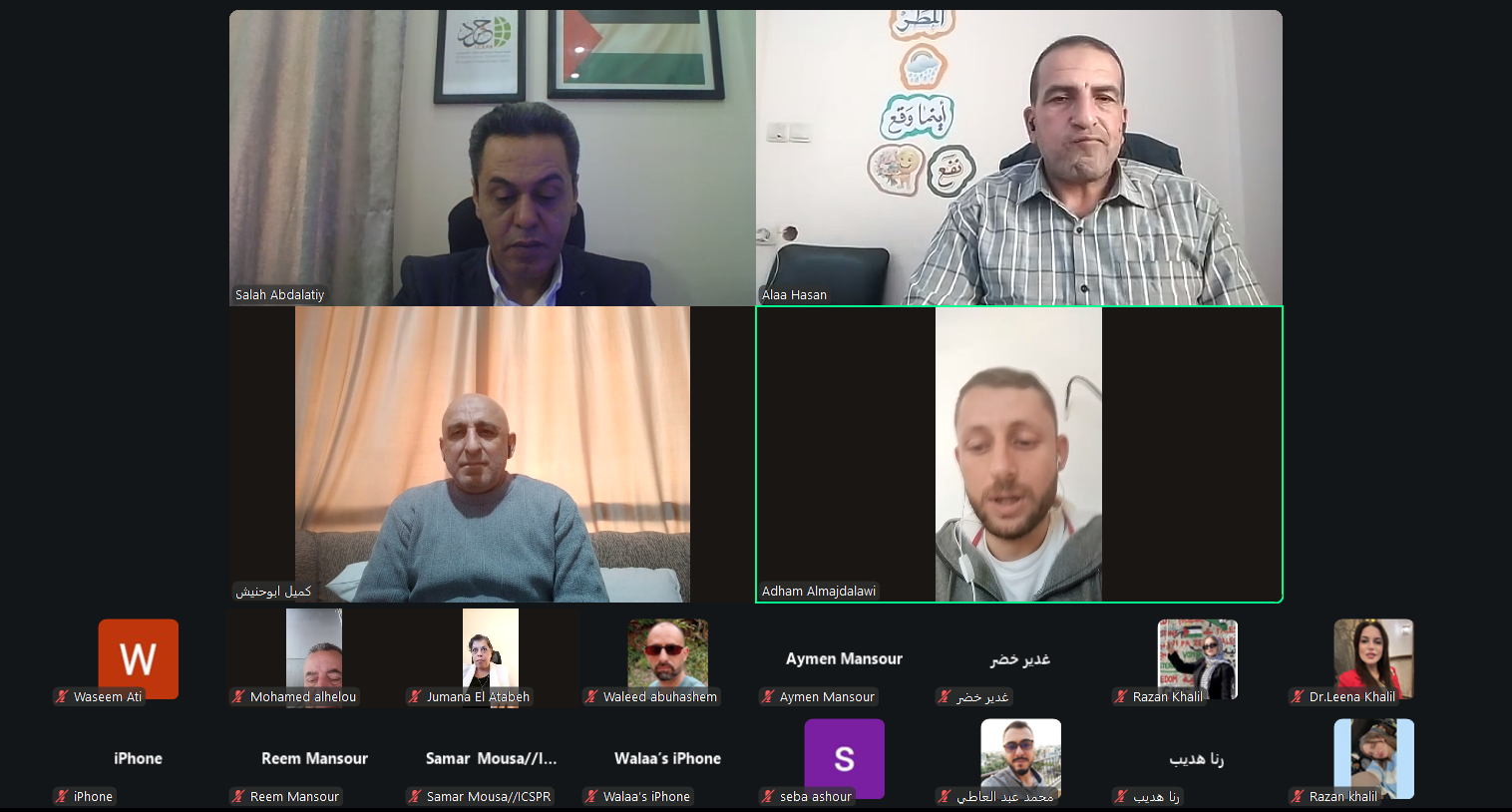
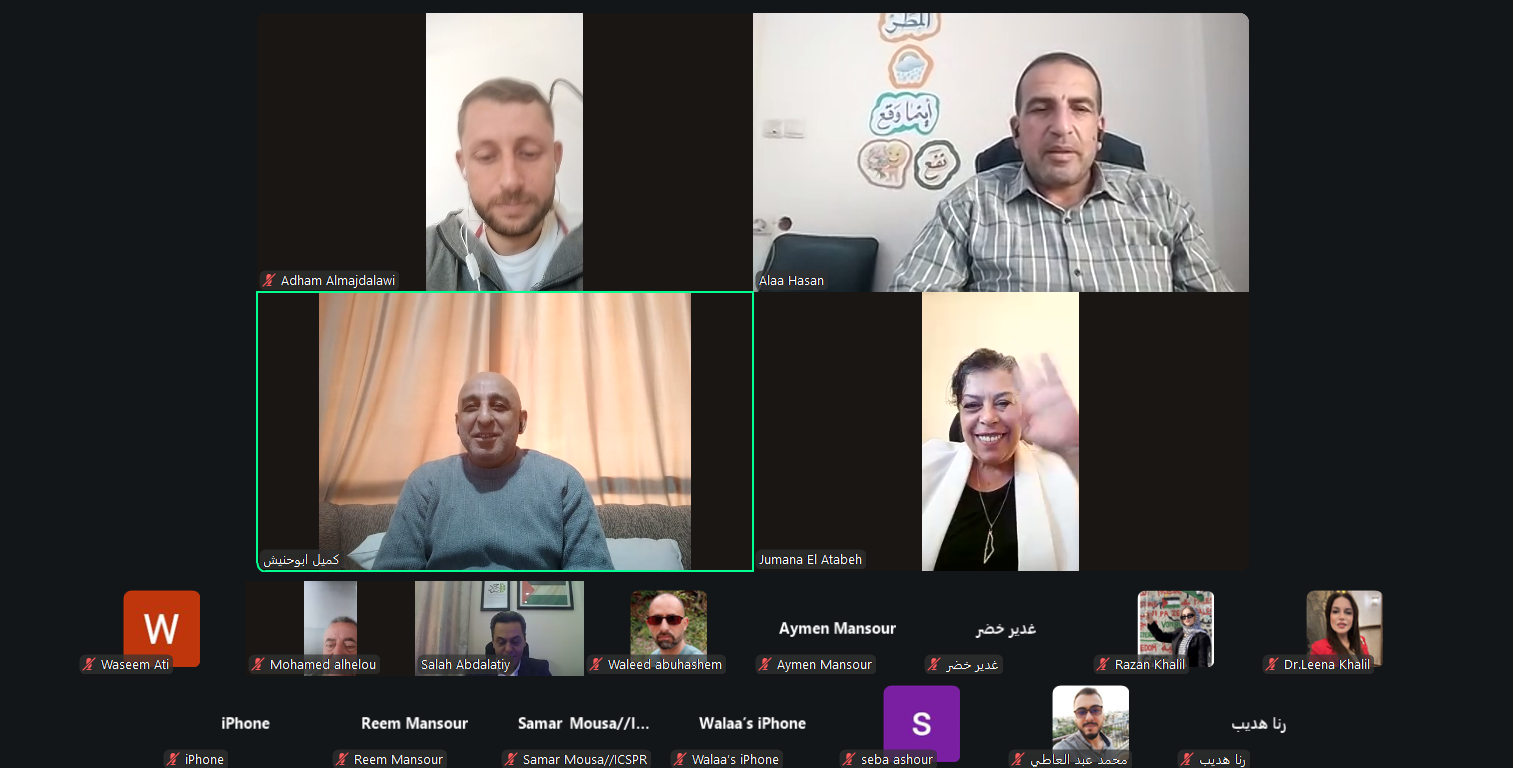
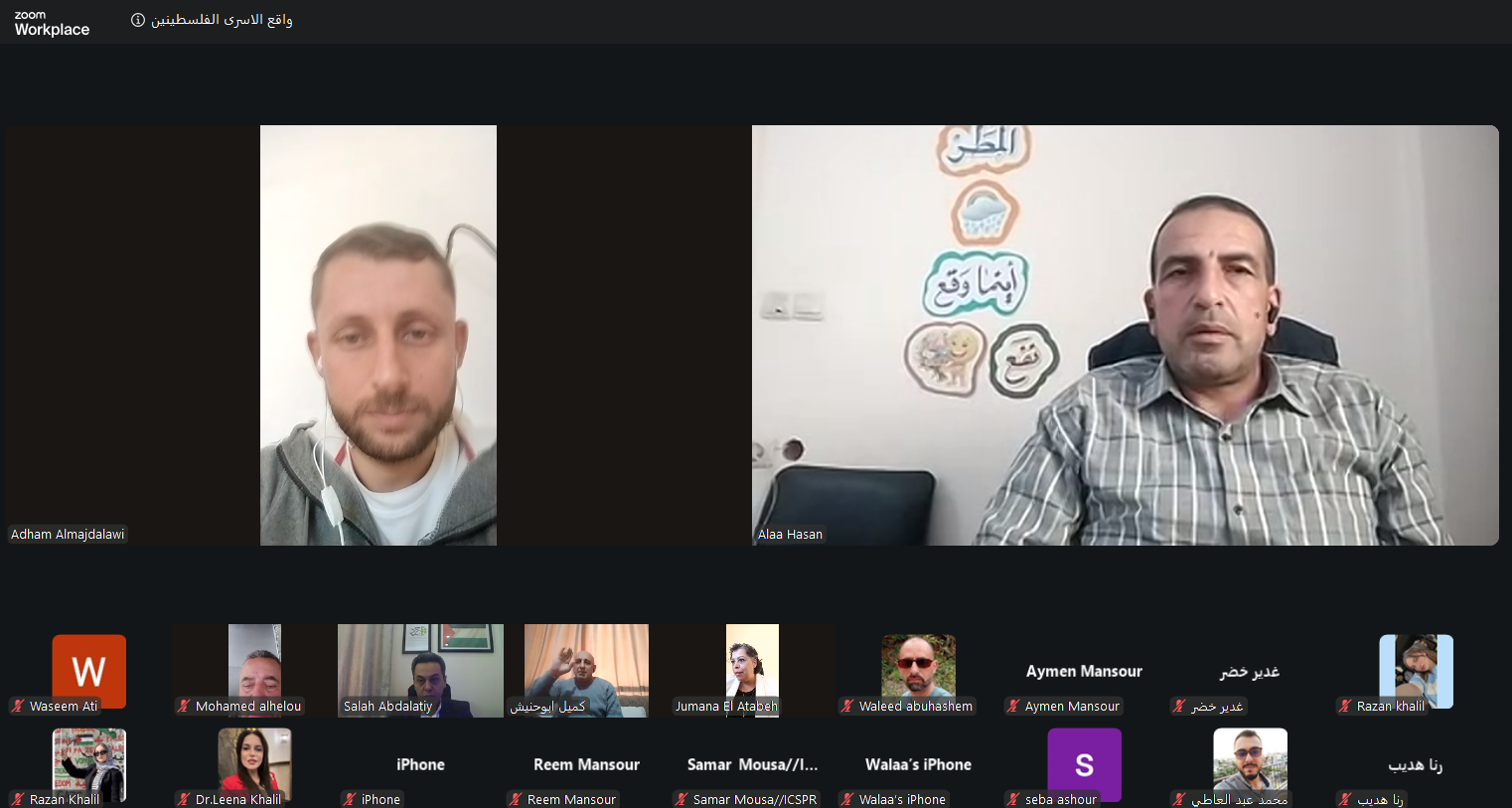
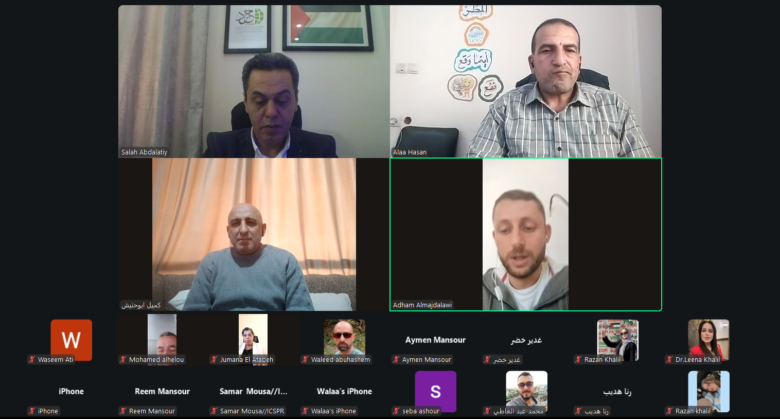
The International Commission to Support Palestinian Rights (ICSPR) organized today, Thursday, a human rights workshop entitled “The Situation of Palestinian Prisoners in Israeli Occupation Prisons and Ways to Support Their Cause,” via Zoom, with the participation of approximately 30 human rights activists, lawyers, representatives of human rights organizations and prisoners’ institutions, media professionals, and former prisoners. The workshop aimed to discuss the situation of Palestinian prisoners and detainees held in Israeli occupation prisons, shed light on the escalating violations committed against them, and explore mechanisms for developing national and international efforts to protect them, advocate for their cause, and hold those responsible for crimes committed against them accountable.
The workshop was opened by lawyer Adham Al-Majdalawi, ICSPR representative and moderator of the meeting, who emphasized the importance of intensifying human rights and media efforts to document Israeli violations against prisoners and unifying perspectives on mechanisms for pursuing legal action before international forums, in a manner that contributes to providing urgent protection for detainees and pursuing those responsible for violations.
The workshop featured extensive discussions on the systematic violations to which prisoners are subjected, including physical and psychological torture, starvation, deliberate medical negligence, solitary confinement, physical and sexual assaults, denial of family visits and communication with lawyers and relatives, as well as arbitrary and administrative detention, enforced disappearance, and the continued withholding of the bodies of several deceased prisoners.
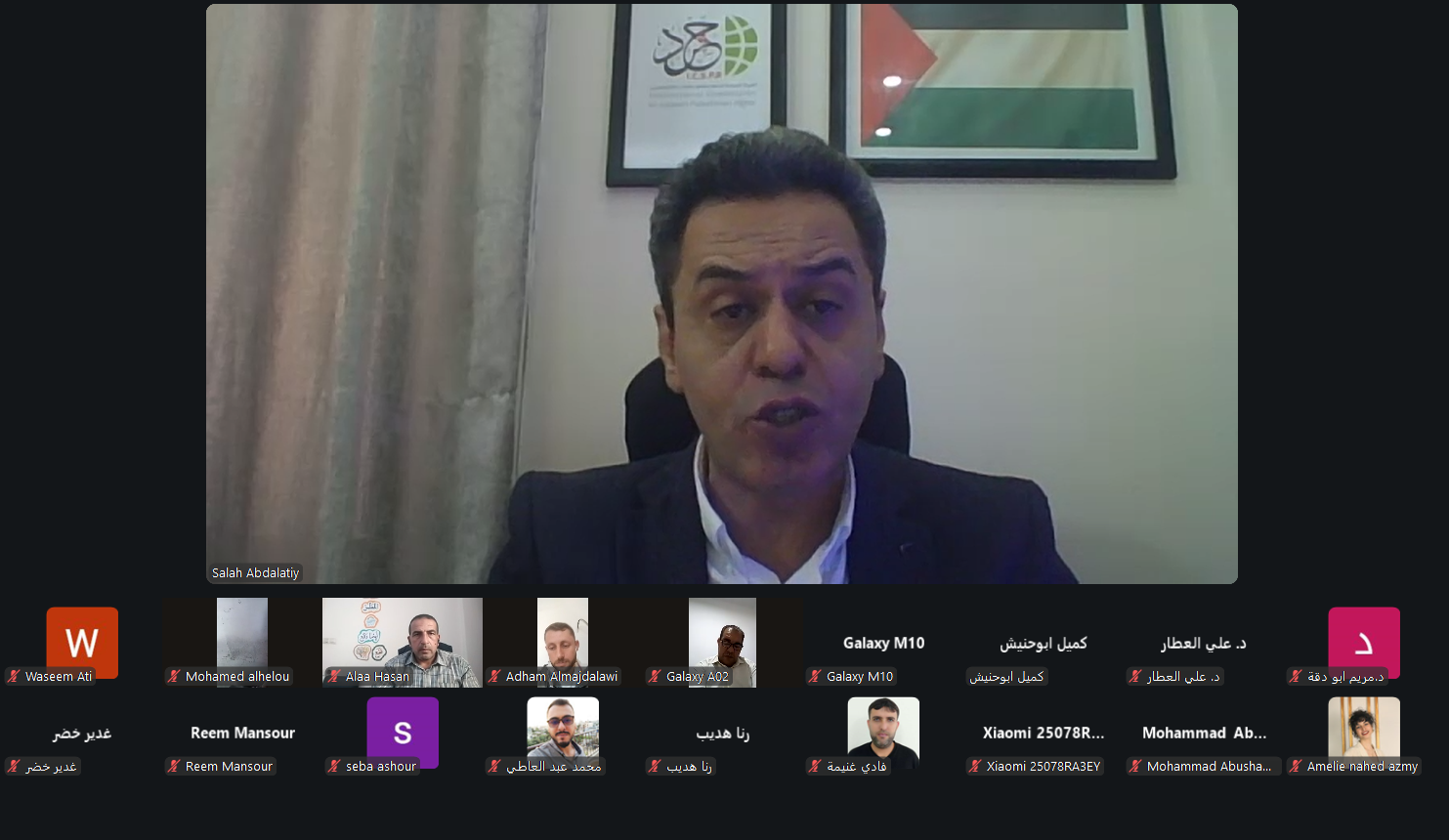
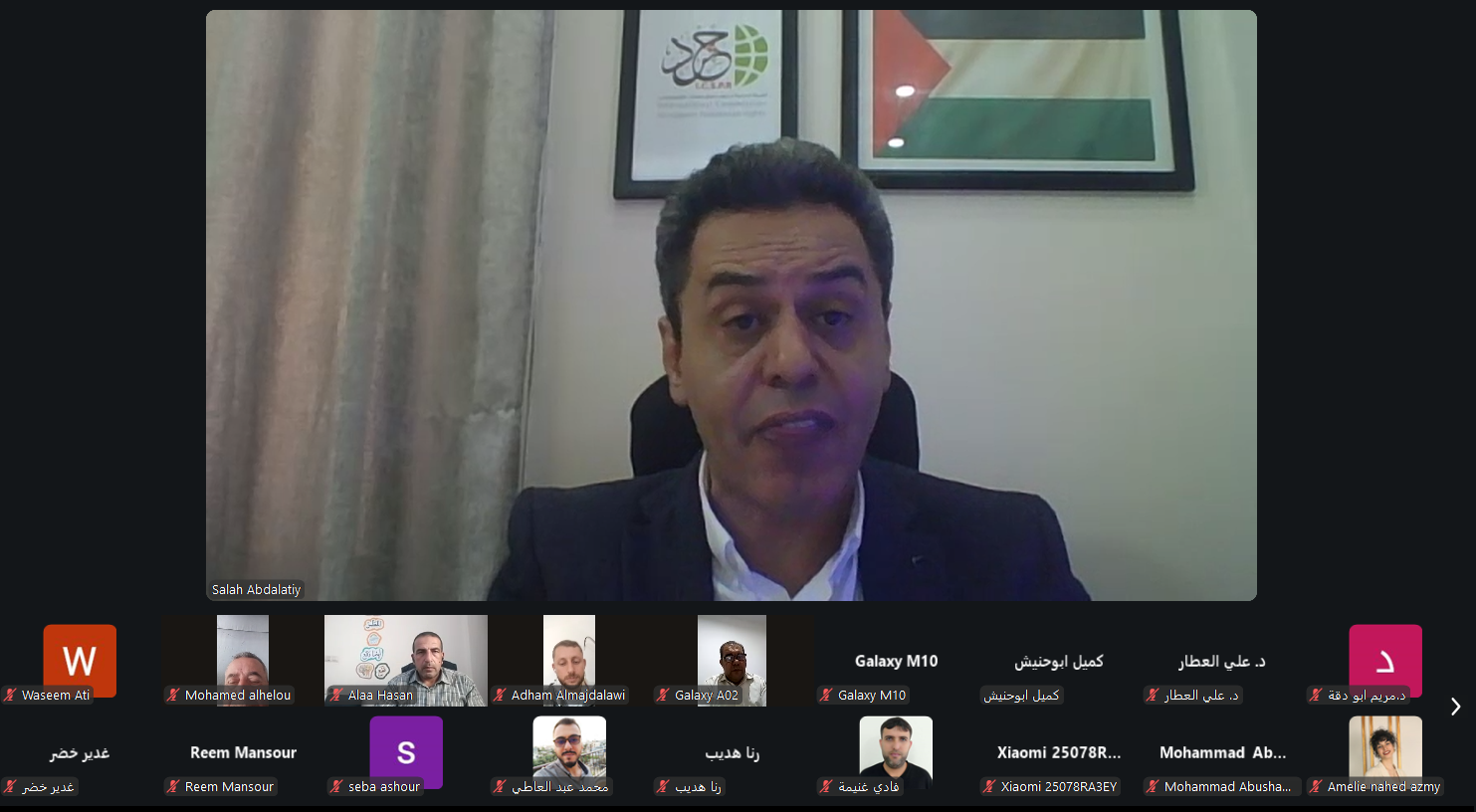
In the main human rights presentation, Dr. Salah Abd Al-Aati, Director General of ICSPR, reviewed the historical, legal, and humanitarian dimensions of the prisoners’ issue. He noted that detention has constituted one of the tools of control imposed on Palestinians since 1967, with approximately 1.25 million Palestinians having been subjected to arrest. Hundreds of prisoners have died inside prisons and detention centers, amid concerns that the actual number of deaths and violations may exceed the officially announced figures, given the withholding of information, the difficulties in accessing detention facilities, and the lack of independent verification of detainees’ conditions.
Abd Al-Aati addressed the escalation of violations since 7 October 2023, and the widespread arrest campaigns that accompanied it, particularly in the Gaza Strip, where detainees have been held in military camps and detention centers, including Sde Teiman Camp, amid reports of torture, starvation, denial of medical treatment, and deprivation of contact with the outside world. He indicated that the figures he presented regarding prisoners’ conditions showed that more than 9,600 Palestinian prisoners and detainees are currently being held, in addition to documented cases of deaths inside detention facilities. He warned that the continued withholding of information makes the announced figures insufficient to establish the actual scale of the violations.
Abd Al-Aati stressed that violations committed against prisoners require serious and independent investigations, and that a number of documented acts may, depending on their legal elements and the circumstances in which they were committed, amount to war crimes and crimes against humanity. He emphasized that the prohibition of torture and cruel and inhuman treatment is absolute under international law, and that such practices cannot be justified under any security or legislative pretext.
Abd Al-Aati criticized the limited international response and the continued reliance on statements of condemnation and expressions of concern, stressing the need to move towards practical, judicial, and diplomatic measures that put an end to these violations and ensure accountability for those responsible. He also emphasized the importance of distinguishing between the legal status of civilian detainees and combatants, while ensuring that all persons held in detention enjoy the protections afforded to them under international humanitarian law.
Abd Al-Aati presented a comprehensive national and international strategy for protecting prisoners, based on seven main tracks. These include restoring national unity and establishing a unified reference framework to defend the prisoners’ cause; developing documentation and monitoring systems and establishing a national database of detainees, missing persons, and individuals who have died in detention facilities; strengthening legal protection and pursuing judicial accountability before the International Criminal Court and competent national courts under the principle of universal jurisdiction; activating the Geneva Conventions and United Nations mechanisms; launching multilingual media and diplomatic advocacy campaigns; providing humanitarian, psychological, and social support to prisoners and their families; and working to impose effective international measures and deterrent accountability against those responsible for violations.
For his part, lawyer Alaa Al-Skaafi, Director of Al-Dameer Association for Human Rights and Prisoners’ Care, delivered a human rights and documentation briefing on the conditions surrounding the arrest and detention of Palestinians, particularly detainees from the Gaza Strip since the beginning of the war. He reviewed the practices and violations documented by the organization throughout the stages of arrest, transfer, and detention, including stripping detainees of their clothing, holding them in harsh conditions, beatings and abuse, the use of police dogs, starvation, denial of medical treatment and medication, physical and psychological torture, sexual assaults, and the spread of diseases in detention facilities.
Al-Skaafi noted that restrictions imposed on lawyers’ work, amendments to detention procedures, and the prolonged denial of detainees’ access to their lawyers, in addition to the expanding use of administrative detention and the “Unlawful Combatants Law,” constitute serious challenges to monitoring detainees’ conditions and guaranteeing their legal rights. He also presented data concerning the number of detainees from the Gaza Strip, deaths inside detention facilities, and the continued withholding of the bodies of deceased prisoners, emphasizing the need to unify the efforts of human rights organizations and develop documentation and legal follow-up mechanisms.
Al-Skaafi also announced the initiative to establish the “National Committee for the Defense of the Rights of Gaza Detainees” as a framework for unifying advocacy, legal, and human rights follow-up efforts and strengthening the provision of psychological and social support to detainees’ families. He called for the necessary support to be provided to this initiative to ensure its continuity.
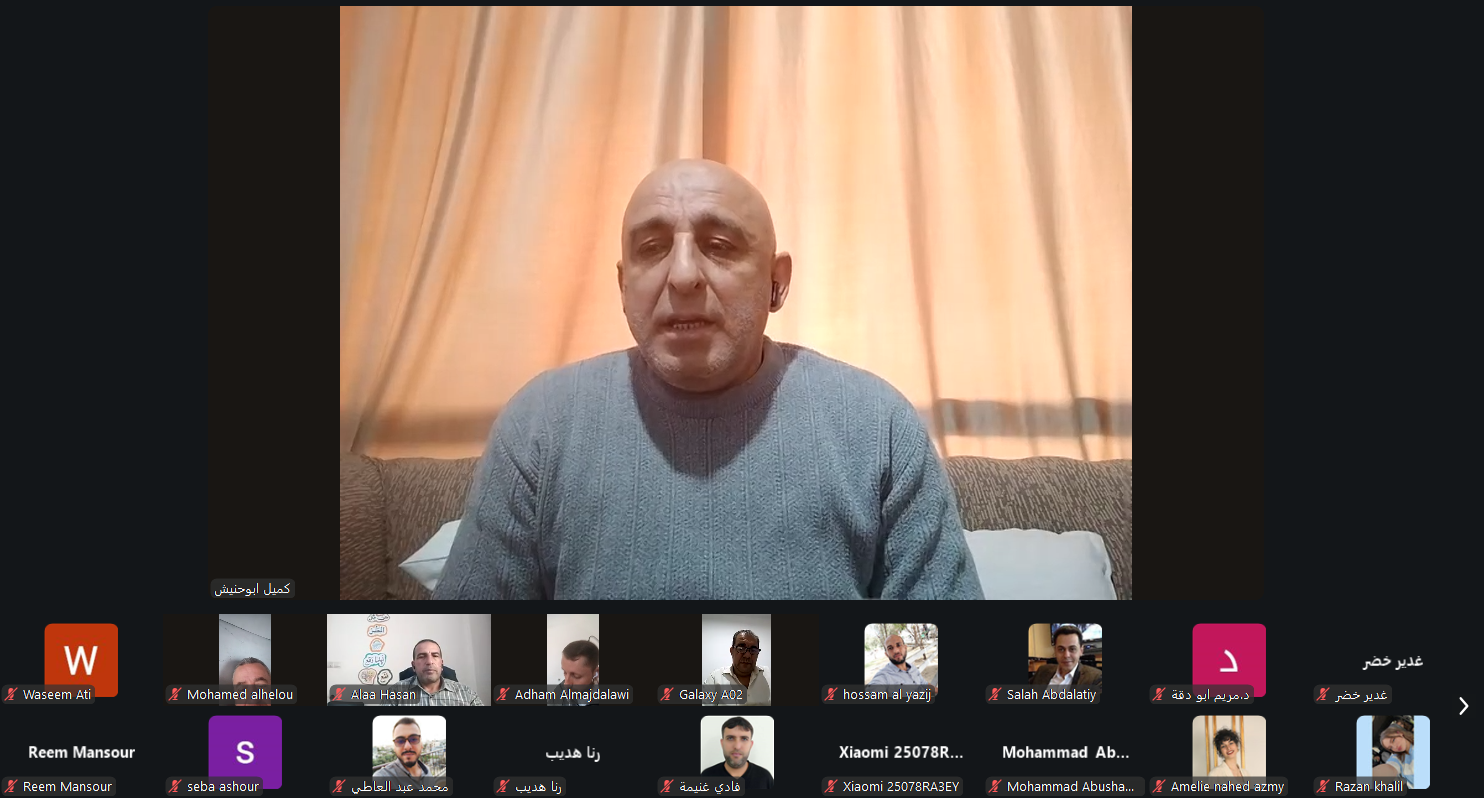
In turn, former prisoner Kamil Abu Hneish delivered a firsthand testimony on the reality faced by prisoners inside Israeli prisons. He affirmed that what has been taking place since 7 October represents a dangerous and unprecedented turning point in the history of the Palestinian prisoners’ movement, and that the testimonies and reports being published reveal only part of the scale of the suffering and daily violations. He described the conditions of starvation and severe overcrowding inside prison cells, the denial of access to showers and prison yards, medical negligence, the spread of diseases, and the introduction of new methods of torture and abuse, including holding prisoners in extremely cold rooms for prolonged periods.
Abu Hneish noted that prisoners are facing harsh conditions that threaten their lives and violate their human dignity. He cited cases of deaths resulting from the denial of medical treatment and emphasized that what is taking place cannot be reduced to individual practices, but rather requires investigations into the policies and procedures implemented throughout the prison and detention system. He also highlighted the worsening suffering of prisoners who were denied the opportunity to be released during prisoner exchange agreements, and the resulting psychological and humanitarian consequences, calling for continued human rights and international efforts and urging that prisoners not be abandoned to their fate.
The workshop also featured a number of contributions and discussions emphasizing the need to expand international advocacy for the prisoners’ cause. Former prisoner Dr. Maryam Abu Daqqa stressed the sacred status of the prisoners’ cause and its national significance, emphasizing that prisoners themselves must be at the forefront of efforts to convey their suffering to the world. She called for benefiting from the experiences of former prisoners and assigning them representative and advocacy roles, including communicating with international public opinion, participating in multilingual international campaigns, and strengthening cooperation among human rights organizations and centers inside and outside Palestine.
For his part, Brigadier General Abu Khaled Al-Hilu called for intensifying popular and international mobilization and organizing monthly marches and events across Europe and the United States. He also stressed the importance of activating the role of Palestinian communities abroad and Palestinians inside the occupied territories in exerting pressure on governments and international institutions, emphasizing the need to restore national unity and unify efforts in defense of prisoners.
Mohammed Abu Shawar, representative of Al-Hurras Foundation in Al-Nasr Refugee Camp, presented proposals to strengthen advocacy efforts among Palestinians in the diaspora and refugee camps through two complementary tracks. The first focuses on activating popular and financial pressure on embassies and governments, while the second centers on providing psychological and social support to prisoners and their families, thereby strengthening their resilience and helping alleviate the consequences of the violations.
In the same context, lawyer Shaaban Al-Jarjir emphasized the need to exert continuous and effective international pressure, activate universal jurisdiction, and convene an international conference dedicated to the prisoners’ issue. He also called for intensifying efforts to reveal the whereabouts of the bodies of deceased prisoners and expose the continued withholding of their remains in multiple languages. He stressed the importance of unifying the efforts of prisoners’ institutions and moving beyond temporary reactions towards a sustainable national program that places prisoners’ freedom and the protection of their rights at the forefront of its priorities.
Dr. Hasanein Habous also emphasized the importance of intensifying documentation efforts and exposing the violations committed against prisoners before international public opinion, as well as supporting the proposed human rights and national strategy to strengthen advocacy and accountability.
At the conclusion of the workshop, participants emphasized the need to develop organized and sustainable national and international action, unify the efforts of human rights organizations and prisoners’ institutions, strengthen the legal and criminal documentation of violations, and pursue relevant cases before the International Criminal Court, United Nations mechanisms, and competent national courts. They also stressed the importance of exerting pressure to enable the International Committee of the Red Cross to visit all detention facilities, reveal the fate of detainees from the Gaza Strip, work towards ending arbitrary administrative detention, put an end to torture, starvation, and medical negligence, and ensure the release of those arbitrarily detained.
The workshop further called for launching coordinated, multilingual international advocacy campaigns, expanding popular and diplomatic mobilization in countries around the world, strengthening legal, psychological, and social support programs for former prisoners and the families of detainees, and working towards convening an international conference specializing in the prisoners’ issue. Such efforts would contribute to moving the cause beyond seasonal solidarity initiatives towards a comprehensive national and international strategy.
This workshop comes within the framework of the ongoing efforts of the International Commission to Support Palestinian Rights (ICSPR) to defend the rights of Palestinian prisoners and detainees, strengthen coordination and networking among human rights organizations, prisoners’ institutions, and national and legal figures, and work towards formulating a shared vision for action, advocacy, and accountability, in a manner that ensures the protection of prisoners, safeguards their dignity and rights, and ultimately secures their freedom and an end to the violations committed against them.