

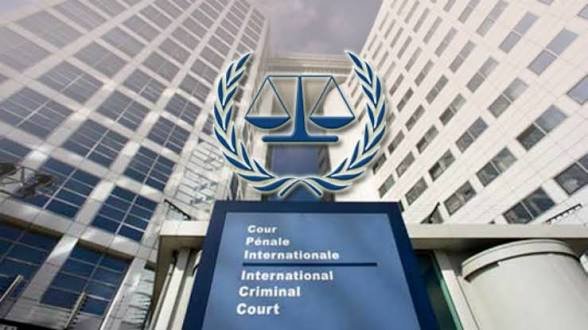
Protecting the Independence of the International Criminal Court Is a Collective Responsibility to Safeguard Justice and Ensure Accountability for International Crimes

Date: 31 July 2026
Press Release
Protecting the Independence of the International Criminal Court Is a Collective Responsibility to Safeguard Justice and Ensure Accountability for International Crimes
The International Commission to Support Palestinian People’s Rights (ICSPR) expresses its profound concern over the recent developments at the International Criminal Court (ICC), foremost among them the decision of the Assembly of States Parties to dismiss the ICC Prosecutor, Karim Khan, based on the findings of internal investigations and proceedings concerning allegations of misconduct attributed to him. The Commission affirms that respect for the rule of law and the accountability of all Court officials—including the Prosecutor—through due legal process constitute fundamental pillars for preserving the Court’s integrity, credibility, and independence. At the same time, these developments cannot be viewed in isolation from the highly complex political environment in which the Court operates, particularly amid escalating pressure, threats, and sanctions directed against it following the initiation of investigations into crimes committed against the Palestinian people and the issuance of arrest warrants against alleged war criminals Benjamin Netanyahu and former Minister of Defense Yoav Gallant. These circumstances raise legitimate concerns regarding the Court’s independence and its ability to exercise its judicial mandate free from political interference.
The International Commission (Icspr) emphasizes that the issue at hand is not about the former Prosecutor as an individual, but rather about the future and independence of the International Criminal Court as the permanent international judicial institution mandated to prosecute perpetrators of genocide, war crimes, crimes against humanity, and the crime of aggression. The political and media campaign led by the United States and Israel against the Court, coupled with sanctions imposed on several of its officials, persistent attempts to undermine its legitimacy and jurisdiction, and the United States’ public support for efforts aimed at weakening the Court, reflect a dangerous pattern of attempts to undermine international justice whenever the Court moves toward holding Israeli officials accountable for crimes committed against the Palestinian people. Targeting the Court and its personnel also risks entrenching impunity, undermining victims’ confidence in the international justice system, and sending the message that political influence can prevail over the rule of law.
The International Commission (Hashd) further notes that the pressure, threats, and sanctions directed against ICC officials—which led to the resignation of some and adversely affected the Court’s work—echo the campaign previously launched against former ICC Prosecutor Fatou Bensouda, as well as the smear campaigns and political pressure directed at Justice Richard Goldstone following the publication of his report on the 2009 military offensive on the Gaza Strip. These developments confirm the existence of a recurring pattern of political and media pressure targeting individuals who carry out investigations into crimes committed against Palestinians. Likewise, the announcement by several states of their withdrawal, or intention to withdraw, from the Rome Statute, alongside U.S. sanctions against ICC officials and calls to weaken the Court, constitutes an alarming development that threatens to erode the international criminal justice system and embolden perpetrators of international crimes to evade accountability. Although the dismissal of the Prosecutor resulted from institutional mechanisms established by the Assembly of States Parties, this does not diminish the imperative of protecting the Court from external influence and ensuring that its decisions and judicial proceedings remain independent and governed solely by the law, free from political considerations or state pressure.
The International Commission (Hashd) stresses that replacing the Prosecutor or ending the Prosecutor’s mandate does not, as a matter of law, affect the Court’s jurisdiction, its ongoing investigations, or the arrest warrants already issued by the Court, which remain valid and binding under the Rome Statute. These developments must not serve as a pretext to delay, obstruct, or weaken investigations into crimes committed in the Occupied Palestinian Territory, particularly genocide, war crimes, and crimes against humanity. The Commission also reiterates that Israel’s non-membership in the Rome Statute does not deprive the Court of jurisdiction over crimes committed in the Occupied Palestinian Territory, nor does it exempt Israeli officials from international criminal responsibility. Furthermore, any facilitation by states enabling individuals subject to ICC arrest warrants to travel freely constitutes a breach of their legal obligations and undermines efforts to combat impunity.
The International Commission (Hashd) affirms that the continuation of investigations into international crimes committed against the Palestinian people represents a genuine test of the credibility of the international legal system and of the international community’s commitment to safeguarding the independence of international justice in the face of political pressure. Protecting the International Criminal Court today is not a defense of any individual official or employee, but rather a defense of victims’ right to justice, the principle of accountability, and the values upon which the Rome Statute was founded—namely that all perpetrators of international crimes must be held accountable without exception, selectivity, or double standards.
The International Commission to Support Palestinian People’s Rights (Hashd) reiterates that the independence and continued functioning of the International Criminal Court constitute an essential safeguard for the protection of international law and the rights of victims. Any attempt to weaken the Court, obstruct its work, or subject it to political pressure poses a direct threat to the entire international justice system. The international community is therefore called upon, now more than ever, to fulfill its legal and moral obligations by ensuring the continuation of investigations into crimes committed against the Palestinian people, enforcing the Court’s arrest warrants, and holding all those responsible for genocide, war crimes, and crimes against humanity accountable. Such action is essential to reinforce the principle of ending impunity, restore confidence in the rule of law, and contribute to the maintenance of international peace and security.
Accordingly, the International Commission to Support Palestinian People’s Rights (Hashd) calls for:
- All States Parties to the Rome Statute to adopt a clear and resolute position in defense of the independence of the International Criminal Court and to protect its judges, Prosecutor, and staff from any pressure, threats, or sanctions intended to influence or undermine their independence.
- The prompt appointment of a new Prosecutor possessing the highest standards of competence, independence, and integrity, in order to ensure the continuity of the Office of the Prosecutor, accelerate ongoing investigations, and avoid any institutional or administrative vacuum.
- The uninterrupted continuation of investigations and judicial proceedings concerning crimes committed in the Occupied Palestinian Territory, particularly genocide, war crimes, and crimes against humanity, with all necessary resources made available to ensure their timely completion.
- Full compliance by all States Parties with their obligations to execute the Court’s arrest warrants, cooperate fully with the Court, and refrain from providing any assurances or facilitation that would enable individuals sought by international justice to evade arrest or accountability, recognizing that combating impunity is an international legal obligation that must not be subordinated to political considerations.
- States that have announced their withdrawal, or are considering withdrawal, from the Rome Statute to reconsider their decisions, uphold their legal commitments, and support reform of the Court from within the Rome Statute system in order to preserve its role as a cornerstone of international criminal justice.
- The United Nations, the Assembly of States Parties, the Human Rights Council, international and regional organizations, and civil society institutions to take urgent and concrete measures to protect the International Criminal Court, strengthen its independence, ensure the continuity of its judicial mandate as one of the fundamental pillars of the international rule-based legal order, and confront all attempts to undermine the Court, obstruct its mandate, or intimidate its personnel.