
Palestinian Elections: A Constitutional Right and Long-Overdue National Imperative to Renew Legitimacy, End Division, and Reform the Political System

Date: July 15, 2026
Press Release
Palestinian Elections: A Constitutional Right and Long-Overdue National Imperative to Renew Legitimacy, End Division, and Reform the Political System—But They Cannot Achieve Their Goals Unless They Are Inclusive, Simultaneous, and Fair
The International Commission to Support Palestinian Rights (ICSPR) is closely following developments concerning Palestinian electoral entitlements, foremost among them the presidential decree calling for Legislative Council elections on November 28, 2026. These developments include amendments to the General Elections Law, the adoption of an electoral system for the Palestinian National Council, and the broad political, constitutional, and human rights debate they have generated regarding the future of the Palestinian political system, the renewal of legitimacy, and the reconstruction of national representative institutions.
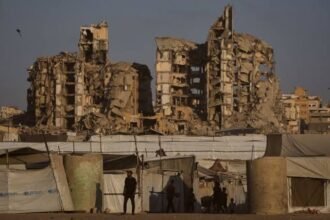
These developments come at the most dangerous stage faced by the Palestinian people, amid the continuing war of genocide, starvation, and forced displacement in the Gaza Strip; escalating settlement expansion, annexation, Judaization, and ethnic cleansing policies in the West Bank, including occupied Jerusalem; continued attempts to liquidate the refugee issue and the right of return; and efforts to re-engineer the Palestinian political system in a manner that serves the occupation’s plans and weakens the unity of the Palestinian people and their national institutions.
This confirms that ending the war of genocide, lifting the blockade, protecting civilians, confronting settlement expansion and annexation, and holding the occupation accountable for its crimes remain national, humanitarian, and legal priorities that cannot be delayed.
At the same time, ICSPR emphasizes that the continued suspension of democratic life for more than sixteen years, the dissolution of the Legislative Council, the erosion of democratic legitimacy, the weakening of constitutional institutions, and the absence of oversight and accountability have all contributed to deepening the Palestinian political crisis and weakening citizens’ confidence in the political system. Renewing legitimacy is therefore a constitutional and national imperative that must not be postponed further.
ICSPR affirms that general elections are a fundamental constitutional and political right guaranteed by the Palestinian Basic Law, the Declaration of Independence, and the International Covenant on Civil and Political Rights. Elections are the natural democratic means for renewing legitimacy, strengthening popular participation, consolidating the peaceful transfer of power, and rebuilding trust between citizens and governing institutions.
However, elections are not an end in themselves. They are a means of serving the Palestinian national project, and their success must be measured by their ability to end division, unify institutions, renew legitimacy, and rebuild the Palestinian political system on the foundations of national partnership, political pluralism, the rule of law, judicial independence, and respect for the popular will—not merely by holding a vote, announcing results, or designing the political system according to a unilateral vision.
ICSPR considers that the current Palestinian crisis is not simply a crisis of absent elections. It is a structural crisis affecting the political system as a whole, amid the continuation of division, unilateral decision-making on matters of war and peace, the declining effectiveness of constitutional institutions, overlapping reference frameworks among the Palestine Liberation Organization, the Palestinian Authority, and the State of Palestine, and the continued management of public affairs through unilateral decisions and measures.
Accordingly, any electoral process detached from comprehensive political reform risks becoming a tool for reproducing the crisis rather than resolving it.
The Commission further emphasizes that the Palestinian experiences of 2006 and 2021 demonstrated that issuing decrees alone is insufficient to ensure successful elections. The absence of constitutional and political guarantees, and the failure to address obstacles related to occupied Jerusalem and the Gaza Strip, will lead either to disruption of the electoral process or to the entry of the political system into new crises.
ICSPR believes that the decision to hold elections, despite all complexities and national challenges, can serve as an entry point for rebuilding national legitimacy and launching a genuine political reform process, provided that it does not become a symbolic response to external pressure or an attempt to reproduce the current reality. Elections must express the free will of the Palestinian people, not merely constitute a procedural requirement or a means of improving the political system’s image before the international community.
In this context, ICSPR stresses that recourse to the popular will is the basis of legitimacy in any democratic system. Continuing to require comprehensive factional consensus before returning to the ballot box effectively means maintaining the suspension of democratic life and perpetuating the existing crisis.
Genuine consensus must concern the rules and guarantees of the democratic process and respect for its results, not the division of influence or the postponement of recourse to the people’s will.
ICSPR welcomes every legal amendment that expands political participation and strengthens democratic representation. However, it expresses concern regarding any provisions or conditions that may restrict the right to stand for election or vote, or impose vague restrictions that could be used to exclude any political party or actor, contrary to the Palestinian Basic Law and international standards for free and fair elections.
The Commission also affirms that renewing legitimacy must encompass all constitutional institutions. As a matter of principle, presidential and legislative elections should be held simultaneously on the same day, accompanied by a clear and binding timetable for completing Palestinian National Council elections.
Fragmenting elections deprives institutions of renewed legitimacy at the same time, prolongs the constitutional crisis, raises financial and administrative costs, and weakens public confidence in the electoral process.
With regard to the Palestinian National Council, ICSPR emphasizes that rebuilding it is an essential entry point for reforming the Palestine Liberation Organization and enhancing its representative legitimacy. The guiding principle should be free and direct elections for Palestinians in the homeland and diaspora wherever possible, while adopting modern methods—including electronic or hybrid registration and voting where circumstances permit—to ensure the broadest possible participation.
Appointments or electoral assemblies must not become a permanent substitute for the popular will.
The Commission further stresses that Palestinians in the diaspora are an integral part of the Palestinian people. Their fair representation in the Palestinian National Council is a safeguard for protecting Palestinian unity and historic rights, foremost among them the right of return and self-determination.
ICSPR underlines that occupied Jerusalem is the true test of any Palestinian electoral process. The participation of Jerusalemites as candidates, voters, and campaigners is an inalienable political and legal right. The Israeli occupation must not be permitted to impose a veto on Palestinian elections by preventing their conduct in Jerusalem.
This requires the prior preparation of a national, legal, and diplomatic plan to ensure the participation of Jerusalemites.
The Commission considers that successful elections require a genuine democratic environment founded on respect for public rights and freedoms, freedom of opinion, expression, association, and political activity; an end to political arrests and persecution based on opinion or political affiliation; judicial independence; the independence of the Central Elections Commission; the neutrality of Palestinian Authority institutions; and the prevention of the misuse of public funds, official media, and public office to influence voters’ will.
It also requires national and international monitoring and full respect for election results.
ICSPR affirms that the success of the electoral process requires prior agreement on a package of national and constitutional guarantees, including:
-
Elections must serve as an entry point to ending division, restoring national unity, and renewing legitimacy, rather than as a means of reproducing the crisis or entrenching division.
-
Presidential and legislative elections must be held simultaneously and on the same day, alongside a binding timetable for completing Palestinian National Council elections.
-
There must be full commitment to respecting election results and to resolving all disputes or appeals through the law and democratic dialogue.
-
A national unity government or national consensus government must be formed after the elections, reflecting the ballot-box results and strengthening the unity of the political system.
-
All Palestinian Authority institutions must be insulated from political rivalry; judicial independence must be reinforced; and the framework regulating constitutional review must be reconsidered to ensure its full independence and prevent its use to suspend the people’s will or dissolve elected institutions outside the provisions of the Palestinian Basic Law, thereby preventing a repetition of the Legislative Council dissolution crisis under the previous Constitutional Court formula.
-
Legal and legislative solutions must be adopted to ensure the continued functioning of the elected Legislative Council if the occupation arrests a number of its members or obstructs them from carrying out their duties, in protection of the popular will.
-
The electoral system for the Palestinian National Council must be reviewed to guarantee fair and democratic representation for Palestinians in the homeland and diaspora.
-
Jerusalem’s participation must be guaranteed at every stage of the electoral process, without allowing the occupation to obstruct it.
-
A democratic environment must be ensured, based on respect for rights and freedoms, the neutrality of Palestinian Authority institutions, and equal opportunity for all electoral lists and candidates.
-
The Central Elections Commission must be enabled to carry out its duties with full independence and be provided with the legal, administrative, and financial resources necessary for successful elections.
-
Political participation by women, youth, and persons with disabilities must be strengthened, while ensuring that women’s representation does not fall below 30 percent of final results.
-
The United Nations, the European Union, the League of Arab States, the Organization of Islamic Cooperation, and all international parties must assume their responsibilities to protect the Palestinian democratic process, pressure the occupation authorities not to obstruct it, and provide the technical and monitoring support required for its success.
ICSPR emphasizes that genuine reform is not limited to holding elections. It requires rebuilding the Palestine Liberation Organization and giving concrete institutional form to the State of Palestine. Until then, Palestinian Authority institutions must be reformed by strengthening the principles of the rule of law and separation of powers, reviving parliamentary life, consolidating accountability and transparency, guaranteeing the peaceful transfer of power, and restoring the people’s will as the sole source of legitimacy.
The Commission believes elections must not become an instrument for reproducing the crisis or consolidating division. They must instead serve as the starting point for a new national compact founded on partnership, pluralism, and the rule of law; rebuilding trust between citizens and governing institutions; and strengthening the unity of the Palestinian people in the homeland and diaspora.
The International Commission to Support Palestinian Rights (ICSPR) affirms that protecting Palestinian democracy has become an inseparable component of protecting the Palestinian national project. Elections are not merely ballot boxes; they are an entry point for rebuilding national legitimacy, renewing confidence between the people and their institutions, ending division, and reconstructing the Palestinian political system—including the institutions of the Palestinian Authority and the Palestine Liberation Organization—on democratic and representative foundations.
This would strengthen the steadfastness of the Palestinian people in confronting occupation, settler colonialism, and genocide, and enable them to continue their legitimate struggle until attaining their inalienable rights, foremost among them the right to self-determination, the right of return, and the establishment of an independent, fully sovereign Palestinian state with Jerusalem as its capital.
The International Commission to Support Palestinian Rights (ICSPR)