
On the Occasion of International Workers’ Day “Palestinian Workers Are Living Through an Unprecedented Humanitarian Tragedy as a Result of Occupation Crimes, the Absence of International Protection, and the Total Collapse of the Labor Market

Date: April 30, 2026
Press Statement
On the Occasion of International Workers’ Day
“Palestinian Workers Are Living Through an Unprecedented Humanitarian Tragedy as a Result of Occupation Crimes, the Absence of International Protection, and the Total Collapse of the Labor Market.”
The International Commission to Support Palestinian Rights (ICSPR) affirms that this year’s May Day comes amid exceptional and extremely harsh conditions facing the Palestinian people, particularly in the Gaza Strip, after more than two and a half years of genocidal war targeting the Palestinian people and their economic and productive capacities, casting a heavy shadow over the working class, which has historically formed a pillar of steadfastness and reconstruction, only to find itself today confronting an unprecedented catastrophic reality shaped by the overlap of war, blockade, and comprehensive economic collapse.
ICSPR stresses that the Palestinian worker has paid a heavy price as a result of the ongoing Israeli aggression, as the suffering has not been limited to the loss of jobs and sources of income, but has also extended to the direct targeting of workers’ lives and safety and the destruction of their workplaces, in flagrant violation of international humanitarian law and human rights conventions that guarantee the protection of civilians and workers during armed conflict.
ICSPR notes that labor market indicators have witnessed an unprecedented collapse due to the aggression, with unemployment rising to around 80 percent in the Gaza Strip and 34 percent in the West Bank, amounting to approximately 550,000 unemployed persons, while gross domestic product recorded a sharp decline exceeding 84 percent, economic activities contracted by between 83 and 98 percent, labor force participation fell to around 38 percent, poverty rates in Gaza rose to more than 93 percent, acute food insecurity affected more than 75 percent of the population, and more than 250,000 workers lost their jobs permanently.
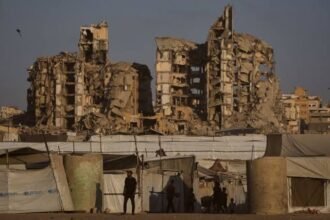
ICSPR considers what Gaza’s workers are experiencing to be a stark example of a compounded humanitarian catastrophe, as the Israeli genocidal war has killed and injured thousands of workers, brought about the near-total destruction of the economic, agricultural, commercial, and service sectors, and displaced more than one and a half million people, including tens of thousands of workers and their families, who are now living in displacement tents and shelters under conditions that lack the minimum standards of human dignity, amid extreme poverty, food insecurity, and the collapse of health and educational services.
ICSPR confirms that the labor sector in Gaza has moved from a state of structural unemployment to one of total economic paralysis, as most productive and service institutions and facilities have ceased operating, production chains have been disrupted, the blockade and border closures continue, and the entry of raw materials needed to restart economic sectors remains prohibited, deepening the state of economic and livelihood collapse.
ICSPR also points out that the restrictions imposed on humanitarian organizations have worsened the crisis, with more than 95 percent of the population now dependent on limited humanitarian aid, including a broad segment of workers who have completely lost their sources of income, amid a near-total collapse in the foundations of daily life.
ICSPR emphasizes that these realities cannot be separated from the context of grave and systematic violations, including the destruction of more than 90 percent of Gaza’s buildings, facilities, and infrastructure, and the ongoing crimes of forced displacement, blockade, and collective punishment, which have led to tens of thousands of deaths and injuries and have compounded the suffering of the population, much of which now relies on aid or marginal informal work to secure the minimum means of survival.
ICSPR notes that Israeli policies, including the withholding of Palestinian tax clearance revenues exceeding 4 billion dollars, restrictions imposed on UNRWA, and the cutting of funding to civil society institutions, have produced a severe fiscal crisis, the dismissal of thousands of workers, and the deterioration of basic services, thereby deepening the cycle of poverty and unemployment and weakening Palestinian society’s ability to remain resilient.
ICSPR stresses that these violations constitute a grave and compound breach of international humanitarian law and international human rights law and amount to war crimes and crimes against humanity, since the targeting of economic infrastructure and sources of livelihood violates the principles of distinction and proportionality, the extensive destruction of civilian property without military necessity constitutes a war crime, and the comprehensive blockade and closure of crossings amount to prohibited collective punishment, while depriving workers of the means of livelihood reflects deliberate impoverishment policies.
ICSPR affirms that the continuation of this reality reflects a clear failure by the international community to ensure respect for international law and confirms the full legal responsibility of the Israeli occupation for these crimes, as the occupying power is obliged to protect the civilian population and ensure its basic needs, while also underscoring the responsibility of the official Palestinian authorities to adopt urgent and transparent policies to protect workers and strengthen their resilience.
ICSPR calls on the international community, including the United Nations and its agencies, to move beyond silence and helplessness and assume its legal and moral responsibilities by providing international protection to the Palestinian people, working to end the aggression and lift the blockade immediately, ensuring the flow of humanitarian aid, and supporting relief and reconstruction efforts without political conditions.
ICSPR demands the permanent opening of border crossings, the guarantee of freedom of movement, the entry of raw materials and equipment needed to restart production, and the launch of a comprehensive and urgent national reconstruction plan based on the principles of justice, transparency, and accountability, ensuring the right of all those affected to housing and work without discrimination, in addition to enabling municipalities, local institutions, and the Gaza Administration Committee to carry out their role in debris removal and in strengthening humanitarian response and economic and social recovery.
ICSPR further calls for holding Israeli officials accountable for crimes and violations before international justice institutions and for activating tools of international pressure, including boycott measures and sanctions, to ensure an end to grave crimes and violations against Palestinian workers and civilians.
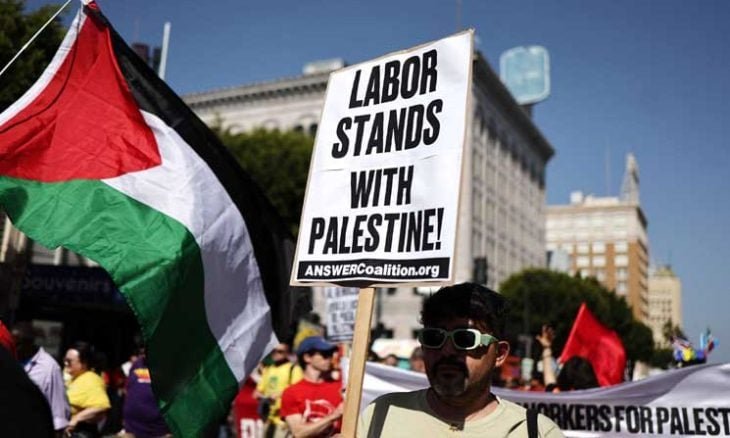
ICSPR directs an urgent appeal to Arab and international trade union and labor movements to move from verbal solidarity to effective action by organizing protests and strikes, exerting real pressure to stop the aggression and lift the blockade, providing material and moral support to Palestinian workers, and adopting international initiatives that reinforce their steadfastness.
ICSPR calls on the Palestinian Authority to assume its national responsibilities toward Palestinian workers by adopting effective policies to strengthen their resilience and by providing comprehensive social protection networks, including the establishment of a national fund to support workers, in a way that contributes to confronting the severe collapse of the labor market.
ICSPR reiterates its solidarity with the United Nations Relief and Works Agency (UNRWA) and calls on the international community to support and fund it, while also urging the Agency to review its policies and expand temporary employment programs and increase support to poor families and unemployed persons in a way that enhances the resilience of Palestinian refugees and preserves their dignity.
ICSPR also calls on the United Nations, the League of Arab States, the Organization of Islamic Cooperation, and all states worldwide to strengthen political, financial, and humanitarian support for Palestinian institutions, including labor unions, the private sector, and civil society organizations, so they can fulfill their role in supporting the resilience of workers and their families in the face of this compounded catastrophe.