
ICSPR Condemns the Ongoing and Escalating Israeli Crimes in the Gaza Strip and Warns of a Comprehensive Humanitarian Collapse Amid International Inaction
 wasem aa
Send an email
wasem aa
Send an email
April 11, 2026
Press Release
ICSPR Condemns the Ongoing and Escalating Israeli Crimes in the Gaza Strip and Warns of a Comprehensive Humanitarian Collapse Amid International Inaction
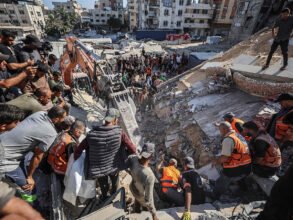
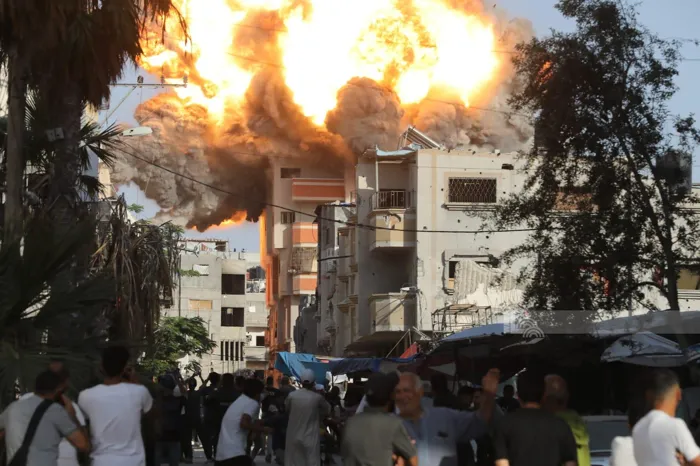
The International Commission to Support Palestinian Rights (ICSPR) strongly condemns the continued and escalating Israeli crimes in the Gaza Strip, most recently exemplified by the massacre targeting Al-Bureij refugee camp in the central Gaza Strip, which resulted in the killing of eight civilians and the injury of others. This comes within a persistent pattern of targeting civilians and civilian objects, reflecting a deliberate policy of mass killing and a blatant violation of international humanitarian law.
Based on official data issued by the Ministry of Health in Gaza, the Commission confirms that the number of casualties over the past 48 hours reached 11 killed and 26 injured. Thousands of victims remain under the rubble due to the inability of ambulance and civil defense teams to reach them. Since the ceasefire came into effect on October 11, the death toll has risen to 749, with 2,082 injuries and 759 bodies recovered, underscoring the fragility of the agreement and the continued Israeli violations.
The cumulative toll since the beginning of the aggression on October 7, 2023, has reached 72,328 killed and 172,184 injured, indicating the scale of Israeli crimes and the unprecedented humanitarian catastrophe facing the population of Gaza.
On the humanitarian level, the Commission warns of the rapid collapse of the health sector. A shortage of fuel and oil has led to the shutdown of one of the main generators at Nasser Medical Complex, forcing medical staff to rely on partial and temporary operating solutions, which threatens patients’ lives, especially in critical departments. Data also reveals that the number of patients evacuated for treatment outside the Gaza Strip over the past six months did not exceed 420, while more than 21,500 patients remain in urgent need of treatment, amid the absence of effective mechanisms to ensure the evacuation of critical cases.
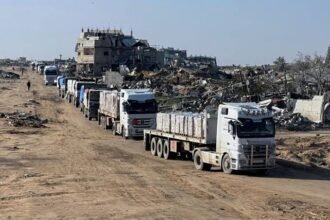
The Commission further stresses that the humanitarian crisis is worsening due to ongoing restrictions on the entry of aid. In some days, the number of trucks entering did not exceed 207, with a daily average of approximately 113 trucks—far below the minimum required. This aligns with warnings from the World Food Programme regarding the fragility of the humanitarian situation and the ongoing catastrophe due to shortages of essential supplies.
Meanwhile, field developments indicate a dangerous escalation on the ground, with continued Israeli military operations along what is referred to as the “yellow line,” including trench digging and artillery shelling of border areas, as part of policies aimed at reshaping the geographic and demographic reality of the Gaza Strip.
Statements by officials in the Israeli government, openly calling for the annexation of lands from Gaza, Lebanon, and Syria, and for expanding settlements in the West Bank, reflect a clear direction toward consolidating an expansionist colonial project that undermines any possibility of establishing a Palestinian state.
This coincides with indications of stalled work by the Gaza Administration Committee and recovery and reconstruction plans linked to the U.S.-backed “Peace Council” plan, due to lack of funding. The political deadlock persists as Israel fails to implement its obligations under the plan and insists—alongside the United States—on disarming Palestinian factions without any guarantees for civilian protection, Israeli withdrawal from the Strip, or provision of necessary funding for recovery, reconstruction, or the functioning of the local administrative committee, including allowing its entry into Gaza. The Commission also warns of signs of a potential resumption of Israeli military aggression, amid reports of preparations for renewed attacks, while efforts to ensure compliance with the ceasefire remain stalled and violations continue daily with U.S. disregard, alongside ignoring Palestinian and mediator demands.
The Commission affirms that what is taking place in the Gaza Strip constitutes a compound crime, including large-scale killing, systematic starvation, obstruction of aid and the work of international organizations, continued destruction of remaining civilian infrastructure, and denial of medical treatment to the wounded. These acts amount to war crimes and crimes against humanity, and reflect Israel’s persistence in committing genocide.
The International Commission “ICSPR” stresses that the continuation of this situation, amid international failure and alarming silence, portends a comprehensive humanitarian explosion and threatens the complete collapse of the foundations of life in the Gaza Strip. This necessitates urgent international action that goes beyond condemnation to effective measures.
Accordingly, the Commission calls on mediators, the international community, the United Nations, and third states party to the Geneva Conventions and the Genocide Convention to act to ensure an end to Israeli violations of the ceasefire, lift the blockade and collective punishment, allow the Gaza Administration Committee to enter the Strip, and provide the necessary funding for its work and for implementing humanitarian response and recovery plans. It also calls for pressure to allow the entry of temporary housing, international media, and humanitarian teams, and to ensure the flow of humanitarian aid at no less than 600 trucks daily, as well as the urgent provision of equipment, fuel, and medical supplies to save what remains of the health system.
The Commission further calls for the provision of international protection for civilians and the swift formation of an international stabilization and protection force in accordance with international law, ensuring Israeli withdrawal from the Gaza Strip, the opening of crossings, and the return of stranded persons, as well as enabling the travel of patients and the wounded.
Finally, it calls for the imposition of sanctions on Israel to compel compliance with international humanitarian law, alongside activating accountability mechanisms for Israeli officials before the International Criminal Court and international judiciary.