
ICSPR Israeli Restrictions on Humanitarian Action and Civil Society Organizations Constitute an International Crime

Date: 23 December 2025
Press Statement
Israeli Restrictions on Humanitarian Action and Civil Society Organizations Constitute an International Crime
The International Commission for Supporting Palestinian Rights (ICSPR) strongly condemns the arbitrary measures and policies imposed by the Israeli occupation authorities on the work of international humanitarian organizations, the United Nations Relief and Works Agency for Palestine Refugees (UNRWA), and Palestinian civil society organizations. These measures include preventing the entry of humanitarian aid, imposing re-registration of organizations with the occupation authorities, obligating them to disclose personal and sensitive data of staff members, and imposing political, security, and administrative conditions. They also include obstructing human rights monitoring and advocacy activities, as part of a systematic policy aimed at controlling humanitarian conditions and undermining independent humanitarian action.
ICSPR condemns the Israeli escalation targeting UNRWA, including preventing the entry of approximately 6,000 UNRWA aid trucks since the ceasefire, alongside the enactment and promotion of Israeli laws aimed at banning or restricting the Agency’s work in the occupied Palestinian territory. This represents a blatant attempt to dismantle one of the main pillars of international protection for Palestinian refugees, dry up humanitarian response for millions of civilians, and impose political realities by force under a false legislative cover.
ICSPR warns of the serious risks resulting from the Israeli occupation authorities undermining the work of major international humanitarian organizations, including Médecins Sans Frontières (Doctors Without Borders), Oxfam, ANERA, CARE International, and the Norwegian Refugee Council, in addition to dozens of international organizations operating in the Gaza Strip and the West Bank. This is part of a systematic policy aimed at dismantling the international humanitarian system as a whole and subjecting it to control and political blackmail, undermining its independence and obstructing its vital role in protecting civilians and meeting essential humanitarian needs.
ICSPR notes that since 2 March 2025, most international humanitarian organizations have been unable to deliver life-saving assistance to the Gaza Strip, as hundreds of aid requests have been rejected under the pretext of “ineligibility.” This has resulted in millions of dollars’ worth of food, medical supplies, and shelter materials being held in warehouses in Jordan and Egypt, while the Palestinian population is subjected to a deliberate policy of starvation and a comprehensive collapse of basic living conditions.
ICSPR explains that the new Israeli registration system for international non-governmental organizations, in force since March 2025, is being used as a political and security tool to control humanitarian work by forcing organizations to submit sensitive information about staff and donors. This exposes humanitarian workers to serious risks, undermines the principles of independence and neutrality, threatens the sustainability of humanitarian operations, and has forced several organizations to scale down or suspend their activities and withdraw international and local staff. This further exacerbates the suffering of the most vulnerable groups, particularly children, women, the elderly, and persons with disabilities.
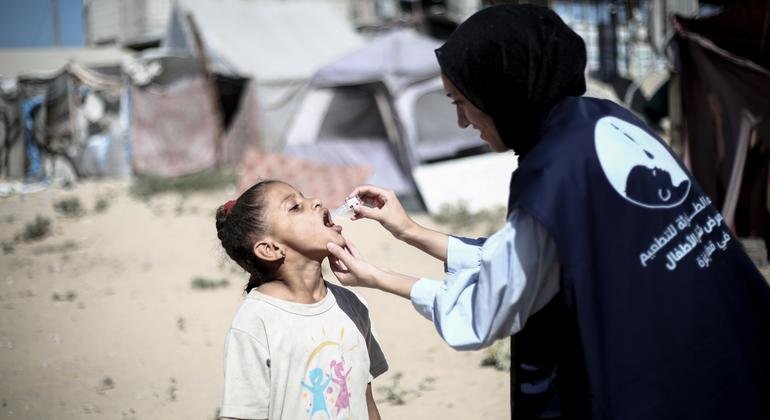
ICSPR condemns the Israeli occupation’s direct obstruction of the United Nations humanitarian response and recovery plan for the Gaza Strip, noting that only approximately USD 1.6 billion of the required USD 4 billion for 2025 has been funded, despite humanitarian needs reaching catastrophic and unprecedented levels. Thousands of displaced persons are living in dilapidated tents that provide no protection from summer heat or winter cold, with estimates indicating that 93% of these shelters are uninhabitable. More than 900,000 people are suffering from severe shortages of water and basic services, while millions have been deprived of livelihoods and agricultural activity due to restrictions on the entry of aid, equipment, and essential materials.
ICSPR reiterates its condemnation of the use of humanitarian aid as a weapon and a political and security tool, and of the undermining of UNRWA and independent humanitarian organizations. Such practices constitute an international crime and a grave violation of international humanitarian law, particularly the Fourth Geneva Convention of 1949. They amount to war crimes and prohibited collective punishment under Article 8(2)(b)(25) of the Rome Statute and may also constitute crimes against humanity within the ongoing context of the crime of genocide.
Accordingly, ICSPR calls upon the international community, the United Nations, Arab and Islamic states, and donor entities to take the following actions:
-
Immediately lift the Israeli blockade and all restrictions imposed on the work of international humanitarian organizations and civil society organizations.
-
Allow the immediate entry of all humanitarian aid, including detained UNRWA aid trucks, without conditions or delay.
-
Exert pressure to halt the implementation of Israeli legislation that bans or restricts the work of UNRWA and international humanitarian organizations.
-
Protect the personal data of United Nations and international organization staff and ensure the independence and neutrality of humanitarian work.
-
Hold Israeli officials accountable before the International Criminal Court for crimes of starvation, obstruction of relief, and collective punishment, and impose binding international measures to ensure respect for international law and the immunity of United Nations organizations and the rulings of the International Court of Justice.
-
Provide funding and support to UNRWA and other international humanitarian organizations and Palestinian civil society organizations in a manner that ensures the continuity of their work and strengthens humanitarian response.